




Precision Household Scissors for Home and Office Use
Household scissors are one of the simplest tools in a drawer, yet a poor pair can slow down everyday tasks. Clean cutting, comfortable handling and sensible durability matter whether the job is opening packages, trimming paper, preparing craft materials or keeping a home office organized. This guide rewrites the original Bonet Houseware topic with a practical focus: how to evaluate a pair of household scissors, what features are useful, how to care for them and what sourcing questions buyers should ask before placing wholesale or OEM inquiries.
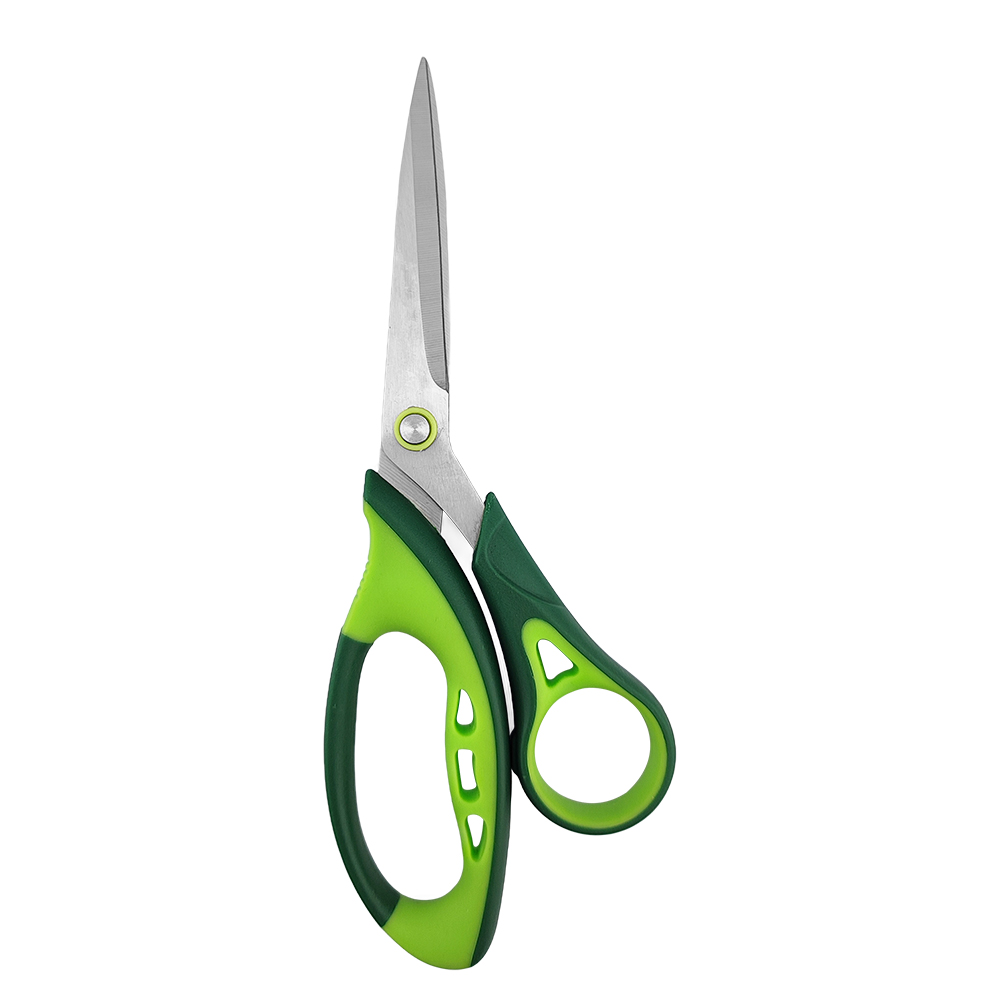
The original article describes a multi-purpose household scissor with a stainless steel blade, an 8 inch size, a green and dark green handle color scheme, an ergonomic handle and a non-slip grip. Those details suggest a general-use scissor designed for routine home and office cutting rather than heavy industrial work. The product image is preserved here for reference.
Key Takeaways
- Choose household scissors based on the materials you cut most often, not only on appearance.
- An 8 inch scissor is a common all-purpose size for paper, packaging, light fabric and office use.
- Stainless steel blades can support everyday corrosion resistance, but buyers should ask about the exact grade and edge treatment if needed.
- Ergonomic and non-slip handles are useful when scissors are used repeatedly during office, craft or household tasks.
- Wholesale and OEM buyers should confirm materials, packaging, logo options, samples, inspection standards and lead times directly with the supplier.
What Makes Household Scissors Suitable for Daily Use?
A reliable household scissor should do three things well: cut cleanly, feel stable in the hand and remain convenient to store. For everyday users, the main cutting materials are usually paper, envelopes, thin cardboard, tape, food packaging, thread, ribbon and light fabric. A scissor that is too small may require more force on longer cuts, while a scissor that is too large can feel awkward for detailed trimming. That is why the 8 inch size mentioned in the original article is a practical middle ground for many homes and offices.
Blade alignment is especially important. Even sharp blades can tear material if the two sides do not meet correctly along the cutting edge. The pivot should feel secure but not stiff. When opening and closing the scissors, the motion should be smooth enough for repeated use without wobble that reduces control.
Blade Material and Cutting Performance
The original article states that the scissors feature a stainless steel blade. Stainless steel is commonly chosen for household tools because it can resist rust better than many plain carbon steels when used and stored properly. However, not all stainless steel performs the same. Buyers should avoid assuming a specific grade, hardness or coating unless it is confirmed by the supplier. For B2B sourcing, ask whether the supplier can provide the steel grade, heat treatment information, blade thickness, hardness range and any corrosion-resistance test method used for internal quality control.
For consumer use, the practical test is simple: the scissors should cut paper without snagging, trim thin packaging cleanly and handle light craft materials without forcing the hand. They should not be used as a substitute for pruning shears, wire cutters, kitchen poultry shears or heavy-duty utility cutters unless the supplier clearly states that those applications are supported.
Handle Comfort, Grip and Control
Comfort is not only about softness. A good household scissor handle should keep the hand stable, reduce pressure points and allow predictable control. The original article mentions an ergonomic design and a non-slip grip, plus a green and dark green handle color scheme. Color helps identify the tool in a drawer, but the shape and surface texture matter more during longer tasks such as sorting documents, wrapping gifts or preparing craft materials.
When evaluating handle comfort, consider hand size, finger opening dimensions and whether the grip works for left-handed or right-handed users. If a product is intended for retail or office supply channels, request samples and test them with different users before confirming a bulk order. A handle that works well for one hand shape may feel restrictive for another.
Home, Office and Craft Applications
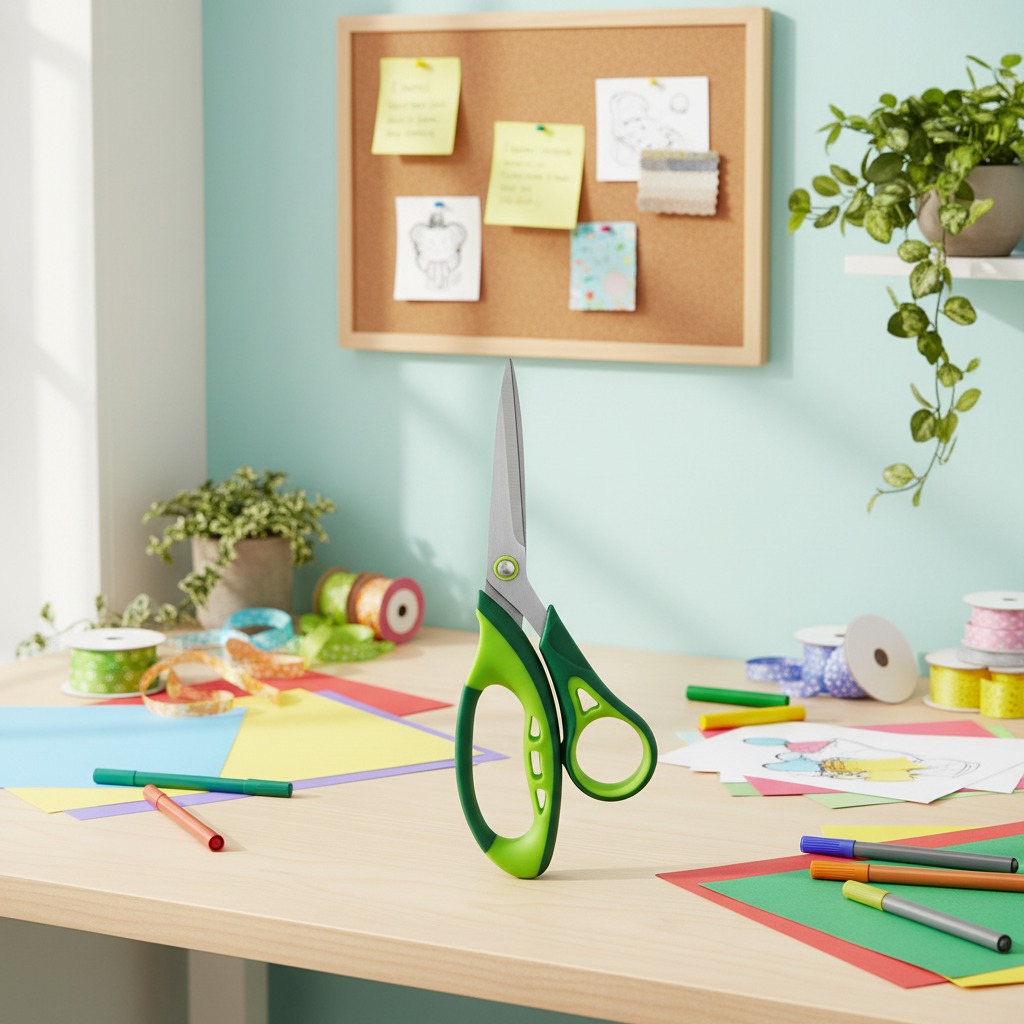
Household scissors often sit between kitchen tools and office tools. They are not specialized for every cutting job, but they can cover many routine tasks. In the home, they may be used for opening parcels, cutting labels, trimming threads or preparing simple decorations. In an office, they are useful for documents, mailers, tape, lightweight card and stationery tasks. In craft use, they can support paper projects, ribbon trimming and light fabric cutting.
To keep performance consistent, it is best to separate scissors by use. For example, do not use the same pair for adhesive tape and clean fabric if you want smooth fabric cuts. Tape residue can build up near the cutting edge and cause drag. If one pair is used for packaging and another for craft or sewing tasks, both tools will usually perform better for longer.
Comparison and Selection Checklist
| Selection Point | What to Check | Why It Matters |
|---|---|---|
| Size | Confirm whether an 8 inch scissor fits the target users and tasks. | Balances longer straight cuts with manageable control. |
| Blade | Ask for stainless steel grade, blade thickness and edge details. | Helps buyers compare durability and cutting expectations. |
| Pivot | Open and close samples repeatedly to check smoothness and stability. | A loose or stiff pivot can reduce accuracy and comfort. |
| Handle | Review grip texture, finger opening and ergonomic shape. | Improves control during repeated household or office use. |
| Packaging | Confirm retail card, sleeve, bulk pack or custom packaging options. | Important for wholesale, online retail and distribution channels. |
| Quality Control | Ask what inspection checks are used before shipment. | Reduces variation across bulk orders. |
Use and Care Tips for Longer Service
- Wipe the blades after cutting tape, glue-backed labels or damp materials.
- Store scissors in a dry place instead of leaving them near sinks or wet counters.
- Use the right tool for hard plastic, metal wire or thick cardboard to avoid blade damage.
- Keep the pivot area clean so the opening and closing action remains smooth.
- Keep scissors away from children unless the product is specifically designed and supervised for child use.
If the blades begin to drag, check for residue before assuming the edge is dull. Adhesive buildup can often be removed with appropriate cleaning methods, followed by drying. Do not soak the handle or use harsh chemicals unless the supplier confirms compatibility with the handle material.
B2B Sourcing Questions for Wholesale and OEM Buyers
For importers, distributors and private-label buyers, the scissor itself is only part of the decision. Commercial details affect whether the product fits a sales channel. Because specific Bonet manufacturing capacity, MOQ, certifications, prices and test results are not provided in the source, buyers should verify these points directly rather than relying on assumptions.
- What blade steel grade, handle material and pivot construction are used?
- Can the supplier provide samples for cutting, comfort and packaging review?
- What logo, color, barcode, label or packaging customization options are available?
- What is the MOQ for standard stock compared with customized versions?
- Which inspections are performed for sharpness, alignment, appearance and packing?
- What lead time, payment terms and shipment options apply to the intended order size?
FAQ
Are 8 inch household scissors good for office use?
Yes, an 8 inch size is commonly practical for office tasks such as cutting paper, envelopes, tape and light card. Buyers should still test samples for comfort and cutting feel.
Can these scissors cut fabric?
The original article mentions use on fabric and light household tasks. For best results, use them on light fabric only and avoid using the same pair on sticky packaging if clean fabric cuts are important.
Does stainless steel mean the scissors will never rust?
No. Stainless steel can resist corrosion better than some other steels, but care, storage conditions and the exact material grade affect performance. Dry the blades after exposure to moisture.
What should wholesale buyers confirm before ordering?
Confirm material details, sample availability, MOQ, packaging, logo options, inspection process, delivery schedule and any required market compliance documents with the supplier.
Are these scissors suitable for heavy-duty cutting?
They are best understood as household and office scissors based on the source description. Do not use them for wire, thick plastic or heavy industrial materials unless the supplier confirms that use.
