




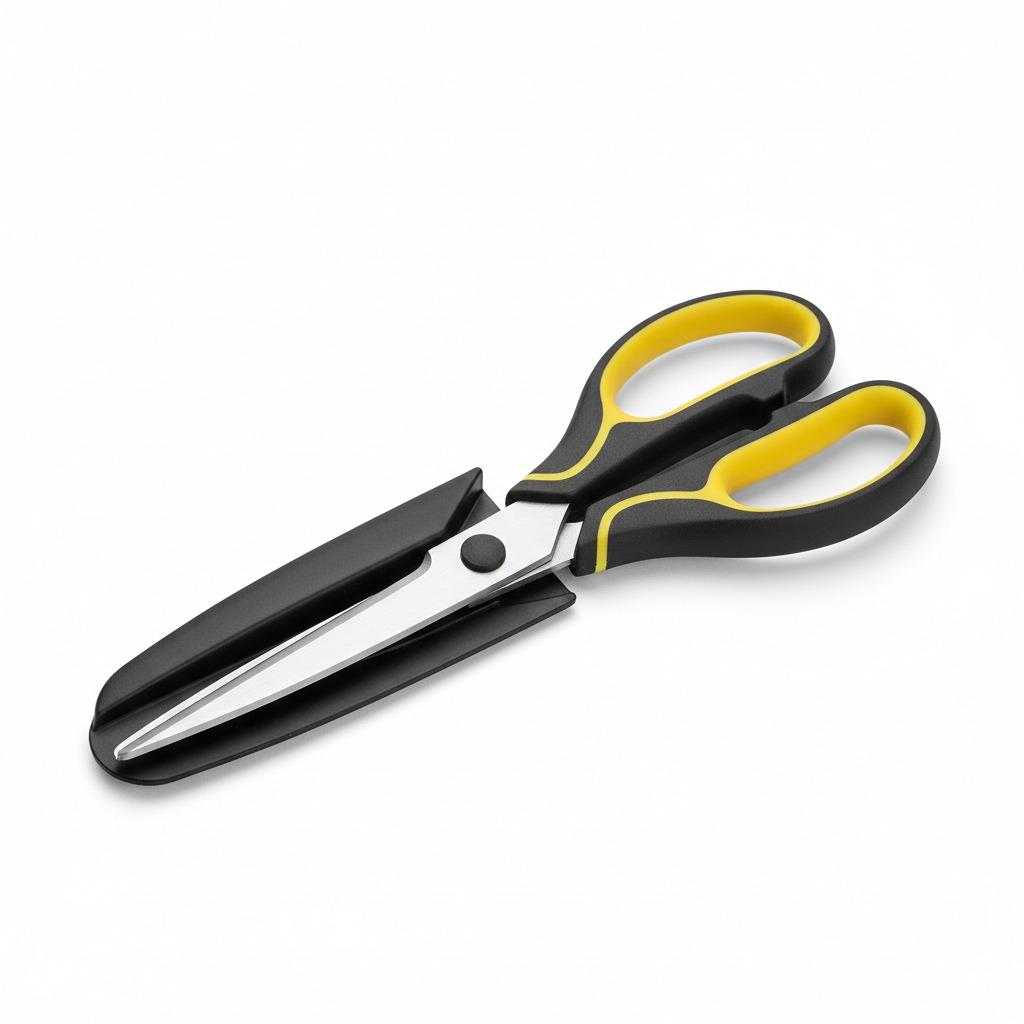
Precision vs. Heavy-Duty: Matching Scissors to Your Project
Choosing the right scissors is less about buying the sharpest pair and more about matching the tool to the material, cut length, and level of control your project requires. A fine paper pattern, a layer of thin fabric, a shipping carton, and a piece of rope all create different resistance. Use the wrong scissors and you may see torn edges, hand fatigue, bent tips, or dull blades long before the job is finished.
This guide compares precision scissors, heavy-duty scissors, and everyday office scissors so you can select the right option for craft, sewing, packaging, DIY, school, and workplace tasks.

Key Takeaways
- Precision scissors are best for short, controlled cuts, tight curves, small patterns, thread trimming, and detailed paper work.
- Heavy-duty scissors are better for thick, layered, or resistant materials such as cardboard, rope, plastic sheeting, upholstery samples, or dense fabric.
- Office scissors cover daily light tasks, including paper, envelopes, labels, and packaging tape, but they are not a substitute for specialist tools.
- Blade length, tip shape, handle comfort, and the material being cut matter as much as sharpness.
- To keep scissors performing well, separate pairs by task and avoid using delicate blades on abrasive or thick materials.
What Precision Scissors Are Designed to Do
Precision scissors are made for accuracy. They typically have shorter blades, often in the 4 to 6 inch range, with fine pointed tips that allow the user to start and stop cuts exactly where needed. The shorter cutting edge gives better control when turning corners, following curves, or trimming close to a line.
They are a good choice for paper crafting, scrapbooking, model making, embroidery, thread trimming, and delicate fabric work. If the project involves small shapes, narrow gaps, or visible finished edges, precision scissors help reduce overcutting and ragged results. Their advantage is not brute strength; it is careful control.
Because the tips are fine, they should not be used to puncture thick materials, pry open packages, or cut wire. Those habits can bend the tip, loosen the pivot, or dull the cutting edge unevenly.
What Heavy-Duty Scissors Are Designed to Do
Heavy-duty scissors are built for resistance. They usually use longer, thicker blades, often around 7 to 10 inches or more, and handles designed to give the hand more leverage. Some models may include reinforced construction, serrated edges, or stronger blade materials, but exact features vary by product and should be checked before purchase.
Choose heavy-duty scissors when cutting cardboard, plastic packaging, rope, carpet samples, thick fabric, leather-like materials, or multiple layers. The longer blades are useful for straight cuts across larger surfaces, while the heavier build helps prevent twisting when the material pushes back.
The trade-off is precision. A large pair may feel clumsy on tiny paper shapes or thread ends. It may also leave marks on delicate material if too much pressure is applied. Heavy-duty scissors belong in a toolkit, stockroom, workshop, or shipping area, but they are not ideal for every desk or craft table task.
Precision vs. Heavy-Duty Scissors Comparison
| Selection Point | Precision Scissors | Heavy-Duty Scissors |
|---|---|---|
| Best purpose | Detailed cutting and trimming | Cutting thick or resistant materials |
| Typical blade length | Shorter blades, often 4 to 6 inches | Longer blades, often 7 to 10+ inches |
| Tip style | Fine, pointed tips for control | Blunt, rounded, or stronger tips depending on model |
| Cut style | Small curves, corners, close trimming | Long straight cuts and high-force cuts |
| Common materials | Paper, thin fabric, thread, light craft materials | Cardboard, rope, plastic sheet, dense fabric, layered material |
| Main risk if misused | Bent tips or dull blades on thick material | Poor accuracy or crushed edges on delicate work |
| Best users | Crafters, sewers, designers, hobby users | DIY users, packers, workshops, facilities teams |
Where Everyday Office Scissors Fit
Office scissors sit between precision and heavy-duty options. They are usually suitable for paper, envelopes, sticky notes, coupons, labels, light card, and routine desk use. A good office pair should feel balanced in the hand and open smoothly without wobbling at the pivot.
However, office scissors should not be expected to handle every job. Repeatedly cutting corrugated cardboard, thick plastic clamshell packaging, or adhesive-heavy tape can quickly reduce performance. For businesses, classrooms, or shared workstations, it is often practical to keep different scissors clearly assigned: one pair for paper, one for packaging, and one for detailed work. This simple habit reduces damage and helps users get cleaner cuts.
How to Match Scissors to Your Project
Before choosing a pair, look at the project rather than the tool. Ask what the finished edge needs to look like, how thick the material is, and how many cuts you will make. A single quick snip has different requirements from a full afternoon of production cutting.
- Identify the material. Paper and thread need a cleaner edge; cardboard and rope need force and leverage.
- Consider the cut shape. Curves, corners, and small openings call for precision scissors. Long straight cuts are easier with longer blades.
- Check the thickness. If the blades struggle to close, switch to a heavier-duty tool instead of forcing the cut.
- Think about hand comfort. For repeated cutting, handle size and grip shape can reduce strain.
- Separate clean and dirty tasks. Do not use your best craft scissors on tape, grit, or abrasive packaging.
Use and Care Tips for Better Cutting
Scissors last longer when they are used within their intended range. Wipe blades after cutting adhesive materials, because residue increases drag and may transfer to clean paper or fabric. Store pointed precision scissors with a cover or in a drawer where the tips will not strike hard objects. Avoid dropping scissors, as a fall can misalign the blades or damage the point.
If a pair begins to chew rather than cut, first check for adhesive buildup or a loose pivot. Some scissors can be tightened; others cannot. If the blade edge is damaged, replacement may be more practical than trying to force continued use, especially for detailed work where cut quality is visible.
Buying Checklist
- Does the blade length match the scale of the project?
- Are the tips fine enough for detail work or strong enough for tougher use?
- Do the handles fit the user’s hand comfortably?
- Is the pivot smooth, stable, and free from side-to-side wobble?
- Will the scissors be used on clean materials, adhesive packaging, or abrasive surfaces?
- For shared workplaces, can the pair be labeled by task to prevent misuse?
Practical FAQ
Can one pair of scissors handle every project?
One general pair can handle many light tasks, but it will not perform equally well on detailed craft cuts and heavy packaging. Keeping at least one precision pair, one everyday office pair, and one heavy-duty pair is more practical for mixed use.
When should I choose precision scissors?
Choose precision scissors when the cut is small, visible, curved, or close to a line. They are especially useful for paper crafts, thread trimming, delicate fabric work, and model details.
When should I choose heavy-duty scissors?
Use heavy-duty scissors when the material is thick, layered, stiff, or resistant. Examples include cardboard, rope, plastic sheeting, and dense fabric. If a light pair twists or stalls, stop and switch tools.
Are longer blades always better?
No. Longer blades are efficient for straight cuts across larger materials, but shorter blades are easier to control for tight detail. Blade length should match the cut path.
How can I keep scissors sharp for longer?
Use each pair only for suitable materials, wipe off adhesive residue, store them safely, and avoid cutting abrasive or hard items unless the scissors are designed for that purpose.
Final Thoughts
The best scissors are the ones that match the job. Precision scissors give control for fine work, heavy-duty scissors provide leverage for tough materials, and office scissors cover everyday desk tasks. By choosing based on material, cut shape, and comfort, you can work more cleanly, reduce frustration, and extend the life of every pair in your toolkit.
