




Quick answer: The most dependable way to launch private label kitchen gadgets is to treat each product as a controlled retail release, not a catalog item with a new logo. Define the intended consumer and task, select an actual product reference, confirm component materials and marketing claims, approve a physical branded sample and packaging proof, then release production against written inspection criteria. For gadget collections with blades, hinges, removable parts or sharpening slots, each component and function must be checked independently before the range is marketed under one brand.
BONET HOUSEWARE, a kitchenware and cutting-tool supplier based in Yangjiang, China, publishes multifunctional gadget references covering vegetable preparation, garlic processing, knife maintenance, potato cutting and cooking/serving. Its OEM/ODM service describes drawing- or sample-based production, material and color customization, logo options, retail packaging support, sampling and quality inspection. These capabilities provide a starting point for a sourcing conversation; a specific logo technique, color, minimum order, lead time, certification or new design is not confirmed until it is approved for the selected model.
This guide is written for private-label kitchenware brands, supermarket category teams, homeware importers, distributors and e-commerce product managers. It introduces a seven-gate decision system that connects the brand promise to a reproducible, inspected, retail-ready SKU. The focus is launch authorization and technical handoff—not a generic supplier ranking, carton-cost tutorial or repeat of an ordinary kitchen utensil buying guide.
Explore BONET Multi Functional Tools Request a Private Label Project Review
Why Private Label Gadgets Need a Different Launch Process
A spatula may have one working head and handle, but a peeler can have several cutting edges, a hand chopper can contain a blade assembly and enclosure, and a sharpener may contain different grinding or sharpening components. A potato cutter can introduce a grid, push mechanism and removable inserts. Every extra interface creates another opportunity for performance variation, incorrect instructions or a missing component in the retail pack.
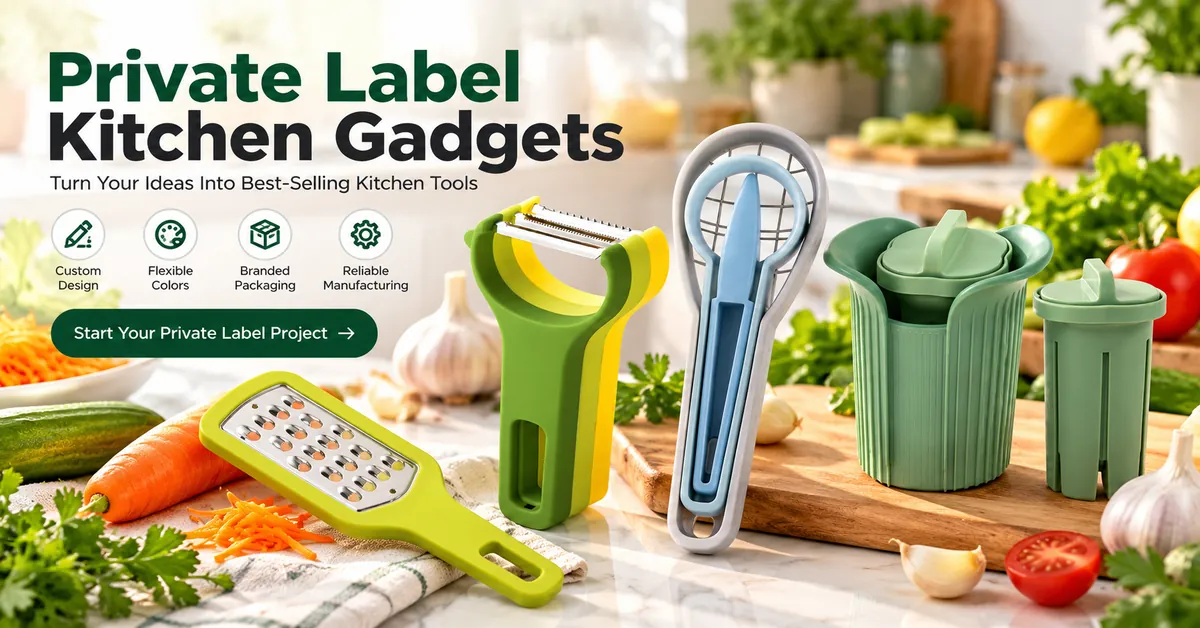
This is why a private label kitchen gadget is more than a cosmetic variation. The product must do the advertised job repeatedly; the consumer must understand how to use and clean it; the packaging must describe the contents accurately; and the factory must be able to reproduce the approved construction. A smart brand brief brings these requirements together before discussing logo placement.
The buyer should also distinguish between catalog-based private label , OEM customization and ODM development . A catalog reference with an approved printed sleeve may involve fewer structural changes than a brand-new cutter mechanism. Changing a knife-sharpening geometry or a peeler blade assembly is a product-engineering question, not simply a packaging choice. Neither route is automatically better: the correct route depends on differentiation, budget, technical risk and launch timing.
For perspective, BONET also publishes a private-label kitchen utensils guide focused on ordinary cooking utensils. The present guide concentrates on mechanical kitchen gadgets , separate component validation, seven-stage sign-off and the exact evidence a retail release file should contain.
Which Buyers Benefit, and When Is This Approach Unsuitable?
The approach is useful for retailers building a coordinated shelf assortment, e-commerce sellers developing original listings, importers managing several packaging languages, distributors adding an owned brand, and kitchenware brands extending beyond conventional utensils. Each group needs consistent appearance, but the commercial reason for its assortment differs.
A retail chain may launch one easy-to-explain prep tool, one giftable multi-function accessory and one higher-value knife-care item. A marketplace brand may need individual packaging, clear instruction imagery and a reliable replacement or complaint process. A specialty kitchenware distributor may require more detailed application limits and a repeatable batch identification scheme. A gift-program buyer needs the correct contents and artwork delivered before a campaign deadline; a beautiful box cannot compensate for a missing blade guard or wrong color.
This approach is not a shortcut for highly specialized products that require independent design validation or approvals. A professional restaurant use case, a tool marketed to children, or a product with unusual electrical, thermal or food-processing functions may call for additional evidence and a different approval program. Do not assume that a household catalog model is appropriate for any industrial or professional task without an explicit assessment.
The strongest brand launch is deliberately narrow. It begins with products whose use cases are clear and for which technical information, prototypes, supply options and documentation can actually be obtained. An attractive five-piece assortment is not necessarily a better launch than two well-controlled products.
Gate 1 — Write One Consumer Promise and One SKU Brief per Tool
Start by stating what each gadget must do for the customer. “Premium kitchen tool” is not an actionable product requirement; “a hand-operated peeler for standard household vegetable preparation, with specified blade configuration and safe storage instructions” is closer. The brief should distinguish must-have functionality from desirable color, finish or display features.
A practical SKU brief includes a product code, function, intended user, market of sale, expected food-contact conditions if applicable, source reference, preliminary materials, size and weight target, cleaning approach, accessories, potential hazards, retail format and expected quantity. Separate requirements from supplier proposals . If the brand proposes a new blade cover, that is a design request until a sample and feasibility review confirm it.
For brand consistency, assign a visual family: color palette, logo clear space, photography background, naming style, typography and packaging hierarchy. However, do not force the same decorative treatment onto a knife sharpener and a food-contact peeler component if it conflicts with use or material suitability.
Gate 1 is passed when purchasing, product development and marketing agree on an identifiable version of the brief. The deliverable should be a controlled file with an owner and revision number. If the brief keeps changing, sample development and quoting will change with it.
A useful early question to ask BONET is: Which portions of this brief match an existing production reference, and which require feasibility review or new development? That answer should appear in the quote rather than being inferred from a product photograph.
Gate 2 — Select Verified Product References Before Planning a Brand Range
The most useful starting point for private label kitchen gadgets is an identified reference model with a published page, not an unverified image from a market trend report. BONET has several relevant references suitable for a preliminary discussion. The table below reproduces selected fields from its product pages; these are published catalog values , not independently tested specifications or a commitment that every product can receive every modification.
| BONET reference | Published product and key data | What it could contribute to a range | Brand approval question |
|---|---|---|---|
| M054 | 3-in-1 Vegetable Peeler; 420 stainless steel and PP; L/M/S size entries | Everyday vegetable-prep hero product | Which blade functions, size option and retail pack are approved? |
| M028 | Lazy Garlic Pounder; 420 stainless steel and ABS; 10 × 9.5 cm | Compact garlic-preparation gadget | Are all removable components listed and tested? |
| M031 | Dual-Stage Knife Sharpener; published 420 stainless-steel metal field and PP plastic field; 12.3 × 5 × 6 cm | Knife-care category extension | Which actual sharpening inserts and blade compatibility are specified? |
| M047 | Multi-Functional Potato Cutter; 420 stainless steel and PP+TPR; 15.9 × 11.7 × 11.5 cm | More visual food-prep product | How are the cutter grid, base and cleaning procedure evaluated? |
| U103 | 2-in-1 Spatula Tongs; 420 stainless steel and NYLON in specification fields; 27.5 × 8 × 4 cm | Cooking and serving cross-sell | Can the actual working-head material and temperature claim be confirmed? |
M054 is published with three size entries: L 18 × 10.8 × 2.5 cm, M 15.1 × 9.2 × 2 cm, and S 13 × 6 × 2 cm. The table above does not imply they share one MOQ, package or retail price. BONET's U103 narrative refers to silicone, while its structured materials field says NYLON ; this discrepancy needs clarification before printing a private-label label or product description. Likewise, a material field does not reveal every insert's composition in a dual-stage sharpener.
The range decision should be driven by customer tasks. A peeler and potato cutter both relate to vegetable preparation but are not interchangeable; a garlic tool may be a distinct add-on. A sharpener targets a different consumer problem and requires careful instructions. A tong addresses cooking or serving rather than initial preparation. If the first launch must remain simple, choose a few roles with clear separation rather than including everything because it exists in the catalog.
View the BONET Product Catalog Send Selected Model Numbers for a Quote
Gate 3 — Verify Function, Component Materials and Claim Boundaries
This gate converts a marketing idea into a performance and evidence plan. The buyer should define what a representative functional test looks like, which components are accessible, what could fail, and which statements must be supported before launch. A “premium blade” statement is not a test method; a task-specific observation with repeatable conditions is.
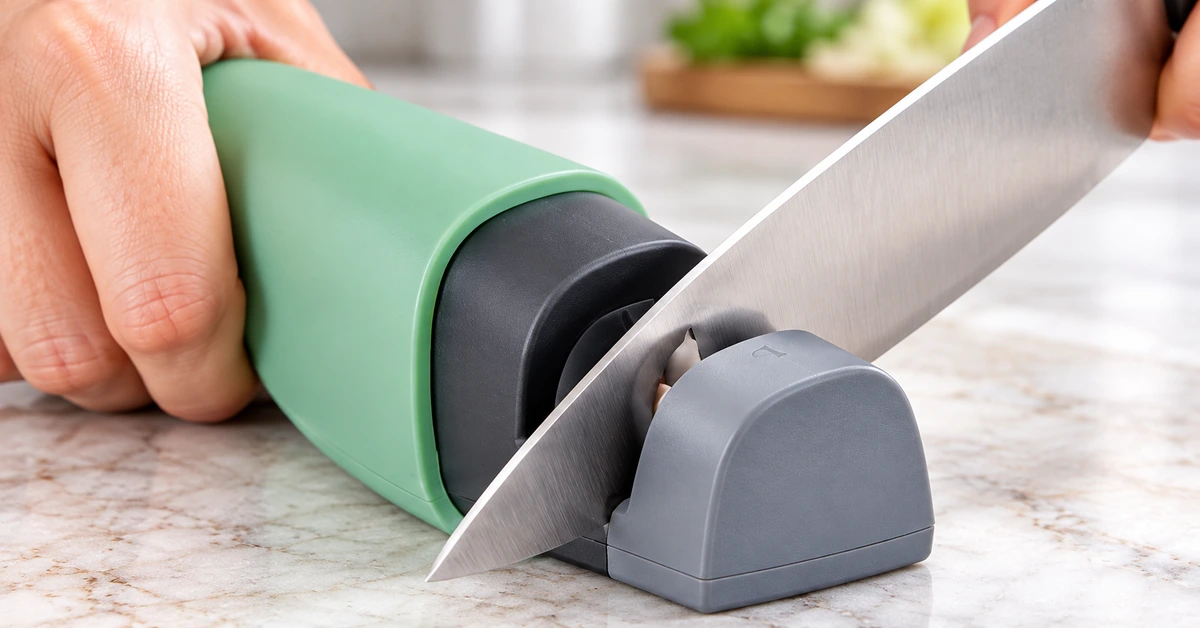
For a peeler, evaluate blade selection, cutting comfort, exposed edges and ease of rinsing. For a manual garlic processor, examine assembly, lid fit, the cutting mechanism, cleaning access, and whether contents remain contained during normal use. For a sharpener, clarify which knife types and edge geometries are suitable; do not suggest universal compatibility. For a cutter, check loading, alignment of parts, cleaning and safe handling of the blade grid. For spatula tongs, confirm how they grip, flip or serve the expected food without misrepresenting the head material.
| Gadget type | Suggested validation scenario | Observations to record | Marketing claim to hold until supported |
|---|---|---|---|
| Peeler | Peel representative firm and soft vegetables using each claimed blade option | Cut consistency, grip, control, blade exposure, cleaning | “Works on all produce” or an unsupported speed claim |
| Garlic processor | Process a defined garlic portion, disassemble and wash | Lid engagement, blade retention, residue, missing parts | “BPA-free,” “dishwasher safe,” or a performance guarantee |
| Manual knife sharpener | Use only manufacturer-approved compatible blades under a documented protocol | Stable grip, insert integrity, clear instructions, blade compatibility | “Works with all knives” or guaranteed sharpness |
| Potato cutter | Cut a representative potato size and clean the cutter components | Force, alignment, base stability, component fit | “Commercial grade” without relevant verification |
| Spatula tongs | Lift and turn a defined food sample using the intended cookware | Grip, joint function, surface effect, cleaning | Specific temperature limit or “silicone” before material confirmation |
Record both successful operation and failure modes. A product may perform well under ideal conditions but be awkward with wet hands or difficult to clean around a joint. A product sample should be evaluated at the actual intended use conditions , not only photographed for a listing. A manufacturer and buyer can agree on a test protocol, but no numerical pass threshold should be invented without a defined requirement.
Material verification requires more than the words “food grade.” For materials intended to contact food, ask for the complete relevant component list, formulation and processing information appropriate to the destination market. The European Commission's Food Contact Materials legislation guidance and the U.S. Food and Drug Administration's guidance on substances that come into contact with food are suitable starting points for qualified regulatory review. Material declarations, testing and appropriate statements of compliance depend on the product, contact conditions and applicable laws; mentioning these authorities does not mean the listed BONET gadgets have already passed specific tests.
Also separate food-contact evidence from durability, washability, heat resistance, recycled content and sustainability claims. A tool can use a particular resin while the suitability of a finished, colored, assembled product remains unproven. The evidence should match the exact component, color or formulation as applicable, and be reviewed whenever these change.
Gate 4 — Approve Logo Placement, Colors and the Brand System on Real Samples
Private label marketing begins with consistent identity, but a working gadget often offers limited safe marking areas. A metal component, molded plastic housing, flexible working head and paper sleeve have different marking and cleaning constraints. BONET's customization service lists printing, laser engraving, custom colors, surface treatments and packaging; the availability of a specific technique must be checked on each actual model and material.
Do not assume a logo can be engraved into every plastic housing or placed onto a food-contact blade. Ask for a marking-location drawing that identifies the surface, exact dimensions, color or finish, orientation, minimum clear space and approved application method. The proof should show an actual branded component, not just a logo digitally pasted onto a catalog photo.
For coordinated multi-product collections, use a controlled color reference and assess the tools side by side. A single color name may reproduce differently on PP, ABS, TPR, NYLON, printed cardboard and any metal finish. Match the design intention while accepting that different materials can require different processes. If the supplier proposes an alternate hue to improve feasibility, treat it as a documented deviation requiring brand approval.
A simple master brand sheet should contain the approved logo art, prohibited alterations, color references, label hierarchy, model naming rules, photograph examples and accessibility/readability requirements. Keep separate appendices for products with individual marking constraints. This prevents a later reorder from using a different logo width merely because another operator interpreted the instruction differently.
Brand exclusivity is a distinct commercial and contractual issue. Adding your logo to a standard item does not automatically make its structure exclusive. If the project involves bespoke tooling, a proprietary mechanism or design rights, seek explicit written terms about ownership, access, use permissions and any exclusivity obligations before funding development.
Gate 5 — Build a Retail Pack That Matches the Product, the Channel and the Claim
The retail package is part of the product specification. It needs to identify the exact contents, protect exposed working edges where appropriate, communicate relevant operating and care information, and fit the sales environment. Branding is important, but a promotional photograph should never imply that spare blades, accessories or a storage case are included when they are not.
A peeler may be suited to compact display packaging only if blade protection and instructions are adequate. A multi-piece potato cutter may require a component tray and clear accessory count. A garlic processor may need stable protective packaging for the container and lid. A knife sharpener should provide understandable compatibility and use warnings. For tongs, the packed length, opening mechanism and handling protection can drive both display and freight considerations.
| Packaging decision | Retail or technical purpose | What the brand must approve |
|---|---|---|
| Product name and image | Sets consumer expectations | Correct model, color, size and included parts |
| Barcode and SKU code | Supports receiving and point of sale | Unique code per saleable variant and placement |
| Usage and cleaning instructions | Reduces misuse and customer complaints | Appropriate claims, diagrams, warnings and languages |
| Blade or mechanism protection | Supports safer transport and handling | Actual fitted protector or approved internal pack arrangement |
| Material or environmental claims | May be legally significant | Evidence for the exact claim, product and target market |
| Inner and master cartons | Controls receiving, storage and shipping | Piece count, packing method, dimensions and labeling |
For a supermarket, check barcode scanning, hanging or shelf dimensions, language version, opening method and planogram constraints. For e-commerce, review the shipping unit after any additional fulfillment protection; a compact product can become expensive when its box is oversized. For distributors, carton identification and pack-level traceability are often more important than a highly decorative sleeve. Each channel requires its own commercial validation.
The final artwork proof should include front, back and side panels, dielines, fonts, actual text, warnings, barcode, pack contents and placement of the brand identity. The approved printer-ready file should carry a revision number. If a safety instruction or material claim changes, re-approve the affected artwork rather than assuming only the product engineers need to know.
Create a physical packed golden sample that matches the expected saleable unit: tool, accessories, instruction sheet, barcode, brand graphics, protective inserts and outer presentation. This is more useful than approving an empty printed carton and assuming everything will fit later.
Gate 6 — Freeze the Golden Sample and the Inspection Plan
An attractive showroom sample is not necessarily a production-release sample. Prototypes may use a different material, process or temporary tooling. A brand should therefore ask which sample stage is being reviewed, what remains provisional and what will be reproduced in normal production. A development prototype can be approved for appearance but should not silently be treated as the final technical reference.
At Gate 6, the buyer and manufacturer should agree on a golden sample or equivalent approved standard with an exact revision identifier. The file should identify measurements, materials, component list, finish, color, logo, function, pack contents, care instructions and approved artwork. Critical characteristics need a measurable criterion or representative test method. If the parties cannot describe how an inspector will judge a feature, they have not fully specified it.
For a peeler, inspection may examine blade fit, stability, edge condition and approved blade variations. For a garlic processor, it may cover lid engagement, moving-part retention and component completeness. For a cutter, alignment and safe assembly matter. For a sharpener, the actual insert materials and intended knife compatibility must be resolved. For tongs, the joint, gripping action and the actual head material require confirmation.
A reasonable quality plan can classify critical, major and minor defects , but its definitions must be agreed for the exact product. A detached cutting component or an unapproved material substitution may deserve a different response from a small cosmetic blemish. Sampling plans and acceptance numbers should refer to an agreed method, such as an applicable lot-inspection standard, rather than a casually quoted universal AQL threshold.
Do not use one good sample as proof of consistent mass production. Depending on the project, request first-production samples, stage inspections and pre-shipment inspection under a written plan. Document how a rejected lot will be segregated, corrected, rechecked and released. BONET's published OEM/ODM workflow includes a quality inspection stage, but it does not publish one fixed sampling level for every kitchen gadget.
Gate 6 passes only when the release standard is observable and traceable. The goal is for the buyer, production team and inspector to identify the same approved item without relying on memory or a screenshot.
The Seven-Gate Release Checklist at a Glance
The framework below is an editorial purchasing method, not a claim that BONET uses a certified seven-gate internal system. It is intended to help brands coordinate their own purchasing, product development, compliance, merchandising and quality teams.
| Gate | Decision owner(s) | Evidence required before proceeding | Main failure prevented |
|---|---|---|---|
| 1. SKU brief | Product manager, buyer | Approved use case, market, essential requirements and revision | Vague specifications |
| 2. Reference selection | Buyer, supplier | Actual model, proposed changes, availability and feasibility | Invented variants or unsuitable models |
| 3. Function and evidence | Engineering, compliance | Test plan, material breakdown, supported claims | Misleading performance or material statements |
| 4. Brand execution | Brand team, supplier | Real marked samples, color and logo approvals | Inconsistent logos or colors |
| 5. Packaging | Packaging, merchandising | Printed and packed proof, barcode, warnings and contents | Labeling errors, returns and damage |
| 6. Production standard | Quality, supplier | Golden sample, inspection criteria and exception rules | Sample-to-batch drift |
| 7. Release and reorder | Purchasing, operations | Signed revision, commercial terms and change-control record | Uncontrolled substitutions and repeat-order failures |
This table is also useful in an initial supplier meeting. Rather than asking whether the manufacturer “does private label,” ask which evidence it can supply for each gate, which items need outside testing, and which dates depend on customer approvals.
Compare Branding Complexity Across Five BONET Gadget Formats
A five-model collection can look coherent in a mood board while presenting very different manufacturing tasks. The comparison below focuses on launch complexity and likely approval work, not unverified prices or a claim that any customization option is automatically offered for every product.
| Reference | Product structure | Likely project attention | Practical retail role |
|---|---|---|---|
| M054 Peeler | Blades and plastic body; listed size variants | Confirm blade set, safe marking area and variant labeling | Everyday food-prep item |
| M028 Garlic Pounder | Container plus cutting mechanism | Check cleaning access, lid fit and all included components | Demonstrable compact accessory |
| M031 Sharpener | Two-stage sharpening format | Confirm actual insert material, knife compatibility and user instructions | Knife-care add-on |
| M047 Potato Cutter | Cutting grid and assembled parts | Check component retention, assembly, pack protection and safe cleaning | Higher-visual-impact prep item |
| U103 Spatula Tongs | Jointed cooking/serving tool | Resolve NYLON-versus-silicone description; assess heat and cookware claims | Cross-category cooking accessory |
This is why a one-page logo approval is not enough for private label kitchen gadgets . Two products may share the same packaging color, yet their mechanical inspections, instructions and claim substantiation should remain different. A well-controlled portfolio preserves both brand unity and SKU-level technical accuracy.
OEM, ODM and Private Label: Which Route Fits Your Launch?
Catalog-based private label starts with an existing reference and requests branding or packaging changes that the manufacturer confirms it can execute. It can be an appropriate first stage when differentiation comes from retail positioning, packaging or channel selection. The buyer should still approve the sample and verify the finished product's materials and claims.
OEM manufacturing is relevant when the buyer supplies drawings, samples, technical requirements or a defined specification. It requires a clear account of which product features are fixed, which are developed, and who signs off changes. BONET publicly lists production by drawing or sample, color and material customization, logo support and mass-production management as services to discuss.
ODM development is a larger decision when the product concept or structure requires supplier-assisted design, feasibility assessment, prototyping or tooling evaluation. BONET describes conceptual development, structural optimization and sample development on its OEM/ODM page . Those statements establish a service offering, not an automatic commitment to make an unreviewed blade mechanism or product geometry.
A brand should ask how proposed changes influence tooling, samples, test evidence, minimums, schedule and eventual repeat supply. New mechanisms or proprietary shapes also raise intellectual-property questions, which should be addressed in a written agreement. Do not equate private-label printing with exclusive ownership of a standard product design.
Pricing, MOQ and Lead Time: Avoid Misleading Shortcuts
The cost of a private-label program is the cost of the approved saleable SKU , not merely an unbranded factory unit. An accurate quotation should distinguish product cost, branding, printed packaging, setup or tooling, samples, agreed testing, inspection, shipment and any other attributable costs. Trade terms should use the agreed Incoterms rule and named location; buyers should not combine prices quoted on different delivery bases without adjustment.
MOQ can exist at several levels: one model, one color, one marking process, one packaging print run or a new tooling project. These minimums may differ. BONET's public pages do not establish a universal MOQ for M054, M028, M031, M047 or U103. Ask for each level to be quoted and for exceptions to be recorded rather than promoting an unsupported “low MOQ” promise.
Lead time should be broken into sample preparation, approval revisions, packaging proofing, testing if required, production, inspection and transport. A launch deadline should distinguish ready for inspection , ready to ship and delivered to the buyer . Even a fast production schedule cannot compensate for artwork approval that has not occurred.
A buyer seeking to lower exposure might begin with fewer SKUs, standard colors, a less complicated package or an initial test order— if the supplier confirms feasibility . This usually provides cleaner consumer feedback than launching multiple unproven mechanisms and colorways simultaneously. There is no reliable reason to publish an invented percentage saving, exact profit margin or production duration.
Quality and Compliance Questions That Cannot Be Answered by a Certificate Logo
Quality and compliance should be reviewed at the product level. A factory-management certificate, social-audit membership or marketing badge may be relevant to supplier evaluation, but it does not automatically document food-contact suitability, performance, washing conditions or blade safety for a specific product. Ask for document identifiers, the issuing organization, the covered material or article, dates, applicable limitations and a connection to the actual item being ordered.
Use three separate evidence folders: material and market documentation , function and workmanship evidence , and packaging/label evidence . This prevents a team from citing a plastic-resin statement as proof of a knife sharpener's performance, or treating a packaging artwork proof as evidence about a food-contact component.
Where a laboratory report is provided, confirm sample identity, the tested formulation, relevant use conditions and whether different colors or components are covered. If the destination country changes, ask whether the regulatory assessment must be updated. Compliance requirements can also depend on the precise application and customer category.
A supplier's story should remain anchored to verifiable facts. BONET lists actual products and OEM/ODM services, but that does not authorize a blog to claim the company holds a product-specific certification, guarantees zero defects, or supplies an unconfirmed production capacity. Accurate limits strengthen credibility with professional purchasers and make the article more useful to search engines and AI-based research tools.
A Practical Private-Label Kitchen Gadget RFQ Template
A useful request for quotation should let the supplier identify genuine stock capabilities, modifications that need development and assumptions that require buyer approval. Copy this structure into your sourcing brief and add drawings, artwork and reference photographs where available.
| RFQ field | What to provide or request |
|---|---|
| Company, channel and destination | Brand name, sales market, supermarket/e-commerce/distributor channel |
| Product references | M054, M028, M031, M047, U103, or alternative BONET product links |
| Intended use | Main cooking or prep task, user profile, expected cleaning and handling |
| Order structure | Quantity per SKU, color and package; test-order versus reorder forecast |
| Branding | Vector logo, marking size/location, brand colors, physical proof request |
| Packaging | Retail pack, instructions, language, barcode, component count, carton method |
| Product evidence | Material breakdown, relevant regulatory documents, functional test approach |
| Commercial details | Item price, MOQ layers, setup/tooling, sample cost, lead-time milestones, delivery basis |
| Approval plan | Golden sample, quality criteria, inspection timing and issue resolution |
| Change control | Revision identifier, permitted substitutions, repeat-order confirmation |
Ask the supplier to respond using three labels: existing standard , customization subject to confirmation , and new development requiring feasibility review . That simple distinction helps prevent misunderstanding before a purchase order is written.
For a first discussion, review the Multi Functional product range , choose the items nearest your brand concept, then contact BONET HOUSEWARE with the brief. Product links give the factory a concrete starting point and reduce the chance that the quote addresses the wrong accessory.
View BONET Kitchenware Products Request an OEM / Private Label Quote
Frequently Asked Questions About Private Label Kitchen Gadgets
1. What are private label kitchen gadgets?
Private label kitchen gadgets are food-preparation, knife-care or cooking accessories supplied for resale under a retailer's or brand owner's identity. The project may use an existing model with approved branding, a modified OEM specification or an ODM-developed product. The buyer should control the final SKU description, claims, samples and package; the term “private label” alone does not establish product exclusivity or a particular manufacturing process.
2. Can BONET add our logo to a vegetable peeler or garlic gadget?
BONET publicly lists logo printing and laser engraving among its OEM/ODM options. Whether either method is appropriate for a specific M054 peeler, M028 garlic tool or other gadget depends on the material, available surface, manufacturing process and intended use. Send the artwork and desired position, then request a real marked sample and a project-specific quotation before promising a particular finish or minimum quantity.
3. Is it possible to mix five different gadget models under one brand?
Yes, a buyer can design a coordinated brand concept across different gadget types, but the commercial and technical feasibility of any particular assortment must be confirmed with the supplier. Each model may have separate MOQ, packaging, test and lead-time requirements. Consistent colors or labels do not eliminate product-specific validation, and an order with several SKUs does not automatically qualify for one shared minimum.
4. Which BONET gadget is most suitable for a first private-label launch?
There is no universal choice. M054 is a vegetable-prep reference, M028 is a garlic-processing tool, M031 addresses knife care, M047 is a potato-cutting product and U103 serves a cooking/serving role. Select the model that matches customer demand, available evidence, packaging requirements, target price and realistic replenishment needs. Request samples before selecting the launch hero product.
5. What does a private-label gadget sample approval need to include?
A complete approval should identify model and revision, materials, dimensions, component count, function, brand marking, color, included instructions, retail package and relevant test evidence. Distinguish an early visual prototype from a production-representative golden sample. Record any exceptions, the sign-off owner and how the inspected shipment will be compared with the approved reference.
6. Are all BONET kitchen gadgets food-contact certified and dishwasher safe?
The public product references do not support a blanket claim covering every gadget and color. Material composition, food-contact documentation, cleaning conditions and any claimed performance need review for the specific product and target market. A product-page phrase or supplier statement should not be presented as a verified certificate or universal dishwasher approval without supporting evidence.
7. What is the MOQ for custom kitchen gadgets with branded packaging?
No single verified public minimum applies to all five cited models and customization combinations. The minimum can vary by model, plastic color, printed component, packaging version or tooling requirements. Ask BONET to quote MOQ for the unchanged standard item, the marked variant, the printed retail pack and any requested structural change separately.
8. Can we request a new cutting mechanism or redesigned handle?
BONET describes ODM concept development, structural optimization and feasibility assessment as available services. A proposed new mechanism or handle still needs an engineering review covering function, tooling, component materials, tests, cost, schedule and rights. Do not treat a sketch or AI-generated concept image as evidence that the product is already manufacturable or currently sold.
9. How should we manage quality on repeat orders?
Use a revision-controlled specification, retained golden sample, approved artwork, component list, packing instructions and written inspection criteria. Require review before significant material, mechanism, finish or packaging changes. Track customer complaints and defect categories across lots; this helps purchasing teams decide whether a change improves performance or creates unnecessary inconsistency.
10. How do we request a private-label kitchen gadget quotation from BONET?
Prepare your chosen product links and model numbers, destination market, intended function, quantities by SKU, logo files, desired colors, packaging brief, target schedule and documentary requirements. Send them through the BONET contact page and request a clear distinction between standard options, feasible modifications and development work, along with the applicable MOQ, sample process and delivery terms.
Conclusion
Successful private label kitchen gadgets launches depend on disciplined release decisions, not just appealing colors or a printed logo. A retailer needs a clear consumer promise, a verified product reference, supported performance and material claims, approved brand execution, accurate packaging, a production-representative golden sample and a controlled path to repeat supply. Those seven gates help buyers see missing information before it becomes a costly customer complaint or a shipment dispute.
BONET HOUSEWARE publishes real references spanning peelers, garlic tools, knife sharpeners, potato cutters and spatula tongs, and describes OEM/ODM support for branding, development, sampling, inspection and export packaging. Use these as starting points for a specific project rather than assuming that every modification or certification is already available. Explore BONET's product range , review its OEM/ODM services , and request a tailored quotation with model selections, artwork, destination market, order quantities and approval requirements.
