




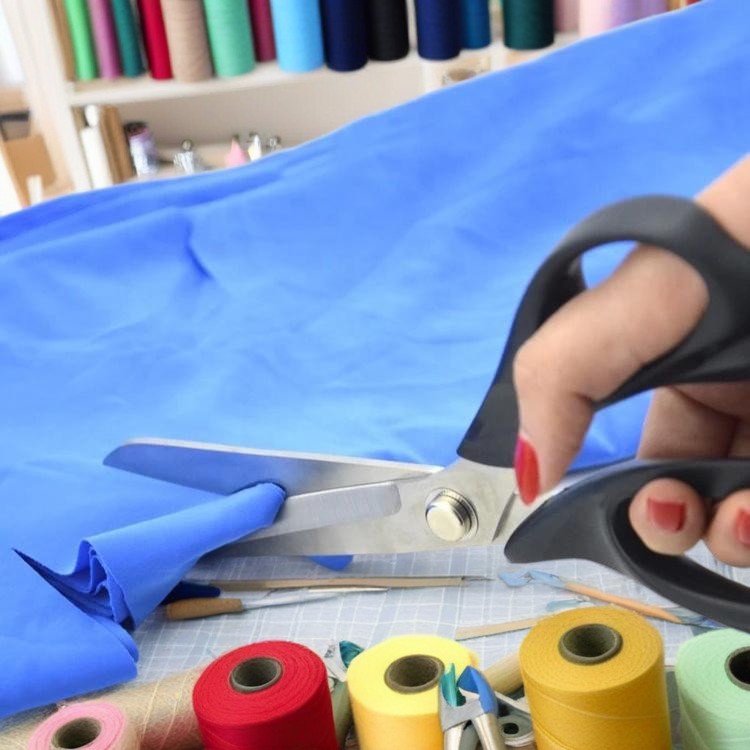
Professional Fabric Scissors: Precision & Durability
Professional fabric scissors are a basic but important tool for tailoring shops, sewing studios, garment sampling rooms, craft brands, and distributors serving textile users. A poor pair of scissors can drag fabric, leave uneven edges, or increase hand fatigue during repetitive cutting. A well-chosen pair supports cleaner cuts, more consistent work, and better comfort over long sessions.
This guide explains how to evaluate professional fabric scissors from both a product-selection and B2B sourcing perspective. It is especially useful for buyers comparing a custom fabric scissors factory, wholesale supplier, or OEM partner. Rather than focusing only on appearance, buyers should consider blade material, cutting feel, handle comfort, fabric compatibility, packaging options, and the questions that should be answered before placing an order.
Why Professional Fabric Scissors Matter
Fabric behaves differently from paper, plastic sheet, or packaging material. Delicate silks can shift easily, cottons may require a steady full-length cut, and soft jerseys can stretch if pulled by a dull edge. Professional fabric scissors are intended to help users cut textiles with control and accuracy. For tailors and sewing teams, this affects seam alignment, pattern matching, and material waste.
The original product description highlights professional fabric scissors designed for precision and durability, with stainless steel blades and an ergonomic design. Those are useful starting points, but buyers should still verify how the scissors perform with the fabrics and cutting volume they expect in daily use.
Key Takeaways
- Choose fabric scissors based on cutting performance, comfort, and intended textile types, not appearance alone.
- Stainless steel blades are mentioned in the source product, but buyers should ask suppliers for full material and hardness details.
- Ergonomic handles can reduce strain, especially for tailoring, sampling, and classroom use.
- B2B buyers should confirm OEM options, packaging, inspection process, lead time, and after-sales handling before ordering.
- Fabric scissors should be kept for fabric only to protect the cutting edge.
What to Look for in Durable Fabric Scissors
Durability is not only about how long the scissors last. It also includes how consistently they cut over time and whether they remain comfortable through repeated use. When reviewing samples, buyers should inspect the blade alignment, pivot smoothness, edge consistency, handle fit, and finish quality.
For fabric scissors with stainless steel blades, ask the supplier what stainless steel type is used, whether the blades are heat treated, and how edge sharpness is checked. If the supplier cannot provide technical details, request physical samples and run your own cutting trials. For distributors, sample testing is important because customer expectations may vary between hobby sewing, professional tailoring, and industrial support use.
Comparison Checklist for Buyers
| Evaluation point | What to check | Questions to ask a supplier |
|---|---|---|
| Blade quality | Clean cutting from tip to base, no snagging or crushing | What blade material is used? How is sharpness inspected? |
| Handle comfort | Grip shape, finger clearance, comfort during repeated cuts | Are different handle sizes or colors available for OEM orders? |
| Fabric compatibility | Performance on silk, cotton, jersey, and other target textiles | Which fabrics has the model been designed or tested for? |
| Pivot and tension | Smooth opening and closing without looseness | Can tension be adjusted? How is pivot consistency controlled? |
| Packaging | Protection during shipping and clear retail presentation | What packaging formats can be supplied for wholesale or retail? |
| OEM support | Logo, color, label, instruction card, or assortment options | What customization options are available and what details affect MOQ? |
Using Fabric Scissors Across Different Textiles
A versatile pair of fabric scissors should cut common textiles without forcing the user to press too hard. The original article refers to use on delicate silks, sturdy cottons, and soft jerseys. These three categories are a good starting point for testing because they expose different problems: silk can slip, cotton can show uneven cutting lines, and jersey can stretch or curl.
When testing scissors, do not only cut a short sample strip. Use realistic cutting motions: long straight cuts, small curves, notches, and cuts at the blade tip. A professional user often needs control in tight areas, not just long straight-line cutting. If the tip cannot cut cleanly, the scissors may be less suitable for pattern work and detail trimming.
B2B Sourcing Guidance: Factory, Supplier, or OEM Partner
For wholesale buyers and private-label brands, sourcing professional fabric scissors requires more than choosing a photo from a catalog. A custom fabric scissors factory or supplier should be able to explain available models, customization limits, packaging choices, and inspection standards. However, buyers should avoid assuming capabilities that have not been confirmed in writing.
Before placing an order, ask clear commercial and technical questions:
- What blade material and handle material are used for this exact model?
- Can the supplier provide pre-production samples before bulk production?
- What logo, color, label, or packaging customization is available?
- What is the MOQ for standard goods and for customized versions?
- How are blade sharpness, pivot smoothness, and visual defects inspected?
- What is the expected production lead time after sample approval?
- How are defective items handled after delivery?
- Can the supplier provide product photos, carton details, and packaging artwork requirements?
These questions help reduce misunderstandings and make it easier to compare suppliers fairly. If you are building a product line, consider ordering several sizes or handle styles for evaluation, then collect feedback from actual sewing users before confirming a larger purchase.
How to Care for Professional Fabric Scissors
Even durable fabric scissors require proper care. The most important rule is to reserve them for fabric only. Cutting paper, cardboard, plastic, wire, or adhesive materials can dull the edge or leave residue. In shared workrooms, label fabric scissors clearly so they are not used for general office tasks.
After use, wipe the blades with a dry soft cloth to remove lint and thread dust. Store the scissors closed and protected, especially if they are transported between classrooms, workshops, or trade events. If cutting performance changes, check whether the pivot has loosened, whether the blades have residue, or whether the scissors need professional sharpening.
Common Buying Mistakes to Avoid
One common mistake is judging scissors only by weight. Heavier scissors may feel strong, but they are not automatically better for long cutting sessions. Another mistake is choosing the lowest price without sample testing. For professional users, an uncomfortable or inconsistent pair can cost more in wasted fabric and slower work.
B2B buyers should also avoid vague product descriptions. Terms such as “premium,” “professional,” or “high quality” are not enough. Ask for measurable details where possible, request samples, and record feedback from the people who will actually use or sell the scissors.
FAQ
What makes fabric scissors different from regular scissors?
Fabric scissors are designed for cutting textiles cleanly and with control. Regular scissors may crush fibers, snag fabric, or become dull quickly when used on sewing materials.
Can one pair of professional fabric scissors cut all fabrics?
One good pair can handle many common textiles, but performance varies by fabric thickness, weave, and stretch. Buyers should test the scissors on the materials most relevant to their users.
Are stainless steel blades a good choice?
The source product mentions stainless steel blades. Stainless steel can be suitable for fabric scissors, but buyers should ask for the exact material details, edge process, and quality checks before ordering.
What should wholesale buyers confirm before OEM production?
Confirm sample approval, customization options, MOQ, packaging, inspection criteria, lead time, and how defects will be handled. Keep all approved details documented.
How should fabric scissors be maintained?
Use them only for fabric, wipe blades after use, store them safely, and avoid cutting paper or adhesive materials. If cutting becomes uneven, check the pivot and consider sharpening or replacement.
Professional fabric scissors are a practical investment for anyone who cuts textiles regularly. By focusing on cutting quality, comfort, supplier transparency, and proper care, buyers can choose scissors that support accurate work and reliable long-term use.
