




Professional Kitchen Scissors: A Practical Buying Guide
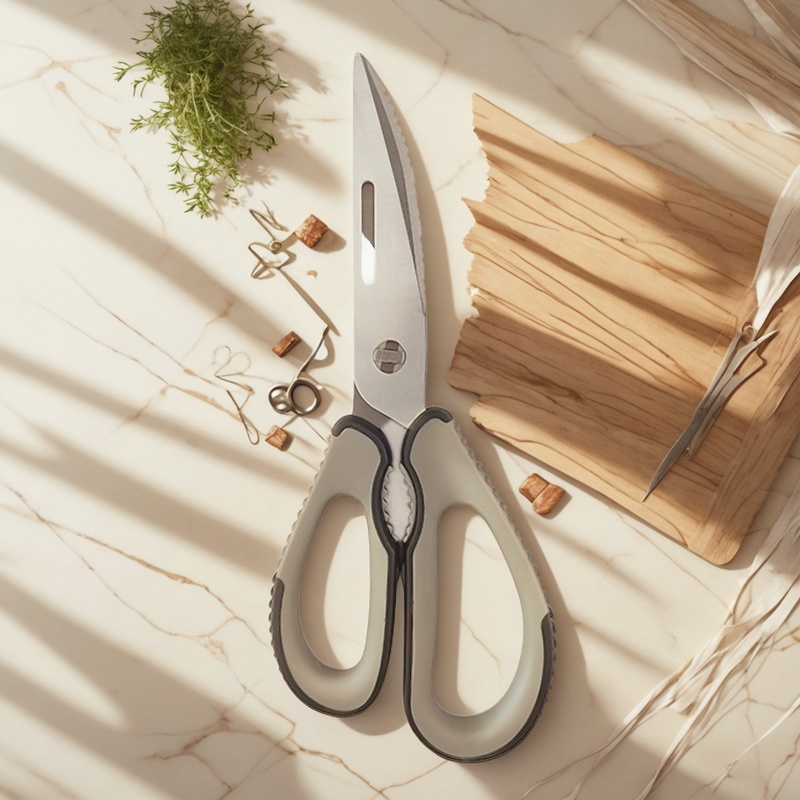
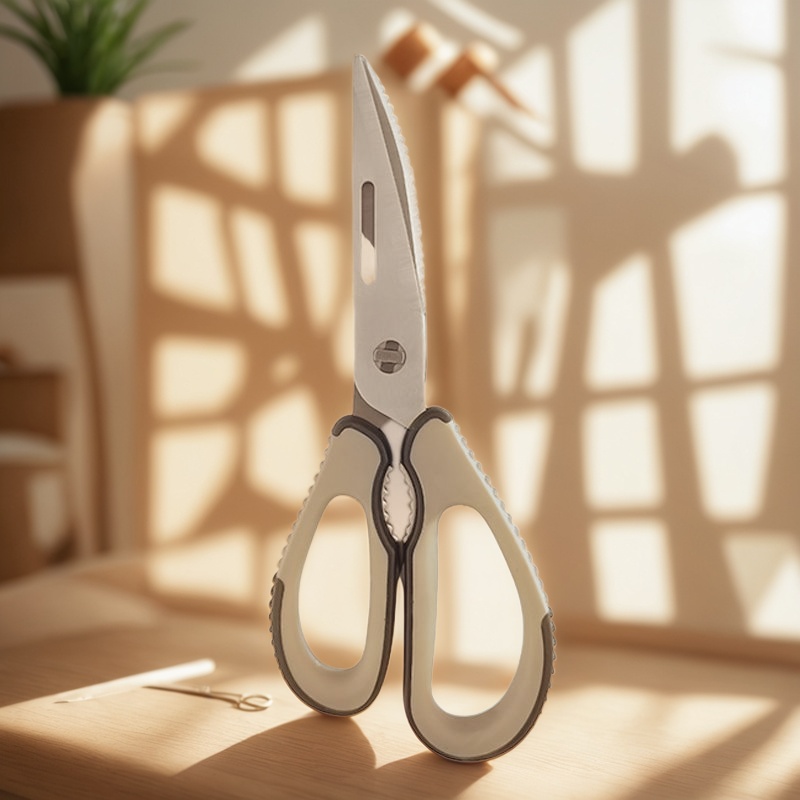
Professional kitchen scissors are useful because they combine quick cutting, controlled trimming, and small preparation tasks in one hand tool. The original product description highlights several practical features: stainless steel blades, a micro-serrated edge, an ergonomic non-slip handle, ambidextrous use, a nutcracker, bottle opener, fish-scaling section, and dishwasher-safe maintenance. Those are meaningful details, but buyers should still evaluate how the scissors perform in real kitchen routines rather than choosing by appearance alone.
This guide explains what to check when selecting professional kitchen scissors for home kitchens, culinary teams, retailers, wholesalers, or OEM sourcing projects. It focuses on performance, usability, care, and supplier due diligence without assuming unverified specifications.
Key Takeaways
- Micro-serrated blades help grip slippery foods such as herbs and raw meats during cutting.
- Stainless steel blades are useful, but buyers should ask the supplier for the exact steel grade and corrosion-resistance details.
- Handle comfort matters for repeat use, especially when hands are wet or oily.
- Multi-function additions such as a nutcracker, bottle opener, and fish scaler are valuable only if they are easy to clean and do not weaken the main cutting function.
- B2B buyers should verify samples, packaging options, lead times, inspection methods, and any applicable compliance documents before placing larger orders.
What Makes Kitchen Scissors Professional?
The word professional should point to reliable cutting, comfortable handling, and maintainable construction. In practice, professional kitchen scissors should cut ingredients cleanly without crushing them, stay controlled in wet conditions, and be simple to clean after contact with raw meat, fish, herbs, or vegetables.
The product described in the source uses precision-engineered stainless steel blades and a micro-serrated edge. A micro-serrated edge is especially useful because it can hold the food surface as the blades close. This reduces slipping when cutting poultry skin, trimming herbs, portioning cooked foods, or preparing raw ingredients. For buyers comparing options, the important question is not just whether a serrated edge exists, but how evenly it is formed and whether the blade alignment remains stable after repeated use.
Blade Design and Cutting Performance
Blade quality determines whether scissors feel efficient or frustrating. Stainless steel is commonly chosen for kitchen tools because it resists rust better than plain carbon steel, but not all stainless steel performs the same. The original article confirms stainless steel blades but does not state the material grade, hardness, coating, or edge-retention test results. A responsible buyer should ask for those details rather than assuming them.
For consumer use, test the scissors on the ingredients you actually prepare: herbs, meat, vegetable stems, packaging, or fish fins. For wholesale or OEM sourcing, request pre-production samples and compare them across several criteria: initial sharpness, blade alignment, smooth opening and closing, edge consistency, and cleaning after oily or fibrous foods.
Comfort, Grip, and Control
The original product information notes an ergonomic handle made from a soft yet durable material with a non-slip grip. This is important because kitchen scissors are often used when hands are wet, when ingredients are slippery, or when quick control is needed. A handle that feels comfortable for one user may feel tight or oversized for another, so the grip opening, finger pressure points, and handle texture should be checked directly.
Ambidextrous design is another useful feature mentioned in the source. For shared kitchens, culinary schools, restaurants, and retail buyers, this can reduce complaints from left-handed users. However, ambidextrous comfort should be tested in practice because blade bevel, handle shape, and thumb pressure can still affect the user experience.
Multi-Function Features: Useful or Unnecessary?
The described scissors include a nutcracker, bottle opener, and serrated section for scaling fish. These extras can reduce the number of small tools needed in a drawer, but they should not interfere with the main cutting job. A bottle opener should be positioned where it is safe to use. A nutcracker section should provide enough leverage without causing uncomfortable hand pressure. A fish-scaling section should be easy to rinse because fish scales and residue can collect in small grooves.
For retail buyers, multi-function features can make a product easier to explain on packaging. For professional kitchens, the priority is still safe, consistent cutting. If the added features make the scissors bulkier, harder to clean, or more difficult to control, a simpler model may be a better choice.
Comparison Checklist for Buyers
| Evaluation Point | What to Check | Why It Matters |
|---|---|---|
| Blade material | Ask for the stainless steel grade and any test information available. | Material affects corrosion resistance, edge retention, and buyer expectations. |
| Micro-serration | Inspect whether serrations are even and grip food without tearing excessively. | Good serration improves control on slippery ingredients. |
| Handle design | Test comfort with dry and wet hands, including left-handed use. | Poor grip increases fatigue and loss of control. |
| Added functions | Try the nutcracker, bottle opener, and fish-scaling section if included. | Extras should add value without reducing safety or cleaning ease. |
| Cleaning | Confirm dishwasher-safe guidance and inspect areas where food can collect. | Kitchen tools need practical hygiene routines. |
| Supplier support | Ask about samples, packaging, labeling, inspection, and lead time. | B2B orders require consistency beyond the first sample. |
Use and Care Guidance
The original description states that the scissors are dishwasher-safe. Even when a tool can go into a dishwasher, users should still remove food residue promptly, open the blades for better rinsing if the design allows it, and dry the scissors after washing. This is especially important after cutting salty, acidic, or protein-rich foods.
- Rinse immediately after contact with raw meat, fish, or sticky ingredients.
- Wash around joints, serrated sections, and multi-function grooves where residue may remain.
- Dry thoroughly before storing to reduce water spots and possible corrosion risk.
- Avoid twisting the blades through hard bones or materials unless the supplier confirms that use case.
- Store away from loose contact with knives or heavy utensils that may damage the edge.
B2B Sourcing Questions for Wholesale and OEM Buyers
Because the original article references a kitchen scissors factory in China and Yangjiang, B2B buyers should approach sourcing with clear verification steps. Yangjiang is widely associated with kitchen knives and cutting tools, but supplier capability still varies. Do not assume capacity, certification, MOQ, or testing results unless the supplier provides documentation.
Before confirming an order, ask practical questions: What stainless steel grade is used? Can the supplier provide a sample from current production? What handle material is used? Are color, logo, and packaging customization available? What are the MOQ, unit packing details, carton dimensions, production lead time, and inspection process? Which compliance documents can be provided for the target market? How are sharpness, alignment, and appearance checked before shipment?
For larger purchasing programs, compare at least two samples under the same conditions. Cut herbs, poultry skin, vegetable stems, packaging film, and cooked food. Wash and dry the scissors several times. Then review whether the handle remains comfortable, the blades stay aligned, and the finish looks consistent.
FAQ
Are professional kitchen scissors only for chefs?
No. They are useful in home kitchens, catering operations, food preparation areas, and retail product lines. The key is choosing a model that matches the intended cutting tasks.
Why choose a micro-serrated edge?
A micro-serrated edge helps grip slippery foods while cutting. This can improve control when cutting herbs, raw meats, fish, or vegetable stems.
Can these scissors replace a knife?
They can replace a knife for some quick trimming and portioning tasks, but they should not replace proper knives for all cutting jobs. Use the tool that gives the best control and food safety for the task.
What should wholesalers verify before ordering?
Wholesalers should verify samples, material details, packaging, labeling options, MOQ, lead time, inspection methods, and any compliance documents required for their market.
How should kitchen scissors be cleaned?
Follow the supplier's care instructions. Since the source states dishwasher-safe maintenance, dishwasher cleaning may be suitable, but rinsing promptly and drying thoroughly remain good habits.
