




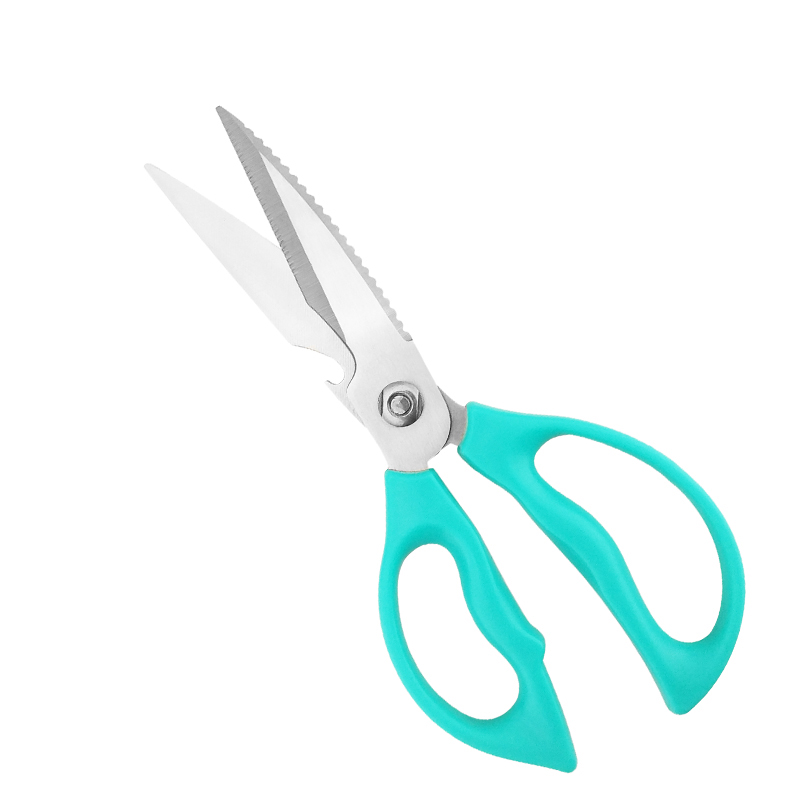
Professional Kitchen Scissors: Precision & Comfort
Professional kitchen scissors are small tools, but they influence many daily kitchen tasks: trimming herbs, opening food packaging, portioning poultry, cutting parchment, and handling prep work that is awkward with a knife. For retailers, wholesalers, and OEM buyers, the same product also raises sourcing questions: how consistent is the cutting action, how comfortable is the handle, and what quality checks should be discussed before placing an order?
This guide rewrites the original review into a practical selection and sourcing article. The reviewed product was presented as a pair of multi-purpose stainless steel kitchen scissors with ergonomic plastic handles, an ambidextrous grip, and a screw pivot mechanism. Those details are useful starting points, but buyers should still confirm final specifications, packaging, compliance needs, and quality standards directly with the supplier.

Key Takeaways
- Good kitchen scissors should cut cleanly, feel stable in the hand, and open and close smoothly without blade wobble.
- Stainless steel blades are commonly chosen for kitchen use, but buyers should ask about the exact grade, hardness target, and corrosion-resistance testing.
- Handle comfort matters for repeated prep tasks, especially when cutting poultry, herbs, packaging, or thicker food materials.
- For OEM or wholesale orders, confirm samples, branding options, inspection criteria, packaging, lead time, and after-sales handling before approval.
- Do not rely only on appearance; test sharpness, pivot tension, cleaning convenience, and grip comfort under realistic kitchen conditions.
What Makes Kitchen Scissors Professional?
The word professional should mean more than a heavier look or a polished product photo. In practical terms, professional kitchen scissors should deliver repeatable cutting performance, safe handling, and reliable assembly. The blades need to meet accurately along the cutting edge, the pivot should hold tension without feeling stiff, and the handle should allow a firm grip even when hands are slightly wet.
The original article highlighted blade quality, ergonomic comfort, and precision engineering. Those are the right areas to examine. A buyer evaluating stainless steel kitchen shears should not stop at a short description, however. Ask for a sample and test it on common use cases: scallions, herbs, chicken skin, thin cardboard packaging, parchment paper, and plastic food pouches. A good pair should not crush delicate herbs, slip on smooth packaging, or twist under moderate pressure.
Blade Quality and Cutting Performance
The source article described the blades as stainless steel and focused on durability and long-lasting sharpness. Stainless steel is a sensible material category for kitchen environments because scissors may contact moisture, acidic foods, and frequent washing. Still, stainless steel is not one single material. Commercial buyers should ask the supplier to specify the steel grade used, the heat-treatment process if applicable, and the target hardness range. If those details are not available, request a clear explanation of what quality control is used instead.
Cutting quality depends on several factors working together. Edge geometry affects sharpness. Blade alignment affects whether the scissors cut to the tip or fold material between the blades. Pivot tension influences both smoothness and control. For B2B sourcing, it is useful to define inspection points in advance: visual finish, blade edge consistency, opening and closing feel, screw tightness, and cutting tests using agreed materials.
Handle Comfort and User Control
The original review noted ergonomic handles made with soft-touch, durable plastic and an ambidextrous handle design. These are valuable features when the scissors will be used by different people in a home kitchen, restaurant prep area, or retail customer base. A comfortable handle reduces strain during repeated cuts and helps users keep better control when working with slippery foods or packaging.
When reviewing samples, check the handle opening size, edge smoothness, and grip texture. Some handles look comfortable but create pressure points at the thumb or finger loop. Others feel fine for a few cuts but become tiring during longer prep tasks. If the scissors are intended for a wide consumer market, left- and right-hand comfort should be tested by actual users rather than assumed from the product drawing.
Pivot Mechanism and Build Consistency
The reviewed scissors were described as using a screw pivot mechanism. A screw pivot can be helpful because it controls how the blades move against each other. The best result is a smooth opening and closing action with enough tension to keep the blades aligned. If the screw is too loose, the cut may feel unstable. If it is too tight, the scissors can become tiring to use.
For OEM kitchen scissors or custom scissors production, pivot consistency is a key quality issue. Ask how pivot tension is checked during production and whether adjustment is possible during final inspection. Buyers may also want to confirm whether the screw type, finish, and corrosion resistance meet the intended market requirements. These are not details to guess; they should be included in the sample approval and production specification process.
Comparison Checklist for Buyers
| Evaluation Area | What to Check | Questions to Ask a Supplier |
|---|---|---|
| Blade material | Stainless steel description, edge finish, corrosion resistance | What steel grade is used, and what tests support the material claim? |
| Cutting action | Smooth movement, clean cut to the tip, no material folding | What standard cutting tests are performed before shipment? |
| Handle design | Grip comfort, loop size, texture, left- and right-hand usability | Can sample handles be tested by different users before tooling approval? |
| Pivot assembly | Screw tightness, blade alignment, long-term stability | How is pivot tension inspected, and what tolerance is acceptable? |
| OEM packaging | Branding space, retail card, instructions, barcode needs | What packaging options are available, and what information must the buyer provide? |
OEM and Wholesale Sourcing Guidance
Because the original article mentioned OEM kitchen scissors, Yangjiang scissors factory expertise, and custom scissors production, sourcing guidance is important. Yangjiang is widely associated with cutlery and hardware manufacturing, but buyers should still evaluate each supplier individually. A factory location does not replace sample testing, documentation review, and clear purchase specifications.
Before confirming a wholesale or OEM order, prepare a written requirement sheet. Include intended market, target retail price range if relevant, blade and handle requirements, packaging format, labeling language, carton requirements, inspection method, and sample approval process. If the product will be sold in a regulated market, ask the supplier what documents they can provide and verify whether those documents match your importer or retailer obligations. Do not assume certifications, food-contact compliance, or testing results unless they are supplied and verified.
Use and Care Tips for End Users
Even well-made kitchen scissors last longer when used correctly. Keep them for food prep and light kitchen tasks rather than hard wire, bones beyond their intended capacity, or non-kitchen materials that may damage the edge. Wash after contact with raw meat or sticky ingredients, then dry thoroughly before storage. If the scissors have a screw pivot, check occasionally that the pivot remains secure and that the blades still meet cleanly.
- Rinse and wash soon after use, especially after cutting poultry, herbs, or oily packaging.
- Dry the blades and pivot area before placing the scissors in a drawer.
- Store with the blades closed to reduce edge damage and improve safety.
- Use a dedicated pair for food rather than mixing kitchen and household cutting tasks.
Practical FAQ
Are stainless steel kitchen scissors always rustproof?
No. Stainless steel is more corrosion resistant than many carbon steels, but performance depends on the grade, finish, care, and environment. Buyers should ask for the exact material information and any relevant corrosion testing.
What should OEM buyers test in a sample?
Test cutting performance, blade alignment, pivot tension, handle comfort, surface finish, packaging fit, and cleaning convenience. Use the same test materials that reflect real customer use.
Is an ambidextrous handle important?
It can be important for general retail, hospitality, and shared kitchens because different users may handle the same tool. The design should still be tested for comfort by both left- and right-handed users.
What information should be confirmed before a wholesale order?
Confirm product specifications, sample approval, branding, packaging, inspection standards, lead time, carton details, payment terms, and what happens if goods do not meet the agreed quality level.
How can users keep kitchen scissors sharp longer?
Use them on suitable kitchen materials, clean and dry them after use, avoid twisting cuts, and store them safely. If cutting performance declines, ask whether the model can be sharpened or adjusted.
