




Professional Kitchen Scissors: A Practical Guide for Kitchens and Buyers
Professional kitchen scissors are one of the simplest tools in a kitchen, yet they often handle jobs that knives, peelers, and utility cutters do less conveniently. A good pair can snip herbs, open food packaging, portion poultry skin, trim parchment, cut twine, and help with many small prep tasks. For home cooks, the goal is comfort, safety, and easy cleaning. For retailers, distributors, and OEM buyers, the goal is to understand which features matter before discussing samples, packaging, and commercial terms with a supplier.
What Makes Kitchen Scissors Different from Ordinary Scissors?
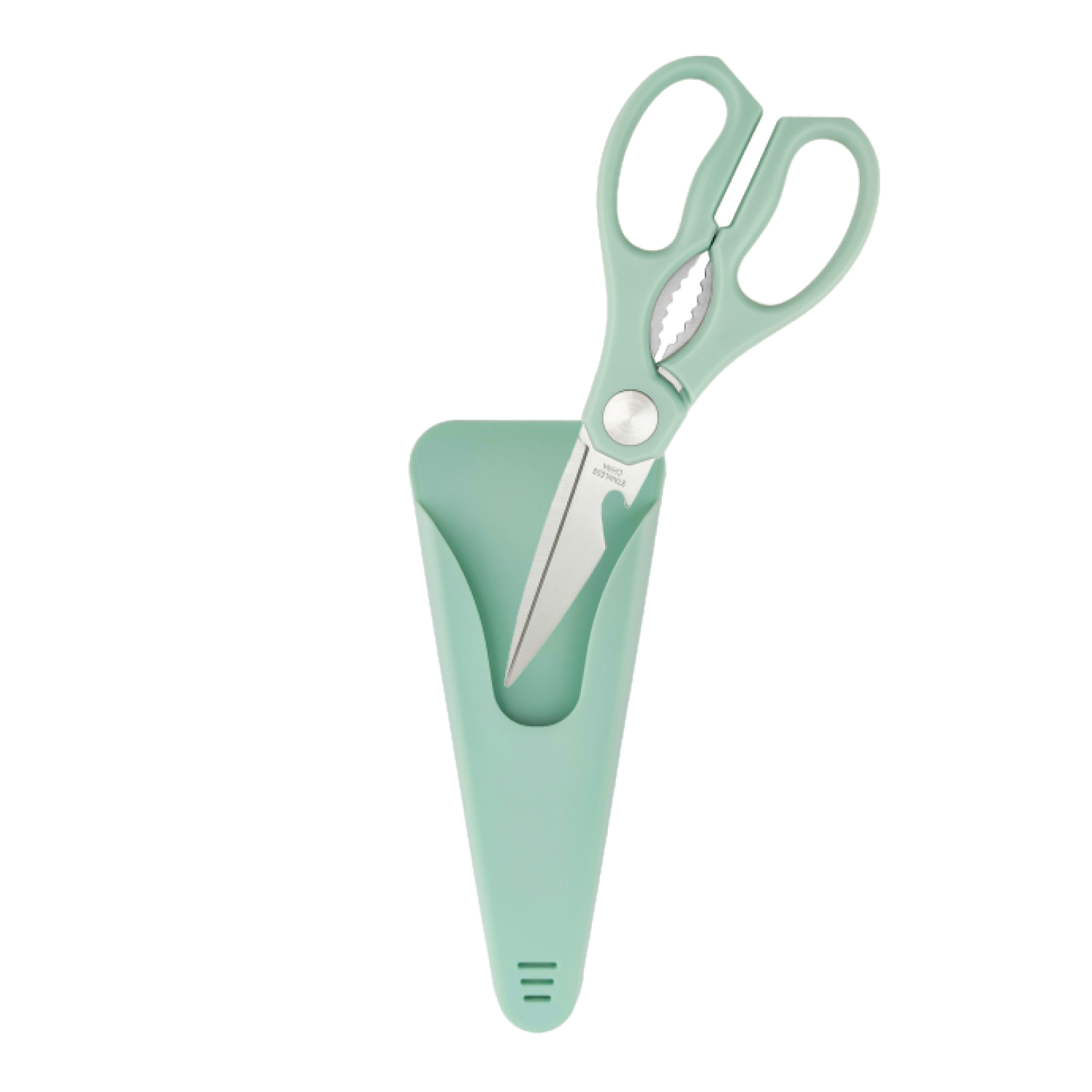
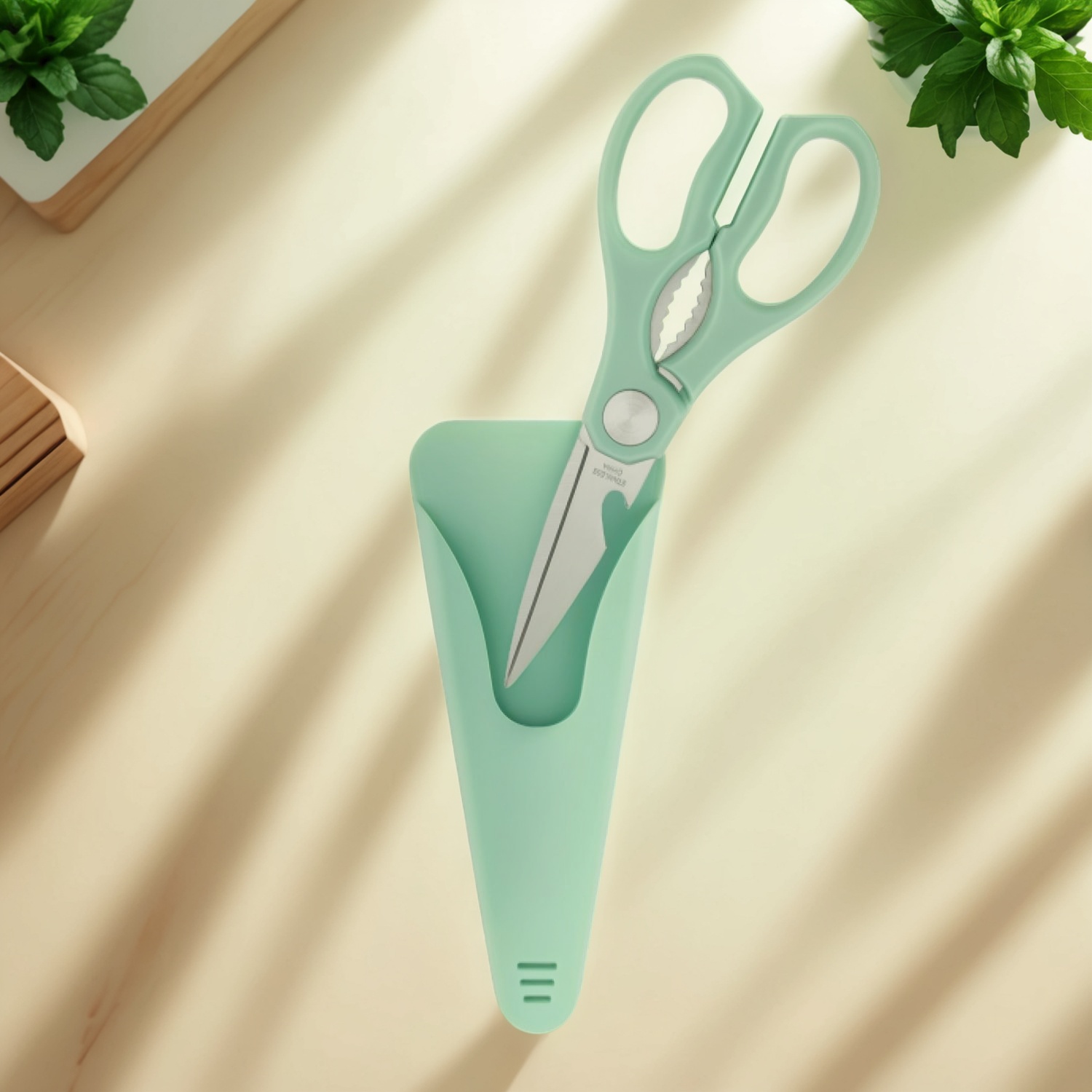
Kitchen scissors are designed for food-preparation environments rather than paper, fabric, or office use. The original product description highlights high-quality stainless steel, corrosion resistance, ergonomic handles, a serrated blade section, and a protective sheath. These are useful details because kitchen tools are exposed to moisture, oil, salt, and repeated washing. A blade that feels sharp on day one is only part of the story; the tool also needs to be comfortable, stable in the hand, and simple to store safely.
Unlike a chef’s knife, scissors cut from two directions at once. That makes them convenient for quick, controlled cuts: trimming herbs directly into a bowl, cutting open vacuum packs, or snipping cooked noodles for serving. They are not a full replacement for knives, but they reduce the number of times you need to switch tools during everyday prep.
Key Takeaways
- Choose kitchen scissors based on blade quality, grip comfort, cleaning access, and safe storage, not appearance alone.
- Stainless steel construction and corrosion resistance are practical advantages in wet kitchen environments.
- Ergonomic handles help reduce hand fatigue during repetitive cutting tasks.
- A serrated section can add utility for tasks such as gripping slippery materials, opening caps, or cracking nuts where the design supports it.
- Wholesale and OEM buyers should request samples and confirm materials, packaging, labeling, compliance needs, and quality-control procedures with the supplier.
Common Uses in Daily Food Preparation
Professional kitchen scissors are most useful when speed and control matter. They can cut herbs without bruising them as much as repeated chopping, trim fins or small bones from fish, open sealed ingredient bags, cut parchment to fit baking trays, and remove kitchen twine from roasted meats. In family kitchens, they are also practical for cutting pizza slices, cooked vegetables, noodles, or children’s food into smaller portions.
The serrated section mentioned in the original article is a helpful detail. Serrations can improve grip on smooth or rounded items and may assist with functions such as opening bottle caps or cracking nuts, depending on the exact design. Users should still apply common sense: if a task requires excessive force, a dedicated opener, nutcracker, or knife may be safer.
Comparison Checklist: Features to Review Before Buying
| Feature | Why It Matters | What to Check |
|---|---|---|
| Blade material | Impacts sharpness, corrosion resistance, and service life. | Ask what stainless steel is used and how it is finished. |
| Handle design | Affects comfort, grip security, and control during repeated cuts. | Test with both dry and slightly wet hands if possible. |
| Serrated section | Adds grip and may support cap-opening or nut-cracking tasks. | Confirm the intended use and avoid forcing unsuitable tasks. |
| Cleaning access | Food residue can collect around the pivot and handle joints. | Review washing instructions and whether parts are easy to rinse. |
| Protective sheath | Reduces accidental contact and protects the blade edge in drawers. | Check that the sheath fits securely and is easy to remove. |
How to Use Kitchen Scissors Safely
Safety starts with choosing the correct cutting motion. Keep fingers away from the blade path, cut on stable ingredients, and avoid twisting the scissors while cutting tough material. If the scissors begin to slip, stop and reposition rather than applying more pressure. For poultry, seafood, or other raw ingredients, separate food-prep tasks from packaging tasks when possible, then clean the scissors thoroughly before using them again.
- Use the full blade length for longer cuts and the blade tips for small, precise snips.
- Dry your hands before cutting slippery packaging or oily ingredients.
- Do not leave sharp scissors loose in a sink where someone may reach in blindly.
- Store the scissors in the included sheath when placing them in a drawer.
Cleaning, Drying, and Storage Tips
Because kitchen scissors come into contact with food, cleaning should be routine rather than occasional. Rinse away residue soon after use, especially after cutting salty, acidic, oily, or protein-rich foods. Use mild dish soap and warm water, paying attention to the pivot area and any serrated sections where small particles can remain. After washing, dry the blades and handles completely before storage to support corrosion resistance and keep the tool ready for the next use.
The protective sheath described in the original article is useful for both safety and blade care. A sheath helps prevent the edge from hitting other utensils in a drawer. If the sheath becomes wet or dirty, clean and dry it too; storing a clean blade in a damp cover can still create hygiene and maintenance problems.
Guidance for OEM, Wholesale, and Supplier Buyers
For B2B buyers sourcing kitchen scissors, product appearance should be evaluated together with documentation and repeatability. Before placing an order, ask the supplier for product samples and compare them across several criteria: cutting feel, handle comfort, blade alignment, pivot smoothness, sheath fit, packaging durability, and consistency between units. Do not assume commercial details such as MOQ, lead time, private-label options, certificates, or test reports unless the supplier confirms them in writing.
Useful questions to ask a kitchen scissors supplier include:
- What stainless steel grade and handle material are used?
- Can the supplier provide material, safety, or compliance documents required for the target market?
- What packaging options are available for retail, e-commerce, or bulk distribution?
- How are blade sharpness, alignment, and surface finish checked during quality control?
- Can branding, color, sheath design, or instructions be customized, and what are the conditions?
This approach helps buyers compare suppliers on verifiable information instead of relying only on catalog images or general claims.
FAQ: Professional Kitchen Scissors
Can kitchen scissors replace a chef’s knife?
No. They are best viewed as a complementary tool. Scissors are convenient for snipping, trimming, and opening packaging, while knives remain better for slicing, dicing, and chopping larger ingredients.
Are stainless steel kitchen scissors rust-proof?
Stainless steel offers corrosion resistance, but no kitchen tool should be left wet, dirty, or stored in a damp cover. Wash and dry the scissors after use to maintain performance.
What is the purpose of a sheath?
A sheath protects hands from accidental contact with the blades and helps prevent the cutting edge from being damaged by other utensils in a drawer.
How should B2B buyers evaluate samples?
Test cutting performance, grip comfort, blade alignment, pivot smoothness, washing access, packaging, and consistency. Also ask the supplier to confirm materials, compliance documents, customization options, and order terms.
When should kitchen scissors be replaced?
Replace them if the blades no longer cut cleanly, the pivot becomes unstable, corrosion cannot be removed safely, or the handles crack or become uncomfortable to use.
