




Professional Tailoring Scissors: Choosing Polka Dot Scissors for Precise Sewing Work
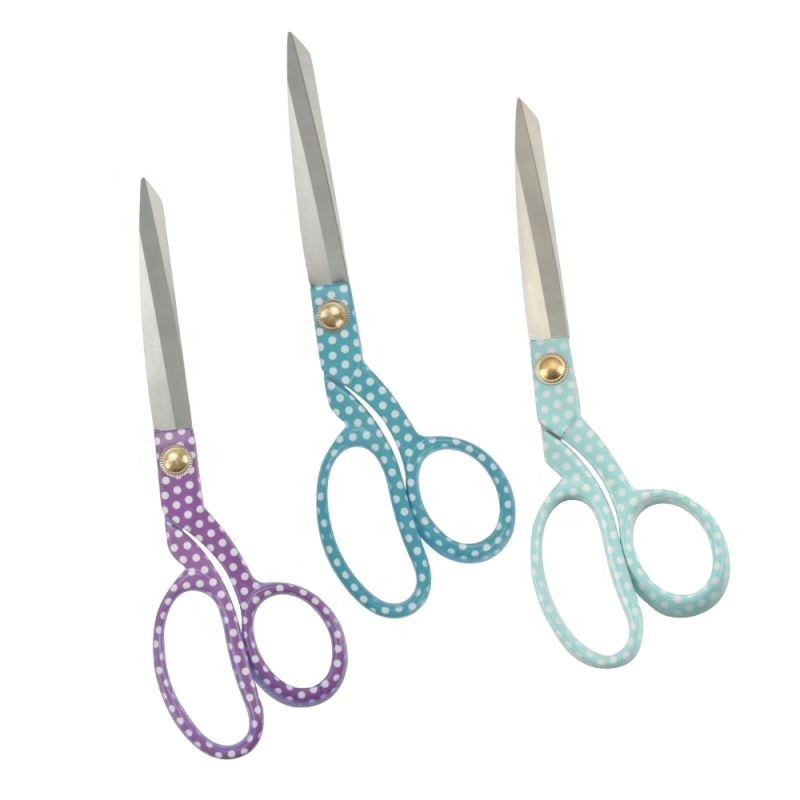
Professional tailoring scissors are one of the most frequently used tools in a sewing room, sample workshop, craft studio or home tailoring kit. A good pair should cut smoothly, feel controlled in the hand and help you follow pattern lines without chewing the fabric edge. The polka dot tailoring scissors described in the original product article combine stainless steel blades, ergonomic handles, purple and blue coloring with white polka dots, and a gold-toned pivot. This guide explains how to evaluate scissors like these in a practical way before you buy, and how to use and care for them so they remain dependable over time.
Key Takeaways
- Choose tailoring scissors based on blade control, handle comfort, cutting task and maintenance needs, not appearance alone.
- Stainless steel blades are suitable for many sewing and craft tasks, but buyers should still ask about sharpening, hardness and intended materials.
- Ergonomic handles can reduce strain during repeated cutting, especially in pattern cutting and long sewing sessions.
- Use one dedicated pair for fabric when possible; paper, cardboard and adhesive materials can dull edges faster.
- For wholesale or OEM sourcing, confirm samples, packaging, inspection criteria and customization options before placing an order.
What Makes Tailoring Scissors Different?
Tailoring scissors are designed for controlled cutting over longer lines than small craft scissors or embroidery snips. They are commonly used to cut fabric panels, trim seam allowances, shape pattern pieces and prepare craft materials. The key difference is balance: the blades need to be sharp enough to cut cleanly, while the handle must allow steady pressure without twisting the wrist.
The polka dot scissors in the source article are presented as professional tailoring scissors for sewing and crafting. Their stated features include stainless steel blades, ergonomic handles, purple and blue color options with white polka dots, and a gold-toned pivot. These features point to a tool intended to be both functional and visually distinctive. However, appearance should support the buying decision rather than replace careful assessment of comfort and cutting performance.
Blade Material and Cutting Performance
The original article states that these scissors use stainless steel blades. Stainless steel is commonly chosen for scissors because it resists corrosion better than many plain carbon steels and is appropriate for regular household and workshop environments. For sewing users, the practical questions are how cleanly the blades cut, how well the edge holds up, and whether the tips can reach corners and small curves without snagging.
Before choosing any professional tailoring scissors, test them on the materials you actually use. Lightweight cotton, denim, felt, lining fabric, interfacing, paper templates and heat-transfer materials can behave differently under the same blade. A pair that feels smooth on thin fabric may require more effort on thicker layers. If you are buying for a business, request a sample and create a simple cutting test for your team: straight lines, curves, notches and layered cuts.
Handle Comfort and Ergonomics
The source article describes ergonomic handles, which is an important feature for anyone who cuts for more than a few minutes at a time. A comfortable handle spreads pressure across the fingers and thumb, reduces rubbing, and helps the hand remain stable during long cuts. This matters for dressmakers, crafters, sample makers and classroom users who may repeat the same cutting movement many times.
Handle fit is personal. Users with larger hands may need a roomier grip, while users with smaller hands may prefer a lighter tool that is easier to open and close. If possible, check the handle opening, the surface texture and the way the scissors sit when resting on a table. Ergonomics should make cutting easier, not simply add a decorative shape.
Style: When Polka Dots Are More Than Decoration
The purple and blue colors with white polka dots give these tailoring scissors a recognizable look. In a busy sewing room, distinctive handles can help prevent tools from being mixed up. In a retail setting, a bold design can also help the product stand out on a display wall or in a sewing kit. For personal users, the benefit may be simple: tools that are easy to identify are less likely to be misplaced.
Still, style should be weighed alongside real use requirements. The gold-toned pivot adds a finished visual detail, but the important functional questions are whether the pivot feels stable, whether the blades open smoothly, and whether there is excessive side-to-side movement. A visually appealing pair of scissors should still be judged by cutting feel and consistency.
Comparison Checklist for Selecting Sewing Scissors
| Selection Point | What to Check | Why It Matters |
|---|---|---|
| Blade material | Confirm stainless steel and ask how the edge should be maintained. | Helps match the scissors to daily sewing and craft tasks. |
| Cutting test | Try straight cuts, curves, notches and layered materials. | Shows whether the scissors work for your actual projects. |
| Handle comfort | Check grip size, pressure points and control during repeated use. | Reduces fatigue and improves accuracy. |
| Pivot stability | Open and close the scissors and look for smooth movement. | A stable pivot supports clean cutting and alignment. |
| Visual identification | Consider color, polka dots and labeling options. | Useful in shared studios, schools and retail kits. |
| Supplier questions | Ask about samples, packaging, inspection and customization. | Important for wholesale, OEM or bulk purchasing decisions. |
How to Use Tailoring Scissors Correctly
Even good scissors can perform poorly if they are used for the wrong task. For clean fabric edges, keep the lower blade in contact with the cutting surface and guide the fabric rather than lifting it high into the air. Open the blades fully for long straight cuts, then use shorter controlled snips for curves, corners and small details.
- Reserve one pair for fabric whenever possible.
- Cut on a stable, clean surface so the fabric does not pull or stretch.
- Avoid forcing the blades through too many layers if resistance feels excessive.
- Wipe the blades after cutting fuzzy, coated or adhesive-backed materials.
- Store the scissors closed and away from loose items that can damage the edge.
If the scissors begin folding fabric instead of cutting it, or if you hear scraping from the blades, stop and inspect them. The issue may be dullness, residue, a loose pivot or simply a material that requires a different cutting tool.
Care and Storage for Longer Service
Regular care is simple but important. Keep the blades clean and dry, especially after use in humid environments. A soft cloth is usually enough for routine wiping. If residue builds up from craft materials, remove it carefully according to the material involved; avoid harsh treatment that could damage the blade surface or handle finish.
Do not drop tailoring scissors into a drawer with pins, clips and metal rulers. Contact with hard objects can nick the edge or affect alignment. A sleeve, pouch or dedicated storage slot helps protect the blades. If sharpening becomes necessary, use a qualified sharpening service or ask the supplier what method is recommended for the specific scissors.
Guidance for Wholesale and OEM Buyers
For distributors, sewing kit brands, craft retailers or promotional buyers, the purchasing process should include more than a product photo. The original article notes that the scissors are crafted in China, but commercial details such as minimum order quantity, packaging, customization, testing and delivery terms are not provided. These should be confirmed directly with the supplier.
Before placing a bulk order, ask clear questions: Can samples be provided for cutting tests? What packaging formats are available? Can handle colors or branding be customized? What inspection standard is used for blade alignment, pivot function and surface finish? How are defective units handled? Are there documents available for the target market’s import or retail requirements? These questions help prevent misunderstandings and make it easier to compare suppliers fairly.
Practical FAQ
Are stainless steel tailoring scissors suitable for fabric?
Yes, stainless steel blades can be suitable for many sewing and craft fabrics. Performance still depends on edge quality, blade alignment and the type and thickness of material being cut.
Should I use the same scissors for paper and fabric?
It is better to keep a dedicated pair for fabric. Paper, cardboard and adhesive-backed materials can dull the cutting edge faster and may reduce fabric-cutting accuracy.
Do ergonomic handles really matter?
They matter if you cut often or for long periods. A comfortable handle can reduce pressure on the hand and improve control, especially during repetitive pattern cutting.
What should bulk buyers check before ordering?
Bulk buyers should request samples, confirm packaging, ask about customization options, review inspection criteria and clarify commercial terms directly with the supplier.
How do I know when scissors need sharpening?
Common signs include fabric folding between the blades, ragged edges, increased hand effort or inconsistent cutting near the tips. At that point, cleaning, adjustment or sharpening may be needed.
