




Pumpkin Carving Knife Factory: Sourcing Guide for Seasonal Kitchen Tools
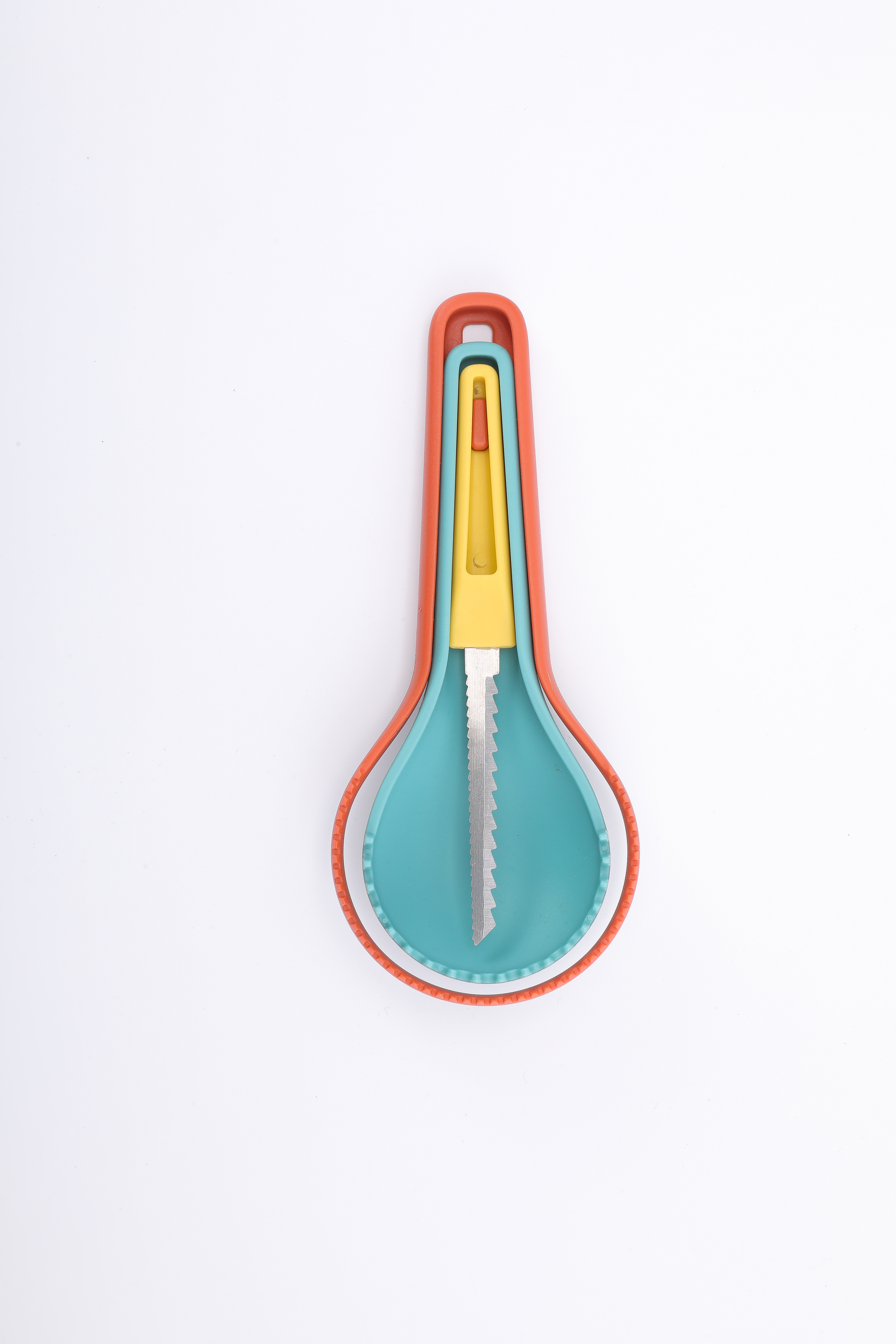
Pumpkin carving is seasonal, but sourcing the right tool set is a year-round commercial decision. Retailers, importers, promotional buyers, and kitchenware brands often need products that are practical for autumn displays while still useful enough to avoid feeling like one-time novelty items. The original concept behind this product is a compact, multi-functional kitchen gadget set with a bright tri-color look in aqua blue, yellow, and coral, a collapsible nesting design, and an integrated serrated-edge knife described as stainless steel. For buyers, the key question is not only whether the item looks attractive, but whether a pumpkin carving knife factory can deliver consistent quality, safe handling, appropriate packaging, and reliable communication before peak season.
Key Takeaways
- A pumpkin carving knife program should be evaluated as both a seasonal item and a kitchen tool, especially when it is part of a multi-functional set.
- Confirm material, blade construction, handle security, packaging, labeling, and intended use with the supplier instead of assuming specifications.
- Ask for production samples, packaging mockups, and written answers to compliance and quality-control questions before placing a larger order.
- For OEM or wholesale projects, plan early because Halloween and autumn retail programs leave little room for late corrections.
What Buyers Should Expect from a Pumpkin Carving Knife Factory
A suitable factory should be able to explain how the product is made, how blades are protected, and how each unit is checked before shipment. A pumpkin carving knife is often used by families, so buyers should pay close attention to edge exposure, handle grip, storage design, and instructions. If the design includes a blade that tucks into the main handle or nests with other tools, ask how the mechanism is tested for fit and stability.
Because the source product describes a collapsible, ergonomic structure, buyers should request actual samples rather than relying only on renderings. Open and close the set repeatedly. Check whether the tools nest smoothly, whether the blade remains secure, and whether the product still feels stable after repeated handling. A space-saving design is valuable only when it remains easy to use and safe to store.
Product Design: Seasonal Appeal Versus Everyday Use
Seasonal products can sell well when they are visually clear on the shelf. The tri-color design described in the original article gives the set a cheerful, easy-to-spot appearance. However, color alone should not drive purchasing decisions. Buyers should consider whether the product can be merchandised beyond pumpkin carving, such as for basic kitchen preparation, fruit cutting, or general household use, depending on the supplier's confirmed intended use.
Multi-functional sets can reduce drawer clutter and improve perceived value, but they also require careful review. More moving parts and nested components can create more points of failure. When evaluating a design, ask whether each tool has a clear purpose, whether the consumer can understand the set without a long explanation, and whether packaging shows storage and handling clearly.
Material and Safety Questions to Ask
The original article states that the knife uses a serrated-edge blade crafted from stainless steel. Buyers should still verify the exact material information with the supplier, including grade, thickness, edge type, corrosion resistance expectations, and cleaning instructions. Do not assume that all stainless steel performs the same way in household use.
For the handle and nesting components, request the material name, color process, heat tolerance guidance if relevant, and whether the supplier has documentation for the target market. If the product will be sold in a specific country or region, ask what labeling, warning statements, and packaging requirements apply. A factory may offer helpful guidance, but final compliance responsibility should be reviewed by the buyer's qualified team or third-party adviser.
Factory Evaluation Checklist
Before selecting a pumpkin carving knife manufacturer or wholesale supplier, compare candidates using practical criteria. The following checklist can be adapted for a sourcing file, supplier audit, or sample review meeting.
| Evaluation Area | What to Check | Questions to Ask the Supplier |
|---|---|---|
| Blade and edge | Serration quality, sharpness consistency, secure placement, protective storage | What is the confirmed blade material and how is edge quality inspected? |
| Handle and nesting design | Fit, grip comfort, collapsible function, stability after repeated use | How many sample cycles have been reviewed for opening, closing, and storage? |
| Packaging | Retail display, instructions, warnings, barcode area, protection in transit | Can you provide a packaging mockup and drop-test or transit-packaging details if available? |
| OEM options | Color, logo placement, packaging artwork, private-label needs | What customization options are available, and what are the MOQ and lead time for each? |
| Quality control | Incoming materials, in-process checks, final inspection, defect handling | What inspection standard is used, and can buyers arrange third-party inspection? |
| Commercial terms | Sample cost, production lead time, payment terms, shipment terms | What details are confirmed in writing before mass production begins? |
OEM, Wholesale, and Seasonal Planning
Pumpkin carving products are highly time-sensitive. If goods arrive after the autumn selling window, even a well-made product can become slow-moving stock. Buyers should build a sourcing calendar that includes sample approval, artwork confirmation, production, inspection, export documentation, shipping, customs clearance, and retailer distribution.
For OEM orders, clarify which elements can be customized. These may include color combinations, logo placement, outer packaging, instruction sheets, or carton markings, but availability depends on the supplier. Ask for confirmed lead times for both standard and customized versions. Also request clear information about minimum order quantity, sample timing, tooling or setup costs if any, and whether color matching requires extra approval steps.
Sample Review: How to Test the Product Before Ordering
A desk review is not enough for a carving tool. Buyers should perform a simple sample evaluation with several users and record results. This does not replace professional testing, but it can reveal obvious design or usability issues before the order progresses.
- Inspect the product out of the package for scratches, loose parts, stains, or sharp exposed areas.
- Open, close, and nest the components multiple times to check alignment and ease of use.
- Hold the handle with dry and slightly damp hands to assess grip comfort.
- Check whether the serrated knife is stored securely when not in use.
- Review the packaging copy for clear warnings, intended use, cleaning guidance, and age-related cautions where appropriate.
- Compare several samples from the same supplier to see whether quality is consistent.
Packaging and Merchandising Considerations
Seasonal kitchen tools often compete for limited shelf space. A compact nesting design can help retailers present the product cleanly, but packaging must show what is inside. If the blade is hidden in the handle, the package should explain the feature without encouraging unsafe handling. Clear diagrams, concise instructions, and realistic product photos can reduce returns and consumer confusion.
For e-commerce, buyers should ask whether the supplier can provide accurate product dimensions, weight, carton details, and safe packaging for parcel delivery. Avoid exaggerated claims in online listings. Instead, focus on confirmed facts: the product format, color, included components, storage method, and supplier-verified material information.
Common Sourcing Risks and How to Reduce Them
The biggest risks in seasonal sourcing are late delivery, inconsistent samples versus production, weak packaging, and unclear specifications. Reduce these risks by confirming a golden sample, approving artwork in writing, arranging inspection, and keeping communication records. If a supplier makes a claim about materials, durability, or market compliance, ask for supporting documents rather than relying on verbal statements.
It is also wise to define defect categories before production. For example, blade looseness, poor nesting fit, incorrect colors, unreadable warnings, or damaged retail packaging may be treated differently depending on severity. Aligning on these points early helps both buyer and factory avoid disputes at shipment time.
Practical FAQ
What should I ask a pumpkin carving knife factory first?
Start with product specifications, blade material, handle material, sample availability, customization options, MOQ, lead time, packaging choices, and quality-control process. Ask for all important details in writing.
Is a multi-functional carving set better than a single knife?
It depends on the sales channel and user need. A multi-functional set can offer better storage and broader use, but it must be easy to understand, safe to handle, and consistent in production.
Can I request custom colors or private-label packaging?
Many kitchenware suppliers may offer OEM or private-label options, but buyers should confirm feasibility, MOQ, cost, color approval process, and production lead time with the specific factory.
How early should seasonal orders be planned?
Plan as early as possible, especially for autumn retail programs. Allow time for samples, revisions, packaging approval, production, inspection, shipping, and distribution before the selling season.
What should not be assumed from a product description?
Do not assume exact material grade, certifications, test results, production capacity, or compliance status unless the supplier provides clear documentation. Treat missing details as sourcing questions.
