




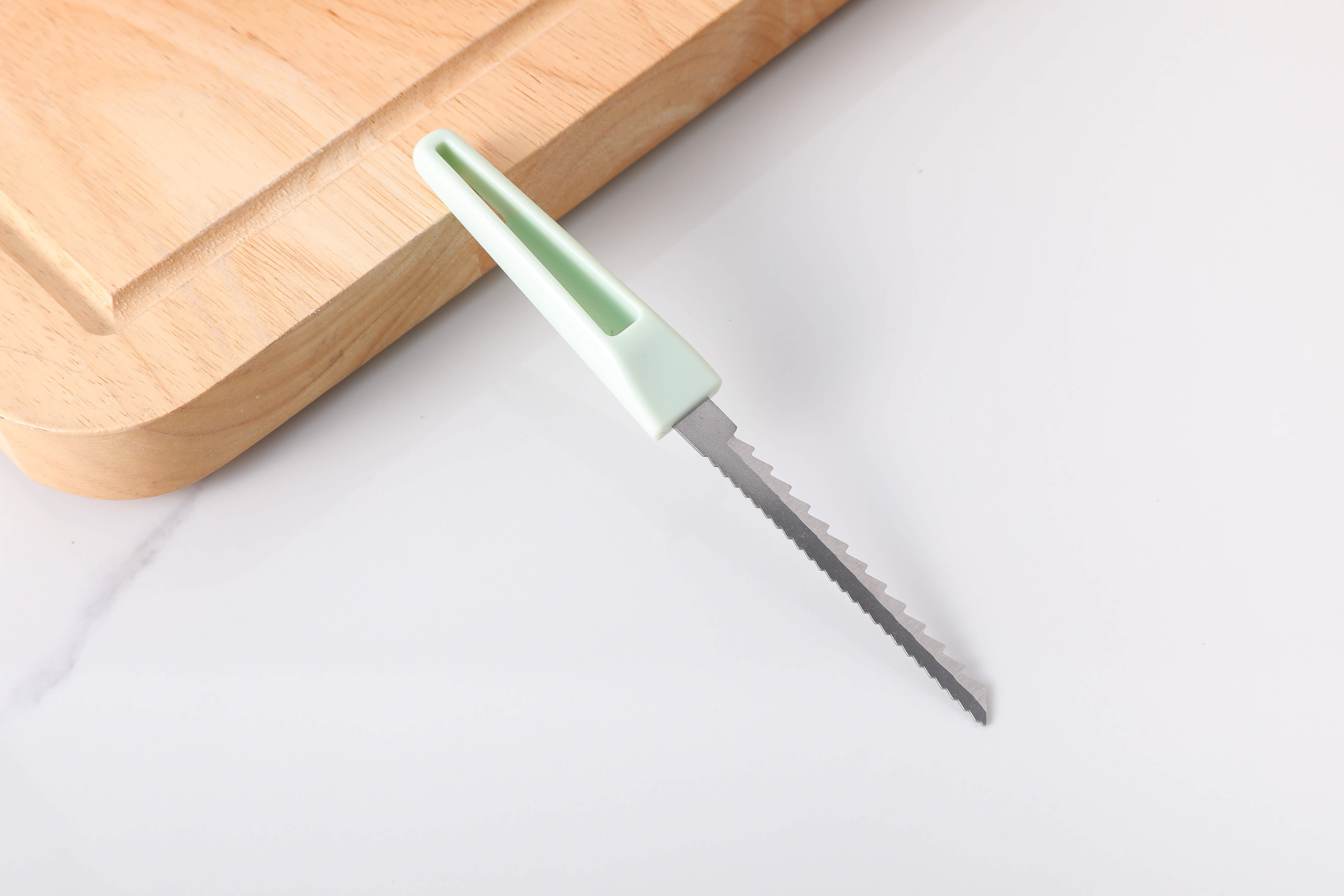
Pumpkin Carving Knife Factory: Multifunctional Innovation
A pumpkin carving knife factory is often associated with Halloween tools, seasonal displays, and detailed decorative cutting. However, the same product thinking used for carving tools can also apply to everyday kitchen utensils: clean cutting edges, comfortable handling, compact storage, and reliable performance across repeated use. For B2B buyers, importers, and private-label brands, the real opportunity is not only finding a factory that can make a carving knife, but identifying a supplier that understands how specialized tool design can support broader kitchenware programs.
The original product concept discussed here is an 8-in-1 kitchen utensil set: a compact, nesting, colorful package that includes practical tools such as a citrus juicer, cheese grater, peeler, whisk, serrated knife, can opener, and measuring cups. This article explains how buyers can evaluate that kind of multifunctional product from a sourcing perspective without relying on unverified claims about capacity, certifications, pricing, or material grades.
Why Pumpkin Carving Experience Can Inform Kitchen Tool Design
Pumpkin carving tools require control, edge consistency, and safe handling because users often work on curved, uneven surfaces. These same priorities matter in kitchen utensils. A serrated knife, for example, may be used for bread or other food-preparation tasks, while also being suitable for creating detailed pumpkin designs during seasonal use. This cross-functionality is useful for retailers and brands that want products with more than one selling season.
For a factory, the challenge is to translate niche experience into a broader assortment. For a buyer, the challenge is to confirm whether the supplier’s engineering, tooling, quality control, and packaging processes are appropriate for a multifunctional utensil set rather than a single seasonal item.
Understanding the 8-in-1 Multifunctional Utensil Concept
A nested 8-in-1 utensil set is designed to save space by combining several kitchen gadgets into one organized format. Based on the existing product description, the set includes a citrus juicer, cheese grater, peeler, whisk, serrated knife, can opener, and measuring cups. The value is not simply the number of pieces; it is whether each tool remains practical when combined into a compact design.
- Citrus juicer: Useful for lemons, limes, and small citrus prep.
- Cheese grater: Helps buyers assess blade sharpness, rigidity, and cleaning ease.
- Peeler: Requires comfortable handling and consistent cutting action.
- Whisk: Should be easy to assemble, use, and clean.
- Serrated knife: Supports daily kitchen cutting and seasonal pumpkin carving details.
- Can opener: Needs smooth operation and dependable fit.
- Measuring cups: Add everyday utility and make the set more practical for home cooking.
Key Sourcing Questions for B2B Buyers
When evaluating a pumpkin carving knife factory or multifunction kitchen tool supplier, buyers should avoid assumptions. Product descriptions often mention quality, lightweight construction, or ergonomic design, but commercial decisions should be based on samples, documentation, and direct questions.
- What materials are used for each component, and can the supplier provide written specifications?
- Are food-contact requirements applicable in the target market, and what documentation is available?
- Can the factory provide pre-production samples before mass production?
- How are sharp edges, moving parts, and nested components inspected?
- What packaging options are available for retail, wholesale, or private-label programs?
- Can the supplier support color customization, logo placement, or instruction inserts?
- What are the MOQ, lead time, payment terms, and sample costs?
- How are defects handled after delivery, and what inspection standard is agreed in advance?
Comparison Checklist: Seasonal Knife vs. Multifunctional Set
The table below helps buyers compare a dedicated pumpkin carving knife with a multifunctional kitchen utensil set. The better option depends on channel strategy, target price point, storage expectations, and seasonal demand planning.
| Evaluation Point | Dedicated Pumpkin Carving Knife | 8-in-1 Kitchen Utensil Set |
|---|---|---|
| Main Use | Seasonal carving and decorative cutting | Everyday kitchen prep plus seasonal use |
| Retail Timing | Strongest before Halloween | Can be promoted year-round |
| Assortment Value | Simple, focused SKU | Higher perceived utility if each tool performs well |
| Quality Focus | Blade control, grip, and cutting precision | Fit, nesting, durability, cleaning, and tool usability |
| Buyer Questions | Ask about edge design, handle comfort, and packaging | Ask about component materials, assembly, tolerance, and inspections |
Quality Control Points to Confirm Before Ordering
For multifunctional products, quality control should look beyond appearance. A nested set may look attractive in product photos but fail if parts are loose, difficult to separate, hard to clean, or uncomfortable in use. Buyers should request functional samples and test each included tool under realistic conditions.
For the serrated knife, check cutting consistency and handle stability. For the grater and peeler, check whether the working edges perform smoothly. For the can opener, test several can sizes if relevant to the target market. For measuring cups, confirm markings, nesting fit, and readability. If the product is intended for food contact, ask the supplier which regulations apply to the destination market and what supporting documents can be reviewed.
OEM and Wholesale Considerations
Brands sourcing from a pumpkin carving knife factory or kitchen utensil supplier may need OEM options such as custom colors, private-label packaging, barcodes, manuals, or bundled seasonal displays. These details should be confirmed early because changes to packaging or component color can affect sample approval, production timing, and carton planning.
Buyers should also clarify whether the quoted product is an existing model or requires new tooling. If new tooling is needed, ask about tooling ownership, revision fees, sample rounds, and expected timelines. Do not rely on verbal assurances for specifications; use a written purchase agreement, approved samples, and inspection criteria.
Key Takeaways
- A pumpkin carving knife factory may offer useful expertise in edge control, handling, and seasonal product design.
- The 8-in-1 utensil set concept offers broader year-round appeal when each component is practical.
- B2B buyers should verify materials, compliance documents, samples, packaging, MOQ, and inspection standards directly with the supplier.
- Multifunctional tools require functional testing, not just visual approval.
Practical FAQ
Is a multifunctional kitchen utensil set better than a dedicated pumpkin carving knife?
It depends on the sales channel. A dedicated carving knife is focused and seasonal, while an 8-in-1 utensil set can support everyday kitchen use and seasonal pumpkin carving with the included serrated knife.
What should buyers ask a factory before placing an OEM order?
Ask about component materials, sample availability, customization options, MOQ, lead time, packaging, inspection criteria, and any documents required for the destination market.
How should samples be evaluated?
Test every function separately. Check cutting performance, grip comfort, nesting fit, cleaning ease, moving parts, measuring markings, and packaging durability.
Can a serrated knife in a utensil set be used for pumpkin carving?
The original product concept notes that the serrated knife can be used for detailed pumpkin designs. Buyers should still test the sample to confirm it suits their intended carving use.
What information should not be assumed?
Do not assume material grade, certifications, production capacity, MOQ, pricing, or compliance status unless the supplier provides clear written confirmation and supporting documents.
