




Multifunctional Grating and Storage System for Modern Kitchen Prep
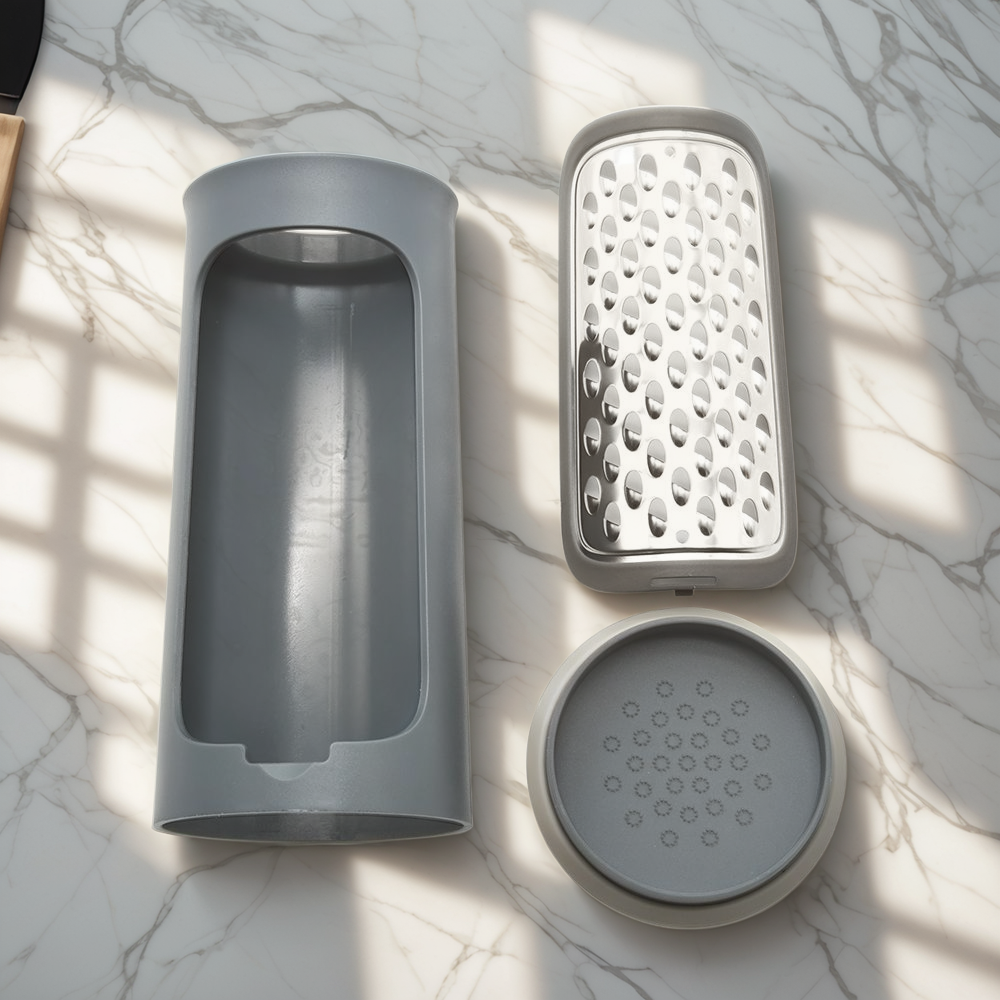
A multifunctional kitchen tool is most useful when it solves a real preparation problem, not when it simply adds another item to the drawer. The Multifunctional Grating & Storage System described in the original product introduction combines three everyday elements: a stainless-steel grater, a curved grey storage container, and a matching lid with starburst-style grooves. Together, these parts are intended to help users grate ingredients, collect them directly, and store them with less countertop mess.
This type of product is especially relevant for home cooks who prepare cheese, citrus zest, vegetables, or garnish ingredients in small to medium quantities. Instead of grating onto a plate or cutting board and then transferring the food again, the container sits beneath the grater to catch the prepared ingredient. The result is a more organized workflow and fewer loose shreds scattered across the work surface.
Key Takeaways
- The system includes a grater, a curved grey collection container, and a storage lid.
- It is designed for direct collection of grated ingredients during prep.
- The lid allows prepared ingredients to be stored after grating.
- Buyers should compare blade sharpness, grip comfort, lid fit, cleaning method, and storage size before choosing a similar product.
What This Kitchen Prep System Is Designed to Do
The main purpose of a grating and storage system is to reduce extra handling during food preparation. With a conventional handheld grater, ingredients often fall unevenly onto a board, bowl, or plate. Some pieces cling to the tool, some scatter, and some need to be transferred before cooking can continue. A container-based design helps combine grating and collection into one step.
In this set, the concave grey container is intended to sit beneath the grater and receive the grated food directly. The original article describes the container as lightweight, durable, and finished in matte grey. Its curved shape also helps distinguish it from a basic flat tray. Once the ingredient is prepared, the lid can be placed on top for storage until the food is needed.
Main Components and Their Roles
Although the system is compact, each component has a specific function. Understanding these parts helps buyers and users judge whether the product fits their kitchen routine.
| Component | Purpose | What to Check Before Buying |
|---|---|---|
| Stainless-steel grater | Grates cheese, citrus zest, vegetables, and similar ingredients | Ask about blade sharpness, edge finish, hand comfort, and cleaning instructions |
| Curved grey container | Collects grated ingredients directly below the grater | Check capacity, stability on the counter, material details, and whether it fits your storage space |
| Storage lid | Covers prepared ingredients for short-term storage | Confirm how securely it fits and whether the supplier describes it as airtight or simply protective |
| Overall set | Combines prep, collection, and storage in one workflow | Review product dimensions, dishwasher guidance, packaging, and replacement-part availability |
How It Helps with Everyday Food Preparation
For many kitchens, the biggest benefit is not speed alone. It is control. When grated food falls into a dedicated container, it is easier to measure, portion, and store. This can be helpful when preparing pasta toppings, salad ingredients, baking additions, taco garnishes, or citrus zest for sauces and desserts.
The grater in the original article is described as stainless steel with sharp perforations. That matters because dull grating surfaces require more force, which can make preparation slower and less comfortable. A sharp grating surface can produce more consistent results, but users should still handle it carefully and keep fingers away from the cutting area.
How to Choose a Grater with Container
If you are comparing this type of product for a home kitchen, look beyond appearance. A neat matte finish is useful only if the tool is comfortable, stable, and easy to clean. Before choosing a grater and storage set, consider the following practical points:
- Ingredient use: Decide whether you mainly grate hard cheese, citrus peel, carrots, cucumber, chocolate, or other foods. Different foods may need different perforation sizes.
- Grip and control: Look for a shape that allows a steady hold without forcing the wrist into an awkward position.
- Container stability: The container should stay in place while you work. A design that slides too easily can create mess or safety concerns.
- Lid fit: If storage is important, check how firmly the lid closes and whether the supplier provides clear guidance on freshness claims.
- Cleaning: Fine grating holes can trap food fibers. Confirm whether hand washing is recommended and whether the surface is easy to rinse.
- Drawer or shelf space: A modular set should store conveniently, especially in smaller kitchens.
Use and Care Tips for Better Results
Good technique makes a compact grating system more effective. Place the container on a dry, level work surface before grating. Position the grater securely so the ingredient falls into the container rather than onto the counter. Use moderate pressure; forcing food against the grater can increase waste and make the tool harder to control.
For citrus zest, avoid pressing deeply into the bitter white pith. For cheese, chill softer varieties briefly before grating if they smear or clump. For vegetables, trim them into manageable pieces so your hand stays away from the grating surface. After use, rinse the grater promptly because dried cheese or vegetable fibers can be harder to remove later.
When storing grated ingredients, let the food condition guide your timing. Ingredients with high moisture content, such as some vegetables, may release liquid after grating. Cheese, zest, and firm vegetables can behave differently in storage. Use clean handling practices and follow normal food-safety habits for refrigeration and consumption.
When This Type of Tool Makes Sense
A multifunctional grating and storage system is a good fit for kitchens where small prep tasks happen frequently. It is useful for people who prefer to prepare toppings or garnishes ahead of serving, or for anyone who wants to reduce the number of bowls used during cooking.
It may be less suitable if you regularly process large quantities of vegetables or cheese. In that case, a box grater, mandoline, or food processor may be more efficient. The best choice depends on batch size, desired texture, storage needs, and available cleaning time.
Questions to Ask a Supplier or Retailer
If you are sourcing a similar product for retail, promotional use, or private-label kitchenware, request clear information before placing an order. Do not rely only on photos. Ask the supplier to confirm material details for the grater, container, and lid; product dimensions; packaging options; cleaning recommendations; lid performance; and whether samples are available for inspection. If compliance documents, food-contact declarations, or test reports are required for your market, ask what documentation can be provided rather than assuming it is included.
For wholesale buyers, it is also sensible to ask about carton packing, lead time, customization options, spare parts, and quality inspection procedures. These details affect landed cost and customer satisfaction as much as the product concept itself.
FAQ
What foods can I prepare with a multifunctional grater and storage container?
Common uses include hard cheese, citrus zest, firm vegetables, chocolate, and small garnish ingredients. The exact results depend on the grater hole pattern and the food texture.
Does the container prevent all countertop mess?
It is designed to collect grated ingredients directly, which can reduce mess. However, technique matters. Keep the grater aligned over the container and work on a stable surface.
Is the lid suitable for long-term food storage?
The lid is intended to cover prepared ingredients, but storage time depends on the food and refrigeration conditions. Ask the supplier for specific lid-performance details if airtight storage is a key requirement.
How should the grater be cleaned?
Rinse it soon after use to prevent food from drying in the perforations. Use a brush if needed, and follow the supplier’s care instructions regarding dishwasher use or hand washing.
What should buyers verify before ordering in bulk?
Confirm materials, dimensions, packaging, cleaning guidance, documentation for your market, sample availability, quality-control process, lead time, and whether any customization is offered.
