




Multi-Functional Kitchen Scissors: Practical Selection Guide
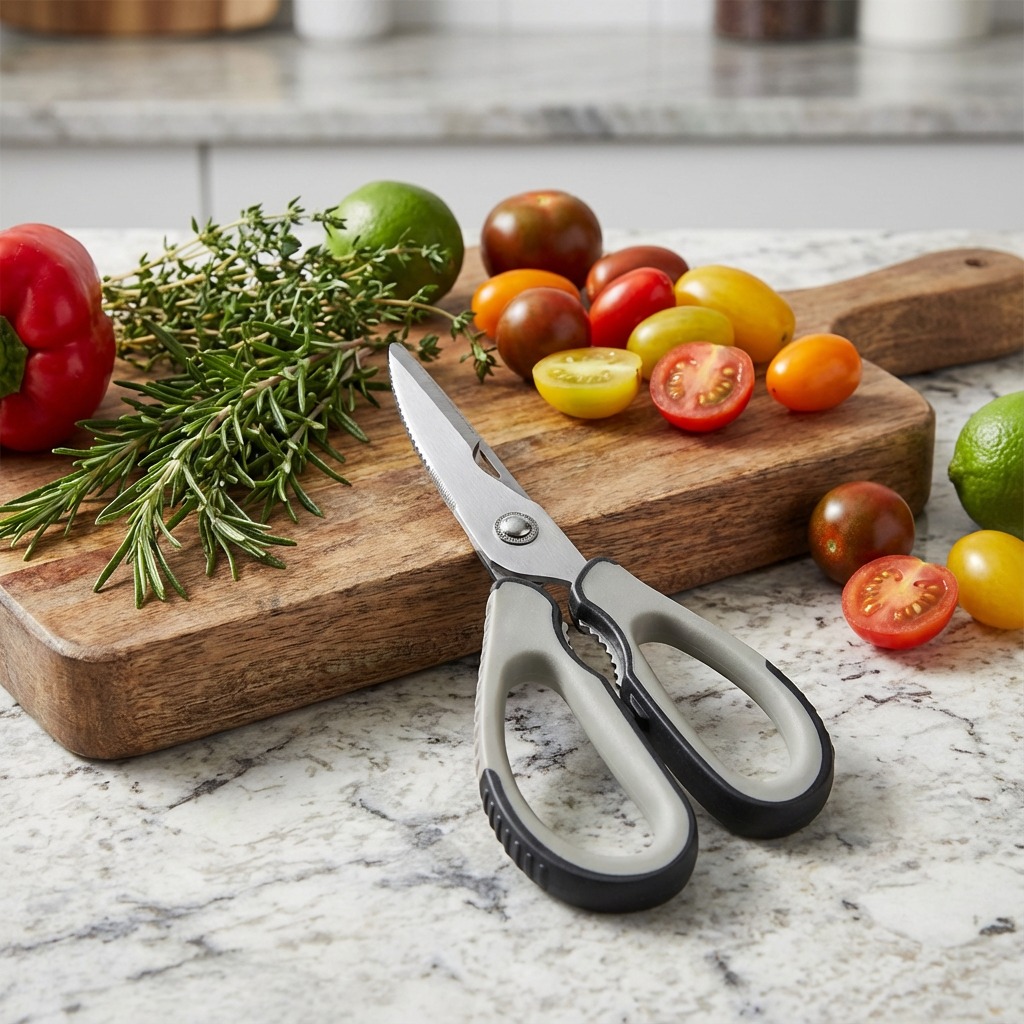
Multi-functional kitchen scissors are designed to do more than trim herbs or open food packaging. A well-chosen pair can support everyday prep work, reduce the need for several small tools, and help both home users and commercial buyers build a more efficient kitchen setup. For wholesale buyers, retailers, and OEM sourcing teams, the key is not only whether the scissors look useful, but whether the design, materials, cleaning method, and supplier answers match the intended market.
The original product information highlights stainless steel blades, a serrated cutting edge, light grey and black ergonomic handles, a bottle opener, nutcracker function, twist-top opener function, and dishwasher-safe cleaning. Those are useful starting points, but buyers should still confirm exact specifications, packaging, compliance documents, and quality-control procedures before placing a commercial order.
Key Takeaways
- Multi-functional kitchen scissors can combine cutting, opening, cracking, and gripping functions in one compact tool.
- Stainless steel blades and a serrated edge are useful for common kitchen tasks such as cutting meat, poultry, herbs, and packaging.
- For wholesale and OEM sourcing, confirm material details, sample quality, packaging, testing, and after-sales handling directly with the supplier.
- Dishwasher-safe claims are helpful, but buyers should ask how the scissors should be dried, stored, and maintained to reduce corrosion risk.
What Multi-Functional Kitchen Scissors Are Used For
Kitchen scissors are often faster than a knife and cutting board for small preparation tasks. They can snip scallions, trim herbs, cut cooked noodles, open sealed bags, portion soft meat, and help with poultry preparation. The multi-functional style adds utility features such as a bottle opener, nutcracker, or twist-top opener, making the tool useful beyond direct food cutting.
For home kitchens, this can save drawer space and simplify quick meals. For commercial kitchens, cafeterias, food-service prep areas, and hospitality settings, the benefit is task efficiency. For retailers and distributors, the product has a clear explanation on the shelf: it is a compact tool that handles several daily kitchen jobs.
Features to Evaluate Before Buying
The most important feature is blade performance. The source content states that the scissors use stainless steel blades and a sharp serrated edge. Serration can help grip slippery foods and packaging instead of pushing them away during cutting. Buyers should ask what stainless steel type is used, how the blade is hardened, and whether the edge is suitable for the foods their customers commonly prepare.
Handle comfort also matters. The original description mentions ergonomic handles in light grey and black with a comfortable, slip-resistant grip. In practice, buyers should test the handle with different hand sizes and check whether it feels secure when wet. If the scissors will be sold into family kitchens, restaurant supply channels, or promotional programs, comfort and safety perception can strongly affect repeat purchases and reviews.
Comparison Checklist for Product Selection
| Selection Point | Why It Matters | Questions to Ask a Supplier |
|---|---|---|
| Blade material | Influences sharpness, durability, and corrosion resistance. | What stainless steel grade is used, and can it be documented? |
| Serrated edge | Helps grip meat, poultry, herbs, and packaging. | Is the serration on one blade or both, and how is sharpness checked? |
| Handle design | Affects comfort, control, and safe handling. | Can samples be tested for grip comfort with wet hands? |
| Added functions | Bottle opener, nutcracker, and twist-top opener add utility. | Which functions are included in the confirmed production model? |
| Cleaning method | Supports hygiene and daily maintenance. | What is the recommended dishwasher and drying procedure? |
| Packaging | Important for retail, e-commerce, and wholesale handling. | What packaging options, labeling areas, and carton details are available? |
Use-and-Care Guidance for Everyday Kitchens
Even when kitchen scissors are described as dishwasher-safe, good care habits extend product life. Rinse food residue soon after use, especially after cutting salty, acidic, or protein-rich foods. If the scissors are placed in a dishwasher, position them so water can reach the blades and so they do not strike other utensils during the wash cycle. After cleaning, dry the hinge area and blade edges before storage.
- Use the serrated blade for foods or packaging that need extra grip.
- Avoid using kitchen scissors on materials that may damage the edge, such as hard wire or bone unless the product is specifically rated for that task.
- Keep the blade area clean after cutting poultry or raw meat to prevent cross-contamination.
- Store scissors closed and away from children, preferably in a drawer organizer or protective slot.
Wholesale and OEM Sourcing Considerations
For buyers searching for kitchen scissors wholesale or discussing a project with an OEM scissors manufacturer, product photos and basic descriptions are not enough. Request production samples and compare them with any approved reference sample. Check cutting consistency, handle finish, hinge movement, opener function, and packaging quality. If the scissors are intended for retail, confirm barcode placement, instruction language, warning labels, and whether the packaging protects the blade during shipping.
Commercial details should be verified directly. Ask about available customization, logo methods, color options, lead time, minimum order quantity, carton packing, spare parts policy, and how defective products are handled. If you need compliance for a particular market, request relevant documentation from the supplier instead of assuming that all kitchen tools meet the same requirements.
How to Match the Product to the Market
A home-use product page should explain real tasks clearly: cutting herbs, opening packaging, trimming poultry, opening bottles, cracking nuts, and handling twist-top caps. A retail buyer may focus on display value and easy-to-understand packaging. A restaurant supply buyer may care more about durability, cleaning, grip, and reorder reliability. An OEM buyer may need private-label packaging, consistent color matching, and documented quality checks.
Because multi-functional kitchen scissors combine several roles, avoid overloading the product promise. The strongest positioning is practical: one kitchen tool for common cutting and opening tasks. That message is easier to support than broad claims about professional performance or universal use.
FAQ
Are multi-functional kitchen scissors suitable for cutting poultry?
They can help with poultry preparation when the blade is sharp and the food is appropriate for the tool. Buyers should confirm the intended use with the supplier and avoid claiming heavy-duty bone cutting unless it is specifically supported.
Can these kitchen scissors go in the dishwasher?
The source article states that the scissors are dishwasher-safe. For best care, users should still dry the blades and hinge area after washing and follow any supplier instructions.
What functions are included besides cutting?
The original information mentions an integrated bottle opener, nutcracker function, and twist-top opener function. Buyers should confirm that the final production sample includes the same functions.
What should wholesale buyers check before ordering?
Check samples, blade material details, handle comfort, packaging, labeling, quality-control process, lead time, MOQ, and any market-specific documentation required for sale.
How should retailers describe this product?
Use specific, task-based wording such as cutting herbs, opening packaging, trimming food, opening bottles, cracking nuts, and helping with twist-top caps. Avoid exaggerated claims that are not supported by product testing or supplier documentation.
