




Dual-Tool Red Silicone Util Set: What to Know Before You Buy
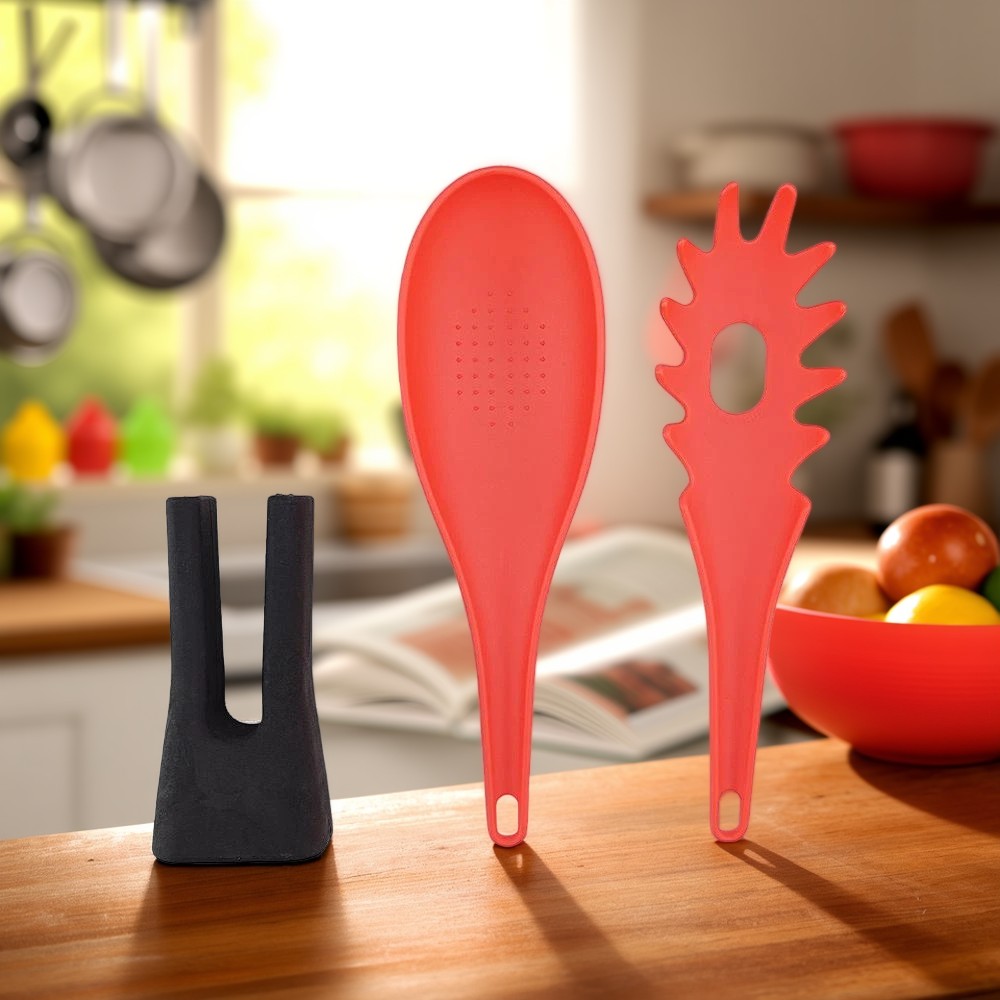
A small utensil set can be more useful than a crowded drawer of rarely used tools. The dual-tool red silicone utensil set described here focuses on two everyday cooking tasks: lifting and serving pasta with a pasta fork, and stirring, scooping, or serving with a broad spoon. The original product description also mentions a black silicone holder, which can help keep the tools upright and easy to reach on the counter.
This guide is written for home cooks comparing practical kitchen tools, not for impulse buying. It explains what this type of set is best for, what features to check, and how to care for silicone utensils so they last longer in daily use.
Key Takeaways
- The set is built around two tools: a pasta fork and a broad spoon.
- The pasta fork is described with multiple prongs and a built-in portion guide for spaghetti serving.
- The spoon is intended for stirring, scooping, and serving foods such as soups and sauces.
- A black silicone holder is mentioned for compact, organized storage.
- Before buying, confirm heat-resistance limits, cleaning instructions, and whether the set is suitable for your cookware.
What Is Included in the Set?
The original article describes a two-piece red silicone utensil set with a pasta fork and a spoon. It also refers to a black silicone holder for organized storage. This makes the set especially relevant for smaller kitchens, first apartments, office pantry kitchens, RVs, or anyone who prefers a limited number of high-use tools instead of a large utensil bundle.
The red finish is mainly a visibility and design feature. A bright utensil is easier to find in a drawer or on a crowded countertop, but color should not be the only reason to choose a kitchen tool. More important considerations include the shape of the head, handle comfort, heat-resistance information, cleaning method, and how the utensil behaves with the pans you use most often.
How the Pasta Fork Helps With Everyday Meals
A pasta fork is not only for spaghetti. The multiple prongs described in the source make it useful for lifting noodles, turning long pasta in a pan, and serving portions without relying on tongs. It can also help separate strands when pasta is mixed with sauce.
The original description mentions a built-in portion guide for spaghetti. This can be helpful if you often cook too much or too little pasta. Portion guides vary by design, so it is wise to check how the guide works in practice and whether it matches the serving sizes you prefer. For households with children, athletes, or people with different appetites, a portion guide should be treated as a helpful reference rather than a strict rule.
What the Spoon Is Best For
The spoon is described as having a smooth, broad surface suitable for stirring, scooping, and serving foods from soups to sauces. This kind of utensil is useful for weeknight cooking because it can move between tasks: stirring a simmering sauce, serving vegetables, lifting dumplings carefully, or transferring food from pan to plate.
When comparing silicone spoons, look closely at bowl depth and edge shape. A flatter spoon is often better for stirring and folding, while a deeper spoon is better for serving liquid foods. If the product page does not clearly show side views, ask for additional photos before purchasing, especially if you need the spoon for soups or stews.
Comparison Checklist Before Choosing
Use the checklist below to decide whether a dual-tool set fits your cooking habits. It also highlights questions worth asking a seller when product details are not clearly listed.
| Feature to Check | Why It Matters | Question to Ask |
|---|---|---|
| Tool selection | Two tools save space but cover fewer tasks than a large set. | Do I mainly need pasta serving and general stirring? |
| Pasta fork design | Prongs help lift noodles and serve long pasta. | Does the portion guide match my usual serving size? |
| Spoon shape | A broad surface helps with stirring, scooping, and serving. | Is it deep enough for soups or mainly for thicker foods? |
| Heat resistance | The source describes heat-resistant silicone, but no temperature is provided. | What is the stated maximum safe temperature? |
| Cookware compatibility | Silicone is commonly chosen for nonstick-friendly cooking. | Is the utensil recommended for my pan coating? |
| Storage holder | A holder can reduce drawer clutter and keep tools accessible. | Is the holder stable and easy to clean? |
Using Silicone Utensils Safely and Effectively
Silicone utensils are popular because they are flexible, quiet on cookware, and generally gentle on coated pans. However, not every silicone product performs the same way. Since the original article does not provide a temperature rating, do not assume the utensils can rest in a hot pan for long periods. Always confirm the stated heat limit from the supplier or packaging.
For best results, use the pasta fork to lift and drain pasta briefly, then transfer it to the sauce pan or serving bowl. Use the spoon for stirring sauces, folding ingredients, and serving finished dishes. Avoid using either tool as a scraper for burnt-on food or as a lever to pry apart frozen items. Silicone heads can be durable, but they are not a substitute for metal tools when heavy force is required.
Cleaning and Storage Tips
Good care keeps utensils more pleasant to use. Wash the tools before first use, especially if they have been stored in packaging. After cooking oily or tomato-based dishes, clean them promptly to reduce staining and odor retention. If the seller states that the utensils are dishwasher-safe, follow the recommended rack placement. If that information is not available, hand washing with warm water and mild dish soap is the safer default.
- Do not leave silicone utensils sitting directly on a burner or under a broiler.
- Use a soft sponge rather than abrasive pads that may roughen the surface.
- Dry the tools before placing them in the holder to reduce trapped moisture.
- Store the holder away from open flames or intense heat sources.
- Inspect the utensil heads periodically for cuts, cracks, or looseness.
Who This Set Is Best Suited For
This dual-tool set is a good fit for cooks who prepare pasta, soups, sauces, and simple home meals on a regular basis. It may also work well for people setting up a small kitchen because it covers two frequent jobs without taking much space. The holder is useful if you prefer countertop access instead of searching through drawers while cooking.
It may not be the right choice if you need a complete utensil set with turners, ladles, whisks, and tongs. It is also worth looking for more detailed specifications if you cook at high temperatures or need commercial-grade tools. In those cases, ask for heat ratings, handle construction details, warranty terms, and cleaning guidance before deciding.
Practical FAQ
Can the pasta fork measure spaghetti portions?
The source describes a built-in portion guide for spaghetti. Check the product photos or ask the seller how the guide is sized, because portion preferences vary by household.
Is the spoon suitable for soup?
The original description says the spoon can be used for foods from soups to sauces. If you serve a lot of broth-based dishes, confirm the spoon depth before buying.
Can these utensils be used with nonstick cookware?
Silicone utensils are commonly chosen for nonstick-friendly cooking, but you should still confirm the seller’s recommendation for your specific cookware surface.
What is the heat-resistance temperature?
The original description mentions heat-resistant silicone but does not provide a specific temperature. Ask the supplier for the maximum safe temperature and usage limits.
How should the black holder be cleaned?
Unless the seller provides dishwasher instructions, wipe or hand wash the holder, dry it fully, and avoid letting water collect at the base.
