




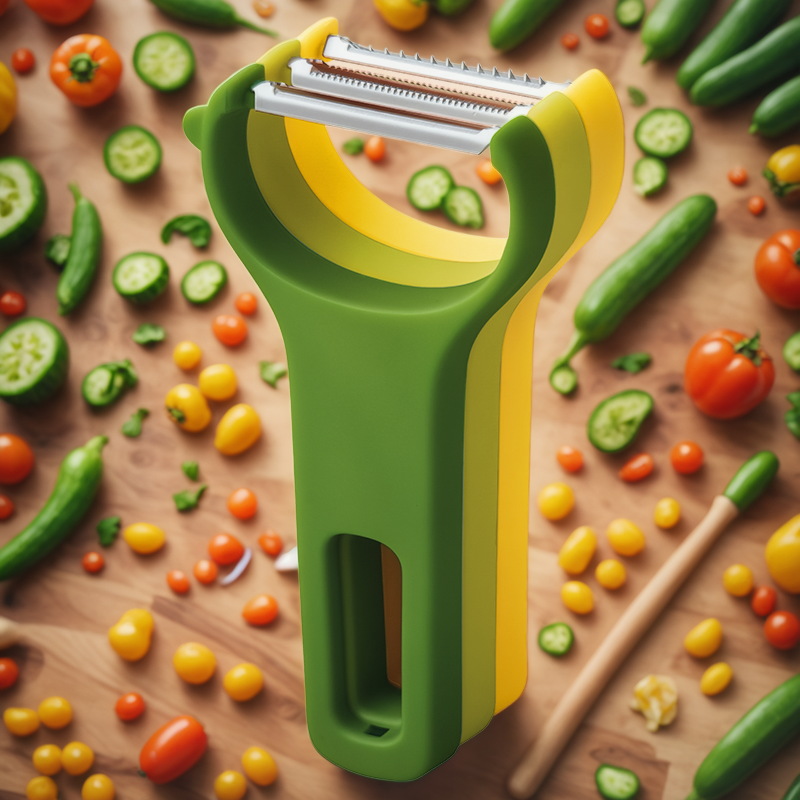
Stackable 3-Blade Peeler Guide for Smarter Prep
A crowded kitchen drawer often contains several tools that do similar jobs: one peeler for potatoes, another for soft fruit, and a separate cutter for thin vegetable strips. A stackable 3-blade peeler is designed to reduce that clutter by combining three peeling functions in one compact format. The original product concept includes a straight blade, a julienne blade, and a serrated blade, with blades that stack into a small body for storage.
This guide explains how to evaluate a multi-blade peeler, when to use each blade, and how to care for the tool so it stays useful in daily cooking. It is written for home cooks and product buyers who want practical information rather than exaggerated claims.
Key Takeaways
- A 3-blade peeler is most useful when each blade has a clear task: standard peeling, julienne cutting, and soft-skin peeling.
- Stackable storage helps reduce drawer clutter, but the blade connection should feel secure before use.
- Choose the blade based on produce texture, not only on shape.
- Cleaning and drying the blades carefully can help maintain safe handling and consistent performance.
What a Stackable 3-Blade Peeler Is
A stackable 3-blade peeler is a compact kitchen tool that groups several peeling edges into one set. According to the original product description, the three blade types are a straight blade, a julienne blade, and a serrated blade. The blades can be separated and snapped into position, then stacked together after use. This design is intended to make storage easier compared with keeping several single-purpose peelers loose in a drawer.
The concept is especially practical for cooks who prepare different types of produce in the same meal. For example, a weeknight salad may require peeled carrots, thin zucchini strips, and sliced tomatoes. Instead of changing tools, the user can change the blade within the same peeler set.
How the Three Blades Are Typically Used
The straight blade is the everyday option. It is suited to firm fruit and vegetables such as potatoes and apples, where a clean, continuous peel is helpful. It can also be useful for carrots, cucumbers, and other produce with relatively even surfaces.
The julienne blade cuts narrow strips. It is useful for preparing carrot ribbons for salads, zucchini strips for quick cooking, or decorative garnishes. Because julienne blades have teeth, they should be used with steady pressure and controlled strokes rather than fast scraping.
The serrated blade is intended for produce with softer skins, such as tomatoes and peaches. A smooth straight blade may slide on these skins or press too hard into the flesh. A serrated edge can grip the surface better, helping reduce bruising when used gently.
Blade Selection Checklist
The best blade depends on the ingredient and the result you want. Use the comparison below as a quick decision guide.
| Prep task | Suggested blade | Best for | Use tip |
|---|---|---|---|
| Basic peeling | Straight blade | Potatoes, apples, carrots, cucumbers | Use long, even strokes and rotate the produce as you work. |
| Thin vegetable strips | Julienne blade | Carrots, zucchini, firm cucumbers | Keep fingers away from the cutting path and stop before the piece becomes too small to hold safely. |
| Soft-skin peeling | Serrated blade | Tomatoes, peaches, other delicate skins | Use light pressure so the blade catches the skin without crushing the flesh. |
| Compact storage | Stacked blade set | Small kitchens, shared drawers, RVs, office kitchens | Confirm the blades are clean and dry before stacking. |
What to Look for Before Buying
When choosing a multi-blade peeler, start with safety and control. The handle should feel comfortable in your hand and allow a firm grip when the produce is wet. The original description mentions an ergonomic handle and a green and yellow color design, but shoppers should still judge comfort personally if possible.
Next, check how the blade modules attach. A stackable peeler is only convenient if the parts connect securely and separate without forcing. Look for smooth transitions between blades and a locking or snap-in feel that does not loosen during normal peeling.
Also consider cleaning. The original article states that the peeler is dishwasher safe, but buyers should confirm the cleaning instructions on the actual product packaging or supplier information. If a peeler has small gaps around the blade housing, food residue may collect there, so easy rinsing matters.
Safe and Efficient Use
Even a small peeler has sharp edges, so simple habits make a difference. Wash produce first to remove grit that could dull the blade or scratch the surface. Hold round items firmly on a cutting board when possible instead of peeling freely in the air. For long vegetables, peel away from your hand and rotate the vegetable after each pass.
For julienne cuts, create one flat side on the vegetable before cutting if it tends to roll. This gives you more control and helps create more even strips. When the remaining piece becomes small, stop and use it in another dish rather than risking your fingertips.
- Select the blade before your hands become wet or oily.
- Check that the blade is fully attached before each task.
- Use light pressure first, then increase only if needed.
- Rinse the blade soon after use, especially after starchy vegetables.
- Dry the tool before stacking it back together.
Cleaning, Drying, and Storage
Good care helps any peeler remain pleasant to use. Rinse the blade immediately after peeling potatoes, apples, or zucchini because starch and plant fibers can dry onto the edge. For tomato or peach skins, rinse under running water and use a soft brush if pieces are caught near the serrations.
If the product instructions allow dishwasher cleaning, place the peeler where it will not be knocked against heavy utensils. If washing by hand, clean from the back of the blade rather than wiping along the cutting edge. Drying is important before stacking because moisture trapped between parts may cause odor or spotting, depending on the materials used.
Store the stacked unit in a drawer section where it will not be crushed by heavier tools. If blade covers are supplied with a specific product, use them. If not, keep the cutting edges oriented away from where hands reach into the drawer.
Who Benefits Most from This Tool?
A stackable 3-blade peeler is most useful for people who regularly prepare fresh produce but do not want several separate tools. Small kitchens, apartment kitchens, and shared cooking spaces benefit from the compact storage. It can also help cooks who like salads, garnishes, vegetable noodles, or quick fruit prep because the blade options cover different textures.
However, it may not replace every specialty cutter. If you need high-volume julienne production, very specific strip sizes, or professional prep speed, a mandoline or commercial prep tool may be more appropriate. For everyday household use, the appeal is versatility in a small footprint.
Practical FAQ
Can one peeler really handle potatoes, apples, tomatoes, and zucchini?
Yes, if it includes the right blade types. Use the straight blade for firm produce such as potatoes and apples, the serrated blade for soft skins such as tomatoes, and the julienne blade for strips of zucchini or carrot.
Is a julienne blade difficult to use?
It is not difficult, but it requires attention. Use steady strokes, avoid rushing, and stop before the vegetable becomes too small to grip safely.
Should I wash it in the dishwasher or by hand?
The original product description says the peeler is dishwasher safe. Still, always check the instructions for the exact product you purchase. Hand washing can be gentler and makes it easier to remove residue from serrated or toothed edges.
What should I ask a supplier before buying in quantity?
Ask what materials are used, how the blade attachment is tested, whether replacement parts are available, what cleaning instructions apply, and what packaging options are offered. Do not assume specifications that are not clearly provided.
How do I keep the blades safe in a drawer?
Stack the blades only after they are clean and dry. Store the unit in a consistent place, away from loose heavy utensils, and use blade covers if they are included with the product.
