




Precision Vegetable Slicer Guide for Faster, More Consistent Prep
A precision vegetable slicer can make everyday meal preparation more predictable, especially when you want even cucumber rounds, neat carrot strips, grated cheese, citrus zest, or fine vegetable shreds. The original product description highlights a vegetable slicer and a colorful handheld grater set with stainless steel blades, ergonomic handles, compact storage, and easy cleaning. Those are useful qualities, but choosing the right tool still depends on how you cook, how often you prepare vegetables, and how comfortable you are handling sharp blades.
This guide explains what to look for before buying, how to compare slicers and graters, and how to use and care for them safely. It is written for home cooks, small food-prep teams, and buyers comparing practical kitchen tools rather than decorative gadgets.
Key Takeaways
- A vegetable slicer is most useful when it produces consistent cuts and feels stable in the hand.
- Stainless steel blades are valued for sharp cutting performance, but they still require careful handling and cleaning.
- A handheld grater set can cover several tasks, including shredding vegetables, zesting citrus, and grating cheese.
- Check blade style, grip comfort, cleaning method, and storage needs before choosing a slicer.
- For wholesale or OEM sourcing, ask suppliers to confirm materials, packaging options, sample availability, and compliance documents instead of assuming them.
What a Precision Vegetable Slicer Does Well
The main advantage of a precision vegetable slicer is uniformity. Even slices cook at a more consistent rate, look cleaner in salads, and fit better in sandwiches, wraps, bowls, and garnishes. For example, thin cucumber slices can help make a salad feel lighter, while evenly grated carrots can blend more easily into slaws or fillings.
Handheld slicers and graters are also useful when you do not want to set up a large appliance. A compact tool can be taken out quickly, used for a small quantity, rinsed, dried, and stored without taking much drawer space. This matters for kitchens with limited storage or for cooks who prepare fresh ingredients in small batches.
Vegetable Slicer vs. Handheld Grater Set
The original article describes both a precision slicer and a set of three handheld graters in bright colors, including green, lime green, and yellow. These tools overlap in purpose, but they are not identical. A slicer is generally better for flat, even cuts, while graters and shredders are better for small textures, zest, and cheese.
| Tool Type | Best For | Selection Checklist |
|---|---|---|
| Precision vegetable slicer | Cucumber, zucchini, potato, radish, and garnish slices | Look for a comfortable grip, stable cutting surface, and a blade style suited to the slice thickness you need. |
| Coarse handheld grater | Carrots, cabbage, firm vegetables, and some cheeses | Check handle comfort, blade sharpness, and whether food clears easily from the cutting holes. |
| Fine grater or zester | Citrus zest, garlic, ginger, hard cheese, and fine shreds | Choose a size that is easy to control and confirm it can be cleaned without trapping fibers. |
| Multi-piece slicer set | Households that prepare different textures often | Make sure each piece has a clear purpose so the set does not become unused drawer clutter. |
Features to Check Before Buying
Start with the blade. The source text mentions stainless steel blades, a common choice for kitchen cutting tools because they can provide clean, sharp cuts. However, do not assume every slicer uses the same stainless steel grade, blade thickness, or finishing process. If those details matter to you, check the product specification or ask the supplier directly.
Next, look at handle design. Ergonomic handles can improve control, especially when grating firm vegetables. The handle should feel secure when your hands are slightly wet, and the tool should not twist or flex excessively under normal pressure. For a handheld slicer, control is just as important as sharpness.
Storage is another practical point. Compact tools are easier to keep within reach, but exposed blades need careful placement. A blade cover, dedicated storage slot, or protective packaging can reduce accidental contact. If a cover is not included, plan where the tool will be stored before you buy it.
How to Use a Vegetable Slicer Safely
Sharp blades save effort, but they require attention. Always place the vegetable on a stable surface and guide it with slow, even pressure. Avoid rushing the last small piece of food, because fingers are closest to the blade at that stage. If the slicer includes a food holder or hand guard, use it. If it does not, stop slicing before the food becomes too short to hold safely.
- Wash and dry vegetables so they do not slip during slicing.
- Trim uneven ends to create a flat surface where possible.
- Use steady pressure rather than forcing the food through the blade.
- Keep fingertips away from the cutting path.
- Rinse the tool soon after use to prevent food from drying on the blade.
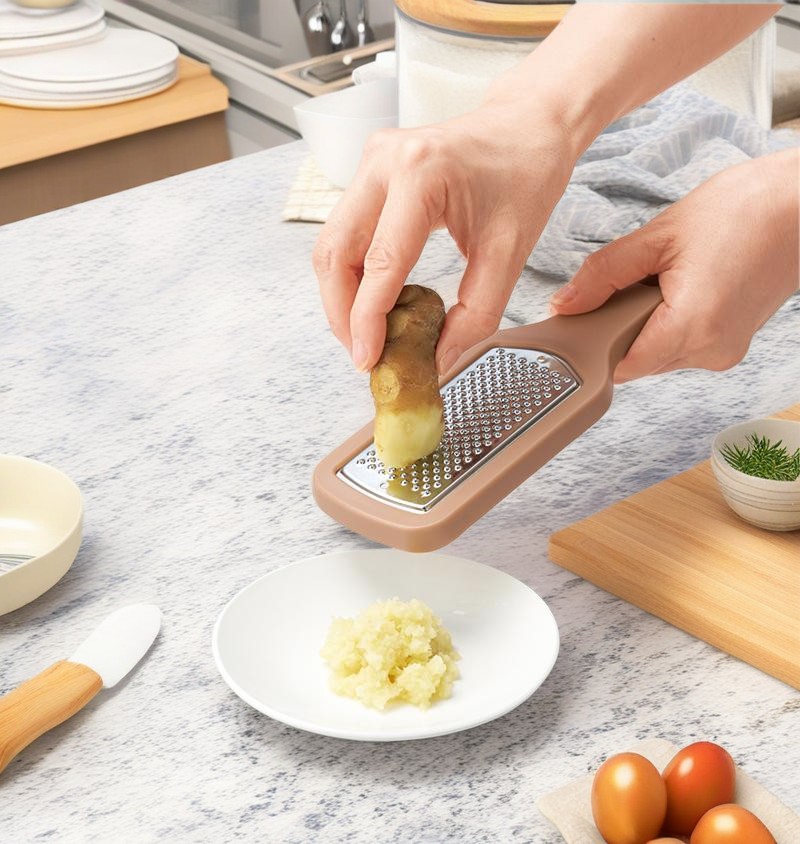
For citrus zest, use light strokes and avoid pressing into the bitter white pith. For cheese, chill softer cheese first so it grates more cleanly. For fibrous vegetables such as ginger, rinse the grater immediately after use because fibers can cling to the blade openings.
Cleaning and Care Tips
The original product copy describes the tools as easy to clean. In practice, cleaning depends on the blade pattern and the foods used. Rinse from the back side of the blade when possible so food particles move out rather than deeper into the cutting holes. Use a dish brush instead of wiping directly over a sharp edge with your fingers.
Dry the slicer after washing to reduce water spots and keep it ready for storage. If the manufacturer provides dishwasher guidance, follow it. If no guidance is available, hand washing is usually the safer approach for preserving handle finish and blade performance. Never leave sharp slicers loose in a sink where someone may reach into cloudy water and get cut.
Guidance for Wholesale, OEM, and Supplier Buyers
For retailers, promotional buyers, and houseware sourcing teams, a vegetable slicer set should be assessed as both a kitchen tool and a consumer safety item. Do not rely only on appearance or color. Request samples and test them with common foods such as cucumbers, carrots, potatoes, citrus, and cheese. Compare cutting consistency, handle comfort, ease of cleaning, and packaging protection.
Before placing a bulk order, ask the supplier clear questions: What blade material and handle material are used? Are color options customizable? What packaging formats are available? Can the supplier provide product care instructions, barcode labeling, or retail-ready packaging if needed? Are any third-party test reports or compliance documents available for the target market? What is the sample process, production lead time, and quality inspection method? These are questions to verify, not assumptions to make.
Practical FAQ
Is a vegetable slicer better than a knife?
It depends on the task. A knife is more versatile, but a slicer can produce repeated, even cuts faster once the food is suitable for the blade size and shape.
Can one slicer handle every vegetable?
No. Very soft, very hard, or irregularly shaped foods may not slice well. Choose the tool based on the vegetables you prepare most often.
Are stainless steel blades maintenance-free?
No. Stainless steel blades still need careful washing, drying, and safe storage. Avoid abrasive cleaning that may damage the surface or edge.
What should I check in a vegetable slicer set?
Check whether each piece has a different useful function, whether the handles are comfortable, whether the blades are protected in storage, and whether cleaning is straightforward.
How can I reduce the risk of cuts?
Use a hand guard when available, slow down near the end of the vegetable, keep fingers away from the blade path, and store the slicer where the edge is not exposed.
