




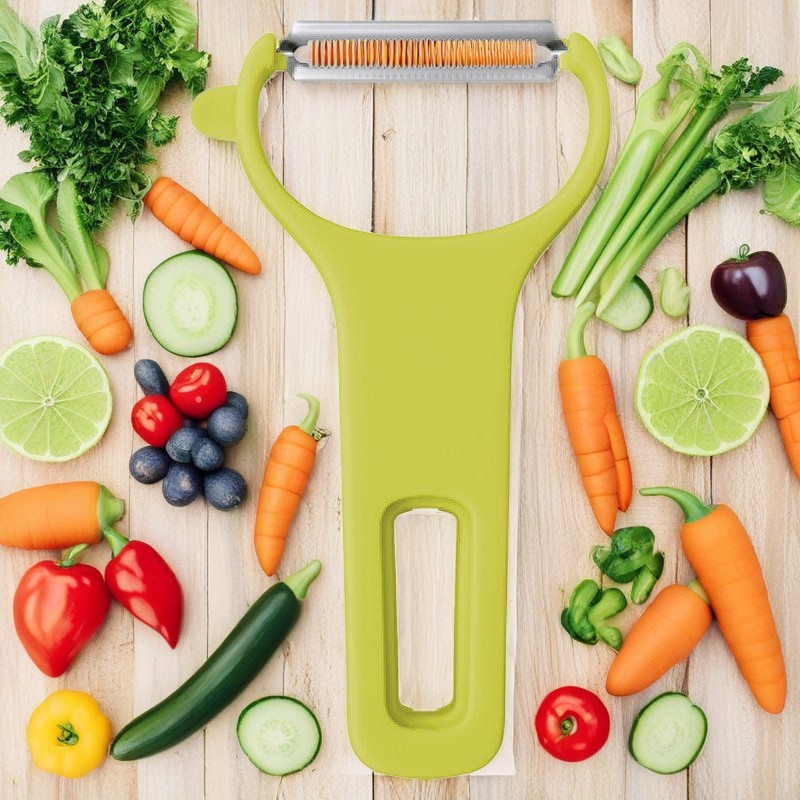
How to Choose and Use a 3-Blade Peeler
A 3-blade peeler is designed for cooks who want one compact tool to handle several common prep tasks: peeling firm vegetables, working with soft-skinned fruit and cutting thin julienne strips for salads, garnishes or vegetable noodles. Instead of keeping separate peelers in a drawer, a multi-blade design can reduce clutter while giving you more control over different ingredients.
The original product information describes a 3-in-1 peeler concept with a standard blade, a serrated blade and a julienne blade. It also mentions stainless steel blades, an ergonomic grip, a built-in auxiliary tab for added control, a stacked mechanism for storage and a bright lime green or tri-color look depending on the version. This guide explains how those features can help in real kitchen use and what to check before choosing a peeler for your home kitchen.
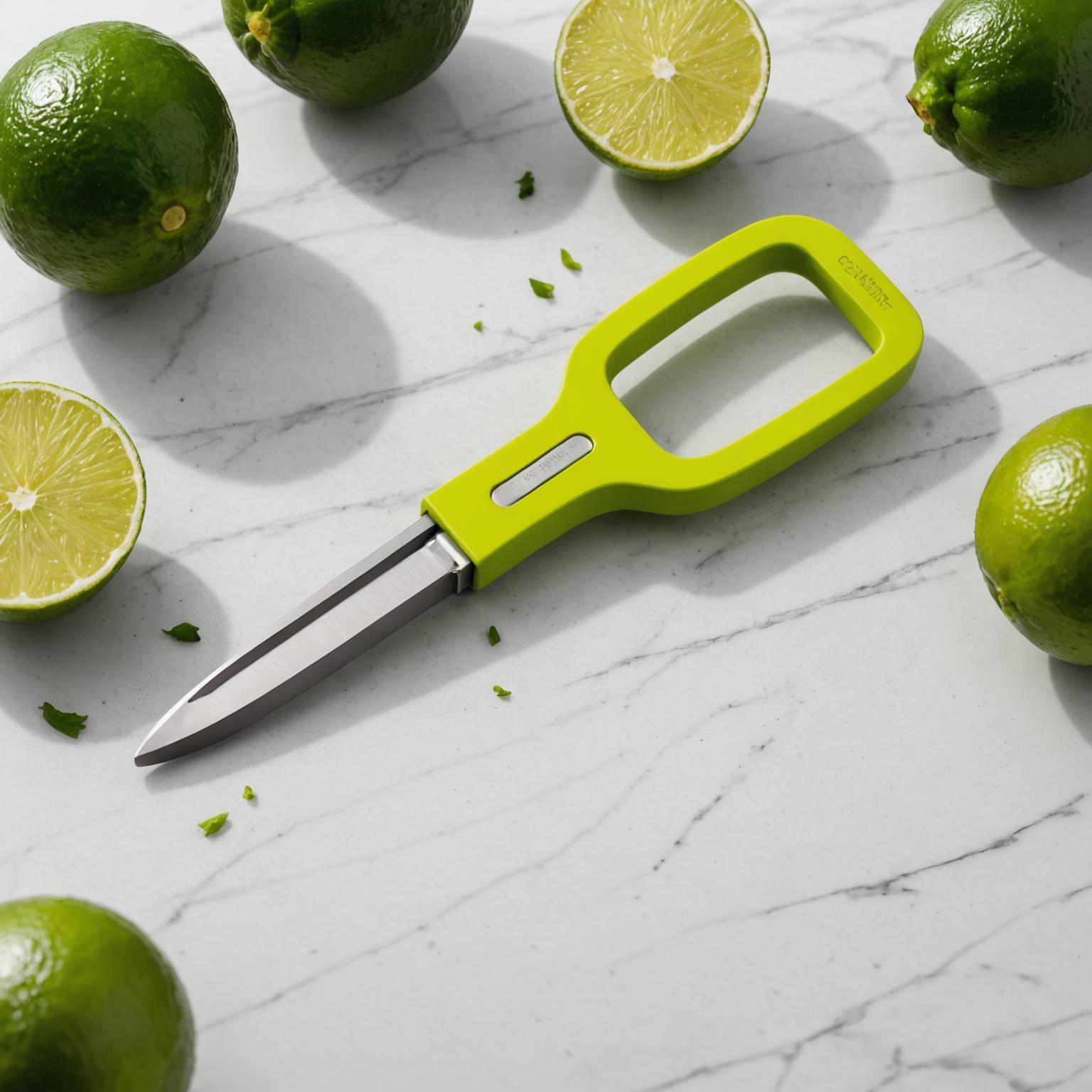
What a 3-Blade Peeler Is Best For
A 3-blade peeler is most useful when you prepare a variety of produce. A standard blade is typically suited to firm vegetables and fruits such as potatoes, carrots, cucumbers, apples and zucchini. A serrated blade is useful for more delicate skins, including tomatoes, peaches or other soft fruit where a smooth blade may slide instead of catching the surface. A julienne blade creates narrow strips for slaws, quick stir-fry vegetables, noodle-style zucchini or decorative finishing.
Because these blades serve different purposes, the main benefit is not speed alone. The practical advantage is choosing the right cutting edge for the ingredient. That can reduce wasted flesh, improve texture and make repetitive prep less frustrating.
Blade Types Compared
Before using any multi-blade peeler, identify which blade does what. Designs vary, so always inspect the tool and confirm the blade position before starting. The comparison below summarizes common uses based on the product details provided.
| Blade or Feature | Best Use | What to Check |
|---|---|---|
| Standard blade | Peeling firm produce such as potatoes, carrots, apples and cucumbers | Look for a clean, even cut without digging too deeply into the flesh |
| Serrated blade | Handling soft fruit or delicate skins such as tomatoes | Use light pressure so the blade grips the skin without crushing the produce |
| Julienne blade | Making thin strips for garnishes, salads and vegetable noodles | Keep fingers clear and use steady strokes for consistent strips |
| Ergonomic grip | Improving comfort during longer prep sessions | Test whether the handle feels secure in wet and dry hands |
| Stacked mechanism | Saving drawer space and keeping multiple blades together | Confirm the blade selector or storage position feels stable before use |
How to Use Each Blade Safely
Sharp peelers are more efficient, but they require careful handling. Wash produce first, dry it if possible and place it on a stable cutting board when extra control is needed. If the peeler includes an auxiliary tab, use it to improve positioning around awkward curves, eyes or corners, but avoid placing fingers near the cutting path.
- Choose the blade before touching the produce. Switching blades while your hands are wet can increase the chance of slipping.
- Use the standard blade for firm foods. Pull or push in smooth strokes, depending on the tool design and your comfort.
- Use the serrated blade gently. Let the teeth catch the skin; pressing too hard may bruise soft fruit.
- Use the julienne blade on longer vegetables. Zucchini, carrots and cucumbers are easier to strip when held securely at one end.
- Stop when pieces become too small. Finish with a knife or save the remaining piece for stock, soup or snacking.
What to Look for When Selecting a Peeler
For home use, the best peeler is the one that feels stable, is easy to clean and matches the foods you actually prepare. The original description mentions stainless steel blades and BPA-free food-grade materials for the 3-in-1 multi-function vegetable peeler. If you are comparing products, check the supplier’s current product page or packaging for exact material details because specifications can vary by model.
- Grip comfort: A handle should not twist in your hand during repeated strokes.
- Blade access: It should be clear which blade is active and how to switch or store it.
- Cleaning ease: Food can lodge around serrated and julienne teeth, so open spaces are easier to rinse.
- Storage safety: A compact stacked design is helpful, but exposed blades should still be protected in a drawer.
- Produce habits: If you often prepare tomatoes and peaches, a serrated blade matters. If you make salads or vegetable noodles, prioritize the julienne function.
Use-and-Care Tips for Longer Service
Even a durable peeler performs better with simple care. Rinse the blade soon after use, especially after peeling starchy potatoes or juicy fruit. If vegetable fibers remain between julienne teeth, use a dish brush and brush away from the sharp edge. Dry the peeler before storing it to help keep the blades clean and ready for the next task.
Avoid using a peeler on very hard items that are better suited to a knife, such as thick squash rind, frozen food or woody stems. Do not twist the blade sideways to pry out deep spots; that can damage the edge or reduce control. If the peeler becomes dull, bent or difficult to clean, it is safer to replace it than to compensate with extra force.
Common Mistakes to Avoid
One common mistake is using the same blade for everything. A smooth blade may not grip a tomato well, while a serrated blade may leave a rougher surface on firm vegetables than you want. Another mistake is pressing too hard. A good peeler should remove the skin in thin layers; force often leads to uneven peeling and more food waste.
Storage is also important. Multi-blade peelers save space, but they still have multiple sharp edges. Keep the tool away from loose utensils if blades are exposed, and make sure children cannot access it. If the design includes a locking or stacked position, confirm it is fully seated before placing it in a drawer.
Key Takeaways
- A 3-blade peeler is useful for firm produce, soft-skinned fruit and julienne cuts.
- The standard, serrated and julienne blades each have a different purpose.
- Comfort, blade control, cleaning access and safe storage matter as much as appearance.
- Use light pressure and match the blade to the ingredient for cleaner prep.
FAQ
Can a 3-blade peeler replace all other peelers?
For many everyday tasks, yes. It can cover standard peeling, soft-fruit peeling and julienne cutting. However, very large or hard produce may still require a knife or a heavier-duty tool.
Which blade should I use for tomatoes?
The serrated blade is generally the better choice for tomatoes and other soft-skinned fruit because it can grip the surface with less pressure.
Is a julienne blade only for decoration?
No. It is useful for practical prep such as carrot strips for salads, zucchini noodles, cucumber garnish and quick-cooking vegetable strips.
How should I clean around the julienne teeth?
Rinse immediately after use and brush away from the cutting edge with a dish brush. Avoid using your fingers to remove stuck fibers from the teeth.
What should I confirm before buying?
Check the current material information, blade arrangement, cleaning instructions and storage safety. If material details such as BPA-free plastic or stainless steel blades are important to you, verify them on the product packaging or with the seller.
