




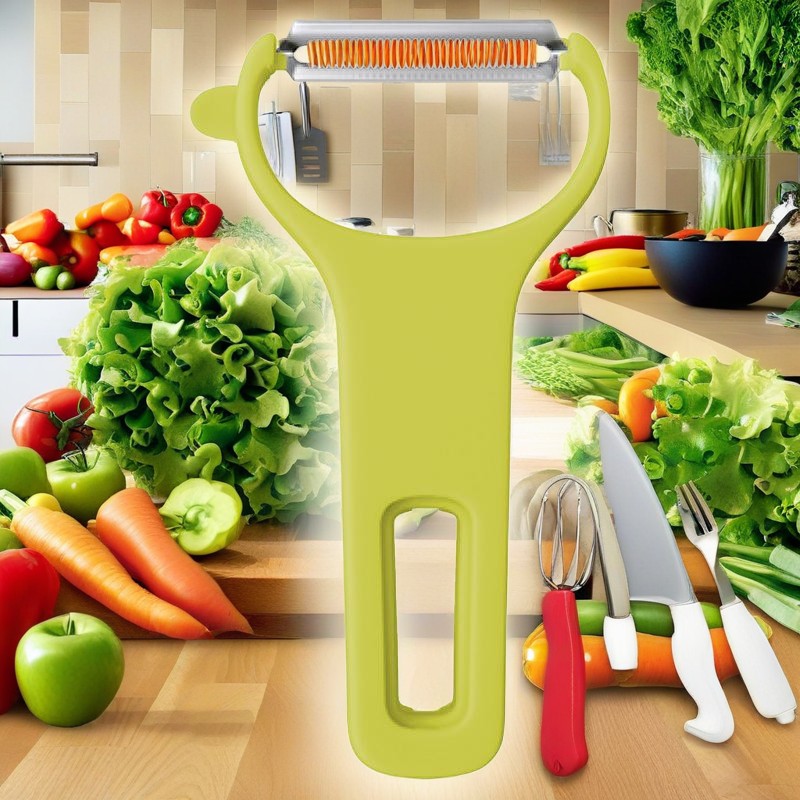
Multi-Blade Peeler Guide for Fruits and Vegetables
A good peeler is one of the small kitchen tools that can change how smoothly prep work goes. When a recipe calls for peeled potatoes, apple slices, zucchini ribbons, carrot matchsticks, or soft fruit with delicate skin, switching between several tools can slow the process and crowd the drawer. A multi-blade peeler is designed to solve that problem by combining different blade functions in one compact tool.
The product shown here is a 3-blade peeler with a standard peeling blade, a julienne blade, and a serrated-edge blade. Those three options cover many common fruit and vegetable tasks, from everyday peeling to decorative cuts. This guide explains what each blade is for, how to use the tool safely, what to check before buying, and how to care for it so it stays useful in daily cooking.

Key Takeaways
- A 3-blade peeler can reduce the need for separate peelers for firm vegetables, soft fruit, and julienne cuts.
- Use the standard blade for routine peeling, the julienne blade for thin strips, and the serrated blade for delicate skins.
- Comfort, blade access, cleaning method, and drawer storage matter as much as sharpness.
- Buyers should confirm exact materials, dishwasher suitability, packaging, and replacement policies with the supplier before ordering.
What a Multi-Blade Peeler Is Designed to Do
A multi-blade peeler is a kitchen prep tool that groups several cutting edges into one handle or body. Instead of keeping one peeler for potatoes, another for tomatoes, and a separate julienne cutter, the cook can select the blade that matches the ingredient. This can be useful in home kitchens, meal-prep stations, cooking schools, and small food-service environments where space and speed both matter.
The main benefit is not just having more blades. It is having the right blade for the right surface. A firm potato skin behaves differently from a ripe tomato skin. A carrot meant for a stir-fry needs a different cut from an apple being peeled for a pie. A 3-in-1 format helps keep those choices simple without turning a basic prep task into a search through the utensil drawer.
Understanding the Three Blade Functions
The original product description highlights three blade types: a standard blade, a julienne blade, and a serrated-edge blade. Each has a specific role. Knowing when to use each one improves both speed and final appearance.
| Blade type | Best for | Practical tip |
|---|---|---|
| Standard peeling blade | Potatoes, apples, and other routine peeling jobs | Use steady, even pressure and rotate the produce rather than forcing the blade. |
| Julienne blade | Thin strips of carrot, zucchini, cucumber, or similar vegetables | Work on a stable cutting board and stop before the vegetable becomes too small to hold safely. |
| Serrated-edge blade | Soft or delicate produce such as tomatoes and kiwi | Let the serrated edge grip the skin; avoid pressing hard enough to crush the flesh. |
How to Use It for Everyday Meal Prep
For basic peeling, wash the produce first and remove any dirt that could dull the blade. Hold the ingredient firmly, keep fingers away from the cutting path, and peel away from the body when possible. For round produce such as apples, rotate the fruit as you work so the blade follows the surface naturally.
For julienne cuts, choose vegetables that are long enough to hold securely. Carrots and zucchini are common examples because they produce attractive, thin strips for salads, stir-fries, garnishes, and quick side dishes. The julienne blade is useful when a knife cut would take longer or when consistent thin strips are preferred.
For soft-skinned fruit, the serrated blade can help start the cut without slipping. Tomatoes, kiwi, and similar produce can bruise if handled roughly, so use short strokes and light pressure. If the fruit is very ripe, chill it briefly before peeling to make it easier to handle.
Comfort, Storage, and Kitchen Workflow
The source description notes an ergonomic handle and a compact, stackable design. Those details are important because a peeler is often used repeatedly during batch preparation. A handle should feel secure, not awkward or slippery, and the blade area should be easy to control. If several people will use the same tool, comfort for different hand sizes is worth considering.
Storage is another practical factor. Multi-function tools save space only when they are easy to store safely. A compact peeler can help reduce drawer clutter, but the blades still need protection from contact with hands and other utensils. If the product comes with a cover, locking mechanism, or storage arrangement, buyers should check how it works before purchase.
Cleaning and Care Tips
The original article states that the peeler is dishwasher safe. Even so, users should follow the actual care instructions supplied with the product, because high heat, strong detergents, and crowded dishwasher baskets can affect many kitchen tools over time. If food particles are caught in the julienne teeth or serrated edge, rinse the blade soon after use so residue does not dry in place.
- Rinse immediately after peeling starchy or sticky produce.
- Use a small dish brush to clean between julienne teeth carefully.
- Dry the peeler before storing it to reduce water spots and drawer mess.
- Store it where the blades will not rub against heavier metal utensils.
- Replace the tool if blades become bent, loose, or difficult to clean safely.
What to Check Before Buying
When selecting a multi-blade peeler, look beyond the number of blades. Ask whether the blade selection is easy to operate, whether the handle feels stable, and whether the tool can be cleaned without trapping food. If you are sourcing for resale, hospitality, corporate gifting, or kitchenware distribution, request clear product details rather than relying on general descriptions.
Useful questions include: What materials are used for the blades and handle? Is the dishwasher-safe claim supported by care guidance? What packaging options are available? Are instructions included for safe blade switching? What colors are available, such as the lime green or green-and-yellow design described in the original article? Are samples available for inspection? These questions help buyers compare suppliers without assuming specifications that have not been confirmed.
Practical FAQ
Can one peeler really replace several kitchen tools?
For many everyday tasks, yes. A 3-blade peeler can cover standard peeling, julienne strips, and soft-skin peeling. It will not replace every knife or mandoline job, but it can reduce how often you need separate small peelers.
Which blade should I use for tomatoes?
Use the serrated-edge blade. It is intended for delicate, softer produce because it can grip the skin with less pressure than a plain blade.
Is a julienne blade safe for beginners?
It can be safe when used carefully on a stable surface. Keep fingers away from the teeth, use longer vegetables when possible, and stop before the remaining piece becomes too small to hold securely.
How should I clean food stuck in the blades?
Rinse the peeler soon after use and clean between the cutting edges with a dish brush. Avoid using fingertips directly on sharp areas.
What should wholesale or OEM buyers confirm?
Confirm exact materials, packaging, color options, labeling, care instructions, sample availability, lead time, and any compliance documents required for the target market. Do not assume these details without supplier confirmation.
