




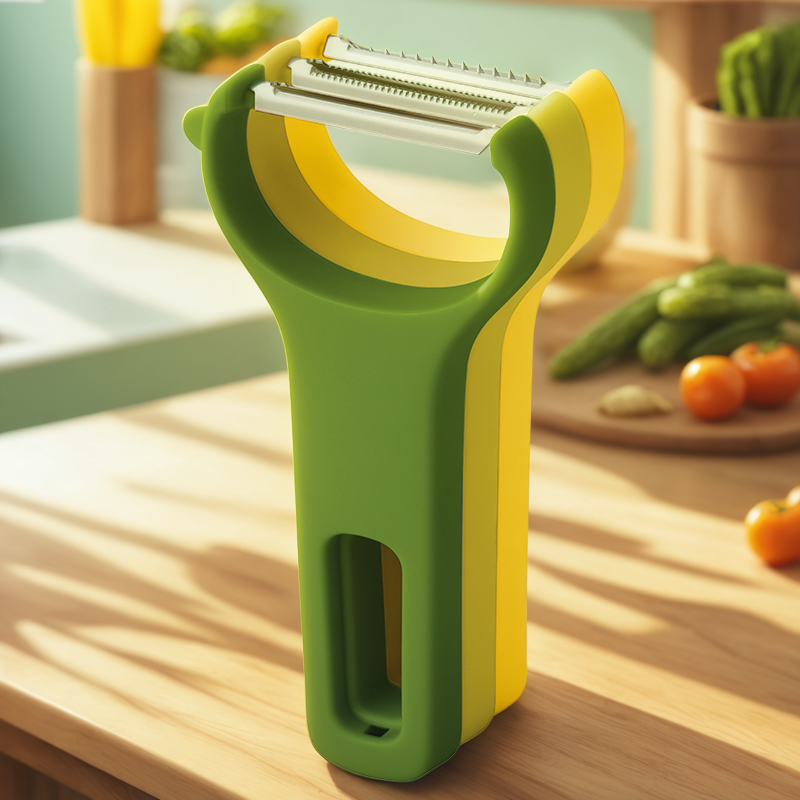
Stackable Peeling Tool: A Practical Guide to 3-Blade Prep
A good peeler should make food preparation faster without adding clutter to the kitchen drawer. A stackable peeling tool is designed for that exact problem: instead of keeping several single-purpose peelers loose in a drawer, it combines multiple peeling functions in a compact format. The original product concept described here is a 3-blade peeler system with a straight blade, a serrated blade, and a julienne blade. Each blade is intended for a different type of ingredient or cut, which makes the tool useful for everyday meals as well as more detailed prep work.
This guide explains how to use a stackable peeling tool in a practical way, what each blade is best suited for, and what to check before buying one for home use, retail assortment, or kitchen gift sets. It avoids exaggerated claims and focuses on the selection, use, storage, and care points that matter in real kitchens.
Key Takeaways
- A stackable peeling tool can reduce drawer clutter by grouping several peeling functions together.
- The straight blade is typically best for firm produce such as potatoes, apples, and carrots.
- The serrated blade is useful for softer skins, including tomatoes and kiwi, where grip matters.
- The julienne blade creates narrow strips from ingredients such as carrots and zucchini.
- Before purchasing, check blade security, handle comfort, cleaning access, and storage fit.
What Is a Stackable Peeling Tool?
A stackable peeling tool is a compact kitchen prep tool that keeps multiple peeling blades in a space-saving arrangement. Instead of storing three separate peelers, the blades are stacked or nested together so they are easier to find and less likely to create drawer mess. This is especially helpful in small kitchens, shared apartments, office pantries, and any kitchen where drawer space is limited.
The version described in the source article is a 3-blade peeler. It includes a straight blade for standard peeling, a serrated blade for delicate or slippery skins, and a julienne blade for cutting thin vegetable strips. The value of this format is not only that it saves space, but that it encourages the user to choose the correct blade for the ingredient instead of forcing one peeler to do every job.
How the Three Blades Are Used
Each blade has a clear role. Understanding those roles helps reduce waste, improves cut consistency, and makes prep less frustrating. While exact performance depends on the blade sharpness, handle design, and produce freshness, the basic uses are straightforward.
| Blade type | Best for | Practical notes |
|---|---|---|
| Straight blade | Potatoes, apples, carrots, and other firm produce | Use steady pressure and long strokes for even peeling. |
| Serrated blade | Tomatoes, kiwi, and soft-skinned fruit or vegetables | The tooth-like edge helps grip smooth or delicate skins. |
| Julienne blade | Carrots, zucchini, and similar vegetables | Creates narrow strips for salads, garnishes, and stir-fry prep. |
If you regularly prepare a mix of firm roots, soft fruit, and decorative vegetables, a 3-blade format can be more convenient than a single peeler. However, users should still pay attention to hand position, blade exposure, and surface stability, particularly when working quickly.
Why Stackable Storage Matters
Kitchen tools often fail not because they are unusable, but because they are inconvenient to store. Loose peelers can disappear under spatulas, measuring spoons, and other utensils. A stackable design helps keep related blades together and can make the tool easier to locate during meal prep.
For consumer buyers, the main benefit is daily convenience. For retailers or buyers evaluating kitchen gadget assortments, stackability can also be a useful feature because it communicates space efficiency. Still, the storage design should be inspected carefully. A good stackable tool should hold together securely, separate without excessive force, and avoid exposed blade edges when stored. If the blades are difficult to remove or feel unstable, the space-saving advantage may not translate into a better user experience.
Choosing the Right Peeling Tool
When comparing stackable peelers, look beyond color and shape. The product should feel controlled in the hand and should be easy to clean after use. Because the source information does not specify material grade, blade material, dishwasher suitability, or exact dimensions, those are important questions to confirm with the seller or supplier before purchase.
Use this checklist when evaluating a stackable 3-blade peeling tool:
- Blade identification: Can users quickly tell which blade is straight, serrated, or julienne?
- Grip comfort: Does the handle feel secure with dry and slightly damp hands?
- Storage safety: Are the blades protected or positioned to reduce accidental contact in a drawer?
- Cleaning access: Can food fibers be removed from around the julienne teeth and blade edges?
- Assembly fit: Do the stackable parts connect firmly without rattling or sticking?
- Care instructions: Does the packaging or supplier explain whether hand washing or dishwasher cleaning is recommended?
- Replacement expectations: If used heavily, is the product intended to be replaced as a whole, or are parts available?
For B2B buyers, such as importers, gift-set brands, or kitchenware wholesalers, request production samples and review them with typical ingredients. Ask the supplier about packaging options, labeling, carton details, inspection criteria, and any compliance documentation required for your target market. Do not assume claims such as food-contact suitability, dishwasher safety, or blade material unless they are documented by the supplier.
Best Ingredients for Each Blade
The straight blade is the everyday option. It is suited to firm produce where the skin separates cleanly from the flesh. Potatoes, apples, and carrots are examples mentioned in the original article, and they are sensible test ingredients because they reveal whether the blade cuts smoothly or drags.
The serrated blade is more specialized. Soft-skinned produce can be difficult for a standard peeler because the blade may slip or press too deeply. Tomatoes and kiwi are examples where a serrated edge can help grip the skin. Use light pressure and short strokes at first, especially with ripe produce.
The julienne blade is for presentation and texture. It can turn carrots or zucchini into thin strips for salads, garnishes, wraps, noodle-style vegetable dishes, or quick stir-fry preparation. For best results, choose firm vegetables and keep fingers clear of the blade path as the ingredient becomes smaller.
Use and Care Tips for Longer Service
Even a simple peeler benefits from careful handling. Rinse the blade soon after use, especially after peeling starchy vegetables or juicy fruit. Food left to dry around a serrated or julienne edge can be harder to remove later. A small dish brush can help clean between teeth, but avoid scrubbing toward your hand.
Dry the tool thoroughly before stacking or storing it. If the product comes with manufacturer care instructions, follow those first. If no instructions are available, hand washing is often the safer default for tools with sharp edges, moving parts, or tight storage channels. Store the peeler where the blades will not be knocked loose by heavier utensils.
Common Mistakes to Avoid
- Using the julienne blade on very soft vegetables that cannot hold their shape.
- Pressing too hard with the serrated blade and damaging delicate fruit flesh.
- Leaving peel residue in the blade area before stacking the tool away.
- Assuming all colorful or compact peelers have the same blade quality.
- Buying for retail or wholesale without checking samples against real produce.
FAQ
Is a stackable peeling tool better than a standard peeler?
It depends on how you cook. If you only peel potatoes occasionally, a standard peeler may be enough. If you prepare different fruits and vegetables and want multiple blade options in one compact format, a stackable 3-blade tool can be more useful.
What is the julienne blade for?
The julienne blade cuts vegetables into thin strips. It is commonly used for carrots and zucchini, especially for salads, garnishes, wraps, and quick-cooking vegetable dishes.
Can the serrated blade peel tomatoes?
The serrated blade is intended for soft or delicate skins, and tomatoes are one of the examples from the original product description. Use gentle pressure and start with a firm tomato for better control.
What should buyers ask a supplier before ordering in bulk?
Ask about blade material, handle material, food-contact requirements for your market, packaging, labeling, inspection standards, sample availability, carton information, and care instructions. Confirm details in writing rather than relying on assumptions.
How should the tool be cleaned?
Rinse after use, remove trapped peel from the blade area, dry thoroughly, and follow the supplier’s care instructions. If dishwasher suitability is not stated, hand washing is the safer choice.
