




How to Choose and Use a Tri-Blade 3-in-1 Vegetable Peeler
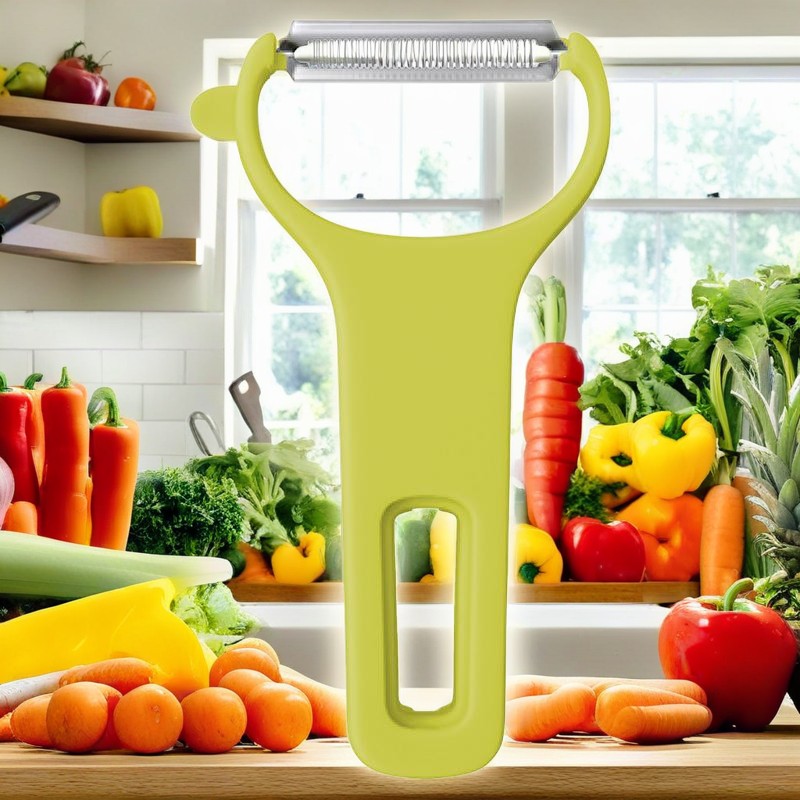
A tri-blade 3-in-1 vegetable peeler is designed for cooks who want one compact tool for several common prep jobs. Instead of keeping separate peelers for potatoes, tomatoes and vegetable strips, this style combines three blade functions in one handheld design. The original product description highlights a straight blade, a serrated blade and a julienne blade, with a bright green, yellow and orange color scheme and an ergonomic handle.
This guide explains what each blade is best for, how to use the tool more effectively, what to check before buying, and how to clean and store it properly. The goal is simple: better food prep with less confusion and fewer unnecessary tools in the drawer.
What Is a Tri-Blade 3-in-1 Vegetable Peeler?
A tri-blade peeler is a multi-function kitchen tool with three peeling or cutting surfaces. The blades are arranged in a compact format so the user can switch between different tasks without changing tools. This can be useful in home kitchens, small cafés, cooking classes, meal-prep stations and any setting where fruits and vegetables are prepared regularly.
The key advantage is task matching. Not every fruit or vegetable peels the same way. A hard carrot needs a different edge than a ripe tomato, and a zucchini cut into thin strips needs a different blade again. A 3-in-1 peeler gives you options while keeping the tool easy to store.
Blade Comparison: Which Edge Should You Use?
The most useful way to understand a tri-blade peeler is by matching each blade to the right ingredient. The table below summarizes typical uses based on the functions described in the original article.
| Blade Type | Best For | Why It Helps | Use Tip |
|---|---|---|---|
| Straight blade | Potatoes, apples, carrots and other firm produce | Creates smooth, controlled peeling on harder surfaces | Use long, even strokes and rotate the produce as you peel |
| Serrated blade | Tomatoes, peaches and softer fruit | Helps grip delicate skins without crushing the flesh | Use light pressure and let the teeth start the cut |
| Julienne blade | Zucchini, carrots, cucumbers and garnish strips | Cuts vegetables into narrow strips for salads, stir-fries or decoration | Keep the vegetable stable and pull in one direction |
How to Select the Right 3-in-1 Peeler
When choosing a multi-blade peeler, do not focus only on the number of blades. The quality of the grip, blade access and cleaning design matter just as much. A tool that looks clever but is awkward to hold will slow down prep work.
- Grip comfort: Look for a handle shape that feels secure in both dry and slightly wet hands. The original article notes an ergonomic handle, which is important for longer prep sessions.
- Blade identification: Each blade should be easy to recognize so users do not accidentally select the wrong edge.
- Compact storage: A layered or compact design can reduce drawer clutter, but it should not expose sharp edges unnecessarily.
- Cleaning access: Food particles can collect near julienne teeth, so check whether the design is easy to rinse and brush clean.
- Supplier information: If buying for retail, hospitality or wholesale use, ask the supplier for confirmed material details, care instructions, packaging options and any applicable compliance documents rather than assuming specifications.
Practical Uses in Everyday Food Prep
A tri-blade peeler is most useful when you move between different ingredients in one recipe. For example, you may peel carrots with the straight blade, use the julienne blade for zucchini strips, and then switch to the serrated blade for tomatoes. This makes it especially helpful for salads, soups, stir-fries, garnishes and lunchbox prep.
For firm vegetables, start with washed produce and trim away any damaged areas. Hold the vegetable on a stable cutting board or firmly in your hand, depending on its size. Pull the peeler away from your body when possible, and keep fingers out of the blade path. For soft fruit, reduce pressure. Pressing too hard can tear the surface or waste flesh.
Step-by-Step Use Guide
- Wash the produce first. Peeling can drag surface dirt across the edible part, so rinse and dry fruits or vegetables before cutting.
- Choose the correct blade. Use the straight blade for firm skins, serrated blade for delicate skins and julienne blade for thin strips.
- Stabilize the ingredient. Large vegetables can rest on a cutting board; smaller items should be held with a careful, secure grip.
- Use controlled strokes. Long, steady movements are safer and cleaner than short, forceful scraping.
- Clear the blade during use. If peel builds up, stop and rinse or tap it away carefully. Never wipe the blade with your fingers.
- Inspect the result. Remove remaining spots with a short second pass instead of digging into the ingredient.
Cleaning, Drying and Storage
Multi-blade peelers need careful cleaning because each blade shape traps food differently. Rinse the tool soon after use, especially after peeling starchy potatoes or juicy tomatoes. A small dish brush is useful for cleaning around a julienne blade, where thin vegetable fibers can lodge between teeth.
If the supplier or packaging confirms dishwasher suitability, place the peeler where it will not shift into other utensils. If dishwasher use is not clearly confirmed, hand washing is the safer default. After washing, dry the peeler thoroughly before storage. Drying helps keep the tool pleasant to handle and reduces residue in the drawer.
Store the peeler so the blades are not loose against fingers or other tools. A dedicated utensil tray, blade cover or separate compartment is useful. This is particularly important in busy family kitchens or shared prep areas where several people may reach into the same drawer.
Key Takeaways
- A tri-blade 3-in-1 peeler combines straight, serrated and julienne functions in one compact kitchen tool.
- Use the straight blade for firm produce, the serrated blade for softer fruit and the julienne blade for narrow vegetable strips.
- Comfort, blade access, cleaning ease and safe storage are important selection factors.
- For commercial sourcing, confirm material, care, packaging and compliance details directly with the supplier.
FAQ
What is the straight blade best for?
The straight blade is best suited to firm produce such as potatoes, apples and carrots, where a smooth peeling stroke is needed.
Why use a serrated blade on tomatoes?
A serrated blade can grip thin, slippery skin more effectively than a plain edge, helping peel soft fruit with less crushing when used gently.
Can the julienne blade make zucchini noodles?
It can create narrow zucchini strips suitable for salads, garnishes or quick cooking. The exact thickness depends on the blade design, so check the supplier’s product details if size consistency matters.
Is a 3-in-1 peeler suitable for professional kitchens?
It can be useful for light to moderate prep tasks, but professional buyers should ask about materials, replacement policy, cleaning guidance and durability expectations before purchasing in volume.
How should I clean between the julienne teeth?
Rinse immediately after use and clean carefully with a dish brush. Avoid using fingers to remove trapped pieces because the teeth are sharp.
