




OEM Kitchen Scissors: A Practical Sourcing Guide for Buyers
Kitchen scissors are one of the most frequently reached-for tools in home kitchens, restaurant prep areas, catering operations, and retail kitchenware assortments. For buyers sourcing OEM kitchen scissors, the goal is not simply to find a product that looks attractive in a catalog. The right item should match the intended user, perform reliably across common kitchen tasks, be safe to store, and be supported by clear supplier communication.
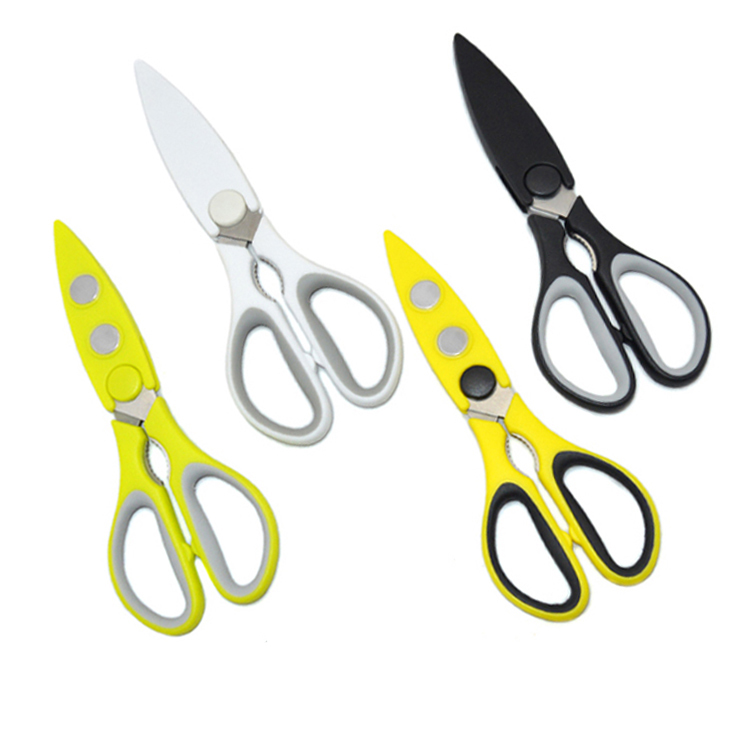
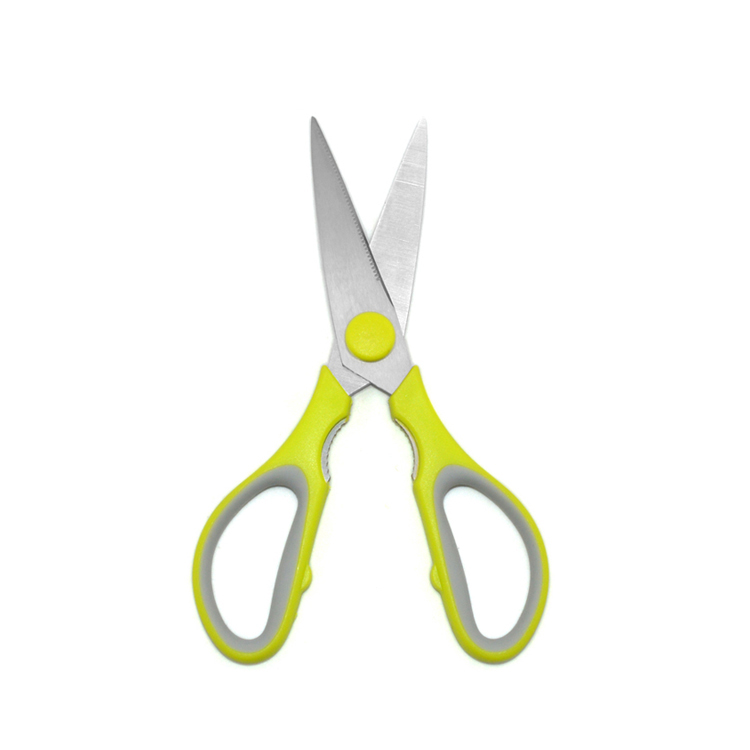
The original product article introduced a multi-purpose kitchen scissors item with soft-grip handles and a protective magnetic sheath. Those are useful details for buyers because they point to two practical concerns: comfort during repeated use and safer storage when the scissors are not in use. This rewritten guide expands the topic into a sourcing-focused article for retailers, wholesalers, private-label brands, and foodservice buyers evaluating OEM kitchen scissors.
Key Takeaways
- OEM kitchen scissors should be evaluated by intended use, not only by appearance or unit cost.
- Multi-purpose scissors can support everyday tasks such as cutting meat portions, trimming herbs, and opening food packaging, but buyers should confirm performance through samples.
- Soft-grip handles are useful for comfort, especially in kitchens where tools are used repeatedly.
- A protective magnetic sheath can support safer storage and help protect blade edges when the scissors are kept in a drawer or displayed on a magnetic surface.
- Before placing a wholesale or OEM order, ask the supplier about materials, packaging options, labeling, inspection process, spare parts policy, and any applicable compliance documentation.
Why OEM Kitchen Scissors Matter in a Kitchenware Range
OEM kitchen scissors allow a buyer to source a product that can fit a specific retail channel, brand position, packaging style, or customer segment. In a grocery channel, the focus may be affordability and simple packaging. In a specialty kitchenware store, customers may compare comfort, storage safety, blade feel, and design. In restaurant supply, durability and ease of cleaning may matter more than color or presentation.
The value of OEM sourcing is control. A buyer can ask about handle color, logo placement, blister card or box packaging, instruction inserts, barcode needs, and carton labeling. However, OEM control also requires careful verification. Do not assume that every pair of kitchen scissors uses the same blade material, handle construction, or finishing process. If those details are commercially important, request a written specification sheet from the supplier and confirm that the mass-production sample matches it.
For a product such as multi-purpose kitchen scissors, it is also important to define the intended use clearly. A tool marketed for general kitchen preparation should be tested for the tasks your customers expect: cutting herbs, trimming poultry skin, portioning cooked or raw meat, snipping packaging, and performing small prep jobs that would otherwise require a knife and board. If a buyer wants to market the item for harder tasks, that claim should be verified rather than assumed.
Product Features to Review Before Sourcing
The source article mentions three practical features: multi-purpose use, ergonomically designed soft-grip handles, and a protective magnetic sheath. These features are worth reviewing in more detail during supplier evaluation.
Multi-purpose use is valuable because customers prefer kitchen tools that solve several small problems. A pair of scissors that can cut meat, slice herbs, and open packaging can reduce the number of tools needed during prep. Still, the phrase multi-purpose should be supported by realistic use instructions. Buyers should ask suppliers what tasks the scissors are designed for and what tasks should be avoided.
Soft-grip handles can improve comfort and reduce hand fatigue during repeated use. This is especially relevant for foodservice teams, meal-prep customers, and households that cook frequently. During sampling, check whether the handle feels secure when the hand is wet, whether the grip fits different hand sizes, and whether the finger openings feel comfortable after repeated cuts.
The protective magnetic sheath is another useful point. A sheath can help cover the blades in a drawer, reduce accidental contact with sharp edges, and protect the scissors during storage or display. If the cover is magnetic, ask the supplier how it is intended to be used, whether it attaches securely, and whether the magnet is part of the cover design or a separate component.
Comparison Checklist for OEM Kitchen Scissors
The following table can help purchasing teams compare samples from different suppliers in a structured way. It does not replace physical testing, but it helps avoid decisions based only on product photos.
| Evaluation Area | What to Check | Questions to Ask the Supplier |
|---|---|---|
| Cutting performance | Test on herbs, meat portions, food packaging, and other intended kitchen tasks. | Which materials and tasks are recommended? Are there tasks the scissors should not be used for? |
| Handle comfort | Check grip feel, hand fit, slipping, and comfort after repeated cutting. | Can handle color, texture, or logo placement be customized for OEM orders? |
| Blade protection | Confirm whether the sheath covers the blade securely during storage. | How is the magnetic sheath assembled, packed, and tested before shipment? |
| Packaging | Review retail display, barcode placement, warning text, and instruction clarity. | What packaging formats are available, and can artwork be supplied by the buyer? |
| Quality inspection | Look for consistent opening and closing action, finish quality, and clean assembly. | What inspection steps are used before export, and can inspection criteria be agreed in advance? |
| Commercial terms | Confirm lead time, order quantity, sample policy, and carton details. | What are the current MOQ, production schedule, payment terms, and shipping options? |
How to Test Samples Before a Wholesale Order
Sample testing should be practical and repeatable. A buyer does not need a laboratory to perform an initial evaluation, but the same tasks should be repeated across all shortlisted samples. This makes comparison more reliable.
- Inspect the product visually for scratches, burrs, uneven assembly, loose parts, and packaging damage.
- Open and close the scissors repeatedly to check smoothness, resistance, and alignment.
- Test cutting on common kitchen items such as herbs, thin meat portions, vegetable stems, and typical food packaging.
- Use the scissors with dry hands and slightly damp hands to assess grip security.
- Attach and remove the protective sheath several times to see whether it fits consistently.
- Place the scissors in the intended retail packaging and check whether the presentation is clear and safe.
- Record comments from several users, not just one buyer, because hand size and cutting style vary.
If the product will be sold under a private label, test a sample with final or near-final packaging. Good scissors can still create customer complaints if the packaging does not explain cleaning, storage, or safe handling. Buyers should also confirm whether the supplier can provide care instructions and warning statements, or whether those must be written by the buyer.
OEM and Private-Label Questions Buyers Should Ask
Many sourcing problems occur because assumptions are not written down. Before confirming an OEM kitchen scissors order, prepare a list of questions and request written answers. This is especially important if your market requires specific labeling, safety language, or retailer documentation.
- What blade and handle materials are used, and can the supplier provide a written specification?
- Which parts of the product can be customized: handle color, logo, sheath color, packaging, instructions, or carton marks?
- Is the magnetic sheath included in the standard item, or is it an optional accessory?
- What sample types are available: stock sample, customized sample, pre-production sample, and shipment sample?
- What quality points are checked before shipment, such as appearance, assembly, cutting action, sheath fit, and packaging condition?
- What are the current MOQ, lead time, payment terms, and available shipping methods?
- Can the supplier support buyer-provided artwork, barcodes, warning labels, or retailer-specific packaging requirements?
- What documents can be provided for your market, and which documents are not available?
A reliable supplier should be willing to discuss these points clearly. If a detail is unknown, it is better to identify it early than after packaging has been printed or a container has been booked.
Storage, Safety, and Care Guidance for End Users
Even when this article is written for B2B sourcing, end-user experience matters because it affects reviews, repeat orders, and returns. Kitchen scissors are sharp tools and should be packaged and explained accordingly. If a protective magnetic sheath is included, the packaging or instruction insert should show how to cover the blades correctly after use.
General care guidance should be simple: wash after contact with food, dry before storage, keep out of reach of children, and avoid using the scissors for tasks beyond their intended purpose. If the supplier provides specific cleaning or dishwasher guidance, use that exact wording. If not, do not invent claims. Ask the supplier for approved care instructions and include them in the final packaging or product page.
For retail buyers, a clear product page can reduce confusion. Explain that the scissors are designed for common kitchen preparation tasks, note the soft-grip handle benefit, and describe the protective magnetic sheath as a storage aid. Avoid exaggerated claims. Customers trust accurate information more than broad promises.
Practical FAQ
What are OEM kitchen scissors?
OEM kitchen scissors are kitchen scissors sourced from a manufacturer or supplier for sale under a buyer’s brand, packaging, or product program. Customization may include packaging, colors, logos, labels, or other details, depending on what the supplier can support.
Are multi-purpose kitchen scissors suitable for professional kitchens?
They can be useful in professional kitchens for repeated prep tasks, but buyers should test samples under real working conditions. Comfort, cutting consistency, cleaning needs, and storage safety should be reviewed before purchasing in volume.
Why is a magnetic sheath useful?
A protective magnetic sheath can cover the blades when the scissors are stored, helping reduce accidental contact with sharp edges and helping protect the blade area. Buyers should confirm sheath fit and magnet function during sample evaluation.
What should I confirm before ordering kitchen shears wholesale?
Confirm product materials, customization options, packaging format, MOQ, lead time, sample approval process, inspection standards, carton details, and any documents needed for your sales market.
Can I claim specific material grade or compliance on my product page?
Only if the supplier provides reliable written documentation and the claim is valid for your target market. Do not add material grades, certifications, testing results, or compliance claims unless they are confirmed.
Final Sourcing Advice
OEM kitchen scissors can be a strong addition to a kitchenware line when the product is selected carefully. For this type of item, the best sourcing approach is hands-on: compare samples, test common kitchen tasks, evaluate handle comfort, check the magnetic sheath, and review packaging before committing to a wholesale order. A clear supplier conversation is just as important as the product photo. Ask direct questions, document the agreed specifications, and approve a production sample before scaling up.
For Bonet Houseware buyers and product teams, the most useful next step is to treat kitchen scissors as a practical tool, not only as a visual product. When performance, safety, packaging, and OEM details are reviewed together, the final assortment is more likely to meet customer expectations and reduce avoidable sourcing risk.
