




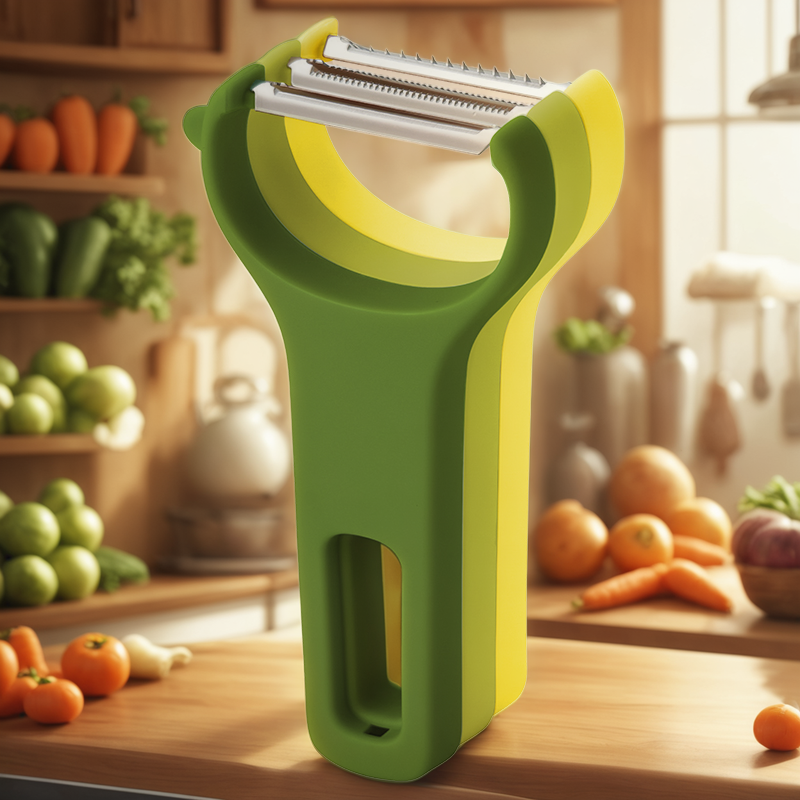
Stackable 3-Blade Peeling Tool: Practical Uses, Selection Tips and Care
A peeler is one of the simplest tools in the kitchen, but the wrong one can slow down prep, waste food, or clutter a drawer with several single-purpose gadgets. A stackable 3-blade peeling tool is designed to solve that problem by keeping three common peeling functions in one compact set: a straight blade, a julienne blade and a serrated blade. For home cooks, meal-prep users and small food-service kitchens, the main value is not novelty; it is having the right blade ready for different textures and tasks.
This guide explains how a stackable peeler works, when each blade is useful, what to check before buying, and how to clean and store it safely. The goal is to help you decide whether this type of kitchen tool fits your cooking habits and storage space.
Key Takeaways
- A stackable peeler helps reduce drawer clutter by grouping three peeling functions together.
- The straight blade is best for everyday produce such as potatoes, carrots and apples.
- The julienne blade creates thin strips for salads, garnishes and vegetable noodles.
- The serrated blade is useful for softer or more delicate skins, including tomatoes and peaches.
- Comfort, blade sharpness, safe storage and easy cleaning are the most important selection factors.
What Is a Stackable 3-Blade Peeler?
A stackable 3-blade peeler is a compact peeling tool system with multiple blade types arranged so they can be stored together. Instead of keeping separate peelers for standard peeling, julienne cutting and delicate skins, the blades stack or nest in a space-saving format. This can be especially useful in smaller kitchens, shared apartments, RVs, office pantries or prep areas where drawer space is limited.
The original concept highlighted three blade styles: a straight blade, a julienne blade and a serrated blade. It also emphasized an ergonomic handle and stainless steel blades. Those details matter because the handle affects control, while the blade material and sharpness influence how smoothly the tool moves through produce. Even so, buyers should still inspect the actual product details before purchase, because dimensions, attachment method and cleaning instructions can vary by model.
How the Three Blades Compare
Each blade is intended for a different type of prep. The table below offers a practical comparison for everyday cooking.
| Blade type | Best uses | Produce examples | What to watch for |
|---|---|---|---|
| Straight blade | General peeling and fast prep | Potatoes, apples, carrots, cucumbers | Use steady pressure to avoid removing too much flesh. |
| Julienne blade | Creating thin strips | Zucchini, carrots, cucumbers | Keep fingers clear of the cutting path; strips can catch if the produce is too soft. |
| Serrated blade | Peeling delicate or slippery skins | Tomatoes, peaches, kiwifruit | Use gentle strokes to avoid bruising softer produce. |
When a Stackable Peeler Makes Sense
This type of peeler is most useful when you regularly switch between different prep tasks. If you cook simple meals and only peel potatoes once a month, a single basic peeler may be enough. But if you prepare salads, lunch bowls, garnishes or vegetable strips, the julienne blade can save time compared with cutting every strip by knife. If you often peel soft-skinned produce, a serrated blade can offer better grip than a smooth blade.
The stackable design also has an organizational advantage. Loose peelers can disappear in crowded drawers, and exposed blades can scrape against other tools. A nested design keeps the set together and can make it easier to find the blade you need. Before buying, check whether the stacked parts stay securely together and whether the design protects blade edges during storage.
Selection Checklist Before You Buy
Because product listings often focus on appearance, it helps to review practical details. Use the checklist below when comparing a stackable peeling tool with other options:
- Blade types: Confirm that the set includes the specific straight, julienne and serrated blades you expect.
- Blade material: If stainless steel blades are stated, check whether care instructions recommend hand washing or allow dishwasher cleaning.
- Handle comfort: Look for an ergonomic shape that supports a secure grip, especially when peeling firm vegetables.
- Stacking security: Ask whether the pieces lock, click, nest or simply rest together.
- Cleaning access: Make sure food can be rinsed from between teeth, blade slots and joints.
- Left- or right-hand use: If this matters in your household, verify whether the peeler works comfortably in both directions.
- Storage safety: Check whether blades are covered or shielded when stacked.
Using Each Blade Safely and Effectively
For the straight blade, wash and dry the produce first, then peel away from your body in smooth strokes. Long vegetables such as carrots and cucumbers are easier to control when one end rests on a cutting board. Round produce, such as apples or potatoes, should be held firmly without placing fingertips in the blade path.
For the julienne blade, start with produce that is firm and evenly shaped. Zucchini, carrots and cucumbers work well when they are not overly soft. Apply even pressure and avoid rushing; julienne teeth are designed to create narrow strips, so they require careful handling. Stop before the vegetable becomes too small to hold safely.
For the serrated blade, use lighter pressure. This blade is helpful on skins that are difficult for a straight blade to grip, such as tomatoes or peaches. Short, controlled strokes usually work better than forceful pulls. If the fruit is very ripe, consider placing it on a board for added control.
Cleaning, Drying and Storage
Peelers come into contact with starchy vegetables, acidic fruit and small food particles that can lodge near the blade. Rinse the blade soon after use so residue does not dry in place. A small dish brush can help clean a julienne blade because the teeth may trap fine pieces of vegetable. Always clean from the back of the blade where possible, not toward the cutting edge.
If the product instructions do not clearly state that the tool is dishwasher safe, hand washing is the safer default. Dry the blades thoroughly before stacking to reduce water spots and help maintain the tool. Store the peeler where the blades are not pressed against heavier utensils. If the stackable design includes a blade cover or protected nesting position, use it consistently.
Common Mistakes to Avoid
- Using the julienne blade on produce that is too soft, which can lead to tearing instead of clean strips.
- Pressing too hard with the straight blade, causing unnecessary food waste.
- Leaving the tool wet after washing, especially around blade joints or tight spaces.
- Storing loose blades in a crowded drawer where edges can be damaged or hands can be cut.
- Assuming all 3-blade peelers have the same size, grip or cleaning method without checking the product details.
FAQ
Is a 3-blade peeler better than a standard peeler?
It depends on how you cook. A standard peeler is enough for basic peeling. A 3-blade version is more useful if you want one compact tool for everyday peeling, julienne strips and delicate skins.
What is the julienne blade used for?
The julienne blade cuts produce into thin strips. It is commonly used for carrot strips, cucumber garnish, zucchini ribbons and salad toppings.
Can a serrated peeler be used on tomatoes?
Yes, a serrated blade is intended for softer or slippery skins, and tomatoes are a common example. Use gentle pressure to avoid crushing ripe fruit.
How should I clean food from the blade teeth?
Rinse immediately after use and use a small brush if particles remain. Clean carefully from the non-cutting side and dry the tool before stacking or storing.
What should I ask before buying in bulk or for a shared kitchen?
Ask the supplier about blade materials, handle dimensions, packaging, care instructions, replacement policy, and whether the stacking design protects the blades during storage and transport.
Final Thoughts
A stackable 3-blade peeler is a practical option for kitchens that need versatility without adding several separate tools. Its value comes from matching the blade to the task: straight for everyday peeling, julienne for strips and serrated for delicate skins. When choosing one, focus on comfort, safe storage, cleaning access and clear care instructions. A well-chosen peeler will not change how you cook overnight, but it can make routine prep more organized, safer and more efficient.
