




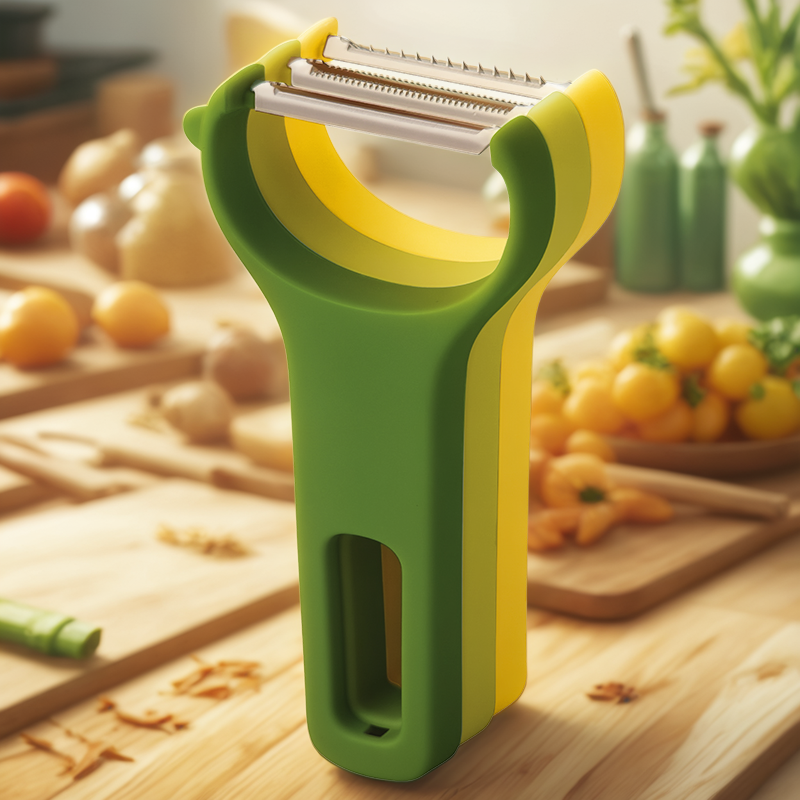
Stackable Peeling Tool: A Practical Guide to Choosing and Using a 3-Blade Peeler
A good peeler is one of the most-used tools in a kitchen, yet many drawers contain several loose peelers that do not work equally well on every ingredient. A stackable peeling tool addresses that problem by combining multiple peeling heads in one compact set. The version described in the original product introduction includes three blade functions: a straight blade for firm vegetables, a julienne blade for thin strips, and a serrated blade for softer-skinned produce such as tomatoes and peaches.
This guide explains what that design is useful for, how to choose a peeler set with confidence, and how to care for it so it stays safe and effective in everyday food preparation.
Key Takeaways
- A stackable peeler is designed to reduce drawer clutter by nesting multiple peeling heads into one compact unit.
- Three blade types serve different tasks: straight peeling, julienne cutting, and serrated peeling for delicate skins.
- Stainless steel blades are useful for sharpness and durability, but buyers should still check edge quality, attachment stability, and cleaning instructions.
- An ergonomic handle can reduce hand fatigue, especially when preparing large batches of vegetables.
- Safe storage and careful washing are important because multiple blades increase both versatility and handling risk.
What Is a Stackable 3-Blade Peeling Tool?
A stackable 3-blade peeling tool is a compact kitchen utensil set built around interchangeable or nested peeling heads. Instead of keeping a separate standard peeler, julienne cutter, and serrated peeler in different parts of the drawer, the heads are designed to stack together as a single organized unit.
The original description highlights a layered green and yellow appearance, which helps distinguish the tool visually in a drawer. More importantly, the stackable format is practical: it keeps related peeling functions together and makes it easier to find the right blade before starting prep work.
For home kitchens, this is mainly a space-saving and convenience feature. For small cafés, catering prep areas, or demonstration kitchens, it can also help keep prep stations tidier, provided staff are trained to clean and store the blades properly after use.
How the Three Blade Types Compare
The main benefit of this style of peeler is not that it has more parts, but that each blade serves a different purpose. Using the wrong blade can crush delicate produce, remove too much flesh, or make prep slower than necessary.
| Blade type | Best suited for | Typical result | Selection note |
|---|---|---|---|
| Straight blade | Firm vegetables such as potatoes and carrots | Clean, controlled peeling | Check that the blade feels stable and glides without digging too deeply. |
| Julienne blade | Vegetables for salads, garnishes, stir-fries, and slaws | Thin strips rather than broad peels | Look for even tooth spacing and a comfortable angle for repeated strokes. |
| Serrated blade | Soft-skinned produce such as tomatoes and peaches | Grips the skin with less slipping | Useful when a straight blade skids or bruises the surface. |
When a Stackable Peeler Makes Sense
A stackable peeling tool is most useful when you frequently prepare different types of produce but do not want to store several separate utensils. It suits kitchens where drawer space is limited, or where a simple set of tools is preferred over a large collection of single-purpose gadgets.
Common use cases include peeling potatoes for weekday meals, making carrot or cucumber strips for salads, preparing fruit with soft skins, or creating quick vegetable garnishes. The julienne blade is especially useful for cooks who want a faster way to create uniform strips without setting up a mandoline or food processor.
However, it is not a replacement for every cutting tool. If you need very precise cuts for professional plating, thick vegetable ribbons, or high-volume processing, a dedicated slicer or commercial prep machine may be more suitable. The stackable peeler is best understood as a compact everyday prep tool.
Features to Check Before Buying
Because peelers are simple tools, buyers sometimes overlook the details that determine whether they are pleasant to use. Before choosing a stackable 3-blade peeler, consider the following checklist:
- Blade material: The original description refers to stainless steel blades. Confirm the blade material with the supplier or product label if this matters for your use.
- Blade sharpness: A sharp blade should remove skin cleanly without requiring heavy pressure.
- Handle comfort: An ergonomic handle can help reduce fatigue during longer prep sessions.
- Stacking security: The heads should nest neatly and should not separate too easily inside a drawer.
- Cleaning access: Check whether food can get trapped around the blade mount or stacking joints.
- Left- or right-hand use: If several people will use the tool, confirm whether the design is comfortable for both hands.
- Storage safety: Multiple exposed blades require careful storage, especially in homes with children.
How to Use Each Blade More Effectively
For the straight blade, hold firm vegetables on a stable cutting board or in your hand with a secure grip. Use smooth strokes away from your body when possible, rotating the vegetable as you work. Avoid forcing the blade; if it catches repeatedly, the produce surface may be uneven or the blade may need cleaning.
For the julienne blade, apply steady pressure and keep the ingredient stable. Long vegetables such as carrots or cucumbers usually produce more consistent strips than irregular shapes. Stop before the piece becomes too small to hold safely.
For the serrated blade, use light strokes on tomatoes, peaches, or other soft-skinned produce. The purpose of the serration is to grip the skin, not to saw aggressively. Too much pressure can bruise ripe fruit or remove more flesh than needed.
Cleaning, Care, and Safe Storage
Rinse the blade soon after use, especially after peeling starchy vegetables or juicy fruit. Dried residue can make cleaning harder and may reduce cutting performance during the next use. Use a dish brush rather than your fingers to clear food from the blade edge.
If the product packaging includes dishwasher guidance, follow it. If no guidance is available, hand washing is the safer default for preserving sharp edges and protecting handles or stacking parts. Dry the tool thoroughly before stacking it back together to reduce moisture trapped between components.
Store the stacked unit in a consistent location so users do not reach blindly into a drawer and touch a blade. If the set includes any blade cover or locking feature, use it every time.
Who Should Consider This Tool?
This type of peeler is a good fit for home cooks who want a tidy drawer, renters with limited kitchen storage, meal-prep users who handle vegetables often, and small food-service teams that need simple manual tools at a prep station. It is also useful for anyone who currently owns several peelers but only uses one because the others are hard to find.
For wholesale or sourcing teams evaluating similar products, request clear details from the supplier before purchasing in quantity. Useful questions include: What blade material is used? Are replacement parts available? What packaging options are offered? Are care instructions included? How is the stacking mechanism tested for normal use? These questions help avoid assumptions about durability, compliance, or performance that are not visible from photos alone.
Practical FAQ
Can one peeler really handle potatoes, carrots, tomatoes, and peaches?
Yes, if the set includes the right blade types. Use the straight blade for firm vegetables, the julienne blade for strips, and the serrated blade for soft skins such as tomatoes and peaches.
Is the julienne blade the same as a spiralizer?
No. A julienne blade creates thin strips with manual strokes. A spiralizer creates continuous spiral cuts and is better for larger volumes or noodle-like shapes.
Are stainless steel blades enough to guarantee quality?
No. Stainless steel is a useful blade material, but performance also depends on edge sharpness, blade alignment, handle design, and how securely the blade is mounted.
How should I store a stackable peeler safely?
Stack the heads as intended, dry them first, and store the unit where the blades are not exposed to careless contact. Avoid tossing loose blades into a crowded drawer.
Is this tool suitable for professional kitchens?
It may be suitable for light prep, small stations, or garnish work. For high-volume peeling, a dedicated commercial tool may be more efficient. Buyers should ask the supplier about intended use, care instructions, and durability expectations.
