





Stationery Scissors Factory Guide: Sourcing 2-in-1 Scissors and Utility Knife Sets
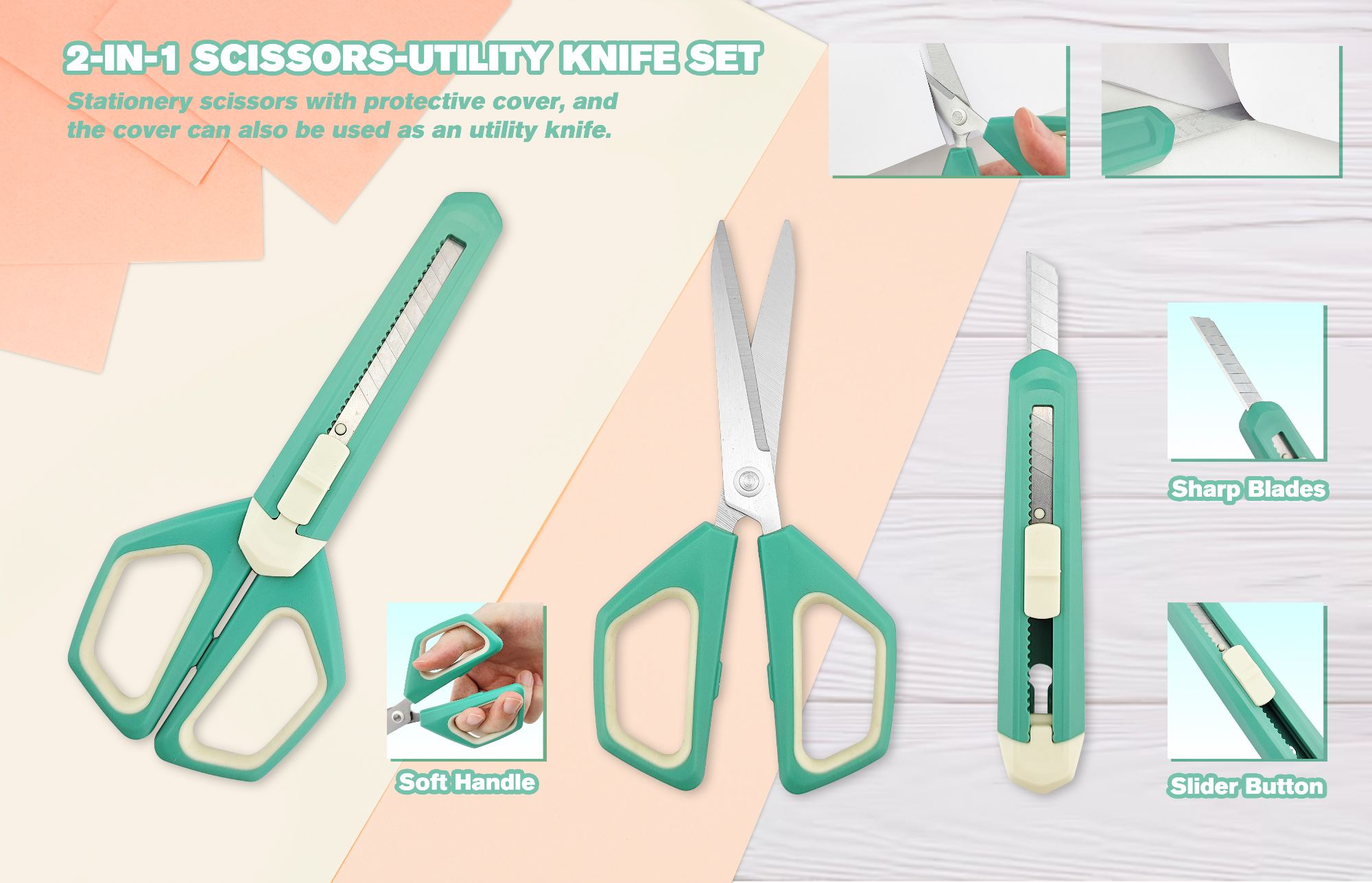
For distributors, office supply brands, school stationery buyers, and promotional product teams, scissors are a familiar category. The challenge is that familiar products can become crowded and difficult to differentiate. A 2-in-1 scissors and utility knife set addresses a common problem: users often need one tool for paper cutting and another for opening boxes, trimming packaging, or handling tougher materials. Combining these functions can reduce desk clutter and make everyday tasks more efficient.
This guide explains how to evaluate a multi-functional stationery cutting tool from a sourcing perspective. It is written for buyers comparing a stationery scissors factory, supplier, manufacturer, or OEM partner. Rather than focusing only on appearance, it outlines practical use cases, feature checks, quality questions, packaging considerations, and the information you should request before placing an order.
What This 2-in-1 Cutting Tool Is Designed to Do
The product described in the original article is a 2-in-1 scissors-utility knife set. It combines a pair of stationery scissors with a slide-out utility knife in one compact tool. The stated design includes soft-grip handles, stainless steel scissor blades, a teal appearance, and a sliding button that reveals the utility knife function. These are useful features for office desks, classrooms, home workspaces, craft areas, mailrooms, and retail back-office environments.
In daily use, scissors are often chosen for cutting paper, labels, thin card, tags, and light craft materials. A utility knife is often more suitable for opening cardboard cartons, cutting tape, trimming plastic packaging, or making straight starter cuts. When these two tools are integrated, users may spend less time switching between items and may be less likely to misplace a separate cutter.
For B2B buyers, the product is not simply a novelty. It can serve as a practical stationery item for retail assortments, corporate office kits, school supply ranges, and branded promotional programs. The value depends on how well the tool performs both functions safely and consistently.
Why Buyers Consider Multi-Functional Stationery Scissors
Stationery buyers usually face pressure to offer products that are useful, compact, and easy to understand at shelf level or online. A combined scissors and utility knife set can fit that requirement because the benefit is simple: one tool handles multiple light-duty cutting tasks. However, buyers should still consider whether the item matches their channel, customer age group, and safety expectations.
- Office supply distributors: Useful for desk accessories, reception areas, mailrooms, and document handling.
- School and education suppliers: Potentially suitable for staff rooms, art rooms, and administrative use; buyers should clarify age suitability and local safety requirements.
- Craft and DIY retailers: Helpful for paper crafts, packaging, labeling, and hobby organization.
- E-commerce sellers: The dual function can be explained clearly through images, bullet points, and demonstration videos.
- Corporate gift buyers: May be considered for practical desk kits if branding options are available.
The main sourcing question is not whether the idea is appealing, but whether the execution is reliable. A combined product must be comfortable as scissors, controlled as a knife, and safe to store when not in use.
Feature Checklist for Product Selection
Before comparing quotations, buyers should define the product requirements. This prevents a low price from hiding important differences in blade finish, handle comfort, packaging, or safety design. The table below can be used as a practical checklist when requesting samples from a stationery scissors supplier.
| Selection Point | What to Check | Questions to Ask the Supplier |
|---|---|---|
| Scissor function | Clean cutting on paper and light materials | What materials are the scissor blades made from, and what cutting tests are performed? |
| Utility knife function | Smooth sliding action and secure retraction | How does the slide button lock or control the blade during use and storage? |
| Handle comfort | Grip shape, hand fit, and control during repeated use | Can you provide samples for user testing across different hand sizes? |
| Safety design | Blade exposure, retraction, sharp edges, and packaging warnings | What safety instructions, age guidance, or warnings can be added to packaging? |
| Appearance | Color consistency, finish, and retail presentation | Are color matching, logo printing, or custom packaging options available? |
| OEM readiness | Branding, artwork handling, carton marks, and documentation | What files, approvals, sample stages, and lead time details are required? |
How to Evaluate a Stationery Scissors Factory or Supplier
When sourcing from a stationery scissors factory, buyers should look beyond the product photograph. The image may show an attractive teal tool, but the purchasing decision should be based on repeatable production quality and clear communication. Ask the supplier to explain the production process, quality control steps, sample policy, packaging options, and how they handle corrective actions if a batch does not match the approved sample.
It is important not to assume details that have not been confirmed. For example, do not assume a particular steel grade, certification, production capacity, minimum order quantity, or compliance status unless the supplier provides written documentation. A responsible buyer should request evidence and keep it with the project file.
Useful questions include:
- Can you provide a pre-production sample that matches the intended color, grip, blade function, and packaging?
- What are the available branding methods for OEM stationery scissors or private label orders?
- How is the utility knife mechanism checked before shipment?
- What inspection standard is used for appearance, function, sharpness, and packaging?
- Can the supplier provide product images, user instructions, and carton information for e-commerce listings?
- What export packaging is recommended to protect blade tips and handles during transport?
Good suppliers answer these questions clearly. If a supplier cannot explain safety, packaging, or inspection procedures, the buyer should slow down and request more evidence before confirming an order.
OEM and Wholesale Considerations
For wholesale and OEM projects, the commercial details matter as much as the product concept. A 2-in-1 scissors and utility knife set may be sold under a distributor brand, included in a stationery bundle, or packaged as a retail item. Each route has different requirements. A retail program may need barcode placement, hanging cards, multilingual instructions, and clear visual explanation of the sliding utility knife. A corporate gift order may prioritize logo placement and individual packaging. An e-commerce program may need drop-test-friendly packaging and accurate product photography.
Buyers should ask whether the supplier can support artwork review, packaging mockups, label placement, and sample approval before mass production. If the order involves a specific market, the buyer should also ask which documents or test reports are available and whether additional third-party testing is needed. The supplier should not be expected to guess the regulations for every destination; the importer or brand owner should confirm local requirements.
Price comparison should be based on like-for-like specifications. A quotation with different packaging, blade material, handle construction, or inspection level is not directly comparable. Request a written specification sheet and confirm all changes in writing.
Quality and Safety Checks Before Ordering
Because this item includes both scissors and a knife function, functional testing is especially important. Samples should be tested by the intended user group or by the buying team under realistic conditions. Check whether the scissors cut cleanly from the base to the tip, whether the handles remain comfortable during repeated cutting, and whether the utility knife slides out and retracts smoothly. The blade should not feel loose during normal use, and the tool should be easy to store safely.
Packaging should make the product function obvious without encouraging unsafe handling. If the item will be sold to consumers, include clear instructions for using and retracting the utility knife. If it will be used in schools or workplaces, consider whether additional warnings or usage policies are required.
Buyers should also inspect appearance consistency. For a colored product such as the teal design described in the source article, request an approved color sample and compare production units against it. Small differences can matter in retail displays, especially when the item is part of a coordinated stationery range.
Use and Care Guidance for End Users
Even a well-made cutting tool lasts longer when used correctly. For end users, the scissors function is best suited to paper and other light materials. The utility knife function is more appropriate for tasks such as opening cardboard packaging or cutting tape. Users should avoid twisting the blade, cutting materials that are too hard for the tool, or leaving the utility knife extended after use.
Basic care guidance can be included in product instructions:
- Retract the utility knife immediately after each use.
- Keep the tool dry and wipe the blades clean after cutting adhesive materials.
- Store it away from young children and untrained users.
- Do not use the scissors or knife on electrical wiring, metal, or other unsuitable materials.
- Replace the product or stop using it if the sliding mechanism becomes loose or damaged.
Clear use instructions reduce complaints and help customers understand the intended limits of the product.
Key Takeaways
- A 2-in-1 scissors and utility knife set can reduce desk clutter and support common office, classroom, craft, and packaging tasks.
- Important confirmed features from the source include soft-grip handles, stainless steel scissor blades, a teal design, and a slide-out utility knife function.
- B2B buyers should request samples, written specifications, packaging details, and quality control information before ordering.
- Do not assume MOQ, certifications, steel grade, capacity, or compliance claims unless the supplier provides documentation.
- For OEM or wholesale orders, confirm branding, packaging, instructions, inspection standards, and market requirements in writing.
FAQ
What is a 2-in-1 scissors and utility knife set used for?
It is used for everyday light cutting tasks where both scissors and a utility knife may be needed. The scissors can handle paper and similar light materials, while the utility knife can help with cardboard, tape, and plastic packaging.
Is this product suitable for OEM stationery programs?
It may be suitable for OEM or private label programs, but buyers should ask the supplier about logo options, packaging customization, sample approval steps, minimum order requirements, and artwork handling before making a decision.
What should buyers check in samples?
Check cutting performance, handle comfort, blade alignment, sliding knife operation, retraction, appearance, packaging strength, and instruction clarity. Samples should match the intended production specification.
Can buyers assume the product has specific certifications?
No. Certifications, compliance documents, and test results should only be treated as valid when supplied in writing by the manufacturer or confirmed through appropriate testing for the target market.
How should the utility knife function be presented in retail packaging?
The packaging should clearly explain that the tool includes a slide-out knife and should show safe use and retraction instructions. Buyers should also consider warning labels or age guidance based on the sales market.
What is the best way to compare stationery scissors factory quotations?
Compare quotations using the same specification, packaging, branding, inspection level, and delivery terms. If one quote is much lower, confirm whether any materials, packaging, or quality checks have been changed.
