




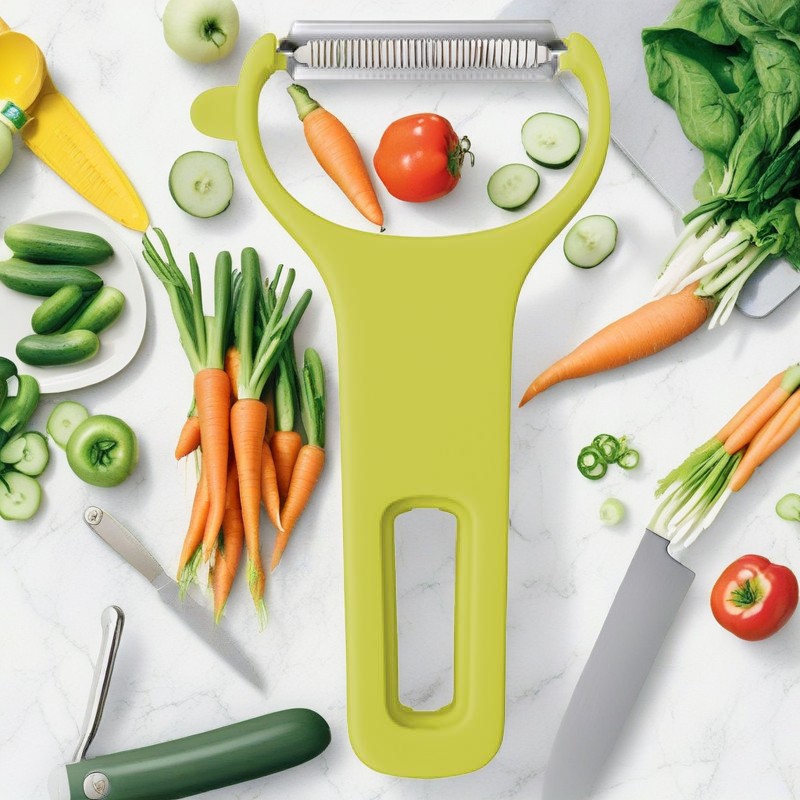
3-Blade Peeler Guide for Faster Fruit and Vegetable Prep
A good peeler is one of the simplest ways to make daily cooking less repetitive. A 3-blade peeler, sometimes called a multi-blade peeler or tri-peeler, is designed to handle more than one peeling task with a single compact tool. Instead of keeping separate peelers for potatoes, soft fruit, and julienne strips, the user can select the blade that best matches the ingredient and the cut required.
The original concept is straightforward: one standard blade for firm produce, one serrated blade for softer skins, and one julienne blade for thin vegetable strips. That combination can be useful for home cooks preparing weekday meals, parents cutting fruit and vegetables for children, or culinary staff who want a small manual tool for finishing tasks. The value comes from choosing the right blade, using it safely, and caring for it properly.
What Is a 3-Blade Peeler?
A 3-blade peeler combines several peeling functions in one handle or rotating head. Designs vary by brand, but the common purpose is to make switching between cutting styles easier. The standard blade is typically used for firm fruits and vegetables such as potatoes, apples, carrots, and cucumbers. The serrated blade is intended for softer or more delicate skins, such as tomatoes, peaches, or similar produce where a smooth blade may slip. The julienne blade cuts narrow strips for salads, stir-fries, garnishes, and slaws.
This type of tool does not replace every knife skill, and it is not always faster for large commercial batches. However, it is practical when you need flexibility, compact storage, and cleaner preparation without reaching for multiple utensils.
When a Multi-Blade Peeler Makes Sense
A multi-blade peeler is most useful when your kitchen routine includes different textures and cutting styles. If you mainly peel only potatoes, a simple straight peeler may be enough. If you often prepare carrots, apples, zucchini, tomatoes, peaches, cucumbers, or decorative vegetable strips, a 3-blade design can reduce tool changes.
- For everyday meals: peel carrots, potatoes, apples, and cucumbers with the standard blade.
- For soft produce: use the serrated blade to grip thin or slippery skins more effectively.
- For salads and garnishes: use the julienne blade to make thin carrot, zucchini, or cucumber strips.
- For compact kitchens: combine several functions in one tool to reduce drawer clutter.
The key is to match the blade to the ingredient rather than forcing one blade to do every job.
Blade Comparison Checklist
Before buying or using a 3-blade peeler, compare the blades and intended tasks. The table below can help you decide which blade to use and what to check during selection.
| Blade type | Best suited for | What to check |
|---|---|---|
| Standard peeling blade | Potatoes, carrots, apples, cucumbers, firm produce | Blade sharpness, smooth movement, comfortable peeling angle |
| Serrated blade | Tomatoes, peaches, soft-skinned fruit, delicate produce | Grip on slippery skins, reduced crushing, easy cleaning between teeth |
| Julienne blade | Carrot strips, zucchini ribbons, garnish prep, salads | Even strip width, safe hand position, food release after cutting |
| Handle and storage design | Daily use and compact storage | Secure grip, blade cover or lock, easy access without exposing sharp edges |
How to Use a 3-Blade Peeler Safely
Because a 3-blade peeler has more cutting surfaces than a basic peeler, safe handling matters. Start by washing the produce and drying it if the surface is slippery. Choose the correct blade before beginning, and make sure any rotating or interchangeable mechanism is fully seated before applying pressure.
- Place the produce on a stable cutting board or hold it firmly away from your body.
- Select the blade that matches the texture: standard for firm items, serrated for soft skins, julienne for strips.
- Use light, steady strokes rather than forcing the blade through the skin.
- Turn the produce as you peel to maintain control and avoid uneven pressure.
- Stop before your fingers get too close to the blade; trim small remaining areas with care.
For round produce such as apples or potatoes, avoid rushing near the ends where the peeler may slip. For julienne cutting, keep the vegetable steady and work with long, controlled strokes to produce more consistent strips.
Choosing a Peeler: Practical Buying Criteria
When comparing peelers, avoid choosing based only on color or appearance. A useful peeler should feel secure in the hand, switch blades without confusion, and clean easily after contact with fibrous vegetables or soft fruit. If you are sourcing for a retail range, hospitality kitchen, or promotional kitchenware program, ask the supplier for clear product details instead of assuming features.
Useful questions include: What are the blade materials? How are the blades secured? Is there a blade guard or storage cover? Can the peeler be cleaned in a dishwasher, or is hand washing recommended? What packaging options are available? Are replacement samples available for inspection before ordering? If compliance or food-contact documentation is required in your market, request the relevant documents directly from the supplier and verify them for your sales channel.
For home users, the most important tests are comfort, control, blade sharpness, and easy rinsing. A tool that is difficult to clean or awkward to grip will stay in the drawer, even if it has several functions.
Cleaning and Care Tips
Peelers work best when residue is removed immediately after use. Starch from potatoes, fine carrot fibers, and tomato skin can collect around the blade. Rinse the peeler under running water as soon as possible, using a small brush if food is caught near the serrated or julienne blade. Dry it thoroughly before storage to help maintain the blade and reduce water spots.
If the product instructions allow dishwasher cleaning, place the peeler where it will not knock against heavier utensils. If instructions are not available, hand washing is the safer default. Store the tool with its blade covered or positioned away from fingers in the drawer. Do not leave it loose in a sink where someone may reach into water without seeing the blade.
Common Mistakes to Avoid
One common mistake is using the julienne blade as if it were a standard peeler. It is designed to create strips, so it requires a steady angle and enough surface length to work well. Another mistake is using too much pressure. A sharp blade should remove the skin with moderate force; pressing harder increases the risk of slipping and may waste more of the produce.
Users also sometimes choose the wrong blade for soft fruit. A smooth standard blade can slide across tomato or peach skin, while a serrated blade is designed to bite into softer surfaces more effectively. Finally, neglecting cleaning can make the tool less pleasant to use and reduce cutting performance over time.
Key Takeaways
- A 3-blade peeler combines standard peeling, serrated soft-skin peeling, and julienne cutting in one compact tool.
- Use the standard blade for firm produce, the serrated blade for delicate skins, and the julienne blade for thin strips.
- Comfort, secure blade switching, safe storage, and easy cleaning are more important than appearance alone.
- For sourcing or wholesale evaluation, ask suppliers to confirm materials, care instructions, packaging, and any required food-contact documentation.
FAQ
Is a 3-blade peeler better than a regular peeler?
It depends on how you cook. If you only peel firm vegetables, a regular peeler may be enough. If you also prepare soft fruit or julienne strips, a 3-blade peeler offers more flexibility.
Which blade should I use for tomatoes?
A serrated blade is usually the better choice for tomatoes and similar soft-skinned produce because it can grip the skin with less slipping.
Can a julienne blade replace a spiralizer?
Not completely. A julienne blade makes short, thin strips, while a spiralizer creates longer continuous strands. For salads and garnishes, the julienne blade is often sufficient.
How should I store a multi-blade peeler?
Store it with the blade covered, locked, or positioned safely away from hands. Avoid leaving it loose in a crowded drawer or hidden in a sink.
What should buyers ask a supplier before purchasing in quantity?
Ask about blade material, handle material, packaging, cleaning guidance, sample availability, replacement policy, and any food-contact documentation required for your target market.
