




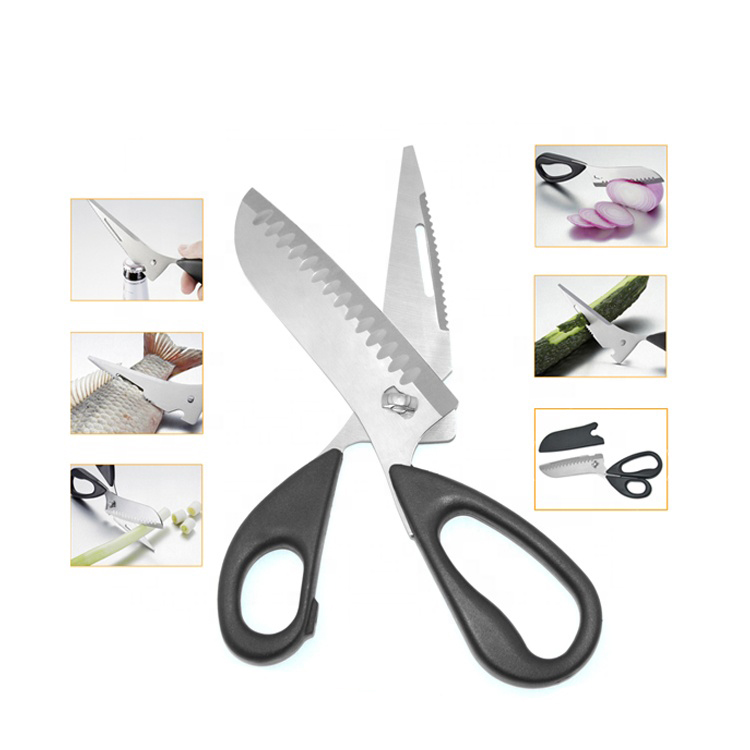
Multi-Functional Scissors for Kitchen and OEM Sourcing
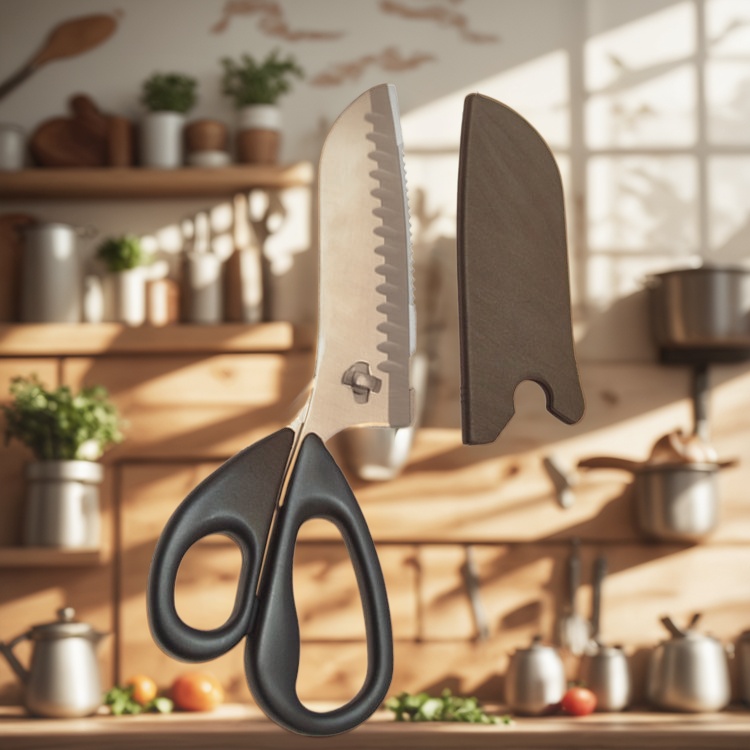
Multi-functional scissors are designed to reduce the number of small tools needed for everyday kitchen work. Instead of using separate tools for cutting food, opening packaging, cracking nuts, or handling simple bottle-opening tasks, a 2-in-1 or multi-purpose design combines several functions in one compact item. For home users, the main question is whether the tool is comfortable, safe, and easy to clean. For wholesalers, brand owners, and OEM buyers, the bigger question is whether the design, materials, packaging, and quality controls fit the target market.
The product described in the original article includes a serrated stainless steel blade, black ergonomic handles, a black protective sheath, and additional functions such as a bottle opener, nutcracker grooves, and a screwdriver tip. These are useful details, but buyers should still verify final specifications with the supplier before placing an order, especially when sourcing for private label, retail sets, or promotional kitchenware programs.
Key Takeaways
- Multi-functional scissors are most useful when the extra features support real kitchen tasks rather than adding unnecessary complexity.
- A serrated blade can help grip slippery foods, packaging, and fibrous ingredients during cutting.
- A protective sheath is important for storage safety and blade protection.
- OEM buyers should confirm materials, dimensions, packaging, branding options, compliance needs, and inspection standards directly with the supplier.
What Multi-Functional Kitchen Scissors Are Used For
In practical use, kitchen scissors are often reached for faster than a knife. They can trim herbs, open food bags, cut parchment, portion cooked meat, snip noodles, and handle light packaging. When the scissors include additional features, they may also work as a bottle opener, nutcracker, or simple screwdriver for small, non-specialized tasks.
The value of a knife and scissors combo is not that it replaces every dedicated kitchen tool. Instead, it offers convenience for common, quick tasks. A pair of multi-functional scissors can be useful in home kitchens, outdoor cooking kits, staff pantries, catering prep areas, and retail kitchen tool assortments. However, the best design depends on the buyer’s intended user. A family kitchen may prioritize safety and easy storage, while a promotional gift buyer may focus on perceived usefulness and packaging presentation.
Important Features to Evaluate
Not all 2-in-1 scissors are built for the same jobs. Before selecting a model, evaluate the features that affect comfort, cutting control, storage, and long-term usability. The original product information mentions a stainless steel blade with a serrated edge, black ergonomic handles, a protective sheath, bottle opener, nutcracker grooves, and screwdriver tip. These features should be considered together rather than individually.
| Feature | Why It Matters | Buyer Questions to Ask |
|---|---|---|
| Serrated blade | Helps grip food, herbs, and packaging during cutting. | What is the blade thickness, length, and cutting performance standard? |
| Stainless steel blade | Commonly used for kitchen cutting tools due to durability and corrosion resistance expectations. | What stainless steel grade is used, and can it be documented? |
| Ergonomic handle | Affects comfort, control, and fatigue during repeated use. | What handle material is used, and is it suitable for left- or right-hand users? |
| Protective sheath | Helps protect the blade and reduces accidental contact in drawers. | Is the sheath included as standard, and can it be customized? |
| Extra tools | Features such as a bottle opener or nutcracker increase versatility. | Which functions are included in the final model, and are they tested? |
| OEM packaging | Retail presentation affects shelf appeal and logistics. | What packaging formats, artwork requirements, and carton details are available? |
How to Choose Scissors for Everyday Kitchen Use
For consumer-facing selection, the first priority is hand feel. A scissor may look useful online, but if the handle is too small, too stiff, or uncomfortable, it will not be used often. Look for a handle shape that supports a secure grip and does not create sharp pressure points. If the scissors will be used by different people in the household, a neutral handle size is usually more practical.
The second priority is cleaning. Multi-functional tools often have grooves, hinges, and built-in openings where food residue can collect. Buyers should check whether the design is easy to rinse and dry after use. If dishwasher safety is important, confirm that claim with the supplier rather than assuming it applies. Drying the scissors after washing can help protect the blade and hinge area.
Finally, consider storage. A black protective sheath, as described in the original product information, is a useful feature because kitchen drawers often contain many metal utensils. A sheath can reduce accidental contact and help prevent the blade from rubbing against other tools.
OEM Sourcing Guidance for Brands and Wholesalers
When sourcing OEM scissors, avoid focusing only on unit appearance. A buyer should create a clear specification sheet before requesting samples. This document can include target use, blade material request, handle material preference, color, logo method, packaging type, labeling needs, carton requirements, and acceptable quality criteria. If any specification is unknown, list it as a question for the supplier.
Important OEM questions include:
- What blade material and handle material are used in the quoted model?
- Can the supplier provide physical samples before bulk production?
- Which parts of the product can be customized: handle color, logo, sheath, packaging, or instruction insert?
- What are the available packaging options for retail, wholesale, or e-commerce shipping?
- What quality checks are performed for blade sharpness, hinge strength, surface finish, and assembled function?
- Are there any market-specific compliance or labeling requirements the buyer must provide?
- What are the lead time, minimum order quantity, payment terms, and sample costs?
These questions are especially important because requirements differ by market. A supermarket kitchenware set, an online private label product, and a restaurant supply item may need different packaging, instructions, and quality expectations.
Comparing 2-in-1 Scissors with Standard Kitchen Shears
Standard kitchen shears are often simpler, which can make them easier to clean and use for repetitive cutting. Multi-functional scissors add convenience by including extra functions, but each added feature should have a clear purpose. If the target customer mostly cuts herbs and packaging, a simple shear may be enough. If the product is meant for compact kitchens, outdoor kits, gift sets, or general-purpose household use, the multi-functional design can be more attractive.
For retail buyers, the best approach is to compare samples side by side. Test grip comfort, opening and closing smoothness, cutting control on different materials, sheath fit, and whether the bottle opener or nutcracker grooves feel practical. Also inspect surface finishing, handle alignment, and packaging durability. These observations often reveal more than a product photo.
Use and Care Tips
To keep multi-functional scissors working well, use them within their intended limits. They are suitable for many kitchen tasks, but they should not be treated as heavy workshop tools. Avoid twisting the blade while cutting hard items, and do not use the tip for prying. After cutting food, wash the scissors promptly, remove residue from grooves and hinge areas, and dry them before storage. Store them in the protective sheath when not in use, especially in shared drawers or busy prep areas.
If the scissors become loose, rusty, chipped, or difficult to close, stop using them for food preparation until they are inspected or replaced. For commercial kitchens or food service environments, follow internal hygiene and tool safety policies.
Practical FAQ
Are multi-functional scissors better than regular kitchen scissors?
They can be better for users who want one compact tool for several small tasks. Regular kitchen scissors may be preferable when simplicity, easy cleaning, or repetitive cutting is the main priority.
What does a serrated blade do?
A serrated edge helps grip materials while cutting. This can be useful for slippery foods, herbs, and packaging, depending on the blade design and sharpness.
Can OEM scissors be customized with a logo?
Many OEM sourcing projects include logo or packaging customization, but the available methods, costs, and requirements should be confirmed with the supplier before ordering.
What should buyers confirm before bulk purchase?
Confirm material details, sample quality, customization scope, packaging, inspection process, lead time, MOQ, and any compliance or labeling needs for the destination market.
How should these scissors be stored?
Clean and dry them after use, then store them with the protective sheath if provided. This helps protect both the blade and the user when the scissors are kept in a drawer.
