




Safety First: Essential Tips for Choosing Kids' Safety Scissors
Learning to cut paper is a small classroom task with a big developmental benefit. Children practice hand strength, coordination, direction-following, and independence each time they use a pair of school scissors. At the same time, scissors are real tools, so parents and teachers need to choose carefully and teach safe habits from the start.
The best kids' safety scissors are not simply the most colorful option on the shelf. A good choice should match the child's age, hand size, cutting skill, and activity type. For classrooms, buyers also need to think about left-handed students, storage, cleaning routines, and how easily children can control the scissors during repeated use.
Key Takeaways
- Choose blunt or rounded tips for young children, especially in preschool and kindergarten settings.
- Match the blade type to the activity: paper-only practice, classroom crafts, or more advanced cutting tasks.
- Check handle size and comfort because poor fit can cause frustration and unsafe hand positions.
- Include left-handed or ambidextrous options when buying for a group of students.
- Scissors still require adult supervision, even when they are marketed as safety scissors.
Why Kids' Safety Scissors Are Different
Adult scissors are designed for cutting efficiency, not early learning. They may have sharp points, longer blades, and handles that are too large for small hands. Kids' safety scissors are designed to reduce common risks while helping children build scissor skills gradually.
Common child-focused features include blunt tips, shorter blades, plastic-covered blades, lightweight handles, and grip shapes that guide finger placement. Some scissors are intended for paper only, while others may cut thin craft materials. Always review the product description and ask the supplier what materials the scissors are intended to cut before using them in a classroom or home activity.
Choose the Right Tip Shape First
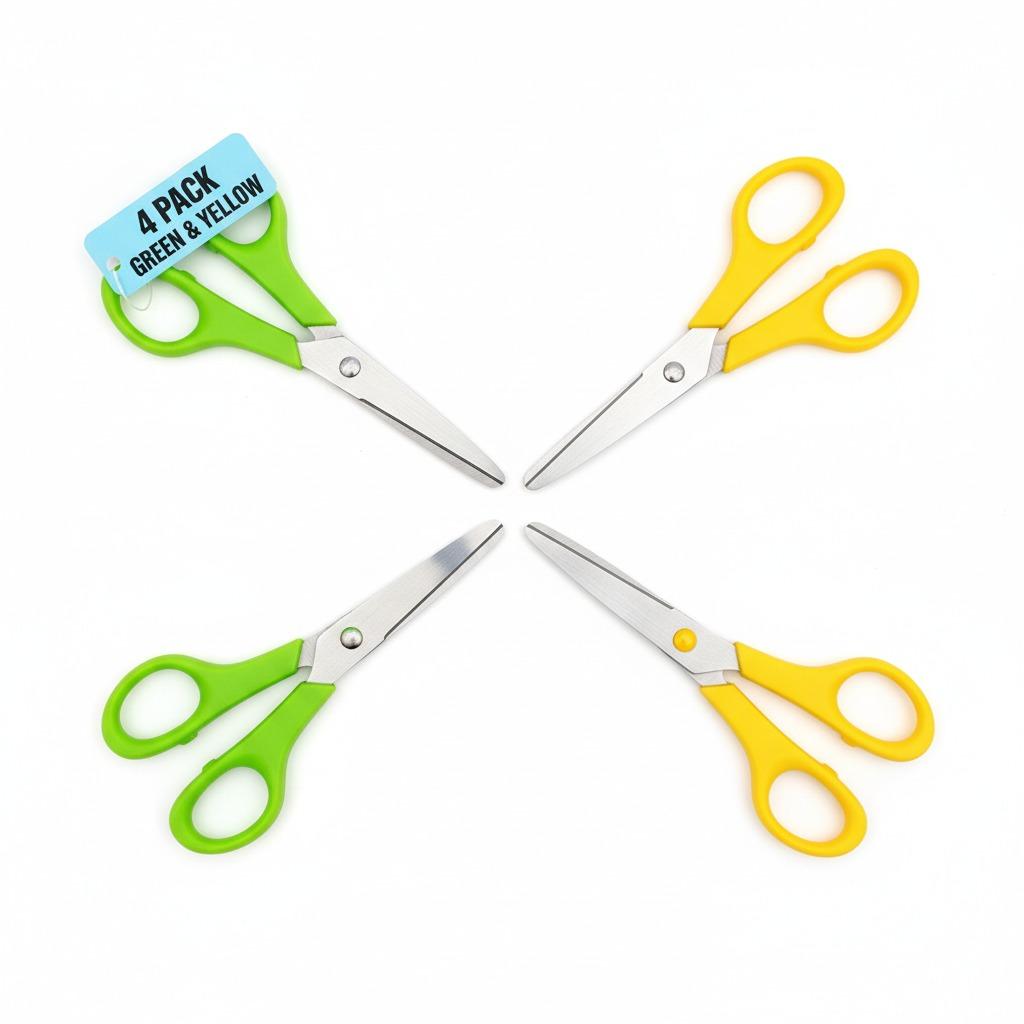
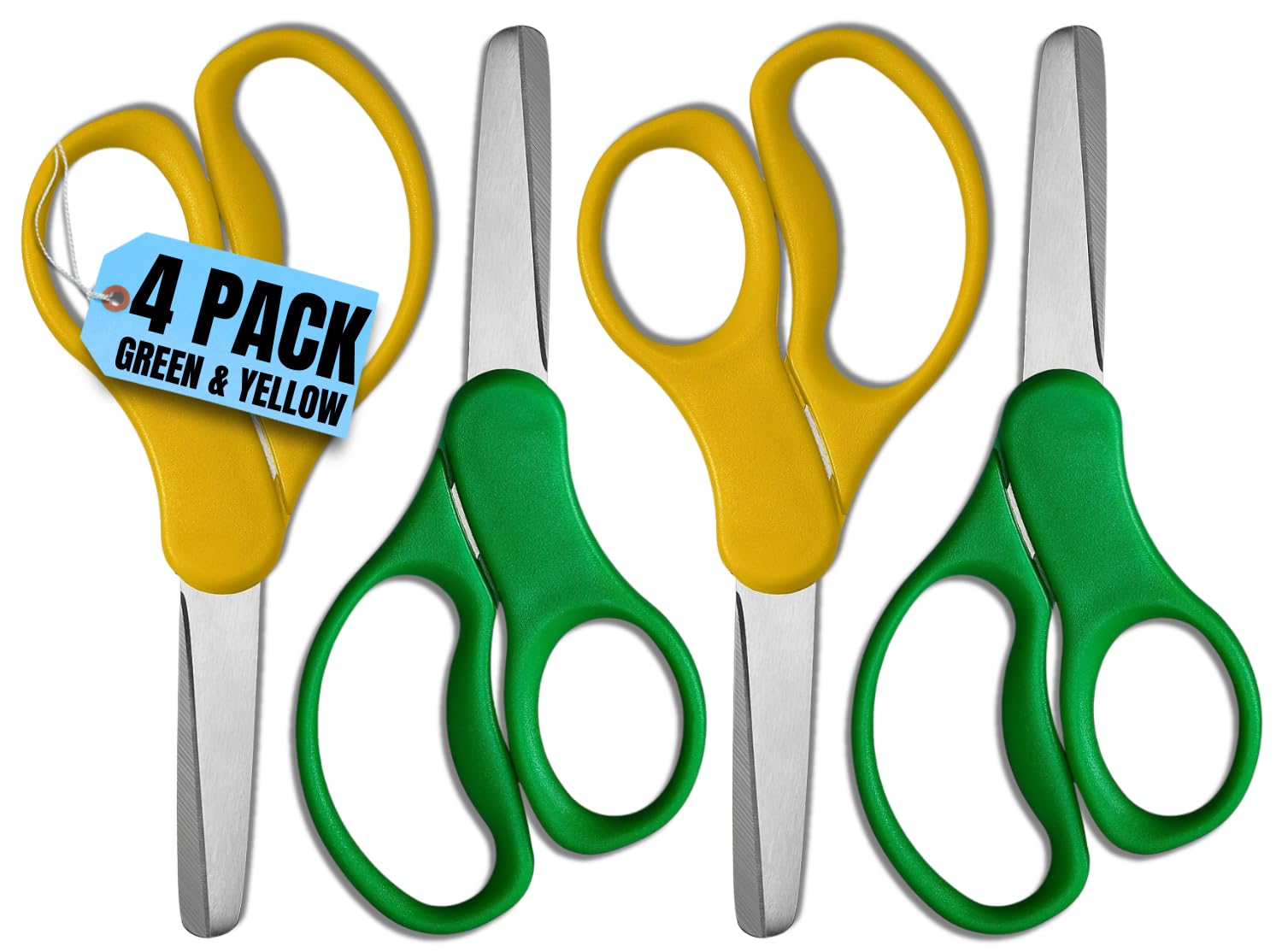
The tip is one of the most important safety details. For younger children, rounded or blunt-tip scissors are usually the safest starting point because they reduce the risk of accidental poking during passing, carrying, or turning at a table.
Pointed-tip scissors may be useful for older children who need more precision, but they are not the first choice for early learners. If you are buying for a preschool, daycare, or kindergarten classroom, make blunt tips a basic requirement. Also inspect the transition between the blade and the tip; it should feel smooth and not have rough edges that could scratch skin or snag materials.
Understand Blade Types and Cutting Ability
Safety scissors can use different blade designs. Some have plastic blades intended mainly for paper practice. Others use metal blades with rounded ends, sometimes combined with plastic handles or guards. The right option depends on age, supervision level, and the materials children will cut.
For first-time practice, paper-only scissors may be enough. For elementary classrooms, students may need scissors that can cut construction paper, worksheets, yarn, or thin craft materials. Do not assume every pair can cut the same materials. If the product listing does not clearly state cutting use, treat it as a question to ask before purchasing.
Compare Key Selection Criteria
| Selection Point | What to Check | Best Use Case |
|---|---|---|
| Tip shape | Blunt, rounded, and smooth ends | Preschool, kindergarten, group activities |
| Blade type | Plastic, covered, or rounded metal blades | Match to paper practice or craft cutting |
| Handle fit | Loops sized for small fingers with comfortable grip | Reducing fatigue and improving control |
| Handedness | Right-handed, left-handed, or ambidextrous design | Classrooms and shared supply boxes |
| Durability | Stable hinge, smooth opening, no loose parts | Daily classroom or home use |
| Storage | Easy to label, count, and store safely | Teacher-managed supplies and craft stations |
Match Scissors to Age and Skill Level
Age recommendations are helpful, but skill level matters too. Some three-year-olds are just learning how to open and close the handles. Some older children may still need extra support due to hand strength or coordination differences. Observe how the child holds the scissors before deciding whether the size and resistance are appropriate.
- Early preschool: choose very simple, lightweight scissors for supervised paper snipping.
- Preschool to kindergarten: use blunt-tip school scissors with handles that guide finger placement.
- Early elementary: consider stronger blades for classroom paper crafts while keeping rounded tips.
- Mixed-age groups: provide separate bins or labels so children use scissors suited to their level.
If a child struggles to cut, the scissors may be too stiff, too large, or not sharp enough for the material. Dull or poorly aligned scissors can actually increase unsafe behavior because children press harder, twist their wrists, or pull the paper instead of cutting smoothly.
Handle Comfort and Control Matter
Handles should allow the child to place the thumb in the smaller loop and fingers in the larger loop without squeezing too hard. A comfortable grip helps children keep their wrist in a safer position and improves cutting accuracy.
For classroom packs, avoid choosing only by color or price. Check whether the handles are smooth, whether the edges feel comfortable, and whether the hinge opens and closes consistently. If possible, test a sample with the type of paper or craft material students will use most often. For online or wholesale purchasing, ask the supplier for clear photos of the handle, hinge, and blade tip.
Left-Handed and Ambidextrous Options
Left-handed children often struggle with right-handed scissors because the blade orientation can block the cutting line or push the paper instead of slicing it cleanly. This can make a child look careless when the real problem is tool fit.
When buying for a classroom, include left-handed scissors or true ambidextrous designs. Do not rely only on symmetrical handle shapes; blade orientation also affects cutting performance. Teachers can label left-handed scissors clearly so students can find the right tool quickly.
Safe Use, Storage, and Care
Even safety scissors need rules. Teach children to sit while cutting, keep the blades pointed away from the body, and pass scissors handle-first. Scissors should not be used for hair, clothing, skin, electrical cords, or any material not approved by an adult.
- Demonstrate how to hold the scissors before the first activity.
- Use a cutting tray or defined craft area to reduce walking with scissors.
- Count scissors before and after group use in classrooms.
- Wipe handles when needed and dry metal parts after cleaning.
- Remove any pair with loose hinges, cracks, rust, or rough blade edges.
Storage also matters. Use a closed container, teacher-managed caddy, or labeled supply drawer. For younger groups, scissors should be handed out only during supervised activities and collected immediately afterward.
Buying Questions for Parents, Teachers, and School Purchasers
Before ordering a single pair or a classroom set, look beyond the product name. Ask practical questions: What age range is the scissor intended for? Is it suitable for left-handed users? What materials can it cut? Are the tips fully rounded? How should it be cleaned? Are replacement or bulk pack options available? If buying from a supplier, request product photos and clarify packaging, labeling, and any applicable safety documentation rather than assuming details not shown in the listing.
Practical FAQ
What age can children start using safety scissors?
Many children begin supervised scissor practice around preschool age, but readiness varies. Start with simple snipping activities and always follow adult guidance and the product's age recommendation.
Are plastic scissors safer than metal scissors?
Plastic scissors can be useful for early paper practice, but they may not cut thicker materials well. Rounded metal blades may work better for older children. The safer option is the one that matches the child, material, and supervision level.
Should every classroom have left-handed scissors?
Yes, it is good practice to provide left-handed or truly ambidextrous scissors so left-handed students can cut comfortably and accurately.
How do I know when to replace school scissors?
Replace scissors if the hinge is loose, the blades no longer align, the tips are damaged, the handles crack, or children must use excessive force to cut ordinary paper.
Can kids' safety scissors cut more than paper?
Some can cut thin craft materials, but not all are designed for that use. Check the product description or ask the supplier before using them on fabric, cardboard, foam, or other materials.
