




OEM Scissors Factory Guide for Multifunctional Kitchen Shears
Kitchen scissors have moved beyond basic cutting tasks. For retailers, importers, and houseware brands, OEM kitchen scissors now need to balance sharp cutting performance, safe handling, easy cleaning, and practical secondary functions. The original article highlighted the evolution of scissors factories and the rise of multifunctional kitchen scissors. This updated guide expands that idea into a practical sourcing framework for buyers evaluating a scissors factory or kitchen shears supplier.
Why Kitchen Scissors Are Changing
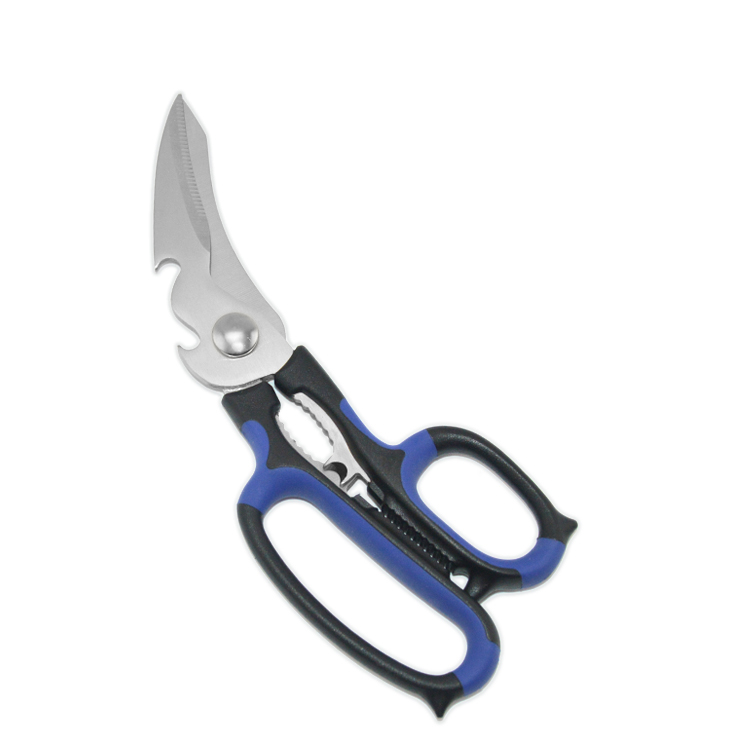
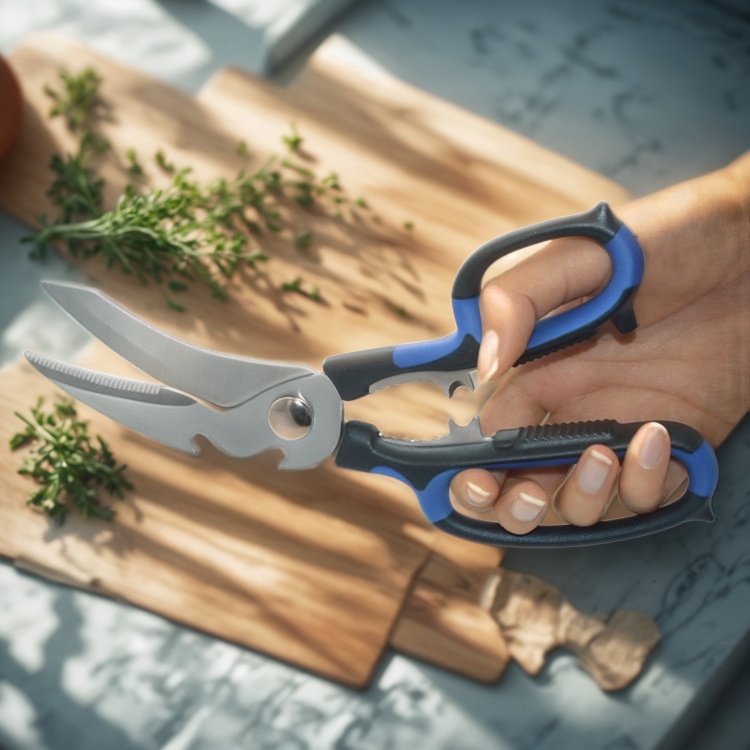
Modern kitchen tools are expected to save space and handle more than one task. This is one reason multifunctional kitchen scissors have become common in consumer and professional kitchens. Instead of offering only a cutting edge, many designs combine shears with added functions such as a nutcracker, grater, or bottle opener. The goal is not to add features for decoration, but to make the tool useful for everyday food preparation and simple kitchen jobs.
For an OEM buyer, this trend creates both opportunity and risk. A feature-rich product can stand out on the shelf, but only if each function is comfortable, durable, and easy to understand. When assessing a scissors factory, buyers should look beyond appearance and ask how the design performs across repeated use, cleaning, packaging, and customer support expectations.
What OEM Kitchen Scissors Usually Need to Deliver
The original product description refers to robust stainless steel blades, ergonomic and practical handles, multifunctional additions, and a pull-apart feature that separates the scissors into two tools. These are useful selling points, but buyers should still verify details before placing an order. Stainless steel can vary by composition, hardness, finish, and corrosion resistance, so the supplier should explain the material used and the related care instructions.
- Cutting performance for common kitchen tasks such as herbs, packaging, and prepared ingredients.
- Comfortable handle shape for both occasional home use and frequent food preparation.
- Safe multifunctional features, including any nutcracker, grater, or bottle opener areas.
- Easy cleaning, especially if the scissors use a pull-apart design.
- Packaging that explains functions clearly without overstating performance.
OEM projects should also define whether the item is positioned as a general kitchen tool, a promotional product, a private-label retail product, or a more specialized kitchenware line. Each use case may require different packaging, inspection criteria, and after-sales documentation.
Comparison Checklist for Sourcing from a Scissors Factory
A structured comparison helps buyers avoid choosing only by unit appearance or initial quotation. The table below can be used during supplier screening, sample review, or factory discussions.
| Evaluation Area | What to Check | Questions to Ask the Supplier |
|---|---|---|
| Blade material | Stainless steel type, finish, edge consistency, corrosion care guidance | What blade material is used, and what maintenance instructions should appear on packaging? |
| Cutting performance | Clean cutting feel, blade alignment, smooth opening and closing | Can samples be tested against the buyer's intended use cases? |
| Handle comfort | Grip shape, pressure points, left/right-hand usability assumptions | Are alternative handle colors, textures, or shapes available for OEM projects? |
| Multifunctional parts | Nutcracker, grater, bottle opener, and other integrated functions | Which functions are standard, and which can be modified or removed? |
| Cleaning design | Pull-apart mechanism, food trap areas, drying requirements | How should users separate, clean, and reassemble the scissors safely? |
| Branding and packaging | Logo placement, instruction card, retail carton, barcode needs | What artwork files, packaging templates, and approval steps are required? |
How to Review Samples Before Committing
Samples are essential because kitchen scissors are tactile products. Photos can show the general form, but they cannot prove balance, grip comfort, cutting smoothness, or how secure the pull-apart feature feels. Buyers should request production-representative samples where possible, not only polished showroom pieces.
During review, open and close the scissors repeatedly, check whether the blades meet cleanly, and confirm that the handle does not create uncomfortable pressure. If the scissors include a nutcracker, grater, or bottle opener, test each feature in realistic conditions. A multifunctional tool should not compromise the core cutting action. If the added features make the scissors bulky, difficult to clean, or confusing to use, the design may need adjustment before production.
For private-label projects, samples should also include packaging drafts or at least packaging dimensions. A strong product can still perform poorly in retail if the packaging fails to explain the functions or care instructions.
OEM Customization: What Buyers Should Define Early
OEM kitchen scissors can involve different levels of customization. Some buyers may only need logo printing and packaging artwork, while others may want changes to handle color, accessory functions, blade finish, or retail presentation. The earlier these requirements are defined, the easier it is for a scissors factory to confirm feasibility and avoid misunderstandings.
- Define the target market and whether the product is for home cooks, gift sets, supermarkets, or professional kitchen channels.
- Confirm which functions are required: cutting, nutcracker, grater, bottle opener, pull-apart cleaning, or other options.
- Ask what branding methods are available and where logos can be placed.
- Clarify packaging structure, language requirements, warning text, and instruction content.
- Request a written specification sheet before approving production.
Buyers should avoid relying on assumptions. If a feature is important for marketing, it should appear in the approved specification, sample record, and inspection checklist.
Quality and Compliance Questions to Ask
Kitchen tools may be subject to different market expectations depending on destination country, retail channel, and product claims. This article does not assume specific certifications or test results. Instead, buyers should ask the supplier what documentation is available and what additional testing may be needed for the target market.
Useful questions include: What materials contact food during normal use? Are material declarations available? Can the supplier support third-party testing if required by the buyer? What inspection standard is used for blade alignment, handle defects, packaging damage, and functional testing? How are nonconforming goods handled? These questions help determine whether the supplier has a clear process, even before discussing price.
For wholesale or OEM orders, buyers should also confirm lead time, minimum order quantity, sample cost, mold or tooling needs, payment terms, and responsibility for freight documentation. These commercial details vary by project and should be confirmed directly with the supplier.
Key Takeaways
- Multifunctional kitchen scissors are useful when added features support, not weaken, the core cutting function.
- OEM buyers should verify stainless steel details, handle comfort, cleaning design, and packaging instructions through samples.
- A pull-apart design can improve cleaning, but it must be simple, secure, and clearly explained to users.
- Supplier comparison should include quality process, customization options, documentation support, and realistic commercial terms.
FAQ: OEM Kitchen Scissors Sourcing
What should I ask a scissors factory before ordering?
Ask about blade material, available functions, customization options, sample process, packaging support, inspection criteria, lead time, MOQ, and whether documentation or third-party testing support is available for your target market.
Are multifunctional kitchen scissors better than standard shears?
They can be more convenient if the extra functions are practical and easy to clean. However, buyers should make sure the main cutting performance remains strong and that added tools do not make the product uncomfortable.
Why is a pull-apart feature useful?
A pull-apart feature can make cleaning easier by separating the scissors into two pieces. Buyers should test whether the mechanism feels secure during use and whether reassembly is simple for consumers.
Can OEM kitchen scissors be customized for private label?
Often, yes, but the scope depends on the supplier. Buyers should confirm available logo methods, handle colors, packaging formats, artwork requirements, and whether any design changes require tooling or additional approval time.
How should buyers compare quotations?
Compare quotations together with specifications, sample quality, packaging, inspection terms, customization scope, and after-sales responsibilities. The lowest price is not always the best value if the product is difficult to use or poorly documented.
