




Scissors Factory: How to Source Kitchen Scissors and Poultry Shears
Choosing a scissors factory is not only about finding a cutting tool at the right cost. For distributors, kitchenware brands, importers, and wholesale buyers, the real task is to confirm whether a supplier can produce consistent kitchen scissors, support practical product choices, and communicate clearly about quality, packaging, and OEM requirements. The original product focus includes kitchen scissors, poultry shears, multi-functional scissors, and OEM scissors manufacturing, so this guide explains how to evaluate those areas without relying on vague marketing claims.
Key Takeaways
- A good sourcing process starts with blade function, handle comfort, safety, and repeatable quality rather than appearance alone.
- Poultry shears should be checked for grip on slippery food, cutting control, and spring-assisted comfort if that feature is offered.
- Multi-functional kitchen scissors can add value, but each extra function should be tested for real usability.
- OEM buyers should ask clear questions about drawings, samples, packaging, branding, inspection methods, and production timelines.
- Do not assume material grades, certifications, MOQ, or testing results unless a supplier provides written confirmation.
What a Scissors Factory Should Prove to Buyers
A scissors factory serving the kitchenware market should be able to explain how its products are designed for common food-preparation tasks. Kitchen scissors may be used for herbs, vegetables, packaging, seafood, meat trimming, or poultry preparation. Poultry shears in particular need stronger cutting geometry than general household scissors because they may be used around joints, skin, and bones.
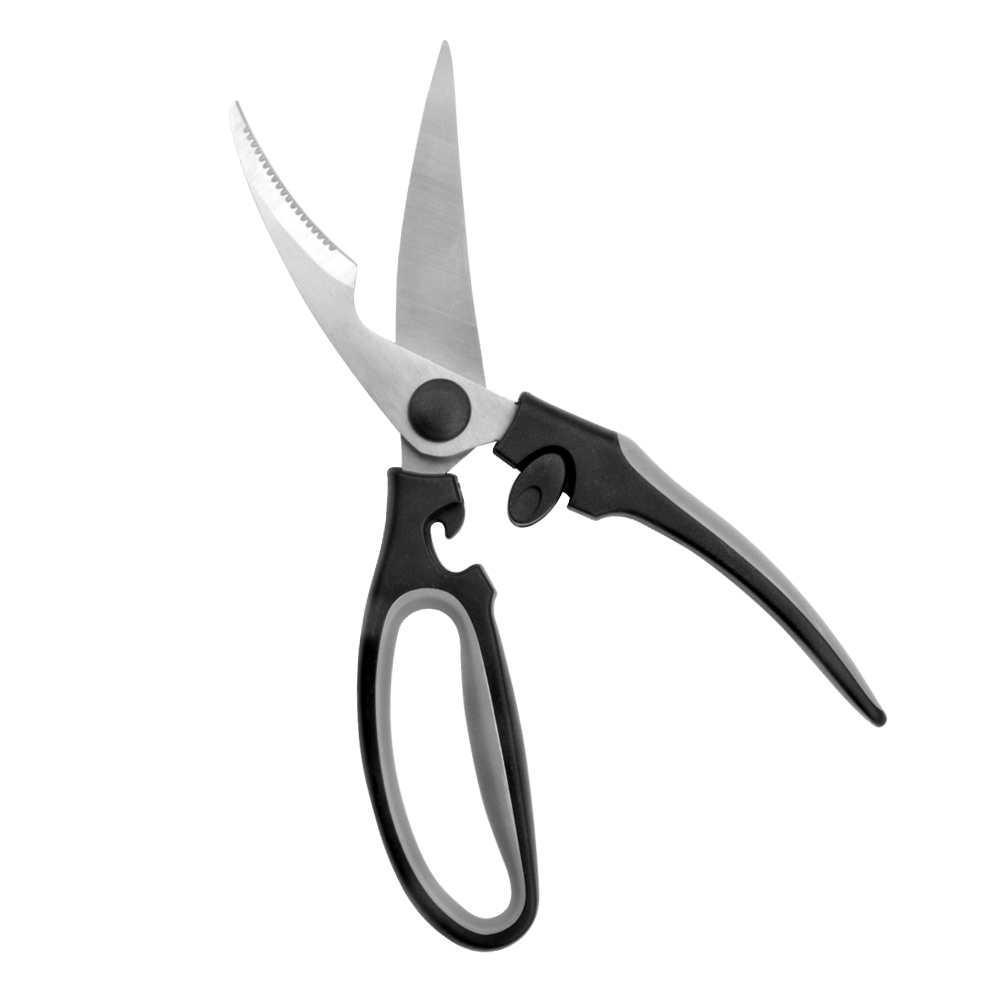
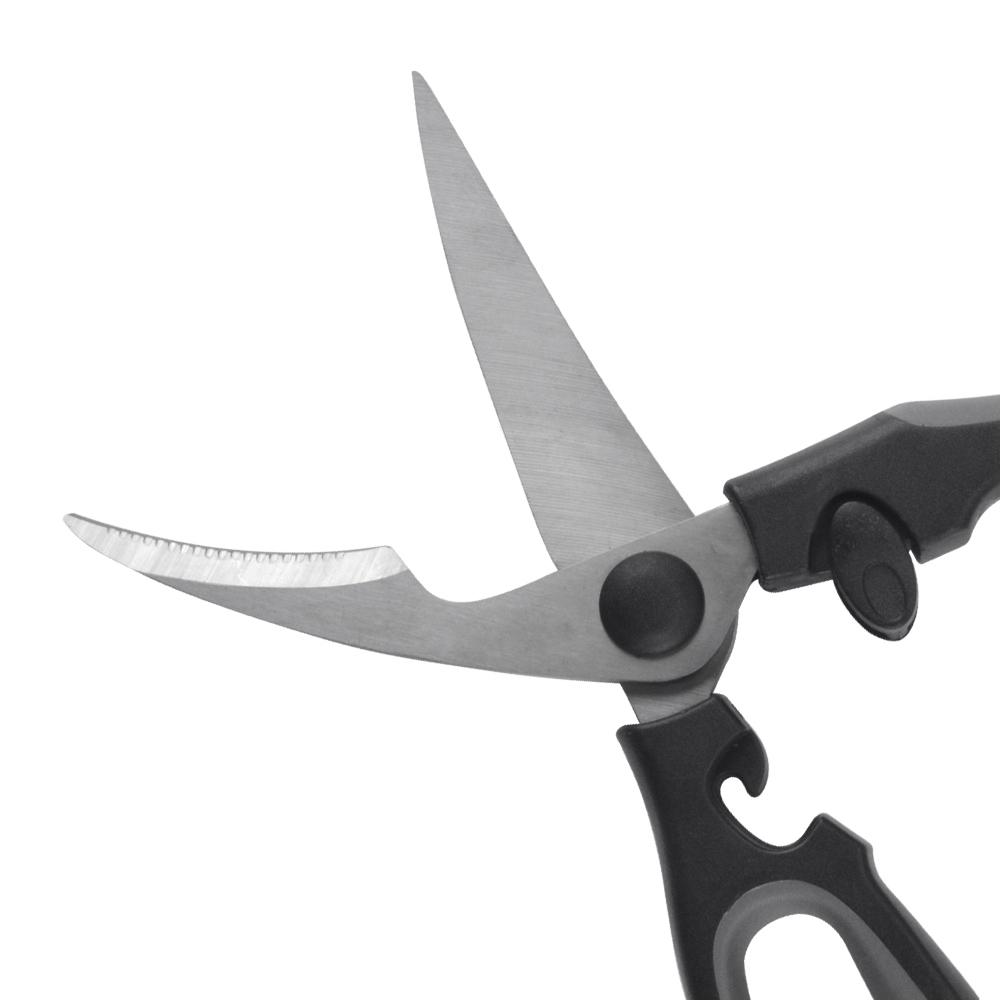
The source article describes professional-grade kitchen scissors, precisely machined stainless steel blades, a serrated section on one blade, ergonomic handles, and a spring-loaded mechanism for poultry shears. Those are useful product points to verify during sourcing. Buyers should ask whether these features apply to the exact model being quoted, because factories may offer several designs with different components and finishes.
Evaluating Poultry Shears for Real Kitchen Use
Poultry shears are often judged in seconds by end users. If they slip, pinch the hand, or require too much force, complaints follow quickly. A serrated blade section can help grip slippery food, while a spring-loaded mechanism may reduce hand strain during repeated cutting. However, buyers should still test samples instead of relying on feature lists.
When reviewing poultry shears, cut through realistic food items, not only paper or cardboard. Check whether the blades stay aligned, whether the handles remain comfortable under pressure, and whether the spring action feels controlled. If the shears include a lock or safety catch, confirm that it closes securely and does not interfere with normal cutting. For wholesale or private-label programs, these small usability details can affect return rates and customer reviews.
Multi-Functional Kitchen Scissors: Useful or Overcomplicated?
The original article mentions kitchen scissors that may include built-in nutcrackers and bottle openers in addition to cutting functions for herbs and vegetables. Multi-function designs can be attractive for retailers because they tell a simple product story: one tool can do several jobs. Still, more functions do not automatically mean a better product.
Buyers should check whether each added feature is durable, comfortable, and easy to understand. A bottle opener should have enough leverage. A nutcracker area should not make the handles uncomfortable. A take-apart design, if offered, should be secure in use and simple to clean. If a feature is only decorative or rarely works well, it may weaken the product's value proposition instead of strengthening it.
Comparison Checklist for Factory Sourcing
| Area to Check | What to Ask the Supplier | Why It Matters |
|---|---|---|
| Blade design | Does this exact model include serration, and what cutting tasks is it designed for? | Prevents mismatch between product claims and end-user expectations. |
| Material details | What blade and handle materials are used, and can they be documented? | Avoids unsupported assumptions about grade, durability, or rust resistance. |
| Handle comfort | Can samples be tested by different hand sizes and during repeated cuts? | Comfort affects both consumer satisfaction and professional kitchen use. |
| Spring mechanism | If included, how is the spring assembled and checked before shipment? | Spring performance influences control, fatigue, and perceived quality. |
| Multi-function parts | Are nutcracker, opener, or other functions tested separately? | Each feature should be practical, not just a selling point. |
| OEM support | What files, samples, packaging artwork, and approval steps are required? | Clarifies project responsibility before mass production begins. |
OEM Scissors Manufacturing: Questions Before You Commit
For brands planning OEM kitchen scissors, the most important step is to define the product before discussing volume. A supplier may be able to provide existing models with logo customization, develop packaging, or support modified designs, but buyers should confirm the exact scope. Do not assume that OEM service includes tooling changes, exclusive designs, or special testing unless those items are agreed in writing.
Useful OEM questions include:
- Can the factory provide samples of the exact kitchen scissors or poultry shears being quoted?
- Which parts can be customized: logo, color, packaging, blade shape, handle design, or accessories?
- What information is needed for artwork, barcode placement, instruction sheets, and carton marks?
- How are pre-production samples approved before bulk manufacturing?
- What inspection steps are used for blade alignment, opening and closing action, surface finish, and packaging?
- Which commercial details, such as MOQ, lead time, payment terms, and shipping method, must be confirmed for this project?
Quality Checks That Reduce Sourcing Risk
Kitchen scissors are simple tools, but quality problems can appear in many places. Uneven blade edges, loose pivots, uncomfortable handles, weak locks, inconsistent spring action, and poor packaging all reduce product value. For B2B buyers, a sample approval process should include both functional testing and visual review.
Ask the supplier how the pivot is adjusted, how blade sharpness is checked, and how finished goods are protected during packing. If the product is described as rust-resistant or durable, request the basis for that claim. If you require compliance documentation for a specific market, ask for current documents related to the exact item and shipment. It is better to ask these questions early than to discover gaps after packaging has been printed.
Packaging, Positioning, and Product Selection
Retail and wholesale buyers should match the product to the sales channel. A professional kitchen shop may prefer heavy-duty poultry shears with clear cutting performance. A supermarket program may focus on everyday kitchen scissors with simple packaging and a competitive specification. A gift or homeware range may benefit from multi-functional scissors, but only if the functions are easy for consumers to understand.
Packaging should explain the main use without exaggeration. For example, if the model includes a serrated blade section, describe the intended benefit in plain language. If a spring mechanism is included, explain that it is designed to assist repeated opening during cutting. Avoid broad claims that cannot be verified by the supplier.
FAQ
What should I ask a scissors factory before ordering kitchen scissors?
Ask for exact model details, material information, samples, customization options, packaging requirements, inspection methods, MOQ, lead time, and written confirmation of any claims you plan to print or advertise.
Are poultry shears different from regular kitchen scissors?
Yes. Poultry shears are typically designed for tougher cutting tasks around poultry preparation. The source article specifically mentions serrated blade grip, ergonomic handles, and a spring-loaded mechanism as useful poultry-shear features.
Can multi-functional kitchen scissors be good for wholesale programs?
They can be, especially when the extra functions are practical and easy to demonstrate. Buyers should test each function, such as a nutcracker or bottle opener, before selecting the product for a retail range.
What should OEM buyers avoid?
Avoid assuming that a supplier can meet unconfirmed specifications, certifications, price targets, or delivery dates. Put product details, packaging, approvals, inspections, and commercial terms in writing before production.
How can I compare two kitchen scissors suppliers?
Compare samples under the same cutting tasks, review communication speed, check documentation, inspect packaging quality, and ask how defects are handled. The best supplier is the one that can provide consistent answers and consistent products.
