




Scissors Factory: How to Source Kitchen Scissors for Wholesale and OEM Programs
Kitchen scissors are a small product category, but they can create big sourcing problems when buyers do not define requirements clearly. A dependable kitchen scissor supplier should help you compare blade design, handle comfort, multifunction details, packaging options, and quality expectations before you commit to a wholesale or OEM order. This guide rewrites the topic from a buyer’s perspective: what to inspect, what to ask, and how to reduce risk when evaluating a scissors factory.
Key Takeaways
- Start sourcing with a clear use case: everyday kitchen cutting, poultry preparation, herb trimming, packaging opening, or a multi-functional retail tool.
- Ask the factory to confirm blade material, thickness, edge type, handle material, packaging, and any test reports rather than assuming specifications.
- Request samples and compare cutting performance, grip comfort, cleaning convenience, and accessory functions such as a bottle opener or nutcracker.
- For OEM kitchen scissors, define branding, color, packaging artwork, inspection standards, and acceptable tolerances in writing.
What Makes a Kitchen Scissor Supplier Worth Shortlisting?
A qualified supplier is not only a company that can quote a low unit price. For B2B sourcing, the stronger signal is whether the supplier can explain the product, provide consistent samples, answer technical questions, and support repeatable production. Kitchen scissors may look simple, yet small differences in blade alignment, handle shape, edge finish, and rivet or pivot quality can affect the user experience.
When you contact a scissors factory, describe your target sales channel first. A supermarket promotion, an online private-label listing, a restaurant supply catalog, and a gift set all need different priorities. For example, online retail may require better product images and protective packaging, while foodservice buyers may care more about daily durability and easy cleaning. A good supplier should help you translate those needs into practical specifications.
Blade Design: The First Detail to Inspect
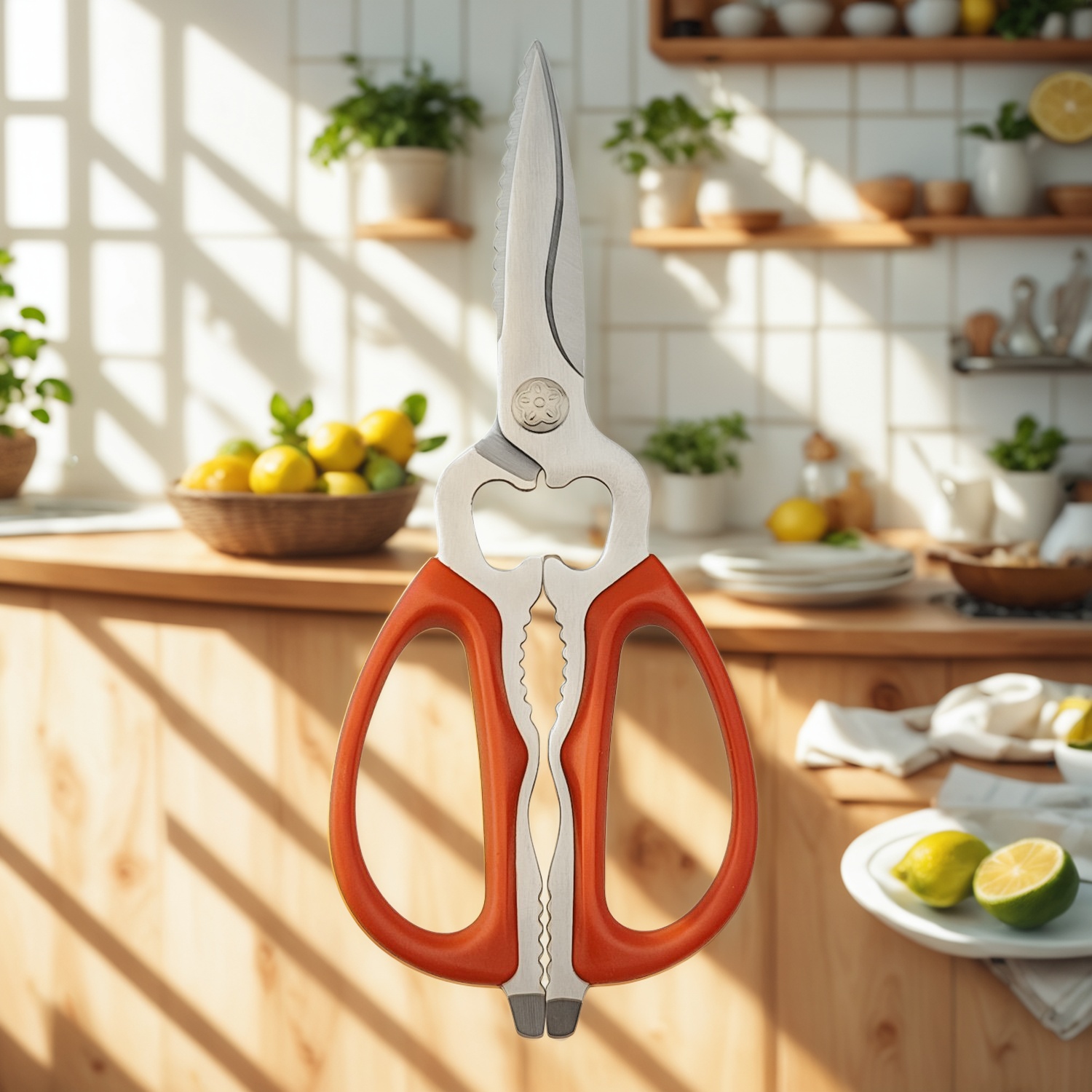
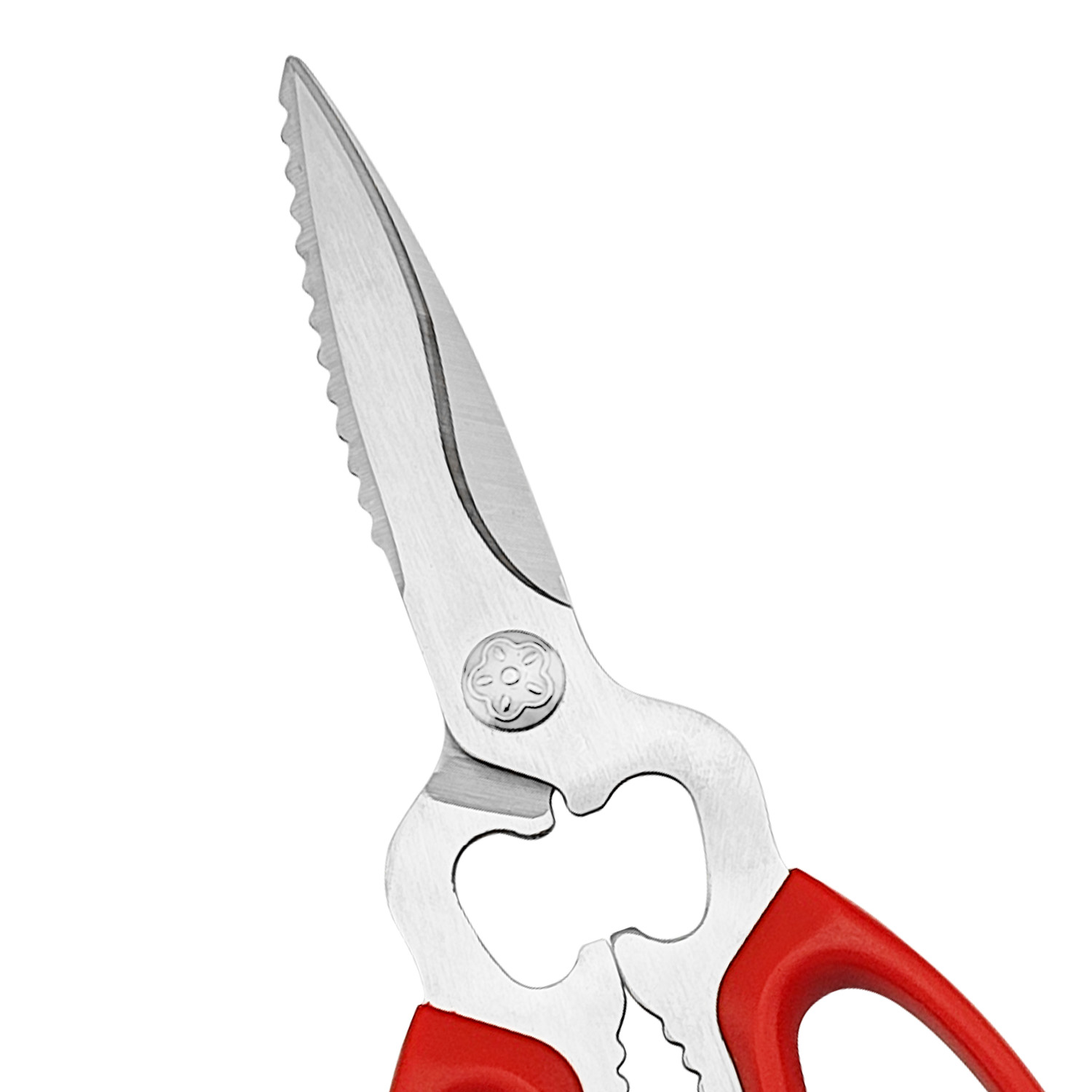
The original product discussion highlights stainless steel blades and a serrated edge as desirable features. Those are useful starting points, but buyers should still ask for exact details. Stainless steel is a broad category, and the supplier should confirm the grade, hardness target if available, blade thickness, surface finish, and rust-resistance expectations. Do not treat the phrase “stainless steel” as a complete specification.
A serrated edge can help grip slippery or tougher food surfaces, making it useful for tasks such as trimming poultry skin, cutting herbs, or opening food packaging. However, serration style varies. Some teeth are aggressive, while others are fine and shallow. During sample review, test the scissors on the materials your customers are likely to cut. The result should be clean, controlled cutting without excessive hand pressure or blade slipping.
Ergonomics, Handle Feel, and Visual Options
Handles influence customer satisfaction as much as blades do. A scissor that cuts well but feels uncomfortable may generate returns or poor reviews. The source article notes the value of an ergonomic silhouette and modern color options. For B2B buyers, the practical step is to request handle samples or finished scissor samples in the intended handle material and color.
Check whether the grip feels secure with dry and slightly wet hands. Look for sharp mold lines, uncomfortable pressure points, or handles that are too small for the intended market. If you plan to sell into multiple regions, remember that hand size preferences can vary. For OEM programs, ask whether custom colors are available and what color matching method the supplier uses. If the answer involves a minimum order quantity, lead time, or additional cost, request those details directly instead of assuming them.
Multi-Functional Features: Useful or Unnecessary?
Many kitchen scissors include extra functions, and the original article mentions a built-in bottle opener and an integrated nutcracker. These additions can make the product more appealing, especially for retail display or online listings. They can also complicate production and quality control if the features are poorly executed.
Before choosing a multi-functional design, decide whether the added functions match your buyers’ real needs. A bottle opener may be useful in a general kitchen drawer. A nutcracker may appeal to households that want one tool for several occasional tasks. But if your category is professional kitchen prep, a simpler design with stronger cutting performance may be the better choice. Ask the supplier to demonstrate each function during sample evaluation and include the features in your inspection checklist.
Comparison Checklist for Evaluating Samples
Use a structured checklist so your team compares samples consistently instead of relying on first impressions.
| Evaluation Area | What to Check | Questions to Ask the Supplier |
|---|---|---|
| Blade | Alignment, sharpness, serration, finish, cutting control | What stainless steel grade and blade thickness are used? |
| Handle | Comfort, grip security, color, surface edges | What handle material is used, and are custom colors available? |
| Pivot or joint | Smooth opening, tightness, wobble, cleaning access | How is joint consistency checked during production? |
| Extra functions | Bottle opener, nutcracker, or other integrated tools | Are these functions tested, and what failures are common? |
| Packaging | Retail presentation, protection, barcode area, instructions | Can the factory support OEM artwork and packaging samples? |
| Quality control | Appearance defects, cutting tests, carton packing | What inspection standard can be agreed before shipment? |
OEM and Wholesale Questions to Ask a Scissors Factory
Clear questions prevent confusion later. When discussing OEM kitchen scissors, prepare a written specification sheet and ask the supplier to confirm each point. At minimum, include:
- Blade material, blade length, thickness, edge type, and surface finish.
- Handle material, color, shape, logo position, and printing or molding method.
- Multi-functional elements, such as bottle opener or nutcracker, if required.
- Individual packaging type, instruction insert, carton packing, and labeling needs.
- Sample cost, sample lead time, production lead time, payment terms, and shipment method.
- Inspection criteria, acceptable defect limits, and how nonconforming goods are handled.
If the supplier mentions certifications, compliance, or testing, request copies of relevant documents and check whether they apply to the exact product you are buying. Requirements can vary by country, sales channel, and product contact use, so buyers should confirm obligations with their own compliance team or import advisor.
How to Review Samples Before Placing an Order
A sample review should simulate real use. Cut herbs, thin packaging, chicken skin, food bags, twine, and any other materials relevant to your customers. Open and close the scissors repeatedly to check smoothness. Wash and dry them according to the care instructions provided by the supplier, then inspect for staining, looseness, or handle issues. If the scissors include a nutcracker or bottle opener, test those functions separately and note whether they are comfortable and safe to use.
Take photos and record comments for each sample. If you request improvements, ask the factory to send a revised sample before mass production. Do not rely only on a verbal promise that production will be different from the approved sample.
Practical FAQ
What is the most important feature in wholesale kitchen scissors?
Blade performance is usually the first priority, but handle comfort and joint stability are close behind. A balanced product should cut cleanly, feel secure, and remain consistent across repeated use.
Should I choose serrated or smooth blades?
Serrated blades can grip slippery foods and tougher textures more effectively. Smooth blades may be easier to sharpen and can feel cleaner on some cuts. Choose based on your target application and confirm performance with samples.
Can a scissors factory make private-label kitchen scissors?
Many suppliers may offer OEM options, but you should ask about logo method, packaging customization, color matching, sample approval, minimum order quantity, and lead time. Do not assume these details are included in a basic quotation.
How can I reduce sourcing risk?
Use written specifications, approve physical samples, define inspection standards, and keep packaging and labeling requirements clear. If compliance documents are needed for your market, request them early and verify that they match the exact product.
Are multi-functional kitchen scissors better for retail?
They can be attractive for retail because features such as a bottle opener or nutcracker are easy to explain. However, the core cutting function should still be strong. Extra features should add value without making the tool uncomfortable or difficult to clean.
