




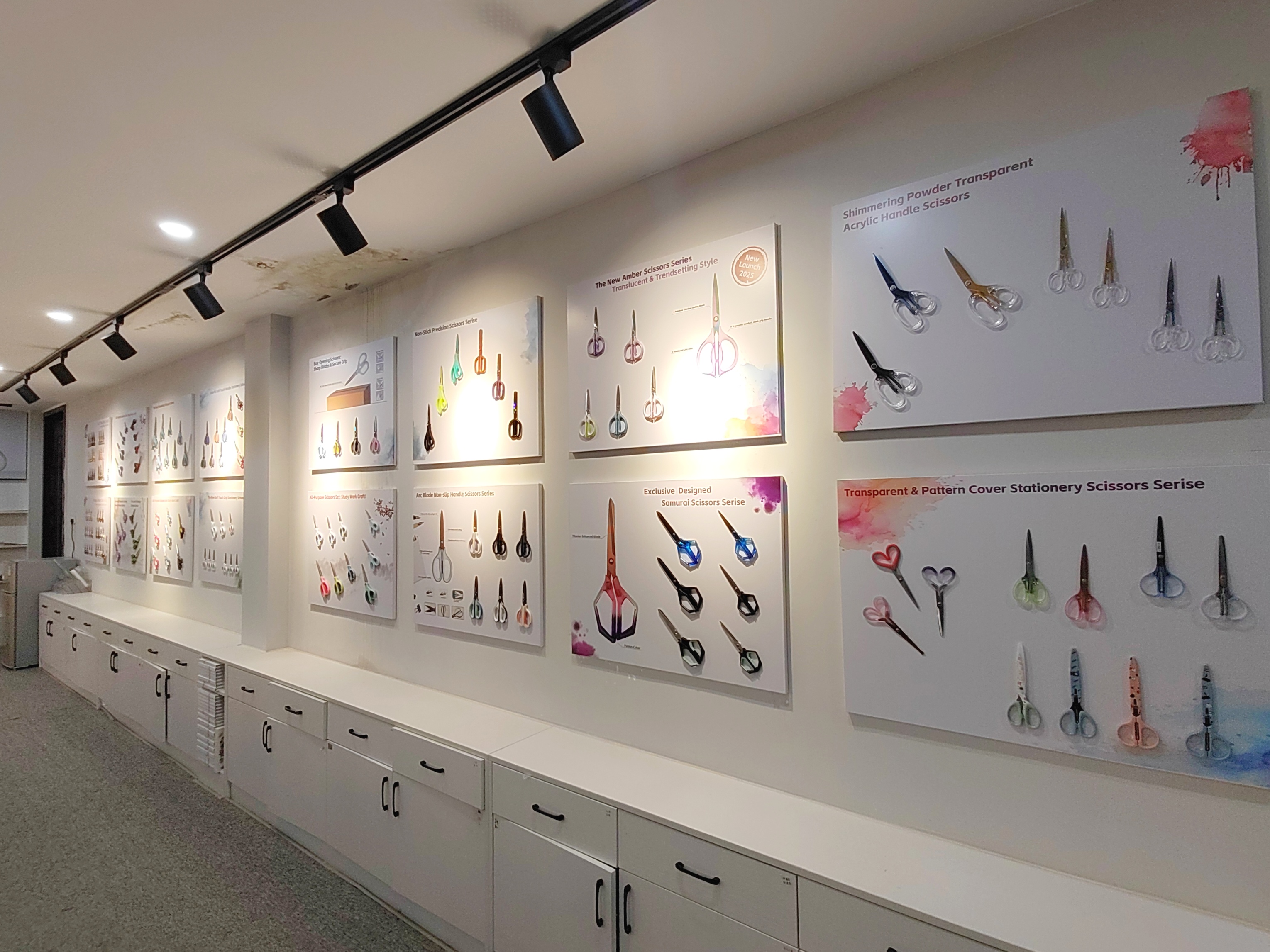
Scissors Showroom: Explore High-Quality Scissors Collection
A scissors showroom is more than a display area. For retailers, distributors, brand owners, and purchasing teams, it is a practical place to compare cutting tools side by side, assess hand feel, review available styles, and prepare better questions before placing an order. The original Bonet Houseware showroom article introduced a broad scissors collection covering household, sewing, crafting, and hairdressing uses. This updated guide focuses on how buyers can evaluate such a collection with clearer sourcing logic.
Key Takeaways
- A showroom helps buyers compare scissors by application, handle comfort, blade shape, finish, and packaging readiness.
- Household, sewing, craft, and hairdressing scissors should not be evaluated with the same checklist.
- Do not rely only on appearance; ask about materials, edge retention, quality control, packaging, and order terms.
- For OEM or wholesale sourcing, confirm customization limits, sample procedures, lead times, and compliance documents directly with the supplier.
What a Scissors Showroom Should Help Buyers Do
A well-organized scissors showroom should make product selection faster and more objective. Instead of browsing isolated catalog photos, buyers can compare blade lengths, handle shapes, colors, grip textures, and intended uses in one place. This matters because scissors are tactile products: the way a handle fits the hand, the smoothness of the opening and closing action, and the balance between blade and grip are difficult to judge from images alone.
For B2B sourcing, the showroom visit or virtual showroom review should also support commercial decision-making. Buyers should be able to ask which models are standard lines, which can be customized, what packaging options are available, and whether samples can be supplied for internal testing. If any details are not shown, they should be treated as questions for the supplier rather than assumptions.
Understanding the Main Scissors Categories
The original article described a wide scissors collection, including household shears, sewing tools, craft scissors, and hairdressing scissors. Each category has different performance expectations. Household scissors are often judged by everyday versatility, comfort, and ease of storage. Sewing scissors need clean cutting on fabric and should be assessed carefully for blade alignment and smooth movement. Craft scissors may require detail control, special blade shapes, or safe handling for hobby use. Hairdressing scissors are professional tools and should be evaluated with extra attention to balance, sharpness, and precision.
When comparing categories, avoid choosing one model for every channel. A supermarket, sewing shop, salon supplier, online homeware store, and promotional gift program may each need a different assortment. The showroom should help you build a range that fits your target customer, retail price position, and packaging format.
Comparison Checklist for Selecting Scissors
| Scissors Type | Typical Use | What to Check in the Showroom | Questions to Ask the Supplier |
|---|---|---|---|
| Household scissors | Daily cutting tasks at home or office | Grip comfort, blade length, opening action, safe storage options | Which models are best for retail multipacks or single-card packaging? |
| Sewing scissors | Fabric, thread, and tailoring work | Blade alignment, smooth closing, clean cut on sample fabric | Can samples be tested on different fabric weights before ordering? |
| Craft scissors | Paper crafts, hobby work, and detail cutting | Tip control, handle size, decorative or special cutting options | Are assorted colors or sets available for seasonal programs? |
| Hairdressing scissors | Salon or grooming use | Balance, finger rest design, precision, and finish consistency | What inspection standards apply to professional cutting tools? |
How to Judge Quality Without Guesswork
Quality claims should be checked through observable details and supplier documentation. In the showroom, open and close each pair several times. The movement should feel controlled, not loose or rough. Inspect whether the blade tips meet properly, whether the handles have rough edges, and whether the surface finish is consistent. If the collection includes stainless steel models, ask the supplier to clarify the specific material information rather than assuming a grade.
It is also useful to perform simple cutting trials. For household scissors, try paper, thin card, packaging film, or common household materials where appropriate. For sewing scissors, use fabric samples. For craft scissors, test both straight cuts and curves. The goal is not to replace formal testing, but to identify obvious issues before requesting samples or quotations.
Ergonomics, Handles, and User Comfort
The original article highlighted ergonomic household shears and handle variety. For buyers, this should be evaluated by user group. A handle that feels comfortable for one hand size may not suit another. Large finger holes may help some users, while compact handles may be preferred for detail work. Non-slip grip features, if offered, should be checked for texture, bonding quality, and comfort during repeated use.
Color and pattern can help differentiate a retail line, but comfort should come first. If you are developing a private-label or OEM range, ask whether handle colors, surface textures, printed branding, or packaging artwork can be customized. Also ask what limitations apply to color matching and whether approval samples are available before production.
Sustainability and Design Claims to Verify
The original article mentioned eco-conscious models and sustainable materials. These can be valuable for certain retail channels, but such claims need careful verification. Buyers should ask what material is used, whether recycled or alternative content is involved, and what documents support the claim. If your market requires specific environmental labeling or packaging rules, confirm those requirements with your compliance team and request supplier documentation before purchase.
Design innovation can also include interchangeable blades, improved grips, safer packaging, or sets designed for different tasks. However, every added feature should be tested for durability, usability, and customer value. A feature that looks interesting in a showroom may not be right for high-volume retail if it increases cost, complicates instructions, or creates after-sales questions.
B2B Sourcing Questions Before Placing an Order
Before moving from showroom selection to purchase, prepare a structured sourcing checklist. This reduces misunderstandings and helps compare suppliers fairly.
- Which scissors models are standard products, and which require custom development?
- What materials are used for blades, handles, screws, rivets, and packaging?
- Can the supplier provide samples for cutting tests and packaging review?
- What customization is possible for handle color, logo placement, sets, and retail packaging?
- What are the MOQ, lead time, payment terms, and shipping options?
- What quality inspection steps are used before shipment?
- Are any documents available for the target market’s compliance or retailer requirements?
These questions should be answered in writing. If a buyer needs specific testing, certification, or labeling, those requirements should be confirmed before order confirmation, not after production.
Practical FAQ
What should I look for first in a scissors showroom?
Start with application fit. Decide whether you need household, sewing, craft, hairdressing, or mixed-use scissors. Then compare handle comfort, blade movement, cutting performance, packaging options, and customization possibilities.
Can one scissors model work for all customers?
Usually not. A general household scissor may suit daily use, but fabric cutting, craft detail work, and professional hairdressing require different designs and performance expectations.
How can I verify stainless steel or other material claims?
Ask the supplier for material details and any available supporting documents. Do not assume a specific grade unless it is clearly provided and confirmed.
What should OEM buyers confirm before ordering?
Confirm sample approval, customization scope, artwork requirements, packaging structure, MOQ, lead time, inspection process, and any market-specific compliance needs.
Is a showroom visit necessary?
It is helpful but not always required. If visiting is not possible, request clear product videos, detailed photos, samples, and written specifications before making a sourcing decision.
