




Scissors Wholesale China: How to Source Tailor and Sewing Cutting Tools
Sourcing scissors wholesale from China can be a practical option for distributors, sewing supply retailers, craft brands, garment factories, and promotional product buyers. The goal is not simply to find the lowest unit price. A good sourcing process should help you identify scissors that fit the intended cutting task, feel comfortable in use, and arrive with packaging and labeling suitable for your sales channel.
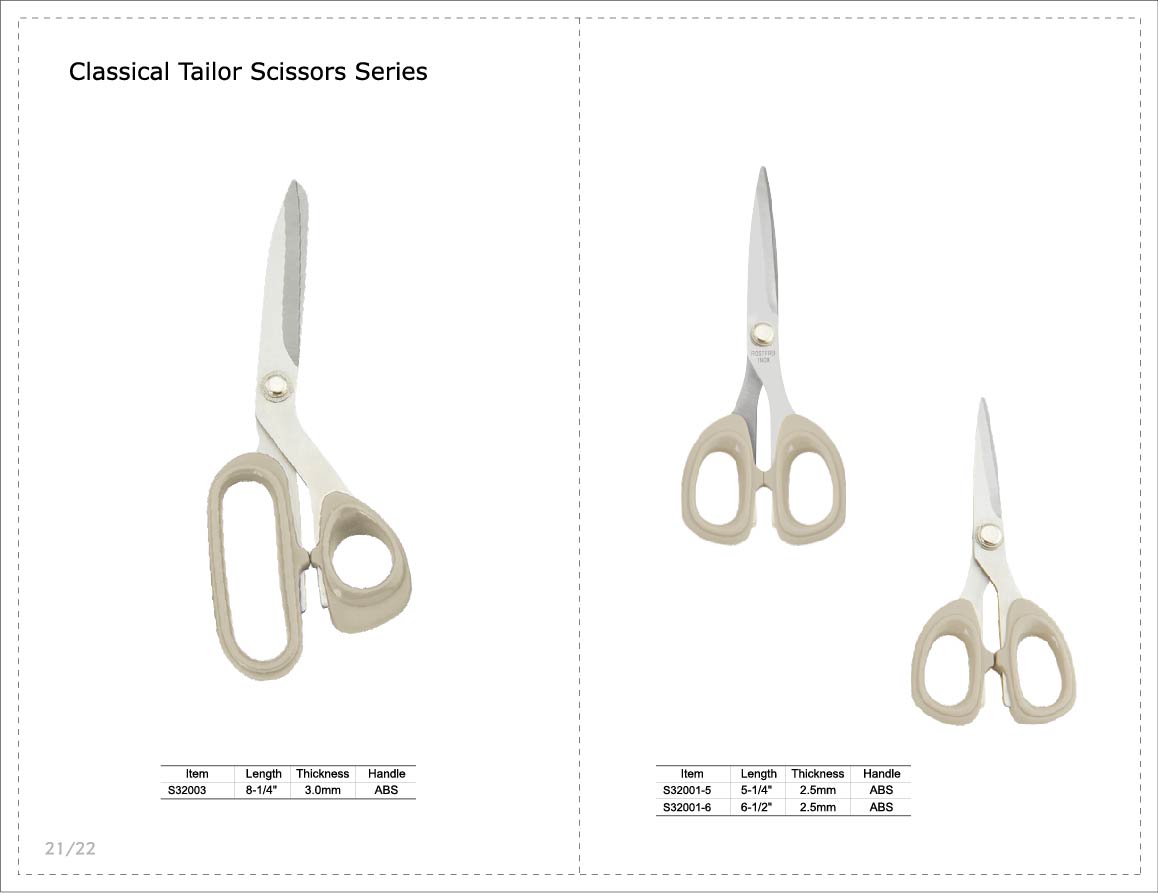
The original product information highlights the Classical Tailor Scissors Series, including an 8-1/4 inch model for heavy-duty tailoring and smaller 5-1/4 inch and 6-1/2 inch options for more detailed work. This guide explains how to evaluate those options, what to confirm with a supplier, and how to compare samples before placing a wholesale order.
Key Takeaways
- Match scissor size to the buyer’s use case: heavy fabric cutting, pattern work, trimming, or detail tasks.
- Confirm stated specifications such as size, blade thickness, and handle material before ordering.
- Request samples and test them on the fabrics or materials your customers actually cut.
- Ask the supplier clear questions about packaging, labeling, carton details, lead time, and after-sales handling.
- Avoid relying on product photos alone; cutting feel, pivot smoothness, and hand comfort need physical checking.
Understanding the Product Line
The Classical Tailor Scissors Series includes several sizes designed for different sewing and fabric-cutting tasks. According to the original product details, item S32003 is 8-1/4 inches with a 3.0 mm blade thickness and an ABS handle. It is described for heavy-duty tailoring and thicker fabrics. For smaller tasks, item S32001-5 is 5-1/4 inches and item S32001-6 is 6-1/2 inches. Both are listed with 2.5 mm thickness and ABS handles.
For B2B buyers, these facts are useful starting points, but they are not a complete purchasing specification. Before confirming an order, ask the supplier to provide an updated product sheet, photos of current production, packaging options, and sample availability. If your market requires specific safety, labeling, or import documentation, raise those requirements early and ask what documents the supplier can provide.
Choosing the Right Scissors for Your Channel
Different customers expect different cutting tools. A tailoring shop may prefer a larger pair that can cut long, controlled lines through fabric. A craft retailer may want a mixed sewing scissors set so hobby users can choose between general cutting and detail trimming. A garment workshop may evaluate scissors based on comfort during repeated use, consistency between pieces, and ease of storage at workstations.
When building a wholesale assortment, consider offering a clear size ladder rather than several similar products. The 8-1/4 inch option can serve users who need a more substantial tool. The 6-1/2 inch option may suit general sewing and pattern work. The 5-1/4 inch option may be easier to position for trimming seams, small craft work, or portable kits. If you sell online, make sure product titles and descriptions explain the intended use plainly so buyers do not order a size that is too small or too large for their needs.
Model Comparison and Sourcing Checklist
| Item | Stated Size | Stated Blade Thickness | Handle | Suggested Buyer Check |
|---|---|---|---|---|
| S32003 | 8-1/4 inches | 3.0 mm | ABS | Test on thicker fabrics and check hand comfort during long cuts. |
| S32001-6 | 6-1/2 inches | 2.5 mm | ABS | Review for general sewing, pattern cutting, and retail set inclusion. |
| S32001-5 | 5-1/4 inches | 2.5 mm | ABS | Check suitability for trimming, detail work, and compact sewing kits. |
| All models | Confirm with supplier | Confirm with supplier | Confirm color and finish | Ask for samples, packaging photos, carton information, and inspection method. |
How to Evaluate Samples Before Wholesale Ordering
A sample review should be structured. Do not only check whether the scissors look acceptable. Cut several materials that represent your actual customer use. For sewing and tailoring channels, this may include cotton fabric, denim-like fabric, lining fabric, thread, paper patterns, and small seam allowances. If your customers cut materials outside normal sewing use, confirm suitability with the supplier instead of assuming.
- Check the first cut from blade tip to base and note whether the cut is smooth.
- Open and close the scissors repeatedly to feel pivot movement and resistance.
- Inspect the handle edges for comfort, especially around the finger holes.
- Compare multiple samples to see whether size, finish, and cutting feel are consistent.
- Review packaging strength if the product will be shipped individually to consumers.
If possible, involve the people who will actually use or sell the scissors. A purchasing manager may focus on price and packaging, while a tailor may immediately notice balance, grip, or cutting control. Both views matter for a successful wholesale decision.
Supplier Questions to Ask Before You Buy
Clear questions reduce misunderstandings. Ask whether the stated item numbers, sizes, blade thicknesses, and ABS handles are current for the production batch you will receive. Request confirmation of available packaging formats, such as bulk pack, individual card, box, or customer-specified labeling if offered. Do not assume that custom packaging, barcodes, or brand printing are included unless the supplier confirms them in writing.
For commercial planning, ask practical questions: What is the minimum order quantity? What is the estimated production lead time after order confirmation? Are samples available, and is the sample the same as mass production? How are cartons packed, and what are the carton dimensions and gross weight? What inspection steps can be arranged before shipment? If your company needs compliance documents for a target market, ask exactly which documents the supplier can provide and whether they apply to the specific scissors you are ordering.
Packaging, Labeling, and Retail Presentation
Wholesale scissors often move through several channels before reaching the final user. Packaging should protect the blade tips, reduce movement during transport, and present product information clearly. For retail, buyers may need a hanging card, blister-style presentation, box, or other shelf-ready format. For workshop supply, simple protective packaging may be more important than display design.
Labeling should be checked carefully. Confirm item number, size, quantity per carton, country-of-origin marking if required for your market, and any warning or handling text your channel expects. If you sell through marketplaces, also ask whether packaging can support barcode placement and whether the supplier can follow your artwork files. Treat artwork approval as a separate step, and always review a pre-production layout when possible.
Balancing Price, Quality, and Risk
Price matters in wholesale sourcing, but scissors are tactile products. A very small cost saving can be lost quickly if customers complain about poor cutting feel, uncomfortable handles, or inconsistent packaging. Build your comparison around total value: sample performance, supplier communication, packaging reliability, shipment preparation, and the ability to repeat the same product in future orders.
It is also wise to document your approved sample. Keep photos, measurements, packaging references, and written specifications. When the order is ready, compare mass-production goods against the approved sample or arrange a third-party inspection if your order value justifies it. This approach helps protect both buyer and supplier by making expectations visible.
Practical FAQ
What size tailor scissors should a wholesaler stock first?
For a basic assortment, consider one larger tailoring size for fabric cutting and one or two smaller sizes for sewing, trimming, or craft use. The best mix depends on whether your customers are professionals, hobby sewers, retailers, or workshop buyers.
Are the listed scissors suitable for heavy fabrics?
The original information describes S32003, the 8-1/4 inch model with 3.0 mm blade thickness, as designed for heavy-duty tailoring. Buyers should still test samples on the specific fabrics their customers use.
What details should be confirmed before placing a wholesale order?
Confirm item number, size, blade thickness, handle material, packaging, quantity per carton, lead time, sample match, inspection process, and any required documents for your destination market.
Should I order a sewing scissors set or individual models?
A set can be useful for retail and hobby channels because it covers multiple tasks. Individual models may be better for factories, tailors, or distributors that already know which size sells best.
Can packaging be customized?
Customization may be possible, but it should not be assumed. Ask the supplier about available packaging choices, artwork requirements, minimum quantities, sample approval, and any added cost or lead time.
