




Scissors with Soft Handle: Versatile and Ergonomic Design
Scissors with soft handle grips are used in homes, offices, schools, craft rooms, and light professional settings because they solve a simple problem: cutting tools should be comfortable as well as sharp enough for routine tasks. A cushioned or soft-touch grip can reduce pressure on the fingers during repeated cuts, while a well-shaped handle helps the user maintain better control.
The original product article introduced the Precision Edge Ergonomic Scissors as a household cutting tool with stainless steel blades, a softly cushioned handle, a minimalist look, and suitability for both right-handed and left-handed users. Those are useful points, but buyers also need to know how to compare options, what to ask a supplier, and how to match the scissors to real use cases.
Key Takeaways
- Soft handle scissors are best chosen by matching grip comfort, blade material, size, and intended cutting tasks.
- Stainless steel blades, as stated in the original product description, are a common choice for household scissors because they support everyday durability and clean cutting.
- For OEM or wholesale sourcing, buyers should confirm specifications, packaging, samples, tolerances, lead times, and compliance documents directly with the supplier.
- Comfort claims should be checked with real users when possible, especially if the scissors are intended for schools, craft kits, office supply ranges, or retail private label programs.
What Soft Handle Scissors Are Designed to Do
Soft handle scissors are not only about appearance. The handle is one of the main contact points between the user and the tool. A rigid handle can feel fine for a few quick cuts, but repeated use may create finger pressure, especially when cutting paper stacks, fabric pieces, packaging, or craft materials. A soft or cushioned grip distributes pressure more evenly and can make longer cutting sessions easier.
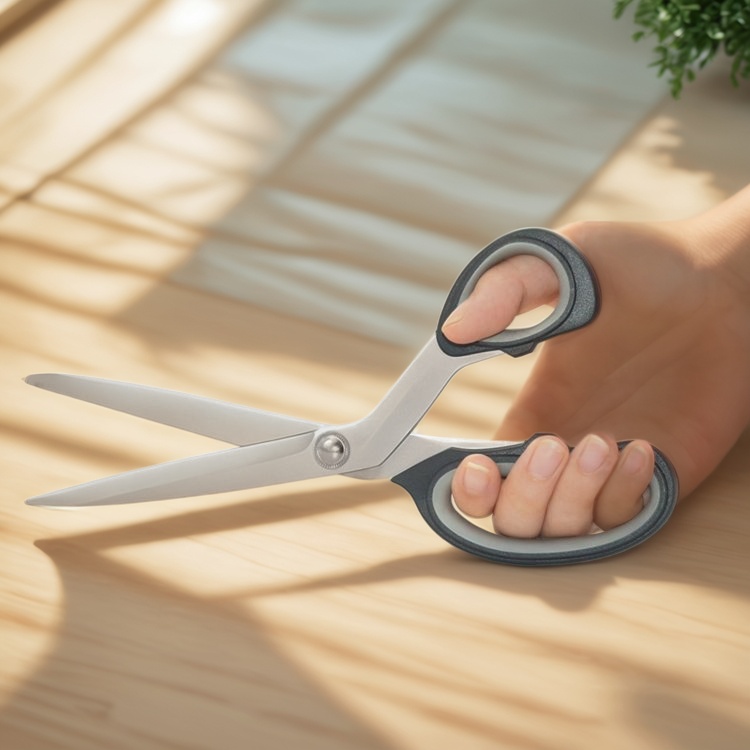
The product described in the source article uses a soft-touch rubber grip and a cushioned handle. These features are relevant for common household and creative tasks, where users may switch between wrapping paper, light fabric, labels, cardboard packaging, and DIY materials. The goal is not to replace specialized industrial cutting tools, but to provide a reliable general-purpose option for frequent everyday use.
Everyday Uses for Household Scissors
Household scissors need to be versatile because most users do not want a different tool for every small task. A pair of soft handle scissors may be used in the kitchen drawer, home office, classroom, craft area, or workplace supply cabinet. The original article specifically mentions paper, fabric, and other materials, so buyers should think about the most common materials their customers will actually cut.
- Paper and stationery: cutting documents, envelopes, labels, wrapping paper, and school projects.
- Craft projects: trimming patterns, ribbons, light decorative materials, and hobby sheets.
- Light fabric use: small home sewing tasks or simple fabric trimming, when the blade design is suitable.
- Packaging tasks: opening mailers, cutting tags, and reducing packaging waste for disposal.
- Shared workspaces: office, retail counter, classroom, or studio use where comfort matters for different users.
For heavier materials, buyers should ask whether the blade thickness, pivot construction, and edge design are appropriate. General-purpose household scissors should not be assumed to perform like shears made for industrial fabric cutting, metal, or thick plastic.
Blade and Handle Factors to Compare
The original product description states that the scissors have stainless steel blades. Stainless steel is widely used for household scissors because it can offer a practical balance of durability and everyday cutting performance. However, not all stainless steel blades are the same. Buyers should ask the supplier what blade hardness, edge finishing, and corrosion-resistance expectations apply to the offered model rather than assuming a grade or performance level.
Handle design deserves equal attention. A soft handle can be made in different shapes, thicknesses, and textures. Some users prefer a larger grip opening, while others want a compact tool for desk drawers or pencil cases. The source article also notes that the scissors are suitable for both right-handed and left-handed users. If this is important for a sourcing project, confirm whether the handle shape and blade orientation have been checked by left-handed users, not only described as universal.
Comparison Checklist for Buyers
| Selection Point | What to Check | Why It Matters |
|---|---|---|
| Blade material | Confirm stainless steel type, finish, and edge process with the supplier. | Helps estimate durability, maintenance needs, and cutting feel. |
| Handle comfort | Review grip softness, opening size, surface texture, and pressure points. | Affects user fatigue during repeated cutting. |
| Intended materials | Ask which materials were used for sample cutting tests. | Prevents mismatch between product claims and customer use. |
| Right/left use | Request clarification on ambidextrous design and user testing. | Important for schools, offices, and shared workspaces. |
| Packaging | Check retail card, blister, bulk pack, barcode, and private label options. | Impacts retail presentation, logistics, and channel requirements. |
| Quality control | Ask about inspection criteria for blade alignment, pivot tightness, and handle finish. | Reduces inconsistent cutting and returns. |
OEM and Wholesale Sourcing Guidance
For importers, distributors, and private label buyers, Chinese OEM scissors sourcing can be efficient, but it should be managed with clear specifications. The original article mentions Chinese OEM scissors expertise in general terms. A stronger sourcing approach is to turn that interest into a checklist of questions before placing an order.
Start with a reference sample. Confirm total length, blade length, handle color, grip material, logo placement, packaging format, and carton requirements. If the supplier offers customization, ask which parts are customizable and which require new tooling. Do not assume minimum order quantity, tooling cost, production lead time, or certification availability; request written confirmation for your project.
Buyers should also ask how samples are approved and how mass production will be inspected. For scissors, practical inspection points may include blade alignment, smooth opening and closing, pivot stability, handle adhesion or molding consistency, visual defects, and cutting performance on agreed materials. If the product is intended for children, schools, or regulated retail channels, compliance requirements should be discussed early with qualified professionals and the supplier.
How to Evaluate Samples Before Ordering
A sample review should go beyond looking at the handle color. Use the scissors in realistic conditions and record results consistently. Cut the same paper, light fabric, packaging material, and craft material with each sample. Notice whether the blades catch, bend the material, leave ragged edges, or feel loose at the pivot.
Comfort is partly subjective, so involve several users if possible. Ask them to rate grip comfort, finger room, control, and fatigue after repeated cuts. If the scissors are meant for a retail product line, compare them with competing products at a similar market position. This helps you understand whether the soft handle is genuinely useful or only a visual feature.
Use and Care Tips for End Users
Even good household scissors last longer when used correctly. Keep them dry after exposure to moisture, wipe adhesive residue from the blades, and avoid cutting materials that exceed the intended use. If the scissors begin to feel stiff, check whether debris has collected near the pivot. Store them closed and away from young children.
- Use separate scissors for food packaging, crafts, and fabric when hygiene or sharpness matters.
- Do not twist the blades through thick materials; choose a stronger cutting tool instead.
- Clean the blades gently after cutting tape or labels to reduce sticky buildup.
- Store in a drawer, holder, or tool kit where the blade edges are protected.
Practical FAQ
Are soft handle scissors better than hard handle scissors?
They can be more comfortable for repeated cutting because the cushioned grip reduces pressure on the fingers. The best choice still depends on blade quality, handle shape, and the materials being cut.
Can one pair of household scissors cut both paper and fabric?
The source article states that the scissors can cut paper, fabric, and other materials. For best results, test samples on the exact fabric type and thickness you expect users to cut.
What should OEM buyers ask a scissors supplier?
Ask about blade material details, handle material, size, color options, logo methods, packaging, sample approval, inspection standards, lead time, MOQ, and any documents required for your sales market.
Are these scissors suitable for left-handed users?
The original description says the design accommodates both right-handed and left-handed users. Buyers should still confirm this with samples, especially for shared-use or retail programs.
How can I judge cutting quality during sample testing?
Check whether the scissors cut cleanly from the base to the tip, whether the pivot feels stable, whether the blades align properly, and whether the handle remains comfortable after repeated use.
