








Silicone Spoon for Cooking: A Practical Guide for Everyday Use
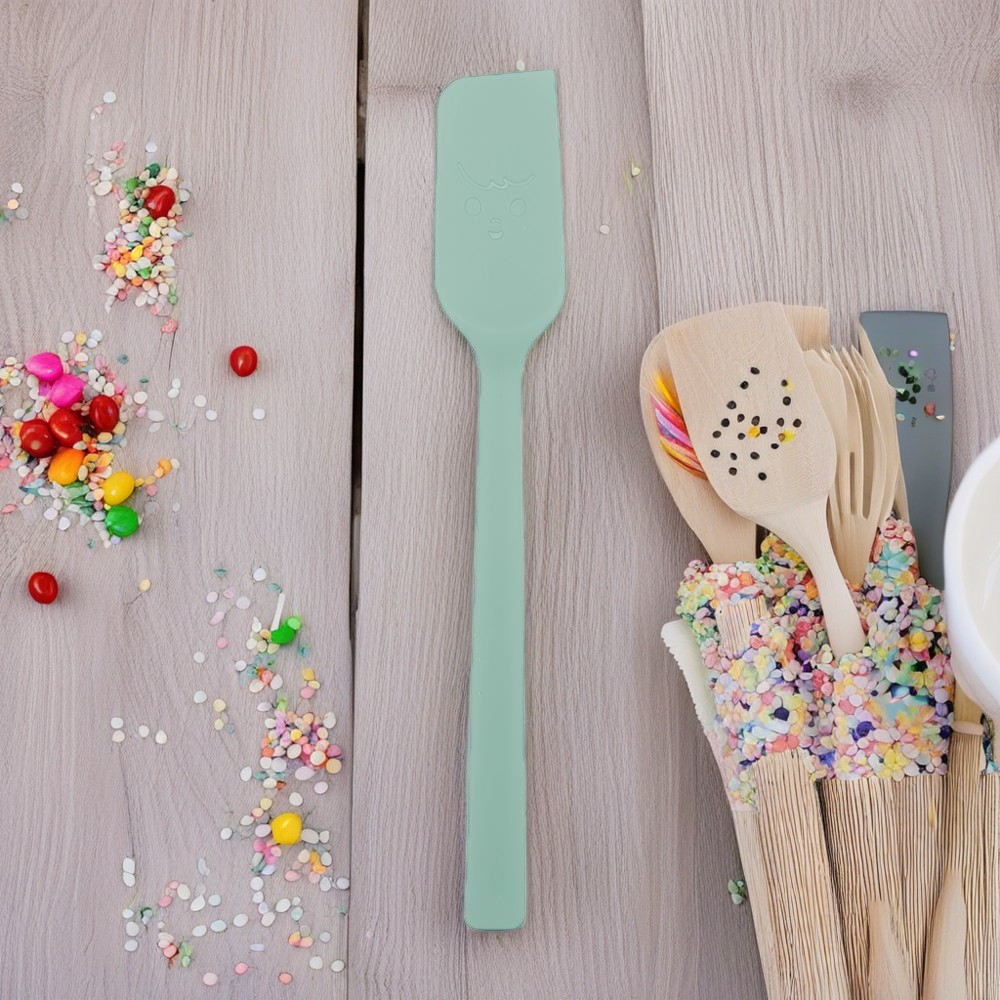
Silicone spoons and spatula-style spoons have become common in home kitchens because they are flexible, easy to clean, and useful for many cooking and baking tasks. The original Bonet Houseware article introduced a mint green silicone spatula with a slanted edge, a cute embossed face design, and a matte finish. This guide expands on that idea with practical advice: how to decide whether a silicone spoon is right for your kitchen, what details to compare before buying, and how to use and maintain it properly.
Key Takeaways
- A silicone spoon for cooking is most useful when it combines flexibility at the edge with enough firmness in the handle.
- A slanted edge can help scrape bowls, fold batter, spread sauces, and reach food left in jars or cans.
- Comfort, ease of cleaning, and the right head shape matter more than color alone.
- Before purchase, check supplier-provided details such as heat-use guidance, dishwasher suitability, dimensions, and material information.
What Is a Silicone Spoon for Cooking?
A silicone spoon for cooking usually refers to a utensil with a silicone head designed for stirring, mixing, scraping, folding, or serving. Some versions look like a traditional spoon, while others are closer to a spatula or spoonula. The mint green tool described in the original article is best understood as a silicone spatula-spoon: it has a scraping edge and is intended for tasks such as mixing batter, spreading ingredients, flipping smaller foods, or scraping containers.
Unlike a metal spoon, silicone is generally chosen for a softer contact surface. This makes it useful when working with mixing bowls, jars, baking tools, or cookware surfaces where a harder utensil may be less suitable. However, buyers should still follow the cookware maker’s care instructions and the utensil supplier’s stated usage guidance.
Where This Type of Utensil Works Best
The main value of a silicone spoon is versatility. It is not limited to one recipe or cooking style. A well-shaped head can move between breakfast, baking, meal preparation, and cleanup tasks without feeling like a specialty tool that sits unused in a drawer.
- Mixing and folding: Use the flexible edge to combine batters, whipped ingredients, or sauces without overworking them.
- Scraping bowls: A slanted edge helps collect the last streaks of batter, dressing, or spread from curved surfaces.
- Spreading: The flat side can help apply jam, frosting, nut butter, or sauce evenly.
- Stirring: A silicone spoon can be used for sauces, soups, and simple stovetop cooking when used within the supplier’s recommended conditions.
- Container cleanup: For jars or cans, a slim and flexible head can reduce waste by reaching corners more easily.
Comparison Checklist Before You Buy
Color and design can make a utensil pleasant to use, but practical details should guide the buying decision. Use the checklist below when comparing silicone cooking utensils online or in-store.
| Feature to Check | Why It Matters | Question to Ask |
|---|---|---|
| Head shape | Determines whether the tool is better for stirring, scraping, spreading, or serving. | Is the edge slanted, rounded, deep, or flat? |
| Flexibility | Too soft may feel weak; too stiff may not scrape well. | Does the head flex at the edge while staying controlled? |
| Handle comfort | A comfortable grip matters during repeated stirring or baking preparation. | Is the handle length and shape suitable for your hand? |
| Cleaning method | Some users prefer dishwasher cleaning, while others hand wash all utensils. | Does the supplier state that it is dishwasher safe? |
| Use guidance | Cooking tools should be used according to the seller’s stated limits. | What heat-use instructions and care warnings are provided? |
Design Details: Slanted Edge, Mint Color, and Comfort
The product described in the original article includes several visible design details: a matte mint green finish, an embossed face design, and a slanted edge. The color and face motif are mainly aesthetic, but they can still affect user preference. A utensil that is easy to identify and pleasant to hold often gets used more frequently than a plain tool stored at the back of a drawer.
The slanted edge is the more functional feature. It gives the utensil a scraping surface that can follow the side of a bowl or container. For baking, this is useful when folding flour into wet ingredients or moving batter from a bowl into a pan. For everyday cooking, it can help spread sauces or scrape soft foods without switching between multiple tools.
Comfort is also worth considering. An ergonomic handle was mentioned in the original article, and that matters because stirring, folding, and scraping involve repeated wrist movement. A handle should feel secure without forcing the user to grip too tightly.
Use and Care Tips for Longer Service
Even a simple kitchen tool lasts longer when used correctly. Silicone utensils are low-maintenance, but they are not care-free. Food residues, oils, and strong pigments can build up if tools are not washed promptly. Follow the product’s care instructions first, then apply these general habits.
- Wash before first use with warm water and mild dish soap.
- Rinse after contact with oily sauces, tomato-based foods, or strong spices.
- If dishwasher cleaning is stated by the supplier, place the utensil where it will not be trapped against heating elements or sharp items.
- Avoid cutting directly on the silicone head with knives or other sharp tools.
- Store it flat or upright so the head is not permanently bent under heavy utensils.
If an odor remains after cooking, wash the utensil thoroughly and let it air dry. For any unusual staining, cracking, stickiness, or surface damage, stop using the tool and check whether replacement is needed.
When to Choose a Silicone Spoon Instead of Other Utensils
A silicone spoon is not always the only tool you need. It is best for soft scraping, mixing, and controlled spreading. A wooden spoon may feel better for heavy dough or thick mixtures. A metal spoon may be better for precise serving in some contexts. A flat spatula may be better for large pancakes or fish fillets. The advantage of a silicone spoon-spatula is that it covers many small daily tasks without requiring a full tool change.
For a compact kitchen, one silicone spoon with a slanted scraping edge can replace several single-purpose tools. For a larger kitchen, it can sit alongside a ladle, turner, whisk, and tongs as part of a practical utensil set.
FAQ
Is a silicone spoon only for baking?
No. It is useful for baking tasks such as folding batter, but it can also be used for stirring sauces, spreading ingredients, and scraping jars or bowls.
Does the mint green color affect performance?
No. Color is mainly a design preference. Performance depends more on head shape, flexibility, handle comfort, cleaning guidance, and the supplier’s stated use instructions.
Can I put it in the dishwasher?
The original article states that the tool is dishwasher safe. For any specific product, confirm the supplier’s care instructions and load it in a way that avoids contact with sharp items.
What should I ask before buying silicone cooking utensils?
Ask about material information, dimensions, heat-use guidance, cleaning instructions, packaging, and whether the shape is intended for scraping, stirring, spreading, or serving.
When should I replace a silicone spoon?
Replace it if the head is torn, cracked, sticky, strongly deformed, or difficult to clean. Damaged utensils can trap food and become less pleasant to use.
