




Silicone Spoon Guide: Uses, Selection and Care
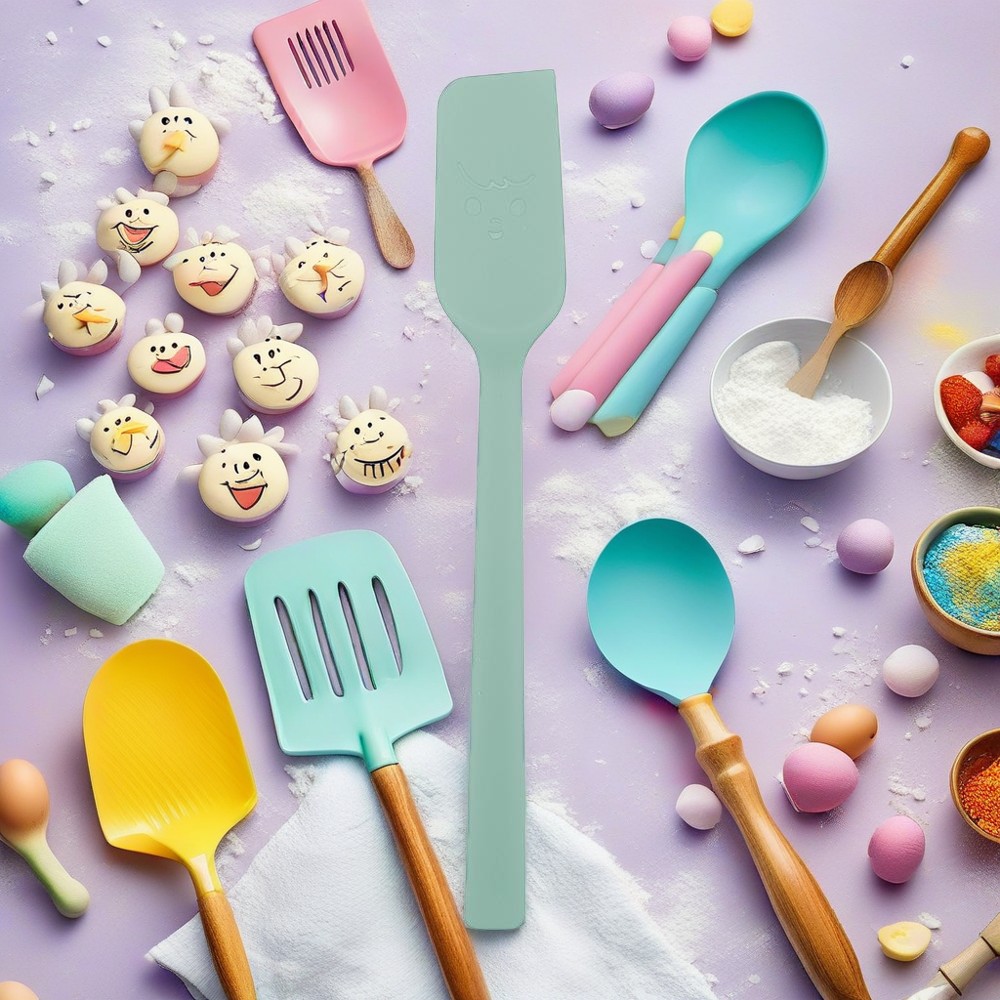
Silicone spoons and spatulas have become common kitchen tools because they are practical for mixing, scraping, folding and serving. The original article highlighted a mint green silicone spatula with a playful embossed smiley face, a minimalist look, flexibility, heat resistance and a comfortable handle. Those details point to what many shoppers want from silicone utensils: a tool that is gentle on cookware, easy to clean and comfortable enough for repeated use.
This guide explains how to evaluate a silicone spoon or spatula for everyday cooking. It avoids exaggerated claims and focuses on real selection and care points: shape, flexibility, cleaning, compatibility with nonstick pans, and the questions to ask before buying.
Key Takeaways
- Silicone utensils are popular because they are gentle on nonstick cookware and useful for scraping, stirring and mixing.
- Check the supplier’s stated heat resistance instead of assuming every silicone spoon performs the same.
- A flexible head helps scrape bowls, while a firmer spoon shape is better for stirring thicker foods.
- Seamless designs are easier to clean because there are fewer gaps where residue can collect.
- For a mint green spatula or decorative design, confirm that the shape still fits your daily cooking tasks.
Why Silicone Spoons Work Well in Everyday Kitchens
A silicone spoon sits between a traditional serving spoon and a scraper. It can stir sauces, fold batter, scoop soft foods and reach the curved edges of bowls. Silicone spatulas are especially useful when you need to remove batter, cream, sauce or dough from a mixing bowl with less waste.
One important benefit mentioned in the original article is that silicone tools are gentle on nonstick cookware. Metal utensils can scratch many coated pans if used carelessly. Silicone is softer, so it is usually a safer choice when stirring eggs, sauces or vegetables in a nonstick pan. That said, users should still avoid pressing hard against damaged coatings or using sharp edges near cookware surfaces.
Silicone tools also feel different from wood, stainless steel or nylon. The head has a slight grip against food and bowl surfaces, which helps with scraping. For cooks who bake often, this is a major advantage. For cooks who mostly serve heavy stews or stir thick mixtures, a stronger handle and a less flexible head may be more important.
Product Features to Check Before Buying
The mint green silicone spatula described in the source has a clean, playful design and an embossed smiley face. Appearance can make a tool more enjoyable to use, but it should not be the only buying factor. A good silicone spoon or spatula should match the tasks you actually perform.
| Feature | What to Look For | Why It Matters |
|---|---|---|
| Head shape | Spoon shape for scooping; flat or angled spatula shape for scraping | Different shapes suit stirring, serving, folding and bowl scraping |
| Flexibility | Flexible edge with enough support in the center | Helps scrape bowls without feeling flimsy |
| Handle comfort | Ergonomic feel and secure grip | Reduces hand fatigue during longer mixing or cooking tasks |
| Seamless design | Few joints, cracks or removable parts | Makes cleaning easier and supports better kitchen hygiene |
| Heat resistance | Supplier-stated temperature range | Prevents misuse near hot pans, ovens or stovetops |
| Food-contact material | Clear material information from the seller | Helps buyers understand what the utensil is made for |
Silicone Spoon vs. Silicone Spatula
The words spoon and spatula are sometimes used loosely, but they are not identical. A silicone spoon is usually deeper and better for stirring, tasting and serving. A silicone spatula has a flatter head designed to scrape bowl sides, spread mixtures and fold ingredients together.
If you cook a wide range of foods, both tools can be useful. A spoon handles soups, sauces and cooked grains more naturally. A spatula is better for cake batter, frosting, scrambled eggs and scraping jars. The mint green silicone spatula in the source is described as flexible and precise for mixing and scraping, so it is best understood as a scraping and folding tool rather than a deep serving spoon.
How to Use Silicone Tools Without Damaging Them
Silicone is durable for many kitchen tasks, but it is not indestructible. Use it according to the supplier’s care instructions, especially around direct heat. A silicone spoon may be heat resistant, but that does not mean it should be left resting in a hot pan for a long time or placed against an open flame.
- Use the flexible edge for scraping bowls, pans and jars rather than forcing the handle.
- Avoid cutting against the silicone head with knives or sharp tools.
- Do not leave the utensil in a hot pot unless the supplier specifically says it is suitable for that use.
- Wash off oily sauces promptly to reduce staining and lingering odor.
- Store the tool where the head is not bent under heavy items.
For nonstick cookware, silicone utensils should still be used with care. Stir smoothly, avoid scraping aggressively over rough damaged surfaces and follow the cookware manufacturer’s guidance.
Cleaning and Storage Tips
The original article notes that a seamless design is easy to clean and hygienic. This is a practical advantage because joints between a head and handle can trap residue. When shopping, look closely at where the handle meets the working end. A smooth one-piece feel is often simpler to rinse after sticky batters or sauces.
Warm water and mild dish soap are usually enough for everyday cleaning. If the utensil has held strong flavors, such as garlic, curry or tomato sauce, wash it soon after use. Let it dry fully before storing it in a drawer or utensil holder. If the spatula has an embossed smiley face or decorative detail, clean around the raised or recessed area so food does not remain in the design.
Questions to Ask a Seller or Supplier
Whether buying one utensil for home use or comparing options for retail, clear product information matters. Avoid assuming that all silicone kitchen tools share the same specifications. Ask practical questions before ordering, especially if the product will be used frequently or sold to customers.
- What is the stated heat-resistance range for the utensil?
- Is the silicone intended for food-contact kitchen use?
- Is the handle reinforced, and what material is inside if reinforcement is used?
- Is the design seamless or assembled from multiple parts?
- Are there care instructions for dishwashers, sterilizing or long exposure to heat?
- For colored tools such as mint green, what cleaning guidance helps reduce staining?
These questions help buyers compare products responsibly without relying only on color, packaging or promotional descriptions.
FAQ
Can I use a silicone spoon on nonstick cookware?
Yes, silicone utensils are commonly chosen because they are gentle on nonstick cookware. Still, use light pressure and follow the cookware maker’s care instructions.
Is a silicone spatula better than a wooden spoon?
It depends on the task. Silicone is better for scraping bowls and protecting nonstick surfaces. Wood can feel firmer for heavy stirring but may require more careful drying.
How do I choose between a spoon and a spatula?
Choose a spoon for stirring and serving. Choose a spatula for scraping, folding and spreading. If you bake often, a flexible spatula is especially useful.
Does color affect performance?
Color does not determine performance. A mint green finish or playful embossed detail may make the tool more attractive, but shape, flexibility, handle comfort and heat guidance are more important.
How should I clean silicone utensils after oily foods?
Wash them promptly with warm water and mild dish soap. Pay attention to decorative details and any seams. Dry fully before storage.
Final Thoughts
A silicone spoon or mint green silicone spatula can be a reliable everyday kitchen tool when chosen for the right purpose. Look beyond appearance and check the working shape, flexibility, handle comfort, cleaning design and supplier information. With sensible use and regular cleaning, silicone utensils can support everyday cooking while helping protect nonstick cookware and reduce food waste during scraping and mixing.
