




Yangjiang Kitchen Scissors: Comfort, Control and OEM Sourcing Guide
Kitchen scissors are a small tool, but they influence daily prep speed, cutting accuracy and user comfort. For retailers, distributors and private-label buyers, the challenge is not simply finding a pair that looks good in a catalog. The goal is to evaluate whether the scissors feel secure in the hand, cut consistently and can be supported by a reliable supplier relationship.
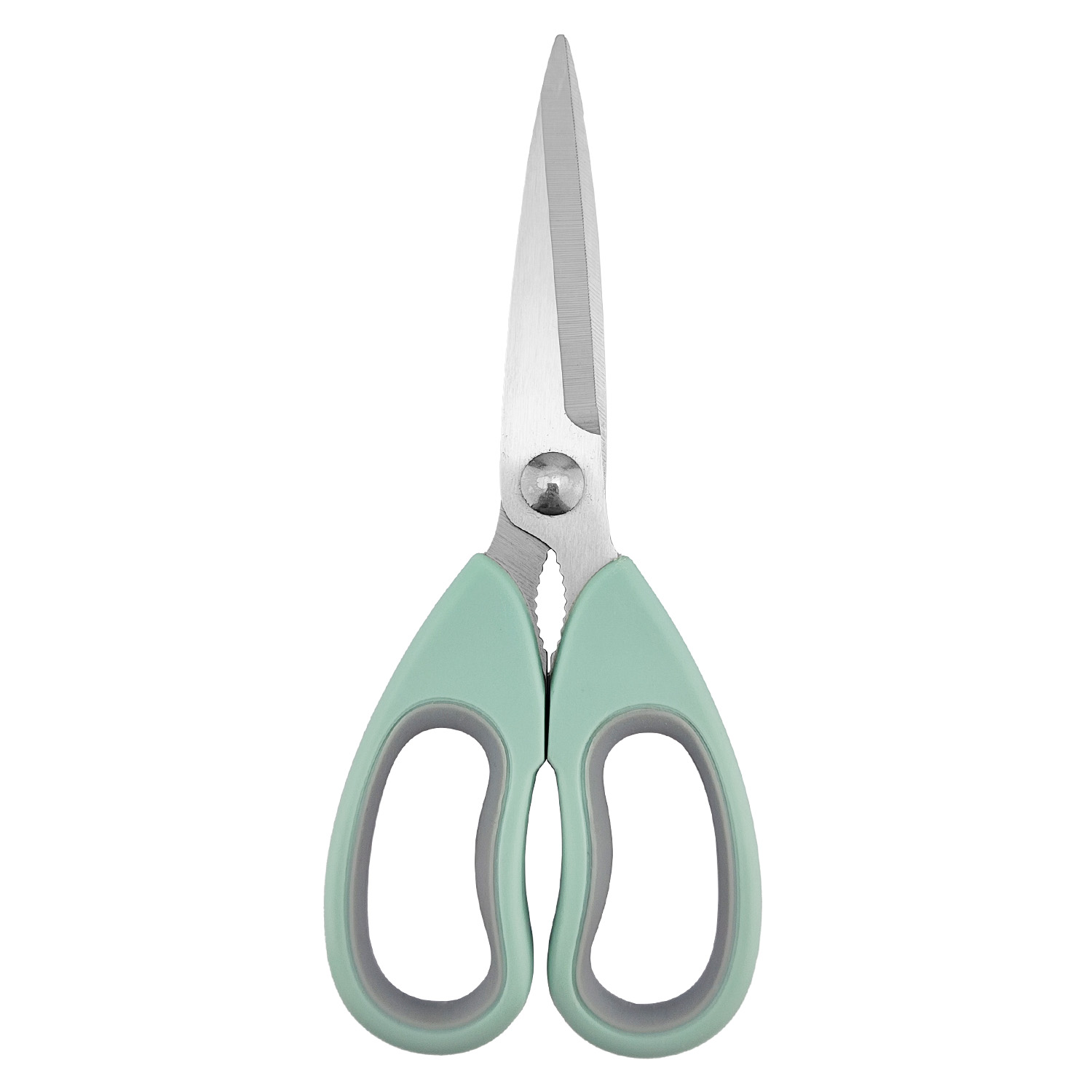
The original focus of this article is soft grip kitchen scissors from a Yangjiang scissors factory, with OEM kitchen scissors options for business buyers. Yangjiang is widely known as a cutlery production area, so many buyers start their sourcing search there. This guide explains what to check before placing a wholesale or OEM order, without assuming details that should be confirmed directly with the manufacturer.
Key Takeaways
- Soft grip kitchen scissors should be judged by comfort, control, blade performance and cleaning convenience.
- For B2B sourcing, ask the supplier to confirm materials, available packaging, branding methods, MOQ, lead time and quality inspection steps.
- Do not rely on appearance alone; test cutting tasks that match your target customer use case.
- OEM kitchen scissors projects should define handle color, logo position, packaging artwork and approval samples before mass production.
What Makes Soft Grip Kitchen Scissors Practical?
Soft grip kitchen scissors are designed to give the user a more secure and comfortable hold than a hard, narrow handle. The benefit is especially noticeable when cutting herbs, packaging, cooked food or poultry portions. A handle that reduces slipping can improve control, while a shape that supports the fingers can reduce discomfort during repeated use.
For consumer-facing product selection, buyers should look for a pair that opens smoothly, closes evenly and feels balanced rather than top-heavy. For wholesale sourcing, business buyers should request physical samples and test them with multiple hand sizes. A design that feels comfortable to one evaluator may not suit a wider customer base.
Why Yangjiang Matters in Kitchen Scissors Sourcing
Yangjiang has a long association with cutlery and scissors manufacturing, which makes it a common sourcing destination for kitchenware buyers. The benefit of working with a Yangjiang kitchen scissors manufacturer is access to suppliers familiar with blade production, handle assembly and export-oriented product development.
However, location alone is not a quality guarantee. Buyers should still ask detailed questions about production process, material sourcing, inspection procedures and packaging control. If a supplier describes itself as a leading manufacturer, request evidence that is relevant to your order, such as sample consistency, factory communication speed and documented quality checkpoints.
Comfort and Control Features to Evaluate
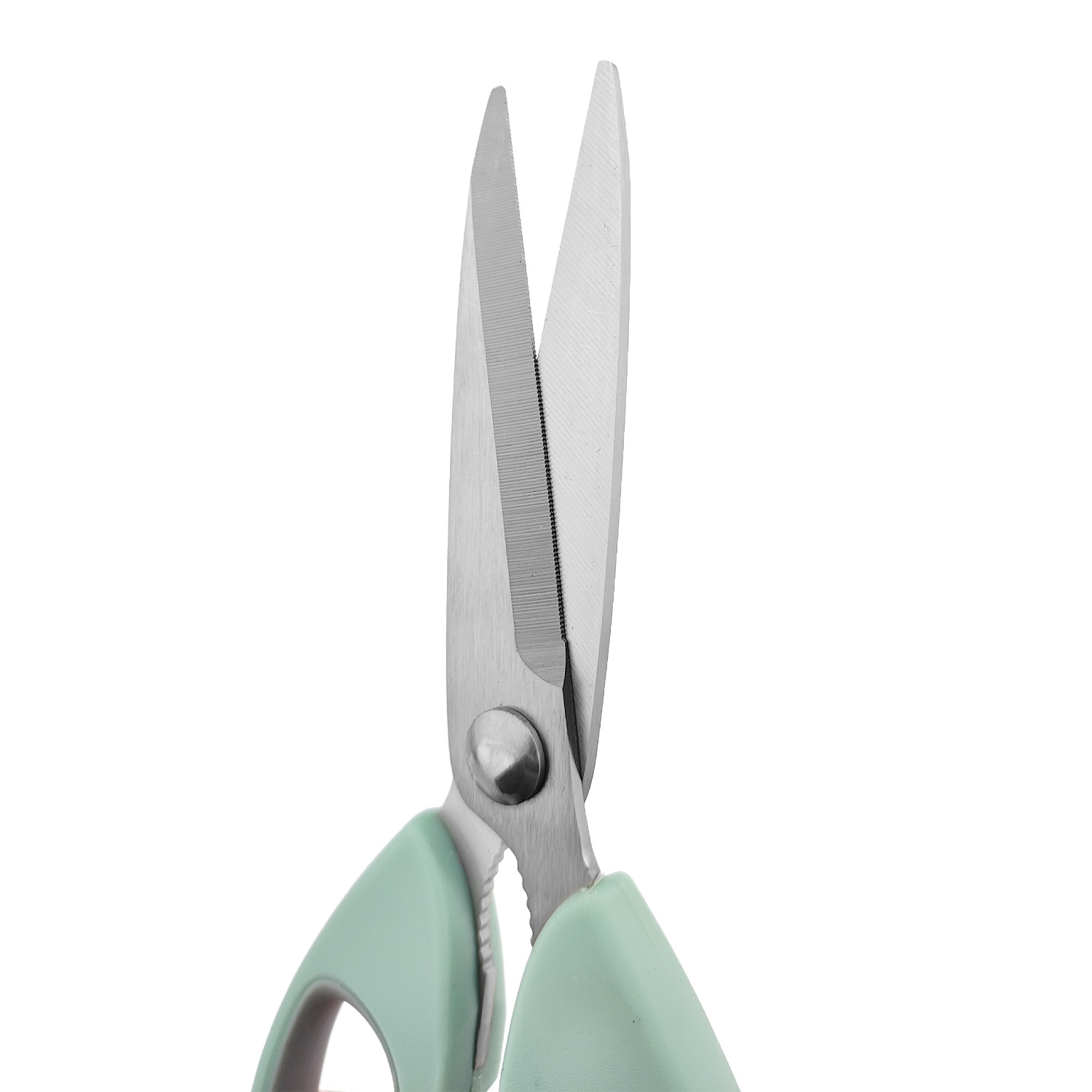
Comfort and control should be evaluated through use, not only through product photos. A pair of scissors may look ergonomic but still cause pressure points or feel unstable when cutting thicker foods. During sample review, test the tool in short and repeated cutting tasks to see whether the handles stay secure and whether the blades track cleanly.
| Checklist Item | What to Check | Questions for the Supplier |
|---|---|---|
| Handle comfort | Grip security, finger space and pressure points | Are different handle colors or grip materials available? |
| Cutting control | Smooth opening, stable closing and clean cutting path | How is blade alignment checked before shipment? |
| Blade performance | Cutting herbs, food packaging and thicker kitchen items | What blade material and hardness can be documented? |
| Cleaning and care | Ease of rinsing and removing food residue | What care instructions should be printed on packaging? |
| OEM readiness | Logo placement, packaging layout and color matching | What files, samples and approvals are required before production? |
OEM Kitchen Scissors: What Buyers Should Define Early
OEM kitchen scissors projects work best when the buyer provides clear requirements before sampling. If you want custom-branded scissors, define the market position first: entry-level kitchen utility, giftable kitchen accessory, retail hanging-card product or private-label set component. Each position can affect packaging, finish, color choice and inspection expectations.
The original article mentions customization possibilities such as handle colors, including mint green, and logo imprinting. Treat these as project discussion points rather than assumptions for every order. Ask what branding methods are available, where a logo can be placed and whether the supplier can provide a pre-production sample for approval.
- Confirm the target retail channel and expected end-user tasks.
- Request samples and compare them with competing products in the same price tier.
- Ask for available handle colors, packaging formats and logo options.
- Clarify MOQ, lead time, sample cost, payment terms and shipping terms.
- Approve a final sample before bulk production begins.
Quality Questions for a Kitchen Scissors Manufacturer
When sourcing from any kitchen scissors manufacturer, ask practical questions that connect directly to risk. What incoming material checks are performed? How is blade sharpness or cutting consistency evaluated? How does the factory handle defective pieces found during inspection? What packaging drop or carton checks are used for export shipments?
If your market requires specific compliance documents, do not assume they are included. Ask the supplier to confirm which documents they can provide for the exact product and order. This is especially important for private-label importers that must manage labeling, safety warnings and retail documentation in their own market.
How to Test Samples Before a Wholesale Order
Sample testing should reflect real kitchen use. Cut fresh herbs to check precision, open food packaging to check convenience and test thicker items to evaluate strength and blade stability. Also test wet-hand handling, because kitchen tools are often used near sinks or food preparation areas.
Inspect the finish as well as the cutting feel. Look for rough edges, loose assembly, uneven gaps between blades or packaging that does not protect the product during shipping. If several samples are provided, compare consistency from piece to piece. Consistency is often more important than one excellent sample.
Use and Care Guidance for End Users
For consumer communication, keep care instructions clear and realistic. Users should rinse kitchen scissors soon after contact with food, dry them before storage and avoid using them for non-kitchen tasks that could damage the cutting edge. If the product has specific dishwasher guidance, material details or detachable construction, those claims should come from confirmed supplier information.
Retailers can reduce returns by explaining intended use on packaging and product pages. A simple care note helps customers understand how to maintain performance and avoid corrosion, dulling or misuse.
FAQ
What are soft grip kitchen scissors best used for?
They are commonly used for herbs, food packaging, cooked foods and general kitchen prep where a secure handle and controlled cutting motion are helpful.
Can OEM kitchen scissors include a private-label logo?
Many suppliers offer branding options, but the exact logo method, placement, MOQ and setup requirements should be confirmed before sampling.
Is a Yangjiang scissors factory automatically better?
Yangjiang is known for cutlery production, but buyers should still evaluate samples, inspection process, communication and order documentation.
What should wholesalers ask before ordering?
Ask about materials, sample approval, packaging, lead time, MOQ, defect handling, carton details and any documents needed for your target market.
How can buyers compare two similar kitchen scissors?
Test cutting consistency, comfort across different hand sizes, handle grip, blade alignment, packaging quality and supplier responsiveness.
