




Spiralizer Manufacturing: A Practical Sourcing Guide for Kitchenware Buyers
Spiralizers have become a familiar kitchen tool for preparing vegetables in noodle, ribbon, and shredded forms. For brands, wholesalers, importers, and kitchenware retailers, the important question is not simply whether a spiralizer looks appealing. The key issue is whether the product can be manufactured consistently, packed safely, and supported by a supplier that understands everyday use, blade safety, and batch quality.
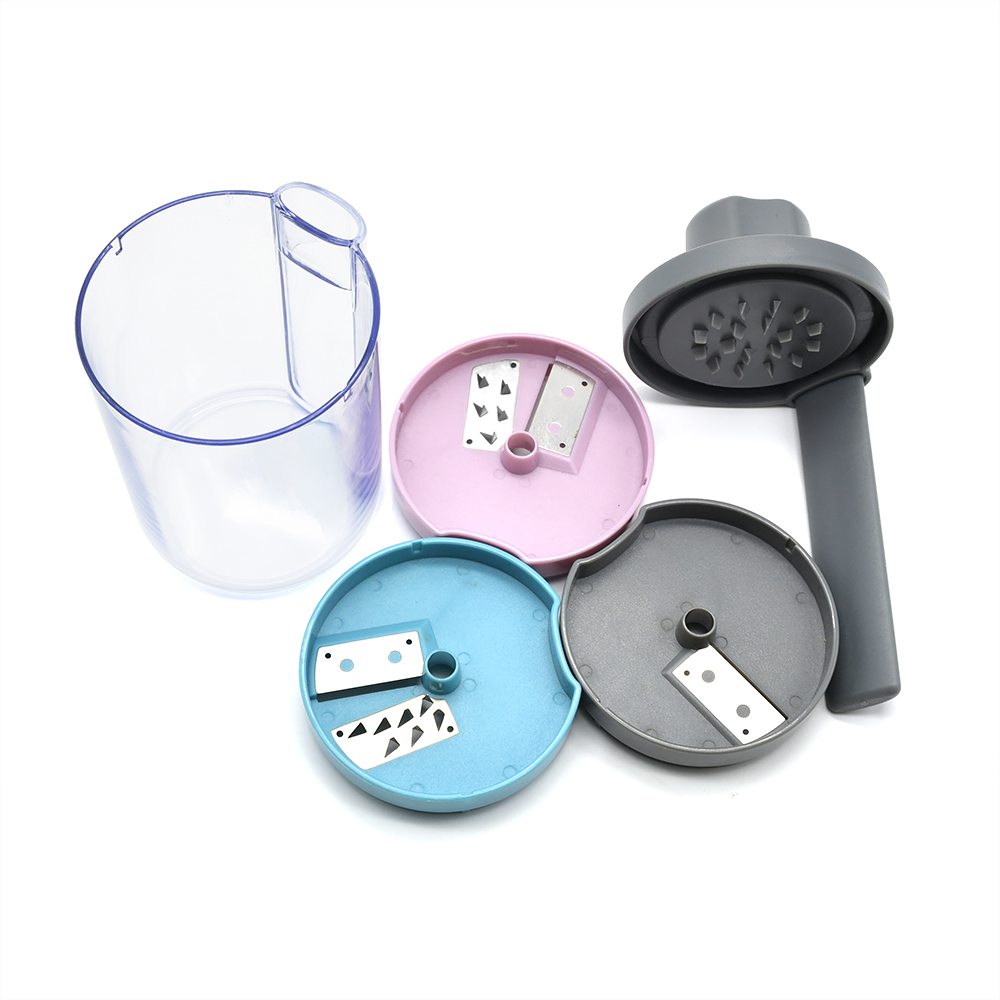
This guide rewrites the topic of spiralizer manufacturing from a sourcing perspective. It explains how spiralizer factories typically approach production, what buyers should check before placing an order, and how related kitchen tools, such as a Multi-Function Handheld Food Grater Set with a transparent collecting jar, ergonomic handles, and colored disc blades, can inform product-selection decisions.
Key Takeaways
- Spiralizer manufacturing depends on blade performance, stable plastic components, safe assembly, and repeatable quality control.
- Buyers should ask suppliers to confirm materials, blade type, packaging, testing methods, lead time, and customization options instead of assuming specifications.
- Modular products with interchangeable blades need clear user instructions and secure blade storage or protection.
- Factory evaluation should include sample review, inspection planning, labeling checks, and practical food-preparation testing.
What Spiralizer Manufacturing Usually Involves
A spiralizer is a simple tool from the user’s point of view, but its manufacturing process requires attention to several details. Most products combine molded plastic parts, cutting blades, handles, containers, suction bases, or hand-operated mechanisms. The exact design depends on whether the product is a handheld spiralizer, a countertop model, or a multi-function grater and slicer system.
In a typical factory workflow, components are formed, trimmed, assembled, checked, cleaned, and packed. Blade-related steps are especially important because poor cutting edges can create uneven vegetable strands, increase effort for users, or cause premature complaints. Buyers sourcing vegetable spiralizers should therefore evaluate not only appearance but also cutting consistency on common foods such as carrots, cucumbers, zucchini, and potatoes.
Factory Operations Buyers Should Understand
When discussing production with a spiralizer factory, buyers should ask how the supplier manages component consistency. For molded parts, dimensional stability matters because lids, jars, blade discs, and handles must fit securely. For sharp components, the supplier should explain how blades are sharpened, installed, protected during packing, and checked before shipment.
The original product reference mentions a Multi-Function Handheld Food Grater Set with a transparent collecting jar for monitoring contents and ergonomic handles for comfort. These details are useful examples of practical kitchenware design. A transparent jar helps users see the prepared food level, while a comfortable handle can reduce strain during repetitive grating or shredding. For B2B buyers, these features should be verified on samples rather than accepted from a catalogue description alone.
Product Design and Blade Options
Vegetable spiralizer production has expanded beyond single-purpose tools. Many suppliers now offer products with interchangeable blades or disc systems for different cuts. The source article notes colored disc blades: pink for fine zesting, blue for medium grating, and gray for coarse shredding. Color coding can make a product easier to use, especially when instructions are simple and the blade function is marked clearly.
When sourcing a spiralizer or grater set, ask whether the blade system is fixed, removable, or modular. Removable blades can improve cleaning and versatility, but they also require safe handling. If a product includes several sharp inserts, buyers should ask how the inserts are stored, whether the packaging prevents movement in transit, and whether the instruction sheet explains safe assembly and cleaning.
Comparison Checklist for Supplier Evaluation
| Evaluation Area | What to Check | Questions to Ask the Supplier |
|---|---|---|
| Materials | Plastic body, jar, handle, and blade components | What materials are used for each part, and can they be documented? |
| Blade performance | Cut quality, sharpness, edge protection | How are blades inspected before assembly and shipment? |
| Usability | Grip comfort, stability, food collection, blade changes | Can you provide samples for practical vegetable testing? |
| Cleaning | Ease of rinsing, trapped food areas, removable parts | Which parts are designed for dishwasher-safe use, if any? |
| Packaging | Blade protection, carton strength, retail presentation | How is the product protected from blade damage during transport? |
| Quality control | Incoming checks, assembly checks, final inspection | What inspection steps are performed and can a buyer arrange third-party inspection? |
Quality Control Points Before Placing an Order
Quality control should begin with samples. A good sample review should include more than a visual check. Buyers should test whether components lock properly, whether the jar or container sits firmly, whether handles feel secure, and whether blades create the intended cut without excessive force. If the product uses colored blades, confirm that the color matches the function described in the manual and packaging.
For larger orders, buyers may want to define inspection criteria in advance. Practical checks can include:
- Confirming product appearance against the approved sample.
- Checking blade installation and visible defects.
- Testing assembly, blade changes, and handle strength by normal use.
- Reviewing packaging for sharp-edge protection and correct labeling.
- Testing a small number of units with vegetables to confirm cutting performance.
Do not assume that a supplier’s standard process matches your market requirements. Ask for written confirmation of specifications, packaging artwork, user instructions, and any compliance documents relevant to your sales region.
Packaging, Instructions, and User Safety
Spiralizers and graters contain sharp parts, so packaging is part of product quality. Blade inserts should not shift freely inside the box. If the product includes a transparent collecting jar, the jar should be protected from scratches or cracks during transport. If the product includes ergonomic handles, packaging should avoid pressure points that could bend or mark them.
Instructions should be short, visual, and specific. Users need to know which blade to choose, how to attach it, how to remove food residue, and how to avoid touching cutting edges. For multi-function products, a simple blade guide can reduce returns and customer confusion. Buyers should request instruction files early, especially if translation, private labeling, or retail packaging changes are needed.
How to Discuss OEM and Wholesale Requirements
If your project involves OEM, private label, or wholesale supply, prepare a clear brief before contacting a spiralizer supplier. Include target retail channel, preferred product type, packaging style, order forecast, inspection expectations, and any market-specific labeling needs. Avoid relying on vague requests such as “best quality” or “competitive price.” Suppliers can respond more accurately when the product requirements are measurable.
Useful questions include: Can the supplier provide pre-production samples? Which parts can be customized? What is the normal production lead time? What are the available packaging formats? Are spare blades or replacement parts available? What quality checks are included before shipment? These questions help buyers compare factories on capability, not only unit cost.
Practical FAQ
What is the most important part of a spiralizer to inspect?
The blade system is usually the first priority because it determines cutting performance and user satisfaction. The handle, container fit, and stability should also be checked.
Are all spiralizer parts dishwasher-safe?
Not necessarily. Buyers should ask the supplier which parts, if any, are designed for dishwasher-safe cleaning and request that this be reflected accurately in instructions and packaging.
Why do some grater or spiralizer sets use colored blades?
Color coding helps users identify functions quickly. In the referenced grater set, pink is for fine zesting, blue for medium grating, and gray for coarse shredding.
How should buyers compare spiralizer factories?
Compare approved samples, material documentation, blade quality, packaging protection, communication speed, inspection support, and the supplier’s ability to answer technical questions clearly.
Should a buyer choose a single-function spiralizer or a multi-function set?
It depends on the sales channel and end user. A single-function tool can be simpler, while a multi-function set may offer more preparation options. Test usability before deciding.
Final Sourcing Advice
Spiralizer manufacturing is about repeatable performance, not only attractive product photos. A reliable sourcing process should combine sample testing, clear specifications, packaging review, and supplier questions about materials and quality control. By treating the spiralizer as a functional cutting tool with safety and cleaning considerations, buyers can make better decisions and reduce avoidable problems after shipment.
