




OEM Spring Action Scissors: Sourcing Guide for Comfort Cutting Tools
Spring action scissors are designed to make repetitive cutting easier. Unlike conventional scissors that rely entirely on the user to reopen the handles after each cut, a built-in spring mechanism helps the blades reopen automatically. For users who cut frequently, this can reduce hand fatigue and support smoother, more consistent work.
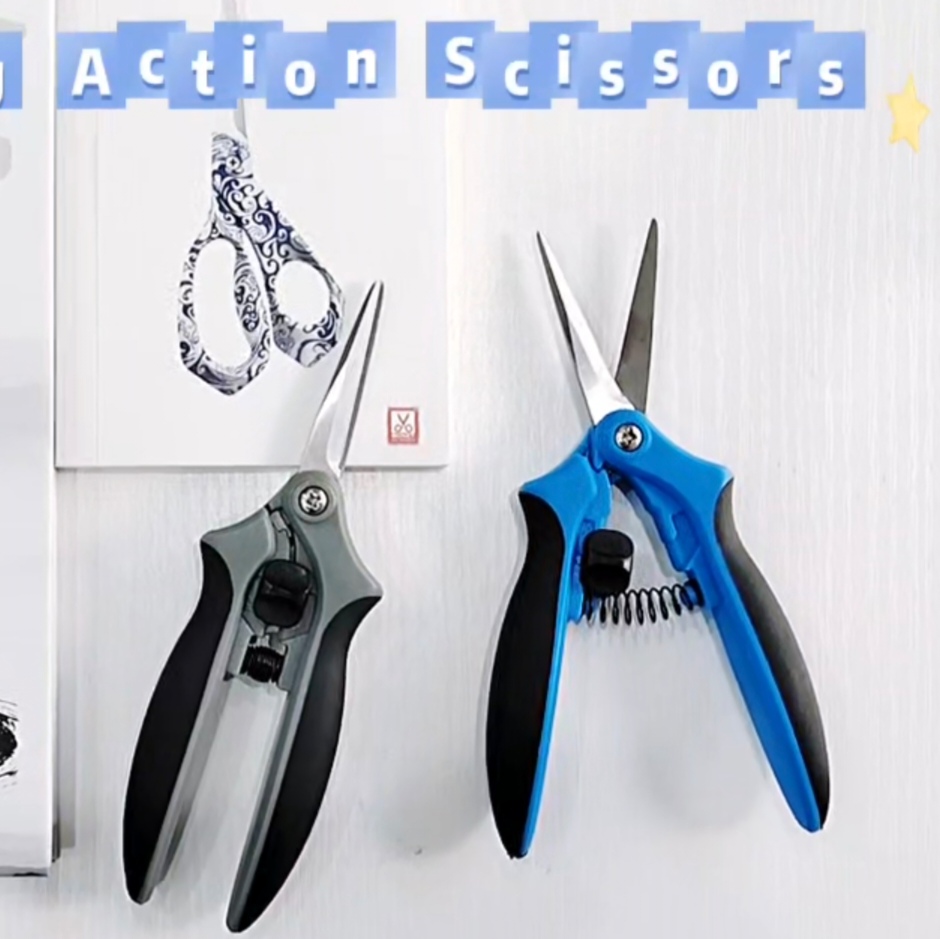
The original Dual Action Scissors article highlights a product concept with spring action, stainless steel blades, ergonomic contoured handles, textured grips, and available grey and blue color options. It also notes use cases such as arts and crafts and everyday household cutting. For buyers considering OEM or custom scissors manufacturing, those details are a useful starting point, but they should be supported by clear supplier discussions, samples, and documented specifications before any production order.
Key Takeaways
- Spring action scissors are most useful when the buyer wants easier repeated cutting and improved hand comfort.
- Important design points include the spring mechanism, blade material, handle shape, grip texture, and color options.
- For OEM sourcing, buyers should not rely on appearance alone; they should request samples and confirm specifications in writing.
- Commercial details such as MOQ, lead time, packaging, branding methods, and compliance documents should be asked directly of the supplier.
What Spring Action Scissors Are Designed to Do
The defining feature of spring action scissors is the spring-assisted reopening movement. After the user makes a cut, the handles reopen with less manual effort. This is different from ordinary scissors, where the fingers and thumb repeatedly perform both closing and opening motions.
For consumer use, this can make everyday cutting feel easier, especially during craft projects, paper cutting, fabric trimming, packaging tasks, or other jobs requiring many repeated cuts. For B2B buyers, the value is broader: a spring action model can serve retail, craft, household, sewing, stationery, educational, and general utility categories, depending on the final design and positioning.
However, “spring action” should not be treated as a single universal design. The strength of the spring, smoothness of reopening, handle spacing, blade length, tip shape, and grip material can all affect the user experience. These details should be defined before confirming an OEM order.
Core Product Features to Evaluate
The source article describes the Dual Action Scissors as having stainless steel blades, ergonomic contoured handles, textured grips, and two color options: grey and blue. These are relevant features for both users and buyers, but they still need practical evaluation.
Stainless steel blades are commonly selected for household and craft scissors because they can provide a clean cutting edge when properly manufactured and finished. Buyers should ask what stainless steel is used, how the blade edge is formed, and whether the supplier can provide material details. If a supplier cannot confirm the grade or processing method, avoid adding unsupported claims to product listings.
Handle design is equally important. Contoured handles can improve comfort, but comfort depends on size, shape, surface texture, and the intended user group. Textured grips may improve control, especially during detailed cutting, but buyers should test whether the texture feels secure without causing discomfort during longer use.
Comparison Checklist for OEM Buyers
Before choosing a spring action scissors supplier, compare samples using a structured checklist rather than only photos or catalog descriptions.
| Evaluation Area | What to Check | Questions to Ask the Supplier |
|---|---|---|
| Spring mechanism | Smooth reopening, consistent tension, no sticking | Can the spring tension be adjusted for different users or markets? |
| Blade performance | Clean cuts on intended materials such as paper, craft sheets, or fabric samples | What blade material and edge process are used? |
| Handle comfort | Fit, grip security, hand fatigue during repeated cuts | Can handle size, color, or surface texture be customized? |
| Safety and finish | No sharp burrs on handles, smooth pivot movement, controlled blade tips | What inspections are performed before shipment? |
| Branding and packaging | Retail display needs, private label space, instructions | What packaging formats and branding methods are available? |
| Commercial terms | MOQ, lead time, sample cost, tooling requirements | Which details must be confirmed before mass production? |
Customization Options to Discuss
Custom scissors manufacturing can involve simple color changes or more detailed product development. The original article mentions grey and blue versions, which suggests color can be part of the product presentation. For OEM buyers, color selection should be tied to brand identity, retail category, and target user.
Useful customization topics include:
- Handle color and color matching process
- Grip texture and comfort requirements
- Blade length, tip shape, and cutting purpose
- Logo placement on handle, blade, or packaging
- Retail card, box, bulk pack, or other packaging format
- Instruction text for safe and proper use
Buyers should ask whether customization requires new tooling, a higher order quantity, extra sampling time, or special artwork files. These details can affect both cost and schedule, so they should be clarified before approving final packaging or placing a purchase order.
Quality Checks Before Mass Production
Spring action scissors contain moving parts, so sample testing matters. A good sample review should include more than checking appearance. Use the scissors repeatedly on the materials your customers are likely to cut. Watch for uneven reopening, loose pivots, uncomfortable pressure points, or inconsistent cutting near the blade tip.
For B2B sourcing, ask the supplier to explain their inspection process. Useful questions include: How is blade sharpness checked? How is spring movement checked? Are finished products inspected for burrs, loose screws, or handle defects? Can the supplier provide pre-production samples for approval? What happens if the production batch differs from the approved sample?
Do not assume that every product automatically meets the rules of your destination market. If compliance documents, safety labeling, or material declarations are required for your sales channel, ask the supplier what they can provide and verify whether it is suitable for your market.
How Retailers and Brands Can Position This Product
Spring action scissors are easiest to explain when the benefit is practical: easier repeated cutting. Product copy should avoid vague promises and focus on real user situations, such as craft sessions, classroom activities, home organization, sewing preparation, or general household cutting.
If the final product uses stainless steel blades, ergonomic contoured handles, and textured grips as described in the source article, those can be highlighted clearly. But claims such as professional-grade, medical-grade, heavy-duty, child-safe, or certified should only be used if the supplier has provided evidence and the design genuinely supports the claim.
For online listings, include close-up photos of the spring area, blade edge, handle grip, and packaging. If selling wholesale, provide buyers with specifications, sample availability, carton details, and any documents they need to review. The more specific and verifiable the product information is, the easier it is for distributors and retailers to evaluate.
Practical FAQ
What is the main advantage of spring action scissors?
The main advantage is that the spring helps reopen the handles after each cut. This can make repeated cutting easier and may reduce hand fatigue during longer tasks.
Are spring action scissors only for crafts?
No. The source product is described for arts and crafts as well as everyday household use. Final suitability depends on blade size, edge quality, handle design, and the materials being cut.
Can spring action scissors be customized for OEM orders?
Often, OEM discussions may include handle colors, grip design, logo placement, packaging, and product configuration. Buyers should ask the supplier which options are available and whether changes require tooling or minimum order quantities.
What should buyers request before placing an order?
Request physical samples, confirmed specifications, packaging details, production lead time, MOQ, inspection process, and any required documents for your sales market. Do not rely only on product photos.
How should users care for spring action scissors?
Keep the blades clean and dry, avoid cutting materials the scissors were not designed for, and store them safely after use. If the spring or pivot feels loose or sticky, stop using the scissors until the issue is checked.
