




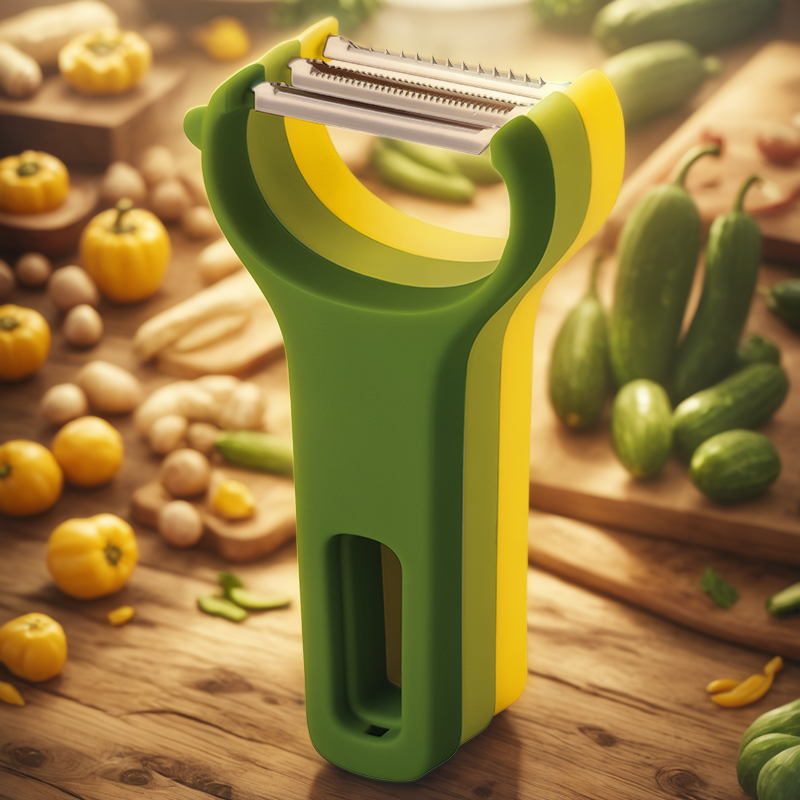
Stackable 3-Blade Peeler: Practical Guide for Everyday Prep
A stackable 3-blade peeler is designed for cooks who want one compact tool set to handle several common preparation tasks. Instead of keeping separate peelers loose in a drawer, a stackable peeling tool groups different blade styles together so they are easier to store, find, and use. The original product concept highlights three blade options: a standard blade for everyday fruit and vegetables, a serrated blade for softer skins, and a julienne blade for thin strips. This guide explains how to evaluate that type of tool, when to use each blade, and how to care for it safely.
Key Takeaways
- A stackable peeler can save drawer space by keeping multiple blade functions together.
- The standard blade is suited to routine peeling jobs such as potatoes, carrots, apples, and similar produce.
- A serrated blade is useful for produce with soft or slippery skins, including tomatoes or kiwi.
- A julienne blade creates narrow strips for salads, garnishes, slaws, and quick vegetable prep.
- Before buying, check comfort, blade protection, cleaning method, and whether replacement or care guidance is available.
What a Stackable 3-Blade Peeler Is
A stackable peeler is a compact kitchen tool system that stores more than one peeling blade in a nested or stacked format. The main benefit is organization: the blades stay together, and the tool takes up less space than multiple separate peelers. For small kitchens, shared apartments, RVs, prep stations, or busy home drawers, this can make daily cooking more manageable.
The three-blade arrangement is intended to cover different food textures and cutting outcomes. Not every fruit or vegetable peels best with the same blade. A hard potato skin behaves differently from a tender tomato skin, and a carrot peeled for soup requires a different cut than carrot strips for a salad topping. A multi-blade peeler offers flexibility without requiring a larger set of tools.
Understanding the Three Blade Types
The usefulness of a 3-blade peeler depends on matching the blade to the task. The standard blade is the everyday option. Use it when you want to remove a thin, even layer from firm produce. It is typically the first choice for apples, potatoes, cucumbers, carrots, and similar items.
The serrated blade is intended for softer produce or items with delicate skins. A smooth blade may slide over the surface of a tomato or tear a ripe kiwi if too much pressure is applied. A serrated edge can grip the surface more readily, helping the user start the peel with less force.
The julienne blade is different because it does not simply remove skin. It cuts narrow strips. This is helpful for carrot ribbons, cucumber strips, zucchini garnish, quick slaw additions, or decorative toppings. It is also useful when you want vegetables to cook quickly because thinner pieces expose more surface area.
Blade Selection Checklist
| Prep task | Best blade choice | What to check |
|---|---|---|
| Peeling potatoes, apples, carrots, or cucumbers | Standard blade | Look for a smooth, controlled peel and comfortable grip angle. |
| Peeling tomatoes, kiwi, peaches, or other soft-skinned produce | Serrated blade | Use light pressure and test whether the blade grips without crushing. |
| Making vegetable strips for salads or garnish | Julienne blade | Confirm strip width suits your recipe and keep fingers clear of the teeth. |
| Storing in a crowded drawer | Stackable system | Check that blades nest securely and do not expose sharp edges. |
| Frequent daily use | Most comfortable blade body | Assess handle shape, balance, cleaning access, and blade safety. |
How to Use the Tool Safely and Efficiently
Good peeling is partly about the tool and partly about technique. Wash produce before peeling so dirt is not dragged across the flesh. Dry slippery items to improve control. Hold the food firmly on a stable cutting board or in your non-dominant hand, depending on the item and your comfort level. Peel away from your body when possible, and keep fingers outside the path of the blade.
For firm vegetables, use steady strokes rather than pressing hard. A sharp blade should remove skin without excessive force. For soft produce, switch to the serrated blade and make shorter, lighter passes. For julienne cutting, keep the produce stable and use consistent pressure so the strips are more even. If the item becomes too small to hold safely, stop and finish with a knife on a cutting board if needed.
Cleaning and Care Tips
Because a 3-blade peeler has multiple cutting surfaces, cleaning matters. Rinse the blade soon after use, especially after peeling starchy potatoes, juicy tomatoes, or vegetables that can dry onto the edge. Use a dish brush to clear food from the blade area rather than wiping directly with a finger or sponge edge. If the supplier provides dishwasher guidance, follow it; if not, hand washing is the safer default for maintaining control over sharp edges and small crevices.
- Rinse immediately after use to remove pulp and starch.
- Brush around the blade carefully from the back side when possible.
- Dry the tool before stacking or storing to reduce trapped moisture.
- Store with blades covered, nested, or positioned away from loose hands in the drawer.
- Stop using the tool if a blade becomes loose, bent, cracked, or difficult to control.
What to Look for Before Buying
When comparing stackable peelers, do not judge only by color or compact shape. A bright palette and space-saving design can be useful, but the everyday experience depends on safety, comfort, and blade access. Check whether the stacked pieces lock or sit securely together. If they separate too easily, the system may scatter in a drawer. If they are too tight, switching blades during prep may become annoying.
Consider handle comfort, especially if you peel larger batches of potatoes, apples, or carrots. The grip should not force your wrist into an awkward angle. Look at how the blade is positioned: it should allow a natural peeling motion and should not be hidden so deeply that cleaning becomes difficult. If buying online, review product photos carefully and ask the seller practical questions about dimensions, cleaning instructions, blade protection, and replacement guidance rather than assuming those details.
When a 3-Blade Peeler Makes Sense
This type of tool is best for people who prepare a variety of produce and want a compact alternative to several individual peelers. It is helpful for home cooks who make salads, soups, lunch boxes, fruit snacks, stir-fries, or decorative garnishes. It may also suit minimal kitchens where drawer space is limited.
However, it is not automatically the best choice for everyone. If you only peel potatoes once a month, a simple single peeler may be enough. If you have limited hand strength, prioritize a comfortable handle and easy blade switching over the number of functions. If children help in the kitchen, blade storage and supervision are especially important because julienne teeth and exposed peeler edges can be very sharp.
Practical FAQ
What is the main advantage of a stackable peeler?
The main advantage is compact organization. Multiple blade functions are stored together, which can reduce drawer clutter and make it easier to find the right blade for the task.
Which blade should I use for tomatoes?
Use the serrated blade for tomatoes and other soft-skinned produce. Apply light pressure so the blade grips the skin without crushing the flesh.
Can the julienne blade replace a spiralizer?
Not completely. A julienne blade makes narrow strips, while a spiralizer creates long continuous vegetable spirals. For quick garnish or salad strips, the julienne blade is often sufficient.
Is a stackable 3-blade peeler dishwasher safe?
That depends on the specific product. Check the supplier’s care instructions. If instructions are not available, hand wash, dry thoroughly, and store safely.
How do I know when to replace a peeler?
Replace it if the blade feels dull, catches unevenly, becomes loose, shows damage, or requires unsafe pressure to work. A peeler should feel controlled and predictable during use.
