




Stainless Steel Grater Factory: Kitchen Innovation
For retailers, importers, brand owners, and hospitality buyers, a stainless steel grater is a small product with a large quality impact. A grater that feels unstable, rusts quickly, clogs easily, or produces uneven shreds can lead to returns and weak repeat sales. A well-designed handheld flat grater, by contrast, supports everyday food preparation for hard cheeses, citrus zest, and vegetables while remaining simple to clean and store.
This guide rewrites the original product introduction into a practical sourcing article. It focuses on what buyers should evaluate when comparing a stainless steel grater factory, what product details matter for end users, and which questions should be asked before placing an OEM, wholesale, or private-label order.
Key Takeaways
- A handheld flat grater should balance sharpness, control, storage convenience, and cleaning ease.
- Stainless steel is valued for durability, resistance to rust and wear, and simple cleaning when properly specified and manufactured.
- Buyers should verify material details, handle construction, packaging, inspection standards, and dishwasher-safety claims with the supplier.
- Uniform hole alignment and a secure ergonomic grip are important quality indicators for a grater intended for frequent kitchen use.
- OEM and wholesale buyers should ask direct questions rather than assume capacity, certifications, MOQ, pricing, or compliance coverage.
What Buyers Should Expect From a Stainless Steel Grater Factory
A stainless steel grater factory should do more than stamp holes into metal. For B2B sourcing, the factory should be able to explain how it controls cutting performance, surface finishing, handle attachment, product consistency, and packaging protection. Even when the product is simple, repeatable production matters because every unit must feel safe and dependable in a kitchen.
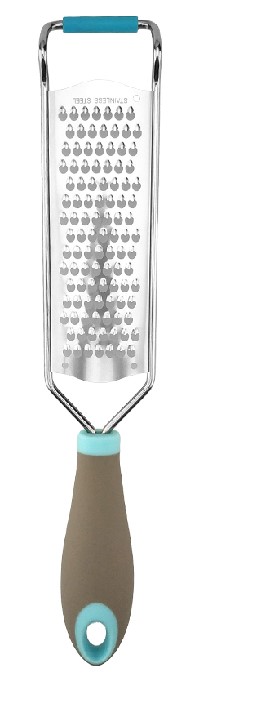
The original article highlights a handheld flat grater made from stainless steel with a compact, flat profile, an expansive grating surface, aligned sharp holes, and an ergonomic rubber grip. Those are useful features to preserve because they speak directly to everyday performance. For buyers, the next step is to confirm how these features are controlled in mass production. Ask the supplier how sharpness is inspected, whether hole alignment is checked visually or by fixture, and how handle bonding or assembly strength is tested before shipment.
Handheld Flat Grater Design: Features That Matter
A handheld flat grater is popular because it is easy to store, quick to use, and suitable for many kitchen tasks. The flat profile can fit into drawers or hang on racks, while a broader grating surface can improve efficiency when preparing cheese, zest, or vegetables. However, design details decide whether the tool feels comfortable or frustrating.
Hole sharpness and pattern consistency are central. If the holes are too dull, users press harder and may lose control. If the holes are uneven, food texture becomes inconsistent. A secure handle is also important because wet hands, oily ingredients, or long prep sessions can make grip stability a real concern. The original product description mentions an ergonomic rubber grip designed to provide a secure hold and reduce strain during extended use. Buyers should request samples and test the grip with dry hands, wet hands, and repetitive grating motions.
Why Stainless Steel Is Common in Kitchen Tools
Stainless steel is widely used in kitchen tools because it can offer durability, resistance to rust and wear, and easy cleaning. For graters, these qualities are especially relevant because the tool contacts acidic citrus, moist vegetables, hard cheeses, and repeated washing. The original article also states that the grater is dishwasher safe, a claim that buyers should verify with the supplier for the exact model, handle material, and finishing process.
Material selection should never be assumed from a product name alone. If your market requires a specific stainless steel grade, food-contact documentation, or special corrosion expectations, ask the factory to provide the relevant details and supporting documents. If the supplier cannot confirm a grade, do not add that grade to your marketing copy. Accurate product descriptions reduce compliance risk and help avoid disputes with customers.
Comparison Checklist for Sourcing Stainless Steel Graters
| Evaluation Area | What to Check | Questions to Ask the Supplier |
|---|---|---|
| Grating performance | Sharp, aligned holes and consistent shredding | How is sharpness and hole alignment inspected during production? |
| Material | Stainless steel body with suitable finish | What stainless steel material is used, and can it be documented? |
| Handle comfort | Ergonomic rubber grip and secure hold | How is the grip attached, and is pull or durability testing performed? |
| Cleaning | Easy rinse-off and dishwasher-safe claim if offered | Does dishwasher safety apply to the full assembled product? |
| Packaging | Protection against bending, scratches, and handle damage | Can packaging be adjusted for retail, e-commerce, or bulk shipment? |
| OEM readiness | Logo, color, label, and carton options if available | What customization options, MOQ, lead time, and artwork rules apply? |
Quality Control Points Before Wholesale Ordering
Before confirming a wholesale order, buyers should evaluate physical samples and production samples rather than relying only on product photos. A grater may look similar across factories, but differences in edge formation, metal thickness, finishing, and grip comfort become clear during actual use. Test the sample with hard cheese, citrus peel, and firm vegetables to see whether the tool cuts cleanly or crushes food.
Also inspect the back side of the grating surface. Rough burrs, uneven edges, or hard-to-clean corners can affect user safety and hygiene. Check whether the handle feels stable when force is applied. If the product will be sold online, packaging should protect the flat surface from bending and should prevent sharp edges from damaging the carton or insert.
- Request pre-production samples before approving a large order.
- Confirm the exact product description that will appear on packaging and listings.
- Ask for inspection criteria covering appearance, function, packaging, and labeling.
- Clarify whether third-party inspection is allowed before shipment.
- Keep one approved sample for comparison with mass-production goods.
OEM and Private-Label Questions to Ask
If you are sourcing from a kitchen gadgets supplier for OEM or private-label sales, commercial details should be confirmed early. Do not assume minimum order quantity, production capacity, logo methods, packaging formats, delivery times, or certification coverage unless the supplier provides them for the exact product and order type.
Useful questions include: Can the handle color be customized? Is logo printing, engraving, or packaging branding available? What artwork file formats are required? What is the sample approval process? Which export documents can be provided? What are the tolerances for color, finish, and packaging? These questions help prevent misunderstanding and keep the sourcing process organized.
Use and Care Guidance for End Customers
Although this topic is B2B-focused, buyers should also think about how the final customer will use and maintain the grater. Clear care instructions reduce complaints and help customers get better performance. Users should grate with steady pressure, keep fingers away from the cutting surface, and rinse food residue soon after use. If dishwasher cleaning is stated for the selected model, the instruction should still recommend placing the grater securely so it does not damage other items or get bent during the wash cycle.
For retail packaging or online listings, avoid exaggerated claims. Instead, explain the practical uses: hard cheeses, citrus zest, and vegetables. Mention the compact flat profile for storage, the broad grating surface for efficient preparation, and the ergonomic rubber grip for control if these match the supplied product.
FAQ
What makes a stainless steel grater suitable for wholesale sourcing?
Consistent cutting performance, durable construction, stable handle design, clean finishing, protective packaging, and clear supplier documentation make a grater more suitable for wholesale sourcing.
Can buyers claim a specific stainless steel grade?
Only if the supplier confirms the grade for the exact product and provides appropriate documentation. If the grade is not confirmed, describe the product simply as stainless steel.
Is a handheld flat grater good for small kitchens?
Yes, a compact flat profile can be convenient for drawer storage or hanging storage, making it practical for home kitchens, food-service prep areas, and retail kitchenware assortments.
What should be tested in a sample?
Test sharpness, shred consistency, grip comfort, handle stability, cleaning ease, surface finish, packaging protection, and whether the final product matches the approved description.
What should OEM buyers confirm before ordering?
Confirm customization options, MOQ, lead time, packaging requirements, inspection standards, payment terms, shipping terms, and any compliance or documentation needs for the target market.
Final Sourcing Advice
A stainless steel grater factory can be a valuable partner when it communicates clearly and controls the details that affect daily use. The strongest sourcing approach is practical: review samples, ask precise questions, verify claims, and align product copy with confirmed facts. For a handheld flat grater, focus on the grating surface, stainless steel construction, ergonomic rubber grip, cleaning expectations, and packaging reliability. These details help buyers select a kitchen tool that is credible, useful, and ready for the demands of modern retail and food preparation.
