




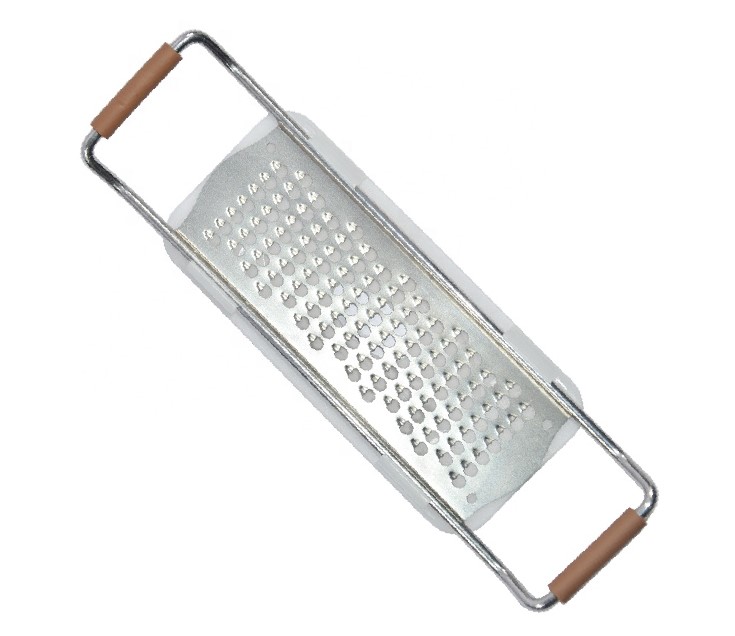
Stainless Steel Grater Factory: Quality Kitchen Tools
Choosing a stainless steel grater factory is not only about finding a sharp kitchen tool. For importers, wholesalers, distributors, and private-label buyers, the decision affects product consistency, user safety, packaging quality, after-sales risk, and long-term supply stability. A grater looks simple, but small differences in blade cutting, handle design, base stability, finishing, and inspection can change the customer experience significantly.
The original product focus is the UltraSharp Classic Stainless Steel Grater, described as a stainless steel kitchen tool with uniformly spaced, precision-cut holes, sharp edges, an elongated ergonomic handle, and rubberized slip-resistant pads at the base. These are useful starting points for sourcing discussions. However, commercial buyers should still verify all technical details directly with the supplier before placing an order, especially if the product will be sold under a specific market standard or private label.
What Buyers Should Expect From a Stainless Steel Grater Factory
A capable stainless steel grater factory should be able to explain how the product is designed, produced, inspected, packed, and prepared for shipment. Buyers should not rely only on catalog photos or general claims such as durable, premium, or professional. Instead, ask for clear answers about the manufacturing process, material declaration, edge consistency, handle assembly, packaging options, and quality-control checkpoints.
Because a grater comes into direct contact with food, buyers should also ask what documents can be provided for the target sales market. Do not assume that a supplier has specific certifications, testing reports, or compliance coverage unless they provide current documents for the exact product, material, and destination market.
Product Design Details That Affect Performance
The most important working area of a grater is the cutting surface. The source article describes uniformly spaced, precision-cut holes with sharp edges. For buyers, this means samples should be checked for clean cutting action, even hole spacing, and a surface finish that does not feel rough in unintended areas. A grater should cut ingredients efficiently without forcing the user to apply excessive pressure.
The handle is another key detail. The UltraSharp Classic is described with an elongated ergonomic handle intended to provide a secure and comfortable grip. During sample review, buyers should test the handle with dry and slightly wet hands, observe whether the grip angle feels natural, and check whether the handle connection feels stable. If the grater will be sold for frequent kitchen use, comfort matters because hand fatigue can lead to poor control and possible accidents.
Safety, Stability, and User Experience
Safety is not limited to sharpness. A grater needs controlled cutting, a stable base, smooth edges where the hand may touch, and packaging that protects the blade during shipping and retail handling. The original article notes rubberized, slip-resistant pads at the base. This is a useful feature to confirm during sourcing because a slipping grater can be frustrating and unsafe.
Buyers should request pre-production or approval samples and test them on common kitchen surfaces. If the product is intended for wholesale, retail, or hospitality channels, consider how different users will handle it. A product that works well for one quick demonstration may not be suitable after repeated use unless the handle, base, and grating surface remain stable.
Comparison Checklist for Supplier Evaluation
The table below can help buyers compare a stainless steel grater factory or kitchen gadgets supplier before committing to an order.
| Evaluation Point | What to Check | Questions to Ask the Supplier |
|---|---|---|
| Material information | Stainless steel type and supporting documents | Can you provide the material declaration for this exact grater? |
| Cutting surface | Hole spacing, edge sharpness, clean finish | How do you inspect the cutting surface during production? |
| Handle design | Grip comfort, assembly strength, hand clearance | Can we test an approval sample before mass production? |
| Base stability | Rubberized slip-resistant pads and surface contact | Are the pads included on all versions or only selected models? |
| Packaging | Blade protection, barcode area, retail presentation | What packaging options are available for wholesale or OEM orders? |
| Quality control | Incoming, in-process, and final inspection steps | What inspection records can be shared with buyers? |
OEM and Wholesale Sourcing Questions
For OEM or wholesale sourcing, clear communication prevents many problems. Buyers should prepare a specification sheet before discussing price. This sheet can include product size, handle design, packaging type, labeling requirements, target market, carton requirements, and inspection expectations. If details are not confirmed in writing, they can easily be interpreted differently by each side.
- Ask whether the product can be supplied as a standard model, customized model, or private-label item.
- Confirm whether branding, packaging artwork, and barcode placement are available.
- Request a sample that matches the intended order version, not only a showroom sample.
- Clarify lead time, minimum order quantity, payment terms, and shipment method directly with the supplier.
- Ask what quality issues are commonly checked before packing and how defects are handled.
Do not invent or assume factory capacity, MOQ, prices, certifications, or testing results. These details should come from the supplier and should be confirmed with current documentation or written quotations.
How to Review Samples Before Placing an Order
Sample testing should be practical and repeatable. Buyers can test the grater with common ingredients such as hard cheese, citrus peel, ginger, or vegetables, depending on the intended use. The goal is not only to see whether the grater is sharp, but also whether it feels controlled, stable, and easy to clean after use.
Inspect the sample under good light. Look for burrs, uneven holes, loose handle parts, weak base pads, or surface marks that may affect retail presentation. Check whether the product sits securely on a flat surface and whether the handle remains comfortable after repeated strokes. If packaging is included, shake-test the retail box gently to see whether the grater moves too much inside.
Key Takeaways
- A stainless steel grater factory should be evaluated on design, inspection, packaging, and communication, not only price.
- Useful product details from the original article include precision-cut holes, sharp edges, an ergonomic handle, and rubberized slip-resistant pads.
- Buyers should verify material details, compliance documents, MOQ, lead time, and customization options directly with the supplier.
- Sample testing should focus on cutting performance, grip comfort, base stability, finish quality, and packaging protection.
- Written specifications help reduce misunderstandings in OEM, wholesale, and private-label orders.
FAQ
What should I ask a stainless steel grater factory first?
Start with the product specification, material information, available packaging, sample policy, MOQ, lead time, and quality-control process. Ask for documents only for the exact model you plan to buy.
How can I judge whether a grater sample is good quality?
Check the cutting surface, hole consistency, handle comfort, base stability, and overall finish. Test the sample with realistic ingredients and inspect it again after cleaning.
Are rubberized pads important on a grater?
They can be important because they help reduce slipping during use. If the product listing mentions slip-resistant pads, confirm that they are included in the version you are ordering.
Can a supplier make OEM packaging for stainless steel kitchen tools?
Many kitchen gadgets suppliers may offer packaging options, but buyers should confirm artwork requirements, costs, lead time, carton details, and labeling rules before production.
Should buyers rely on catalog descriptions alone?
No. Catalog descriptions are useful for initial screening, but purchase decisions should be based on samples, written specifications, supplier answers, and any required documents for the target market.
