




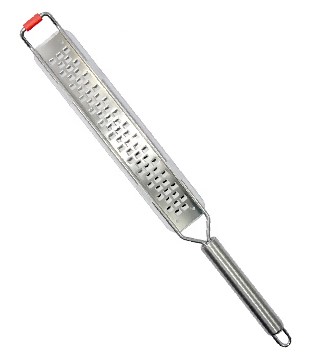
Stainless Steel Grater Supplier: A Practical B2B Sourcing Guide
Choosing a stainless steel grater supplier is not only about finding a sharp kitchen tool. For distributors, retailers, hospitality buyers, and private-label kitchenware brands, the right supplier should support consistent product quality, clear communication, suitable packaging, and dependable order handling. A grater may look simple, but small details such as blade pattern, handle comfort, edge finishing, and carton protection can affect customer satisfaction and return rates.
The original product information describes a professional stainless steel grater set with five different graters, each using a distinct blade design. The set is intended for tasks such as zesting citrus, grating cheese, and shredding vegetables. It also mentions ergonomic black handles designed for a comfortable, secure grip. Those are useful starting points for a sourcing brief, but buyers should still confirm material details, dimensions, packaging, compliance documents, and commercial terms directly with the supplier before placing an order.
What Buyers Should Confirm First
Before comparing quotations, prepare a short specification sheet. This helps suppliers respond accurately and prevents vague offers that are difficult to compare. For stainless steel graters, the specification should cover product type, intended market, handle style, blade pattern, size, packaging, labeling, and any required testing or documentation. If the supplier offers a five-piece grater set, ask whether all five pieces can be ordered together only, or whether individual graters can be purchased separately.
- Confirm the exact stainless steel description used for the grating surface.
- Ask for product dimensions, weight, and blade pattern details for each grater.
- Request handle material information and color options if relevant.
- Clarify whether packaging is retail-ready, bulk-packed, or customizable.
- Ask what quality checks are performed before shipment.
Product Selection: Matching Grater Types to End Users
A stainless steel grater set can serve multiple kitchen tasks, which is useful for retail shelves, foodservice supply, and promotional kitchenware programs. Fine grating surfaces are commonly used for citrus zest, hard cheese, chocolate, garlic, or spices. Medium and coarse surfaces may be better suited to cheese, carrots, cucumbers, potatoes, or other vegetables. A set with five different blade designs gives buyers a broader product story, but it also requires closer inspection because each blade style should perform its intended task cleanly and safely.
When sourcing for professional kitchens, durability and ease of cleaning may be priorities. For household retail, comfortable grip, clear packaging, and understandable product instructions can be more important. If the product will be sold online, request high-quality product photos, accurate measurements, and use-case descriptions from the supplier, or plan to create your own content after sample approval.
Comparison Checklist for Supplier Evaluation
The table below can help purchasing teams compare stainless steel grater suppliers in a structured way. It does not replace sample testing, but it helps identify gaps before orders move forward.
| Evaluation Area | What to Check | Questions to Ask the Supplier |
|---|---|---|
| Blade design | Fine, medium, coarse, or specialty patterns | Which foods is each blade designed to process? |
| Material details | Stainless steel description and handle material | Can you provide written material information for the product? |
| Handle comfort | Grip shape, texture, and stability during use | Are the black handles standard, or can colors be changed? |
| Packaging | Retail box, hanging card, sleeve, or bulk carton | What packaging options are available for wholesale orders? |
| Quality control | Visual inspection, edge finishing, assembly checks | What checks are performed before shipment? |
| Commercial terms | MOQ, lead time, sample policy, payment terms | What are the current terms for this item or set? |
Sample Testing Before Bulk Orders
Samples are essential when sourcing graters because performance is difficult to judge from photos alone. Test each grater on realistic foods such as citrus peel, hard cheese, and vegetables. A good sample review should look at cutting efficiency, food release, handle stability, surface smoothness, and cleaning effort. Buyers should also check whether the grater flexes too much under pressure and whether any edges feel rough during handling.
If the set includes five different graters, test each one separately and record results. Do not assume that one strong sample means every blade pattern performs equally well. For private-label or wholesale programs, it is also wise to test the packaging. Drop, compression, and transit handling can affect whether graters arrive with bent edges, scratched surfaces, or damaged retail boxes.
OEM, Wholesale, and Packaging Questions
If you are sourcing for OEM or private-label use, avoid relying on assumptions. Ask whether logos, handle colors, inserts, manuals, barcodes, and carton marks can be customized. Also ask what artwork format is required and whether the supplier provides dielines for packaging. These details should be confirmed before design work begins.
Commercial details such as minimum order quantity, production lead time, sample charges, and payment terms can change by order size and customization level. Rather than using generic supplier claims, request current written terms for the exact grater set or individual grater model you plan to buy. If compliance documents are needed for your market, ask what the supplier can provide and whether the documents apply to the specific product you are ordering.
Quality Risks to Watch
Common problems in grater sourcing include inconsistent blade sharpness, weak handle attachment, rough finishing, unclear packaging claims, and poor carton protection. Buyers should also check that product descriptions do not overpromise. For example, if a listing claims a specific stainless steel grade, dishwasher suitability, or food-contact compliance, the supplier should be able to support that claim with appropriate documentation.
- Approve physical samples before confirming bulk production.
- Create a written specification sheet with photos and measurements.
- Confirm packaging materials and carton configuration.
- Define acceptable and unacceptable cosmetic defects.
- Request pre-shipment photos or inspection reports when appropriate.
Key Takeaways
A stainless steel grater set can be a practical wholesale product when its blade designs, handle comfort, and packaging match the target market. The described set includes five graters with different blade designs, stainless steel grating surfaces, and ergonomic black handles. For B2B buyers, the most important step is to convert those product features into a clear sourcing checklist. Confirm materials, sizes, packaging, quality checks, customization options, and commercial terms before placing a bulk order.
FAQ
What should I ask a stainless steel grater supplier before ordering?
Ask for product dimensions, material information, blade pattern details, packaging options, sample availability, MOQ, lead time, and the quality control process used before shipment.
Is a five-piece grater set better than a single grater?
It depends on the sales channel. A five-piece set offers more functions for retail or gifting, while single graters may be easier to position for foodservice, replacement purchases, or lower price points.
Can stainless steel graters be customized for private label?
Customization may be possible, but buyers should confirm logo placement, handle color options, packaging artwork requirements, MOQ, lead time, and any tooling or setup charges with the supplier.
How should I test grater samples?
Test each blade pattern with suitable foods, such as citrus, cheese, and vegetables. Check sharpness, comfort, cleaning effort, handle stability, finishing, and whether the packaging protects the product during handling.
What information should not be assumed?
Do not assume a specific steel grade, certification, dishwasher suitability, production capacity, price, or delivery time unless the supplier provides written confirmation for the exact product and order.
