




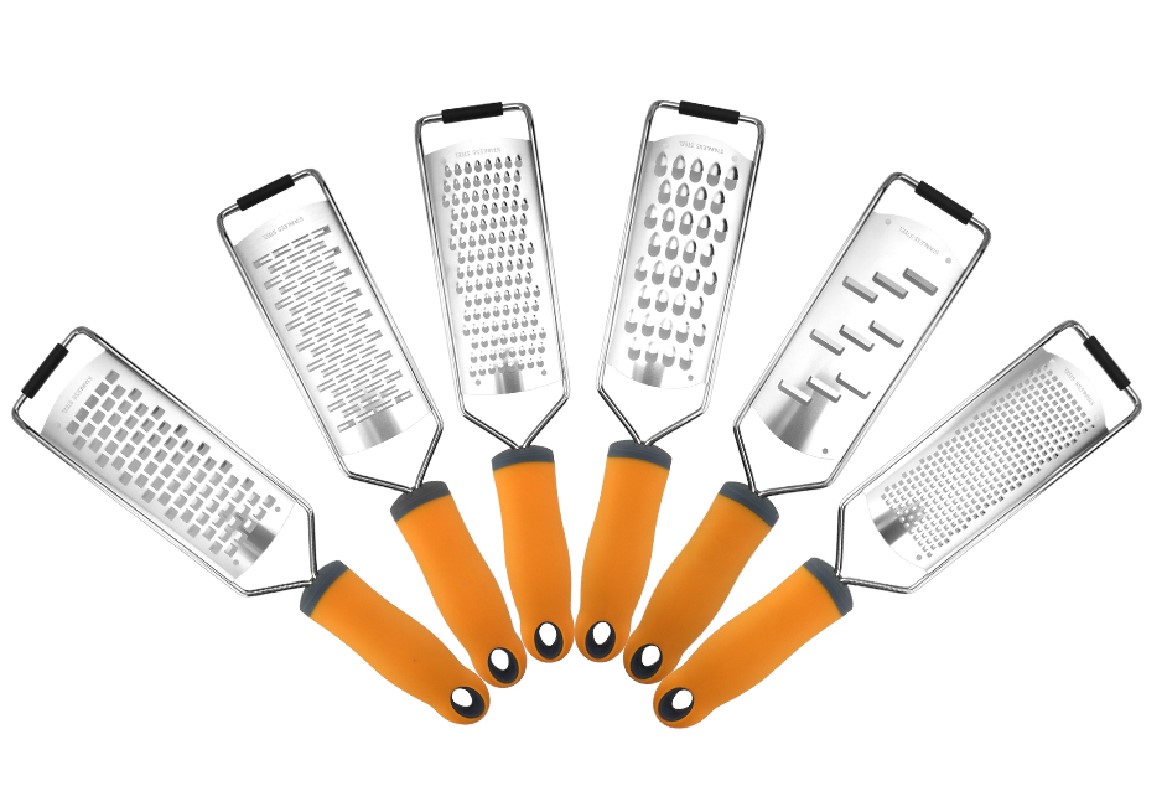
Professional Quality Stainless Steel Grater Supplier
Sourcing a stainless steel grater looks simple until buyers compare blade sharpness, handle comfort, cleaning needs, packaging, and consistency across repeat orders. For retailers, importers, kitchenware brands, hotel suppliers, and foodservice distributors, the right supplier is not only a product vendor. It is a partner that helps reduce complaints, simplify assortment planning, and keep kitchen tools reliable in daily use.
The original product information highlights a series of five dedicated graters, each with a different texture for tasks from fine citrus zesting to coarser ingredient preparation. It also notes stainless steel construction, black ergonomic handles, ease of cleaning, and use with ingredients such as herbs, hard vegetables, cheese, ginger, and lemon peel. This guide expands those facts into a practical B2B checklist for selecting, comparing, and discussing stainless steel grater supply options.
Key Takeaways
- Choose grater styles based on real cooking tasks, not only on appearance or price.
- Ask suppliers to explain steel material, blade forming, handle attachment, packaging, and inspection procedures.
- For wholesale or OEM projects, confirm customization options, carton details, lead times, and replacement handling before ordering.
- Test samples with citrus peel, cheese, ginger, herbs, and firm vegetables to evaluate sharpness and clogging.
What Buyers Should Look For in a Stainless Steel Grater Supplier
A reliable stainless steel grater supplier should provide clear product information and stable communication. Buyers should be able to request photos, dimensions, packaging details, care instructions, and sample availability. If the product is intended for retail shelves, the supplier should also be able to discuss barcode placement, inner packing, display needs, and language requirements for labels or instructions.
For OEM or private label sourcing, ask whether the supplier can support logo application, handle color discussion, packaging artwork coordination, or assortment sets. Do not assume these options are available; confirm them in writing. It is also useful to ask how the supplier controls sharp edges, burrs, handle fit, and surface finishing during production, especially when ordering multiple grater textures in one range.
Why Stainless Steel Graters Are Common in Professional Kitchens
Stainless steel is widely used for grating surfaces because it can be formed into sharp cutting patterns and cleaned after contact with common foods. In a busy kitchen, a grater may be used for cheese over pasta, ginger for stir-fry preparation, citrus zest for baking, or firm vegetables for salads and garnish work. A durable grating surface helps keep preparation efficient, while a comfortable handle reduces strain during repeated use.
The original article describes black ergonomic handles designed for a comfortable grip. When reviewing samples, buyers should check whether the handle feels secure when wet, whether the transition between handle and metal body is smooth, and whether the tool remains stable under pressure. A good grater should feel controlled, not flimsy, when used with harder ingredients.
Comparing Common Grater Textures and Use Cases
A five-piece or multi-texture grater series can help customers handle different recipes with one coordinated range. The best assortment depends on the target channel. A homeware retailer may prefer a balanced set for everyday cooking, while a foodservice distributor may focus on robust tools for repeated prep tasks.
| Grater Texture | Typical Use | Buyer Checkpoint |
|---|---|---|
| Fine zesting surface | Lemon peel, spices, small aromatics | Check whether it removes zest cleanly without excessive pith. |
| Medium grating surface | Cheese, ginger, garlic, firm vegetables | Test cutting speed and whether food clogs the holes. |
| Coarse grating surface | Vegetable shreds, larger cheese pieces | Confirm shred size is consistent across the surface. |
| Slicing or wide-cut texture | Thin vegetable pieces or decorative prep | Check edge safety and user control during pressure. |
| Assorted grater set | Retail bundle or professional prep kit | Review packaging, labeling, and clear usage guidance. |
Quality Questions to Ask Before Wholesale Ordering
Before placing a wholesale order, buyers should move beyond general claims such as “high quality” and ask specific questions. What stainless steel is used for the grating surface? How is blade sharpness checked? Are there inspections for burrs, loose handles, warped bodies, or surface marks? How are products protected during shipping so the cutting surfaces do not rub against other items?
It is also important to request real samples from the same product range under consideration. Test them with a repeated sequence: citrus peel, semi-hard cheese, fresh ginger, herbs, and a hard vegetable. Wash and dry the grater after testing to see whether residue remains trapped. This small trial can reveal practical differences that are not visible in catalog images.
OEM, Packaging, and Supplier Communication
For brand owners, the sourcing conversation should include more than the tool itself. Ask whether the supplier can quote different packaging formats, such as color boxes, hanging cards, sleeve packaging, or set packaging. Confirm artwork file requirements, proofing steps, carton quantities, and how packaging is approved before mass production. If your market requires specific warnings or care instructions, provide the wording and ask where it can be placed.
Commercial details should be clarified early: minimum order quantity, sample cost, production lead time, payment terms, shipping method, spare packaging policy, and how quality issues are documented. If certifications, testing reports, or compliance documents are required for your market, ask the supplier what can be provided and whether documents are current and relevant to the exact product being purchased.
Use, Cleaning, and Merchandising Guidance
Even for B2B buyers, consumer use experience matters. A grater that is difficult to clean or uncomfortable to hold may create returns or poor reviews. Product pages and packaging should explain which texture is best for which food, how to clean the cutting surface safely, and how to store the tool without damaging the blade or causing accidental cuts.
- Rinse soon after use to prevent cheese, ginger, or citrus residue from drying in the holes.
- Clean from the non-cutting side when possible to reduce contact with sharp edges.
- Dry before storage to help keep the tool in good condition.
- Store with a cover, sleeve, or separated drawer space if available.
How to Build a Better Grater Assortment
A practical assortment should match the buyer’s sales channel. For supermarkets, one or two everyday graters with clear food icons may be enough. For kitchen specialty stores, a five-texture series can offer better choice and encourage set purchases. For hospitality or restaurant supply, buyers may prioritize comfort, cleaning speed, and replacement availability.
When comparing suppliers, create a simple scorecard covering sample performance, handle comfort, finish quality, packaging clarity, communication speed, and documentation readiness. This makes the decision less dependent on unit price alone and helps identify which supplier is prepared for long-term cooperation.
FAQ
What should I ask a stainless steel grater supplier first?
Start with material details, available grater textures, sample options, packaging formats, MOQ, lead time, and quality inspection steps. These answers show whether the supplier can support your channel.
Is a five-piece grater range better than a single grater?
It depends on the market. A five-piece range offers more task-specific choices, while a single grater may be easier for entry-level retail, promotional programs, or compact kitchen assortments.
How can I test grater quality before ordering?
Use samples with citrus peel, cheese, ginger, herbs, and hard vegetables. Check sharpness, clogging, comfort, stability, cleaning, and whether the handle remains secure during pressure.
Can stainless steel graters be customized for private label?
Customization may be possible, but buyers should ask the supplier directly about logo methods, handle color options, packaging artwork, sample approval, MOQ, and production lead time.
What information helps reduce after-sales issues?
Clear use instructions, safe cleaning guidance, accurate food-use examples, and protective packaging can help customers choose the right grater and care for it correctly.
