




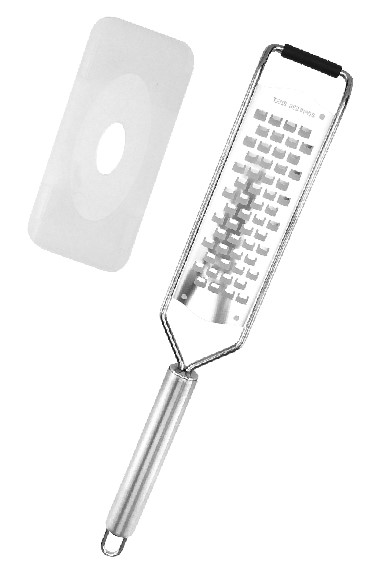
Stainless Steel Grater Supplier: Sourcing Kitchen Tools With Confidence
Choosing a stainless steel grater supplier is not only about finding a kitchen tool that looks good in a catalog. For importers, distributors, hospitality buyers, promotional product companies, and kitchenware retailers, the right sourcing decision affects usability, customer satisfaction, packaging quality, repeat orders, and after-sales issues. A grater or handheld zester is a simple product, but small details such as blade sharpness, handle comfort, cover fit, and cleaning performance can decide whether it works well in daily kitchens.
The original product focus includes stainless steel kitchen graters and handheld zesters designed for tasks such as grating citrus peel and hard cheeses like Parmesan. Some models may include ergonomic, non-slip handles and protective covers for safer storage. When evaluating suppliers, buyers should confirm these details directly, request samples, and avoid assuming features that are not clearly stated in the quotation or product specification.
Key Takeaways
- Confirm the exact grater type, blade style, handle design, and cover before placing a bulk order.
- Ask suppliers for written specifications rather than relying only on catalog photos.
- Test samples with real foods such as citrus, Parmesan, ginger, chocolate, or nutmeg, depending on your market.
- For wholesale or OEM projects, clarify packaging, branding, lead time, inspection process, and replacement policy.
- Do not assume material grade, compliance status, or production capacity unless the supplier provides documentation.
What Buyers Should Look For in a Stainless Steel Grater Supplier
A reliable stainless steel grater supplier should be able to explain the product clearly and answer practical sourcing questions. Start with the basics: Is the item a fine zester, coarse grater, box grater, rotary grater, or multi-purpose grater? What foods is it intended for? Does it include a protective cover? Is the handle designed for grip and comfort? Are there different models available for retail, foodservice, or promotional use?
For B2B sourcing, communication is a major quality signal. A supplier should provide product photos, dimensions, packaging options, sample availability, carton details, and any relevant documents they can support. If you need private label or OEM packaging, ask whether artwork templates, barcode placement, color box design, or instruction inserts can be handled. If these details are not confirmed early, small misunderstandings can cause delays or unexpected costs.
Understanding Stainless Steel Kitchen Graters for Sale
Stainless steel kitchen graters are used for many preparation tasks, from zesting citrus peel to grating hard cheeses such as Parmesan. Handheld zesters are often chosen because they are compact, easy to store, and useful for both home cooks and professional kitchens. A protective cover can help keep the blade area shielded during storage, while a non-slip handle can improve control during use.
However, buyers should not treat all graters as interchangeable. A fine zester may work well for lemon peel but may not suit customers who expect coarse shredded cheese. A broad grater surface can be efficient for vegetables, while a narrow handheld zester may be better for garnishing, baking, and cocktail preparation. Before selecting a model, define your customer group and the most common use cases in your market.
Comparison Checklist for Supplier Evaluation
| Evaluation Area | What to Check | Questions to Ask the Supplier |
|---|---|---|
| Product type | Handheld zester, flat grater, box grater, or specialty design | Which foods and use cases is this model designed for? |
| Blade performance | Sharpness, cut consistency, clogging tendency, ease of cleaning | Can we test samples before confirming the order? |
| Handle design | Grip comfort, non-slip surface, hanging hole, balance | Is the handle material and structure fixed or customizable? |
| Storage safety | Protective cover fit and durability | Is a cover included as standard, optional, or unavailable? |
| Packaging | Retail card, color box, bulk pack, barcode, instructions | What packaging options can be quoted? |
| Wholesale support | MOQ, lead time, carton packing, inspection terms | What are the current order requirements and production timeline? |
Sample Testing Before Bulk Purchase
For a stainless steel grater manufacturer or supplier, sample testing is one of the most useful steps in the sourcing process. Test the grater with the foods your end customers are likely to use. For a fine zester, try lemon, lime, orange peel, Parmesan, ginger, and chocolate. Check whether the tool produces even shavings, whether food sticks in the blade surface, and whether the handle remains comfortable after repeated use.
Also review cleaning and storage. A grater that works well for the first few seconds but clogs quickly may create customer complaints. A cover that is too loose may fall off in a drawer, while a cover that is too tight may frustrate users. If the product is intended for retail, open and close the packaging several times to see whether the display method protects the item and communicates the product clearly.
OEM, Wholesale, and Branding Questions
If you are sourcing for wholesale, private label, or OEM projects, ask commercial questions in writing. The goal is not only to get a unit price, but to understand what is included. Confirm whether the quotation includes the grater, protective cover, packaging, inner carton, outer carton, labeling, and any requested brand elements. Ask whether artwork review, pre-production samples, or production photos are available.
- What is the current MOQ for the selected grater model?
- Can the supplier provide a sample with the same handle, cover, and packaging planned for production?
- What customization is possible for packaging, logo placement, color, or instruction materials?
- What inspection steps are used before shipment, and can a buyer arrange third-party inspection?
- Which product documents, material information, or compliance-related files can the supplier provide for the target market?
Avoid assuming certifications, testing results, or material grades unless the supplier provides evidence. Requirements vary by destination market, sales channel, and product use. Buyers should consult their own compliance team or testing partner when selling through regulated retail channels or marketplaces.
Quality Details That Affect End Users
Graters are judged by everyday usability. Sharpness matters, but so do stability, cleaning, hand comfort, and storage. A handheld zester should feel controlled in the hand and should not require excessive pressure. The blade area should support consistent grating for the intended food. The handle should be comfortable enough for repeated use, especially in foodservice or busy home kitchens.
For retail buyers, product information should be clear and honest. If a model is best for citrus zest and hard cheese, say so. If it is not designed for large vegetables or heavy-duty shredding, avoid overpromising. Accurate product positioning reduces returns and helps customers choose the right tool.
Packaging and Retail Presentation
Packaging is part of product quality. A stainless steel kitchen grater may be sold in a hanging card, sleeve, color box, or bulk format depending on the channel. Retail packaging should show the blade type, main uses, cleaning guidance, and any included cover. For e-commerce, the packaging should protect the product in transit and prevent the blade from damaging other items in the parcel.
If you are comparing suppliers, ask for photos of standard packaging and packed cartons. Confirm whether barcodes, multilingual text, warning labels, or customer-specific artwork can be added. Packaging decisions should be made before mass production, not after the goods are ready.
Practical FAQ
What is the difference between a grater and a zester?
A zester is usually designed for fine shavings, especially citrus peel and hard cheese. A grater may be fine, medium, coarse, flat, box-shaped, or multi-sided, depending on the model.
Should buyers request samples before ordering stainless steel graters wholesale?
Yes. Samples allow buyers to test blade performance, handle comfort, cover fit, packaging, and cleaning before committing to a larger order.
Can a supplier customize a handheld zester?
Customization may be possible, but it depends on the supplier and model. Ask about logo placement, handle color, packaging design, MOQ, tooling needs, and sample approval.
What documents should importers ask for?
Ask what material information, product specifications, packaging details, and market-related compliance documents the supplier can provide. Do not assume availability without written confirmation.
How can buyers reduce quality risks?
Use approved samples, written specifications, packaging proofs, pre-shipment inspection, and clear defect criteria. These steps help align expectations between buyer and supplier.
Final Sourcing Advice
A stainless steel grater supplier should be evaluated on more than price. The best choice is the supplier that can provide a suitable product for your target market, communicate clearly, support sampling, and answer detailed questions about packaging, customization, and quality control. For handheld zesters and stainless steel kitchen graters, practical testing with real foods remains the most dependable way to judge performance before placing a wholesale or OEM order.
