




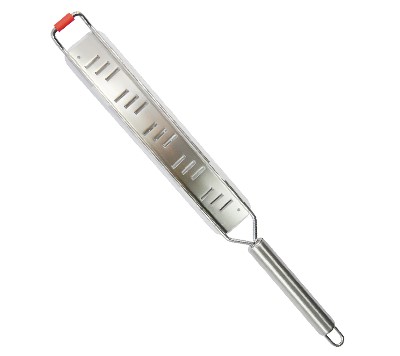
Stainless Steel Grater Supplier: Practical Sourcing Guide
Choosing a stainless steel grater supplier is not only about finding a product that looks useful in a kitchen. For importers, wholesalers, promotional buyers, and private-label brands, the bigger question is whether the grater can be sourced consistently, packed safely, described accurately, and supported with clear commercial information. A multi-functional grater with exchangeable stainless steel blades can be attractive because it serves several food-preparation tasks in one compact tool, but buyers should still verify the details before placing an order.
The original product concept highlights a grater with six exchangeable stainless steel blades, an ergonomic handle, and compact storage. Those are useful selling points for retail and food-service channels, especially when shoppers want one tool for zesting, shredding, slicing, and grating. This guide explains how to evaluate that type of stainless steel kitchen grater from a sourcing perspective without relying on vague claims or unsupported specifications.
Key Takeaways
- A six-blade stainless steel grater can cover multiple kitchen tasks, but each blade should be checked for function, fit, sharpness, and safe handling.
- Ask suppliers to confirm material details, packaging options, labeling requirements, replacement blade availability, and quality-control procedures.
- Do not rely only on product photos; request samples and test the tool with common foods such as citrus, cheese, carrots, potatoes, fruit, and spices.
- For OEM or wholesale orders, clarify customization, lead time, MOQ, carton packing, spare parts, and documentation before committing.
What Buyers Should Look For in a Stainless Steel Grater Supplier
A reliable supplier should be able to explain the product clearly and answer practical questions. For a stainless steel grater, buyers should ask what stainless steel is used for the blades, what material is used for the handle and frame, how the exchangeable blades lock into place, and whether the product has been designed for hand washing, dishwasher use, or both. If these details are not already listed, they should be treated as questions for the supplier rather than assumptions.
Commercial buyers should also check whether the supplier can support their sales channel. A supermarket buyer may need barcode labeling and shelf-ready packaging. An online seller may need drop-test packaging and clear product images. A restaurant supply distributor may care more about blade durability, replacement parts, and easy cleaning. The best supplier for one channel is not always the best supplier for another.
Understanding the Six Exchangeable Blade Concept
The original product description lists six exchangeable stainless steel blades designed for different kitchen uses. This type of configuration can make the product easier to position as a versatile kitchen tool, but the buyer should confirm that every blade performs well and is simple to identify. If the blades are not marked clearly, end users may become confused or use the wrong blade for the task.
| Blade | Stated Use | Buyer Checkpoint |
|---|---|---|
| Blade A | Delicate citrus zest or Parmesan shavings | Test whether it produces fine results without clogging quickly. |
| Blade B | Medium ribbons for chocolate or carrots | Check ribbon consistency and user effort. |
| Blade C | Coarse shreds for soups and salads | Confirm it handles firmer vegetables safely. |
| Blade D | Ultra-coarse grating for potatoes | Test stability under higher pressure. |
| Blade E | Uniform slicing for fruits and vegetables | Review slice thickness and blade exposure. |
| Blade F | Fine grating for spices | Check cleaning difficulty and residue buildup. |
Quality Checks Before Wholesale or OEM Orders
Before ordering in bulk, request production samples or pre-production samples that match the intended packaging and branding. A grater may look acceptable in a catalog but fail during practical use if the handle flexes, the blade insert moves, or the cutting surface is difficult to clean. Testing should include both performance and safety.
Create a simple checklist for inspection. Confirm that the blade edges are clean, the parts fit securely, the handle feels stable, and there are no sharp burrs in areas the user touches. If compact storage is part of the product design, check whether all six blades can be stored neatly and whether the storage method protects users from accidental contact with cutting edges. Ask the supplier how they inspect blade sharpness, assembly fit, and packaging condition during production.
Packaging, Labeling, and Retail Presentation
Packaging matters because graters contain sharp surfaces. Buyers should ask whether the supplier can provide protective blade covers, inner trays, printed boxes, instruction sheets, or warning labels. For e-commerce, packaging must also protect the grater during parcel handling. If the blades are loose inside the box, the product can arrive damaged or create a poor unboxing experience.
Private-label buyers should confirm what artwork files are required, whether the supplier can apply a logo, and whether there are additional costs for custom packaging. Avoid making assumptions about barcode printing, language requirements, or country-of-origin labeling. These details should be confirmed in writing before production starts.
Supplier Questions That Reduce Sourcing Risk
A clear question list helps separate responsive suppliers from vague ones. When discussing stainless steel kitchen graters for sale, ask questions that produce measurable answers instead of broad promises.
- What materials are used for the blades, handle, frame, and storage components?
- Are the six blades included as standard, and are replacement blades available?
- How does each blade attach, lock, and release?
- What packaging options are available for retail, wholesale, or e-commerce?
- Can the supplier provide samples that match the final production version?
- What inspection steps are used before shipment?
- What customization options are available for OEM or private-label orders?
- What are the MOQ, lead time, payment terms, and carton details?
How to Position the Product for Different Sales Channels
For consumer retail, the product story should focus on practical food preparation: zesting citrus, grating Parmesan, shredding carrots, slicing fruits and vegetables, preparing potatoes, and grating spices. Clear blade explanations are more useful than exaggerated marketing language. Shoppers want to know what the tool does, how to clean it, and how to store it safely.
For wholesale and distributor channels, the sourcing message should be more technical. Buyers may want consistent supply, stable packaging, clear blade functions, and responsive after-sales communication. If the supplier offers OEM support, ask what can actually be customized: logo placement, box design, instruction manual, color, packaging structure, or blade set configuration. If a feature is not confirmed by the supplier, do not include it in retail listings.
Use and Care Guidance for End Customers
Even when the purchasing decision is B2B, end-user satisfaction affects repeat orders. Retailers should provide simple use and care information. Customers should use the correct blade for each food type, keep fingers away from cutting surfaces, and clean the grater soon after use to reduce dried-on residue. If the supplier does not confirm dishwasher suitability, recommend hand washing in the product copy until verified.
Storage is also important. A compact design is helpful only if users can store blades safely and identify them easily. If the product includes a storage case or onboard blade storage, explain how it works in the instruction sheet. If not, consider asking the supplier whether safer storage accessories can be added.
FAQ
What makes a stainless steel grater supplier suitable for wholesale buyers?
A suitable supplier should provide consistent product information, samples, packaging options, clear commercial terms, and answers about materials, inspection, customization, and shipment preparation.
Should buyers choose a six-blade grater instead of a single grater?
A six-blade grater can be more versatile because it supports zesting, shredding, slicing, and fine grating. Buyers should test every blade because one weak insert can reduce customer satisfaction.
Can I claim the grater is rustproof or dishwasher safe?
Only make those claims if the supplier provides clear confirmation or suitable documentation. Otherwise, describe the product as using stainless steel blades and ask users to follow verified care instructions.
What should be checked in a sample order?
Check blade sharpness, blade fit, handle comfort, cutting consistency, cleaning effort, storage safety, packaging strength, and whether the delivered sample matches the supplier's description.
Is this type of grater suitable for OEM branding?
It may be, but OEM suitability depends on the supplier's actual services. Ask about logo methods, packaging design, MOQ, sample approval, production lead time, and any extra customization costs.
Final Sourcing Advice
A stainless steel grater with six exchangeable blades can be a strong addition to a kitchenware range when the supplier can support the product with clear specifications, stable packaging, and practical quality control. Buyers should avoid vague claims and focus on testable details: how the blades perform, how safely they store, how the handle feels, and how well the supplier communicates. With the right questions and sample checks, sourcing teams can make a more confident decision before moving into wholesale, OEM, or private-label production.
