




Why Stainless Steel Is Used for Kitchen Knives?
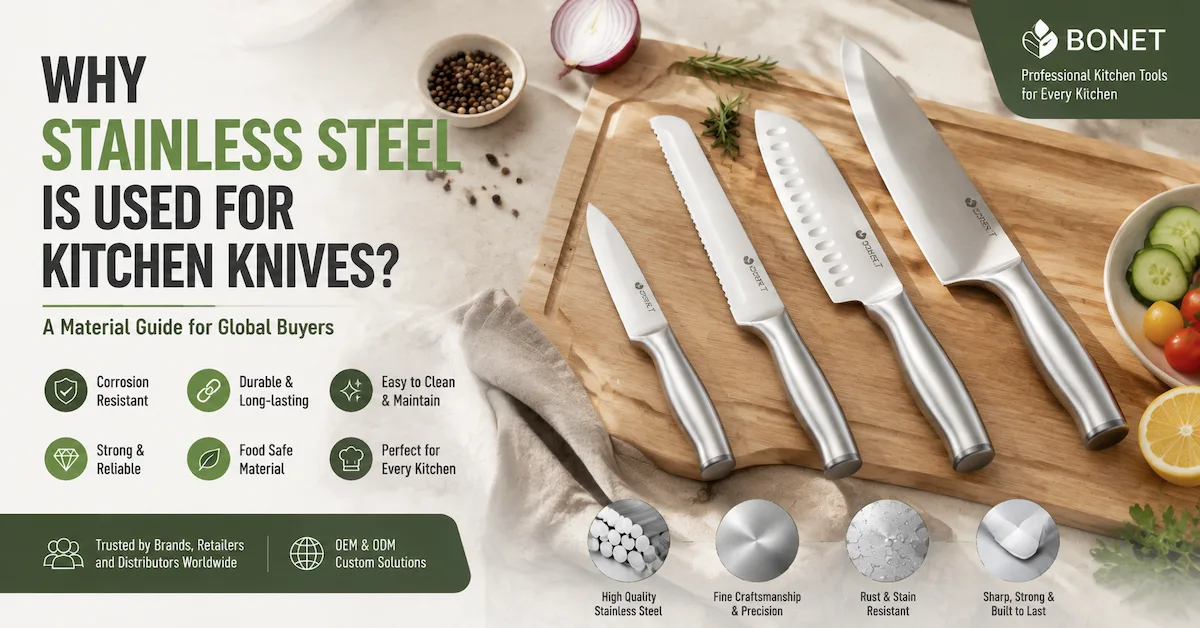
When selecting kitchen knives, material is one of the most important factors affecting performance, durability, and user experience. Among different blade materials, stainless steel has become one of the most popular choices for kitchen knives worldwide.
Understanding why stainless steel is used for kitchen knives helps kitchenware brands, retailers, importers, and distributors make better sourcing decisions.
Stainless steel kitchen knives are widely preferred because they offer a balanced combination of:
- Corrosion resistance
- Durability
- Easy maintenance
- Stable cutting performance
- Attractive appearance
For commercial buyers, stainless steel provides a practical solution that meets the needs of different markets, from household kitchens to professional cooking environments.
BONET specializes in kitchenware manufacturing, providing kitchen knives, scissors, utensils, and customized kitchen tools for global brands, retailers, and private-label companies. BONET Products
What Makes Stainless Steel Suitable for Kitchen Knives?
Stainless steel is an alloy mainly containing iron, carbon, and chromium. The addition of chromium creates a protective layer that helps improve corrosion resistance.
For kitchen knife production, material selection directly influences:
| Factor | Impact on Kitchen Knives |
|---|---|
| Corrosion resistance | Helps prevent rust and staining |
| Hardness | Affects cutting performance |
| Toughness | Improves durability |
| Surface finish | Enhances appearance |
| Maintenance | Influences user convenience |
For manufacturers and buyers, stainless steel provides a reliable balance between performance and production practicality.
Corrosion Resistance: A Key Advantage of Stainless Steel Knives
One of the main reasons stainless steel is used for kitchen knives is its resistance to corrosion.
Kitchen knives are frequently exposed to:
- Water
- Food ingredients
- Moisture
- Cleaning processes
Without proper corrosion resistance, blades may develop:
- Rust
- Surface stains
- Reduced appearance quality
Stainless steel helps maintain product appearance and performance over long-term use.
For retailers and brands, this means:
- Fewer customer complaints
- Better product durability
- Higher customer satisfaction
Durability and Long-Term Performance
Kitchen knives are everyday tools that require reliable performance.
Stainless steel offers:
- Strong blade structure
- Good wear resistance
- Stable performance
- Long service life
For mass-market kitchen products, durability is especially important because customers expect knives to maintain performance after repeated use.
A reliable stainless steel kitchen knife should balance:
- Sharpness
- Strength
- Flexibility
- Maintenance requirements
Easy Maintenance and Consumer Convenience
Another reason stainless steel is widely used for kitchen knives is easy maintenance.
Compared with some other blade materials, stainless steel knives are generally easier for everyday users to maintain.
Benefits include:
- Easy cleaning
- Lower maintenance requirements
- Better resistance to environmental factors
This makes stainless steel kitchen knives suitable for:
- Household kitchens
- Restaurants
- Catering applications
- Retail product lines
For global brands, easy maintenance is an important selling point because it improves the overall user experience.
Stainless Steel Kitchen Knives vs Other Blade Materials
Different blade materials provide different advantages.
| Material | Advantages | Considerations |
|---|---|---|
| Stainless Steel | Durable, corrosion resistant, easy maintenance | Requires proper heat treatment |
| Carbon Steel | Excellent sharpness and edge retention | Higher maintenance |
| Ceramic | Lightweight and corrosion resistant | More fragile |
| High Alloy Steel | Premium performance | Higher cost |
For many commercial kitchenware products, stainless steel remains the preferred option because it provides a good balance between performance, cost, and usability.
Why Kitchen Knife Manufacturers Prefer Stainless Steel
From a manufacturing perspective, stainless steel offers several advantages.
Stable Production Performance
Stainless steel supports consistent production through:
- Cutting processes
- Stamping
- Grinding
- Polishing
- Heat treatment
This helps manufacturers maintain stable product quality.
Flexible Product Applications
Stainless steel can be used for:
- Chef knives
- Paring knives
- Utility knives
- Kitchen knife sets
- Professional cooking knives
This flexibility makes it suitable for different product collections.
Better Surface Finishing Options
Manufacturers can create different appearances through:
- Polishing
- Satin finishing
- Brushed finishing
- Coating treatments
This allows brands to develop products with different market positioning.
Stainless Steel Kitchen Knife Manufacturing Process
Material quality is only one part of producing reliable kitchen knives. Manufacturing processes also influence final performance.
Typical production stages include:
Material Preparation
Manufacturers select suitable stainless steel materials based on:
- Product requirements
- Target market
- Performance expectations
Blade Processing
Important processes include:
- Cutting
- Grinding
- Heat treatment
- Edge forming
Surface Treatment
Surface finishing affects:
- Appearance
- Corrosion resistance
- Product value
Assembly and Quality Inspection
Final checks may include:
- Blade sharpness
- Handle strength
- Balance testing
- Appearance inspection
BONET's manufacturing capabilities include processes such as stamping, heat treatment, grinding, polishing, assembly, quality inspection, cleaning, protection, and packing for cutting-tool products. BONET Manufacturing Process
How Buyers Should Select Stainless Steel Kitchen Knives
For brands and retailers, choosing the right stainless steel kitchen knives requires evaluating several factors.
Blade Performance
Consider:
- Sharpness
- Edge retention
- Cutting efficiency
Handle Design
A good handle should provide:
- Comfortable grip
- Safe operation
- Balanced handling
Manufacturing Capability
Buyers should evaluate:
- Factory experience
- Production control
- Quality inspection procedures
- Customization capability
Market Positioning
Different markets may require different products:
| Market | Recommended Focus |
|---|---|
| Premium brands | Materials, design, craftsmanship |
| Retail stores | Balance of quality and price |
| Professional users | Performance and durability |
| Private labels | Customization and packaging |
OEM Stainless Steel Kitchen Knives for Global Brands
For private-label companies, stainless steel kitchen knives offer strong customization opportunities.
OEM services may include:
- Custom blade designs
- Handle colors
- Logo engraving
- Packaging solutions
- Knife set development
A professional manufacturer can help brands create products that match their target customers and sales channels.
BONET supports OEM/ODM kitchenware projects, including product customization, material selection, packaging solutions, and manufacturing support for global buyers. BONET OEM ODM Service
Quality Control Checklist for Stainless Steel Kitchen Knives
Before placing bulk orders, buyers should review:
| QC Area | Buyer Concern |
|---|---|
| Steel material | Product durability |
| Heat treatment | Blade performance |
| Edge grinding | Cutting ability |
| Handle assembly | Safety and comfort |
| Surface finish | Appearance quality |
| Packaging | Retail presentation |
A professional kitchen knife supplier should have clear quality control procedures throughout production.
Common Mistakes When Choosing Kitchen Knife Materials
Choosing Only Based on Price
Lower-cost materials may affect:
- Product lifespan
- Cutting performance
- Brand reputation
Ignoring Heat Treatment
Even high-quality stainless steel requires proper processing to achieve good performance.
Overlooking Product Application
Different users require different knife characteristics.
A household knife and a professional kitchen knife may have different priorities.
Not Evaluating Supplier Capability
Material quality depends on:
- Manufacturing experience
- Process control
- Quality management
FAQ
Why is stainless steel used for kitchen knives?
Stainless steel is used because it provides corrosion resistance, durability, easy maintenance, and reliable performance for everyday kitchen applications.
Are stainless steel kitchen knives better than carbon steel knives?
Stainless steel knives are easier to maintain, while carbon steel knives may offer stronger sharpness but require more care.
What type of stainless steel is best for kitchen knives?
The best stainless steel depends on the required balance of hardness, corrosion resistance, durability, and product positioning.
Are stainless steel kitchen knives suitable for professional kitchens?
Yes. Stainless steel knives are widely used in professional kitchens because they provide durability and reliable performance.
Why do manufacturers choose stainless steel for kitchen knives?
Manufacturers prefer stainless steel because it offers stable production performance, flexible applications, and good surface finishing options.
Can stainless steel kitchen knives be customized?
Yes. OEM manufacturers can customize blade designs, handles, logos, packaging, and knife sets.
What should buyers consider when sourcing stainless steel kitchen knives?
Buyers should evaluate material quality, manufacturing capability, quality control, customization options, and supplier experience.
Does BONET manufacture stainless steel kitchen knives?
Yes. BONET provides stainless steel kitchen knives, kitchen tools, OEM/ODM customization, and manufacturing solutions for global buyers. BONET Contact Us
Conclusion
Understanding why stainless steel is used for kitchen knives helps global brands, retailers, and importers make better product decisions.
Stainless steel remains one of the most widely used kitchen knife materials because it combines corrosion resistance, durability, easy maintenance, and commercial practicality.
For businesses sourcing kitchen knives, the best supplier should provide not only quality materials but also reliable manufacturing processes, quality control, and customization support.
BONET helps global buyers develop competitive kitchen knife products through professional manufacturing, OEM/ODM services, and customized kitchenware solutions. BONET Products BONET Contact Us
