




Stainless Steel Kitchen Scissors: Practical Uses, Selection and Care
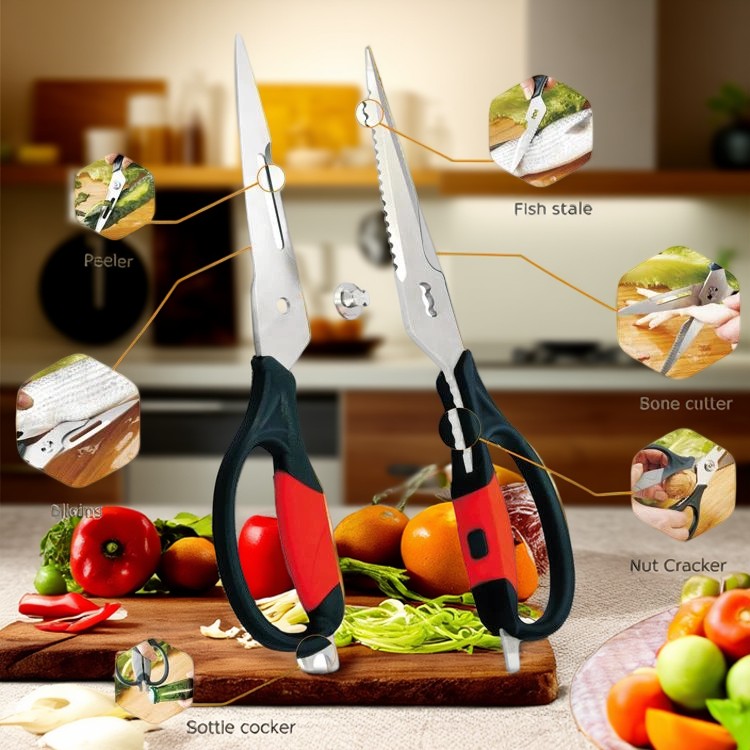
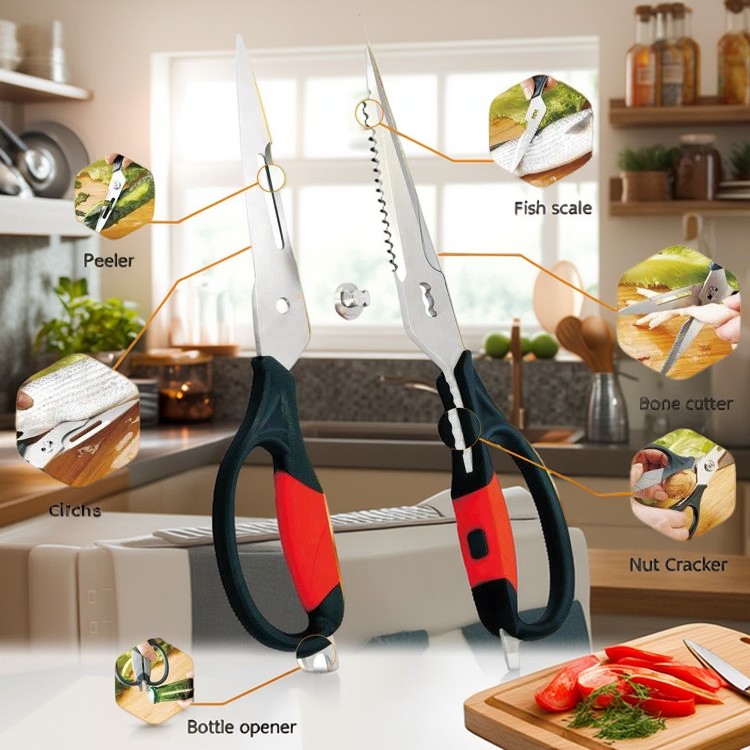
Stainless steel kitchen scissors are one of the simplest tools to overlook until food preparation becomes awkward. A good pair can trim herbs, cut vegetables, portion thin meat, open packaging and handle small utility tasks without reaching for a knife and board every time. The multi-function kitchen scissors shown here also include extra built-in functions mentioned in the original product description, such as a nutcracker, bottle opener, fish scaler, peeler and bone cutter.
This guide explains where kitchen shears are genuinely useful, how to compare features, what to ask before buying, and how to care for the blades so they stay reliable in daily cooking.
Key Takeaways
- Stainless steel kitchen scissors are best for quick cutting jobs such as herbs, leafy greens, packaging and small ingredient prep.
- Multi-function designs may include a nutcracker, bottle opener, fish scaler, peeler and bone cutter, but each feature should be checked for comfort and safety.
- Do not assume a specific stainless steel grade, dishwasher suitability or certification unless the supplier clearly provides that information.
- Cleaning and drying after use are important, especially when cutting meat, fish or salty foods.
What Stainless Steel Kitchen Scissors Are Used For
Kitchen scissors, also called kitchen shears, are designed for food preparation rather than paper or craft use. Their appeal is speed and control. Instead of moving a slippery ingredient to a cutting board, you can cut directly over a bowl, pan or plate. That makes them useful for trimming scallions, cutting herbs, snipping bacon, dividing noodles, shaping dough edges or opening a sealed bag of ingredients.
The original product description highlights several functions beyond basic cutting. The scissors are described as suitable for peeling vegetables such as potatoes and carrots, slicing herbs and vegetables, removing fish scales, cutting bone, cracking nuts and opening bottles. These functions make the tool more versatile, but buyers should still consider how often each function will be used. A tool with many features is only helpful if the blades align well, the handle feels secure and the added functions do not make the scissors uncomfortable.
Feature Checklist and Comparison
When choosing stainless steel kitchen scissors, compare practical details instead of relying only on appearance. The red and black ergonomic handle described in the source is intended for comfort, but hand size, grip angle and cutting resistance are personal factors. If buying online, check close-up photos and ask the seller for missing details before placing a bulk or repeat order.
| Feature to Check | Why It Matters | Question to Ask |
|---|---|---|
| Blade material | Stainless steel can resist rust better than ordinary carbon steel, but performance depends on grade and finish. | What stainless steel grade is used for the blades? |
| Blade alignment | Poor alignment causes crushing instead of clean cutting. | Are the blades inspected for smooth opening and closing? |
| Handle comfort | A comfortable grip reduces hand strain during repeated prep tasks. | What is the handle material and is it suitable for wet hands? |
| Multi-function parts | Nutcracker, bottle opener, fish scaler and peeler features should be easy to locate and control. | Can the supplier provide usage images or a demonstration? |
| Cleaning method | Food residue can collect near pivots and textured sections. | Is hand washing recommended, and can the blades separate for cleaning? |
How to Use Kitchen Scissors Safely
Kitchen scissors are easy to use, but they are still sharp cutting tools. Use them with the same attention you would give a knife. Keep fingers away from the cutting path, cut slowly through dense ingredients and avoid twisting the blades sideways. If the scissors resist a task, do not force them; forcing can damage the edge, strain the pivot or cause slipping.
- Use the right section of the blade for the job. The inner part near the pivot offers more leverage for firm foods, while the tip is better for light trimming.
- Cut over a stable container or board so food does not fall onto the floor or hot surfaces.
- For raw meat or fish, use the scissors only for that task until they are washed thoroughly.
- Do not use kitchen scissors on hard non-food materials unless the manufacturer says they are suitable.
- Store them closed and out of reach of children.
Best Food Preparation Tasks
For herbs, scissors help reduce bruising because you can snip small bundles directly into a dish. For leafy greens, they make quick work of trimming stems. For thin vegetables, they are convenient when a knife feels excessive. The original description also mentions peeling vegetables such as potatoes and carrots; if the tool includes a peeler edge, test it first on a stable surface and use controlled strokes.
For fish preparation, the described fish-scaling function can be helpful for small jobs. Scale fish under gentle running water or inside a deep sink to reduce mess. For meat, scissors can trim fat, cut skin or portion smaller pieces. The source refers to a robust bone cutter, but users should be cautious: bone hardness varies widely, and attempting to cut very hard bones may damage the tool or create a safety risk. Ask the supplier what types of bone the design is intended to handle.
Cleaning and Care
Good cleaning habits protect both the tool and the food you prepare with it. Stainless steel is valued for kitchen use because it is generally more resistant to corrosion than many other metals, but it still benefits from prompt cleaning and drying. Salt, acids and food residue can affect surfaces over time, especially around the pivot or textured multi-function areas.
- Wash soon after cutting raw meat, fish, herbs or acidic foods.
- Use warm water and mild dish soap unless the supplier provides different care instructions.
- Scrub carefully around the pivot, nutcracker groove, scaler area and bottle opener slot.
- Dry completely before storage to reduce moisture exposure.
- Do not leave scissors soaking in the sink where edges can be damaged or hidden under other dishes.
If the scissors become loose, stiff or dull, check whether the pivot can be adjusted or whether sharpening is recommended. Do not assume the blades are removable unless the product description states so.
Buying Guidance for Home and Small Business Use
For home kitchens, prioritize comfort, clean cutting and easy washing. A compact multi-function tool can replace several occasional-use gadgets, but only if those features are practical. For cafés, meal prep teams or retailers sourcing kitchen accessories, the evaluation should be more structured. Ask for clear product photos, blade material information, packaging options, care instructions and any test reports or compliance documents that are relevant to your market. Avoid assuming certification, food-contact documentation or performance claims unless the supplier provides them in writing.
It is also useful to request a sample before a larger order. Test the scissors on herbs, packaging, thin vegetables and the specific foods your customers are likely to prepare. If the product is marketed as multi-function, test the nutcracker, bottle opener, fish scaler, peeler and bone cutter functions separately. A feature list is helpful, but actual handling reveals whether the tool is comfortable and safe.
Practical FAQ
Are stainless steel kitchen scissors the same as regular scissors?
No. Kitchen scissors are intended for food preparation and often have stronger blades, wider handles or extra functions. Regular scissors may not be hygienic or strong enough for kitchen tasks.
Can these scissors cut bones?
The original description mentions a bone cutter, but users should confirm the intended use range with the supplier. Small poultry bones and very hard bones are different tasks, and forcing the tool can be unsafe.
Are stainless steel kitchen scissors rust-proof?
Stainless steel is generally rust-resistant, not automatically rust-proof. Drying the scissors after washing and avoiding long soaking helps preserve the surface.
Can I put kitchen scissors in a dishwasher?
Do not assume dishwasher suitability unless the supplier confirms it. Hand washing is often the safer default because it protects edges, pivots and handle materials.
What should I check before buying a multi-function pair?
Check blade alignment, grip comfort, cleaning access, stainless steel grade, and whether the extra functions match your cooking habits. For business sourcing, ask for samples and written product details before placing a larger order.
