




Stainless Steel vs Carbon Steel Kitchen Knives: A Practical Metal Guide
Choosing between stainless steel and carbon steel is one of the most common decisions when buying a kitchen knife. Both metals can perform well, but they suit different habits. Stainless steel is valued for corrosion resistance and easier day-to-day care. Carbon steel is often chosen by cooks who enjoy a very sharp edge and do not mind extra maintenance. This guide explains the differences in plain English so you can choose based on how you cook, clean, store, and sharpen your knives.
Key Takeaways
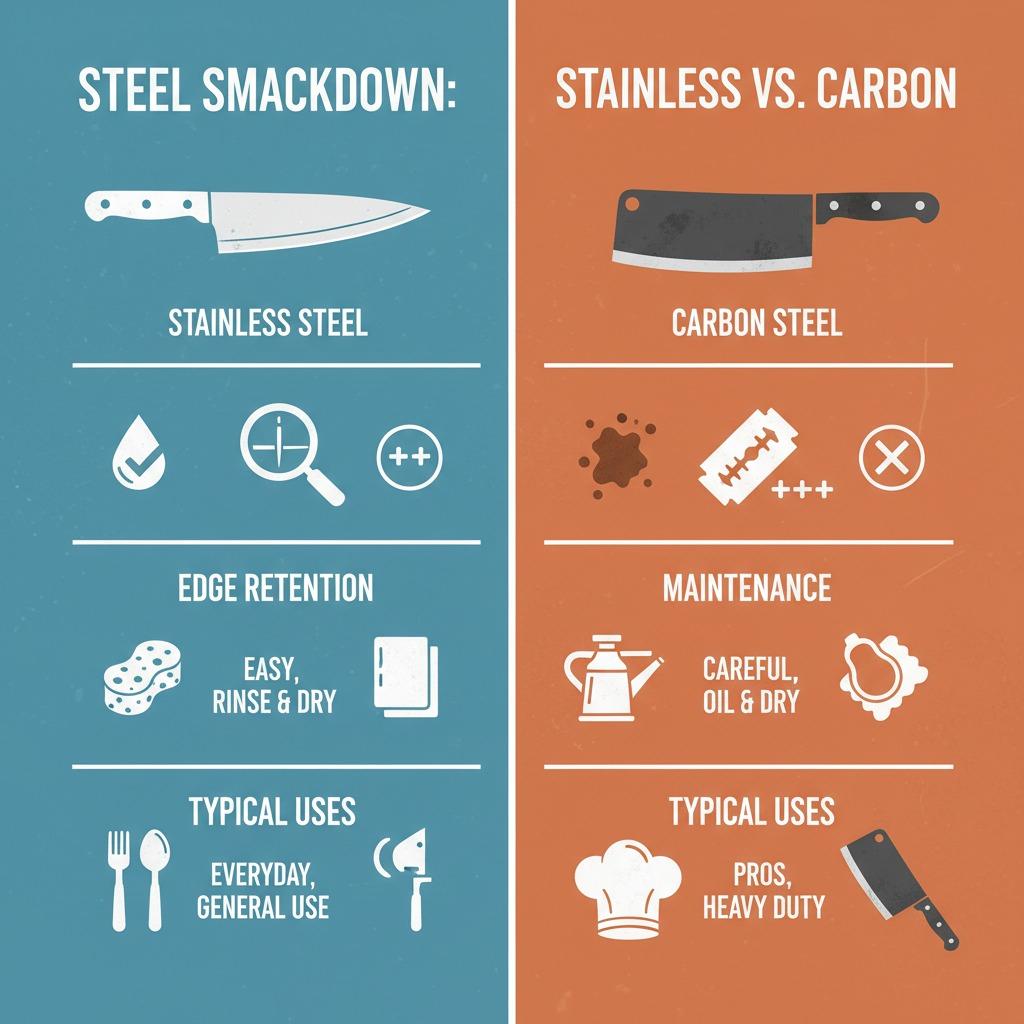
- Stainless steel is generally easier to maintain because it resists rust and staining better than carbon steel.
- Carbon steel can take a very keen edge, but it needs prompt drying and more careful storage.
- The best knife material depends on your cooking style, sharpening habits, and tolerance for maintenance.
- For busy home kitchens, shared kitchens, or humid environments, stainless steel is often the safer everyday choice.
What Stainless Steel Means for Kitchen Knives
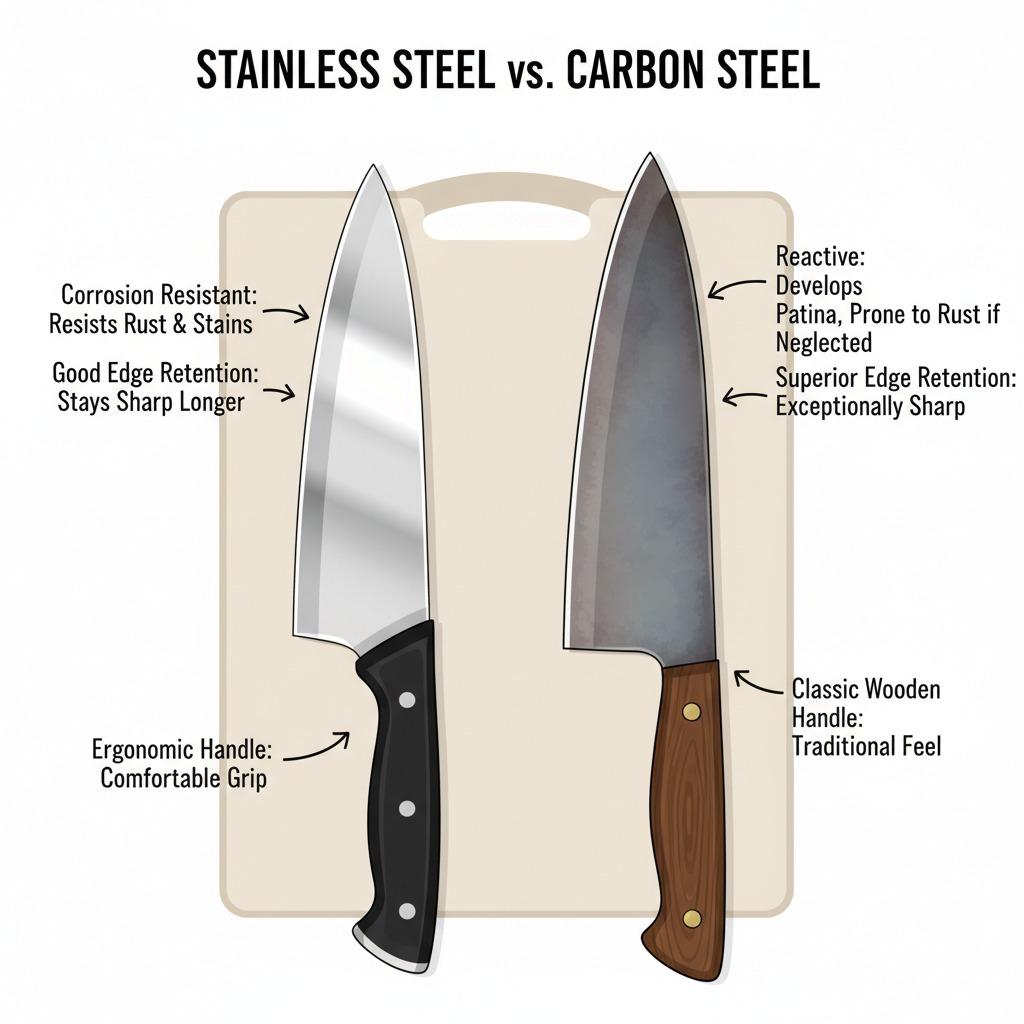
Stainless steel is not completely stain-proof, but it contains alloying elements that help it resist corrosion better than simple carbon steel. In practical kitchen use, this matters when a knife touches water, salt, tomatoes, citrus, onions, or other acidic ingredients. A stainless steel knife can still be damaged by neglect, but it usually gives the user more time to wash and dry it without immediate rust concerns.
This makes stainless steel popular for home cooks, culinary students, catering teams, and commercial kitchens where tools may be used by several people. If you are comparing products such as a chef's knife, check the supplier's product page for the exact steel type, hardness guidance, handle material, care instructions, and whether the knife is intended for dishwasher use. Do not assume every stainless knife performs the same; heat treatment and blade geometry also affect cutting performance.
What Carbon Steel Means for Kitchen Knives
Carbon steel has a reputation for sharpness, feedback, and easy sharpening. Many experienced cooks like the way it responds on the board and the way it can be refined to a thin, precise edge. Over time, carbon steel develops a patina, which is a darker surface layer that forms through normal use. Some cooks like this character; others prefer the cleaner look of stainless steel.
The trade-off is care. Carbon steel can rust if left wet, stored dirty, or exposed to acidic foods for too long. After cutting lemons, tomatoes, or onions, it is wise to wipe the blade, wash it by hand, and dry it immediately. Some users apply a light food-safe oil before storage, especially in humid climates. If you want a low-maintenance knife, carbon steel may feel demanding. If you enjoy sharpening and careful tool care, it can be rewarding.
Stainless Steel vs Carbon Steel Comparison
| Selection Factor | Stainless Steel | Carbon Steel |
|---|---|---|
| Rust resistance | Better resistance to moisture and acidic foods, though still needs cleaning and drying. | More vulnerable to rust; requires prompt drying and careful storage. |
| Edge character | Can be sharp and reliable, depending on steel, heat treatment, and grind. | Often appreciated for taking a very fine, keen edge. |
| Maintenance level | Lower maintenance for everyday users and shared kitchens. | Higher maintenance; wiping, drying, and occasional oiling may be needed. |
| Appearance over time | Usually keeps a brighter look with proper care. | Develops patina and may discolor with use. |
| Best suited for | Busy home cooks, humid kitchens, and users who want easier care. | Enthusiasts and professionals who prioritize edge feel and accept upkeep. |
How to Choose Based on Your Cooking Habits
Start with your real routine, not an ideal version of it. If you often leave knives near the sink, prep acidic ingredients, or share tools with family members or staff, stainless steel is usually more forgiving. It is also a practical option for people who want one reliable chef's knife for vegetables, herbs, boneless meats, and general meal preparation.
Carbon steel makes more sense if you already dry knives immediately, sharpen regularly, and enjoy maintaining tools. It is also a good fit for cooks who value tactile cutting feedback and do not mind a blade that changes appearance. Before purchasing either type, ask these product-selection questions:
- What exact steel or material description is provided by the seller?
- What care instructions are recommended for washing, drying, and storage?
- Is the knife intended for home use, professional prep, or display/gifting?
- What sharpening angle or sharpening method does the supplier recommend?
- Are replacement, warranty, or after-sales support details clearly stated?
Use and Care Tips for Longer Knife Life
Regardless of material, good care improves performance and safety. Wash kitchen knives by hand with mild detergent, rinse, and dry them completely before storage. Avoid leaving any knife soaking in a sink, where the blade can be damaged and the edge can become a safety hazard. Store knives in a block, sheath, magnetic strip, or drawer insert that protects the edge from contact with other utensils.
Use an appropriate cutting board, such as wood or plastic, rather than glass, stone, or metal surfaces that can dull the edge quickly. Hone or sharpen when cutting starts to feel less controlled. A sharp knife is not just about neat slices; it also reduces the pressure needed during prep. For carbon steel, add the extra habit of wiping the blade during long prep sessions and drying it immediately after washing.
When Stainless Steel Is the Better Everyday Choice
For most general users, stainless steel offers the best balance of performance and convenience. Its corrosion resistance is valuable in modern kitchens where knives meet moisture, acidic foods, and frequent cleaning. It is especially useful for beginners, families, rental properties, food-service environments, and anyone who wants dependable cutting without a strict maintenance routine.
This does not mean stainless steel is automatically superior in every category. A poorly made stainless knife can underperform, while a well-made carbon steel knife can be excellent. The fair comparison is not only metal name versus metal name; it also includes heat treatment, blade thickness, handle comfort, balance, sharpening support, and the supplier's clarity about care.
Practical FAQ
Is stainless steel always rust-proof?
No. Stainless steel resists rust better than carbon steel, but it can still stain or corrode if left wet, dirty, or exposed to harsh conditions.
Does carbon steel stay sharper than stainless steel?
Carbon steel is often praised for taking a keen edge, but actual edge retention depends on the specific steel, heat treatment, blade geometry, cutting board, and sharpening routine.
Which knife material is better for beginners?
Stainless steel is usually easier for beginners because it is more tolerant of everyday kitchen habits and requires less specialized care.
Can I put these knives in a dishwasher?
Hand washing is the safer recommendation for quality kitchen knives. Always follow the supplier's care instructions, and ask before purchasing if dishwasher use is important to you.
What should buyers ask a supplier before ordering?
Ask for the exact material description, care guidance, sharpening recommendations, handle details, packaging options, warranty terms, and any available compliance or test documentation relevant to your market.
