




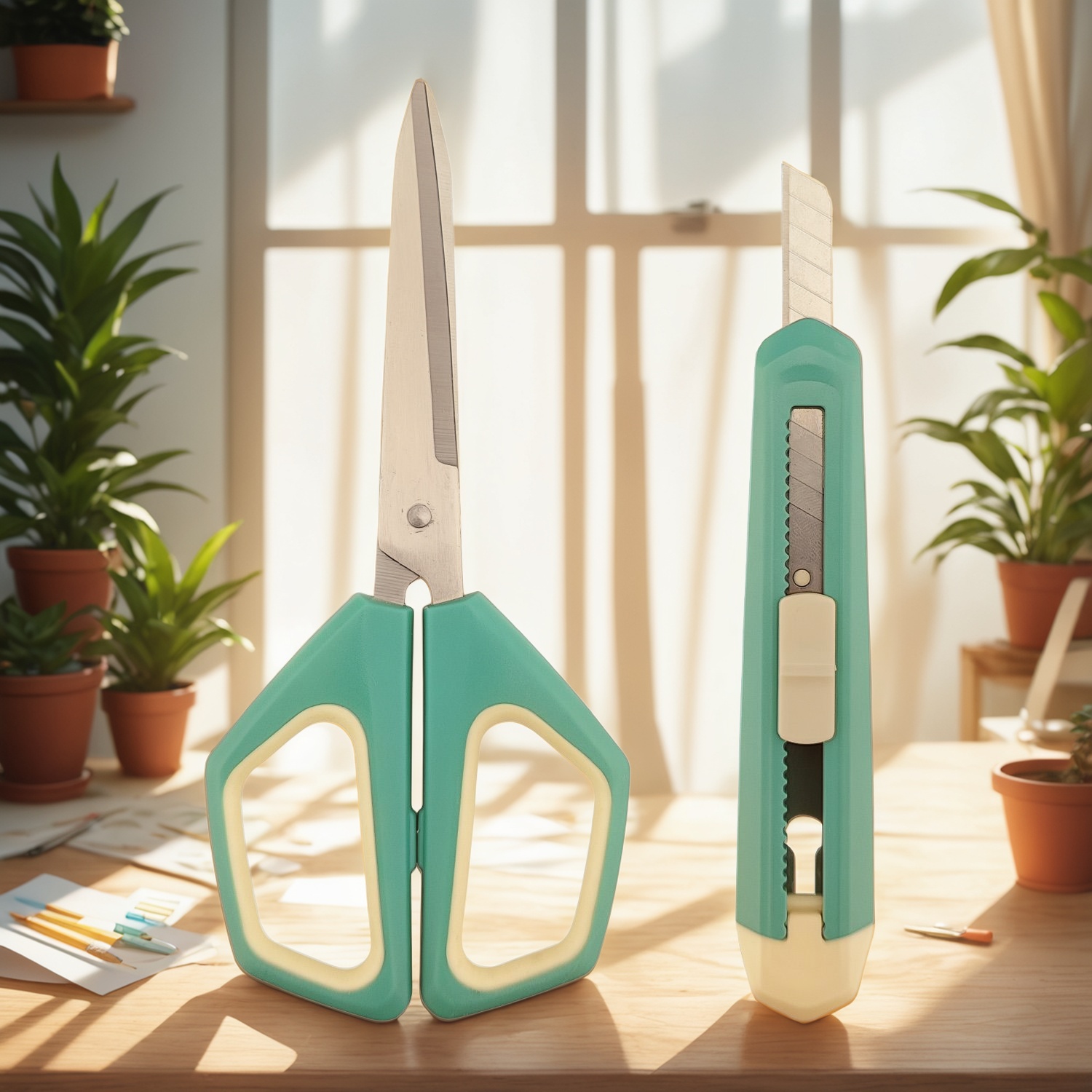
Stationery Scissors China: Quality and Style Combined
Stationery scissors from China are widely used in offices, schools, craft rooms, packaging areas, and everyday home tasks. Buyers often look for a balance of reliable cutting performance, comfortable handling, modern appearance, and sensible cost. The original product description highlights demand among crafters, students, and office workers, and mentions features such as ergonomic designs, high-performance blades, stainless steel scissors, mint green handles, and product sets that may include complementary tools such as utility knives.
For B2B buyers, however, choosing stationery scissors is not only about appearance. Importers, wholesalers, private-label brands, and retail buyers also need to evaluate blade performance, handle comfort, packaging, quality consistency, and supplier communication. This guide explains how to assess stationery scissors from China with a practical sourcing mindset, while avoiding assumptions about specifications that should be confirmed directly with the supplier.
Key Takeaways
- Stationery scissors are commonly purchased for office, school, craft, and light packaging tasks.
- Stainless steel blades are valued for corrosion resistance and consistent cutting, but exact steel grade and hardness should be confirmed with the supplier.
- Handle comfort, blade alignment, opening smoothness, and packaging quality are important for repeat orders.
- For wholesale or OEM sourcing, buyers should ask clear questions about materials, tolerances, samples, packaging, labeling, and quality inspection.
- Product sets, such as scissors paired with utility knives, can support retail merchandising when the tools match the target user’s needs.
Why Stationery Scissors from China Are Popular
China has a broad manufacturing base for stationery, office tools, household products, and craft accessories. This makes it possible for buyers to source simple office scissors, children’s stationery scissors, craft scissors, and coordinated tool sets through a range of suppliers. The appeal is not limited to price. Many buyers also consider design variety, color options, packaging flexibility, and the ability to develop products for specific retail channels.
The original article notes that best-selling scissors often combine ergonomic design with high-performance blades. In practice, these two points should be examined carefully. A product may look attractive in photos, but a buyer should still test how it performs on common materials such as paper, envelopes, card stock, thin cardboard, labels, or light craft materials. If the product is intended for fabric, confirm that the blade geometry and sharpness are suitable, because not all stationery scissors are designed for textile cutting.
Blade Material and Cutting Performance
Stainless steel scissors are often preferred for stationery use because stainless steel can resist corrosion better than many non-stainless alternatives. The original source specifically mentions stainless steel scissors and precision-ground stainless steel blades. Those are useful selling points, but B2B buyers should ask for details before placing a bulk order. Important questions include: What stainless steel is used? What is the blade thickness? Is the blade hardened? How is sharpness checked? Is there a cutting test during inspection?
Cutting performance depends on more than material. Blade alignment, pivot tightness, edge grinding, tip shape, and handle leverage all affect the user experience. Poor alignment can make scissors chew or fold paper instead of cutting cleanly. A loose pivot may feel unstable, while an overly tight pivot can cause hand fatigue. For wholesale orders, samples should be tested by several people, not only viewed in a catalog.
Handle Design, Comfort, and User Fit
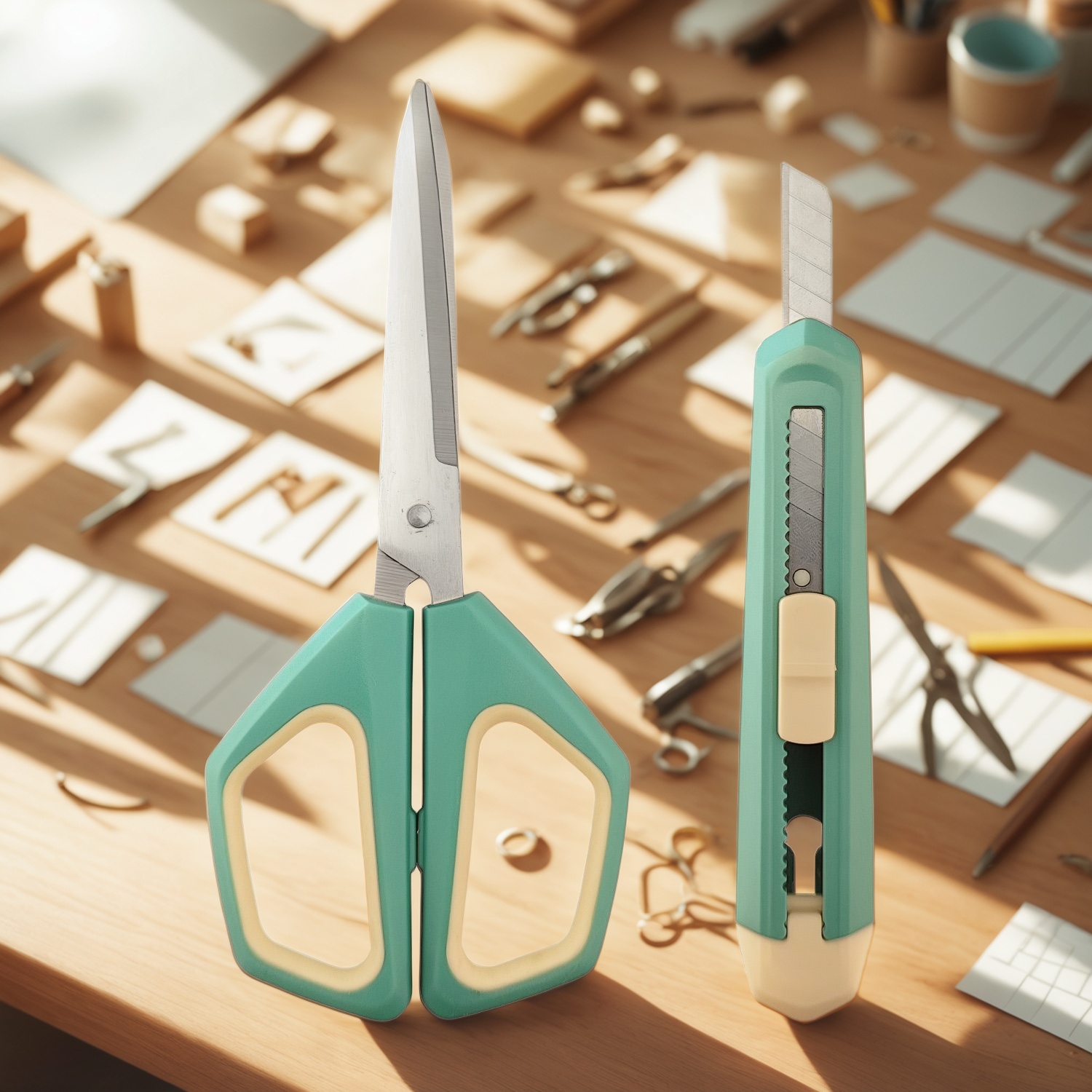
The original article refers to ergonomic designs and a mint green crafting essentials set. Color and styling can help a product stand out on a shelf, especially for craft, school, or lifestyle stationery categories. Still, the handle must fit the intended user. Office workers may prefer a simple all-purpose handle. Crafters may want comfort for longer cutting sessions. Students may need lightweight scissors that are easy to store in a pencil case or classroom kit.
When evaluating handle design, consider the grip opening size, surface texture, finger pressure points, and whether the tool is suitable for right-handed, left-handed, or general use. If a supplier describes a product as ergonomic, ask what design feature supports that claim. For example, is the handle shaped to reduce pressure, or is the grip simply larger than a basic model? Clear definitions help prevent misunderstandings between buyer and supplier.
Comparison Checklist for Buyers
The table below can help importers, distributors, and retail buyers compare stationery scissors before confirming a production order.
| Selection Point | What to Check | Questions to Ask the Supplier |
|---|---|---|
| Blade material | Stainless steel, blade thickness, edge finish | What steel is used, and can you provide material details? |
| Cutting performance | Clean cuts on paper, card, labels, or intended materials | What cutting tests are performed before shipment? |
| Handle comfort | Grip size, surface feel, pressure points | Is the handle designed for adult, student, craft, or office use? |
| Pivot and alignment | Smooth opening, no wobble, consistent blade contact | How is blade alignment inspected during production? |
| Product set options | Scissors alone or bundled with utility knife or accessories | Can the set contents, colors, or packaging be customized? |
| Retail packaging | Blister card, paper card, box, barcode, labeling | What packaging formats are available for wholesale orders? |
| Quality control | Sampling, final inspection, defect criteria | What AQL or inspection standard can be agreed before production? |
Product Sets and Retail Positioning
Some stationery scissors are sold individually, while others appear in coordinated sets. The original article mentions a Mint Green Crafting Essentials Set and notes that some sets may include complementary tools like utility knives. Sets can be attractive for gift, craft, student, and home office channels because they offer a ready-to-use selection of tools. However, a set only works well when every item has acceptable quality.
If a buyer is sourcing a set, each tool should be tested separately. The scissors should cut cleanly, the utility knife should operate safely according to its design, and all items should fit securely in the packaging. Color consistency is also important when the set is marketed around a visual theme such as mint green. Ask the supplier whether handle colors are matched by standard color references or by production sample approval.
OEM, Wholesale, and Supplier Evaluation
For B2B sourcing, supplier capability matters as much as the product sample. A good inquiry should be specific and practical. Instead of only asking for the lowest price, buyers should explain the target market, expected use, packaging needs, and inspection requirements. This allows suppliers to recommend a suitable model or clarify whether customization is possible.
Before placing a larger order, consider asking the supplier for:
- Product photos and a physical sample from current production or a comparable batch.
- Material details for the blade and handle, including any available technical information.
- Packaging options and whether private label artwork can be applied.
- Sample lead time, production lead time, and order process.
- Quality control procedures, including cutting tests, visual checks, and carton inspection.
- Defect handling terms and how nonconforming goods are managed.
- Any documentation required for the destination market, if applicable.
Do not assume certifications, compliance status, or testing results unless the supplier provides current documents that match the exact product and market. Requirements may vary by country, buyer type, and end-use category, especially for school supplies or children’s products.
Sample Testing Before Bulk Purchase
Sample testing is one of the simplest ways to reduce sourcing risk. Create a small test plan that reflects the product’s real use. For office scissors, test standard copy paper, envelopes, labels, and light packaging. For craft scissors, test paper, card stock, thin cardboard, and other materials the product is expected to handle. If fabric cutting is claimed, confirm that performance with the supplier and test accordingly.
During testing, note whether the scissors cut cleanly from base to tip, whether the blades catch or separate, whether the handle causes discomfort, and whether the pivot loosens after repeated use. Also check for burrs, sharp unwanted edges on the handle, uneven color, printing defects, or packaging damage. These findings can be turned into written inspection criteria for future orders.
Practical FAQ
Are stainless steel scissors always better for stationery use?
Stainless steel is commonly valued for corrosion resistance and everyday durability, but performance also depends on blade grinding, alignment, pivot quality, and intended use. Ask the supplier for material details and test samples before ordering.
Can stationery scissors cut fabric?
Some scissors may cut light fabric, but not every stationery model is designed for textile use. If fabric cutting is important, request samples and confirm the supplier’s recommended application.
What should wholesalers check before ordering from a China supplier?
Wholesalers should check product samples, blade material, cutting performance, handle comfort, packaging quality, labeling options, inspection process, lead time, and defect handling terms.
Are product sets a good option for retail buyers?
They can be, especially for craft, student, or home office channels. The buyer should test every item in the set and confirm packaging, color consistency, and safety-related details with the supplier.
What details should be confirmed for OEM or private label scissors?
Confirm logo placement, packaging artwork, color matching, sample approval process, production tolerance, carton packing, barcode requirements, and any destination-market documentation needed by the buyer.
Final Thoughts
Stationery scissors from China can offer practical value for office, school, craft, and retail programs when buyers evaluate them carefully. Attractive colors, ergonomic handles, and stainless steel blades are useful features, but they should be supported by sample testing and clear supplier communication. For importers and wholesalers, the best approach is to define the intended use, compare options with a checklist, and confirm all commercial and technical details before committing to production.
