




Stationery Scissors Factory: OEM Sourcing Guide for School and Office Buyers
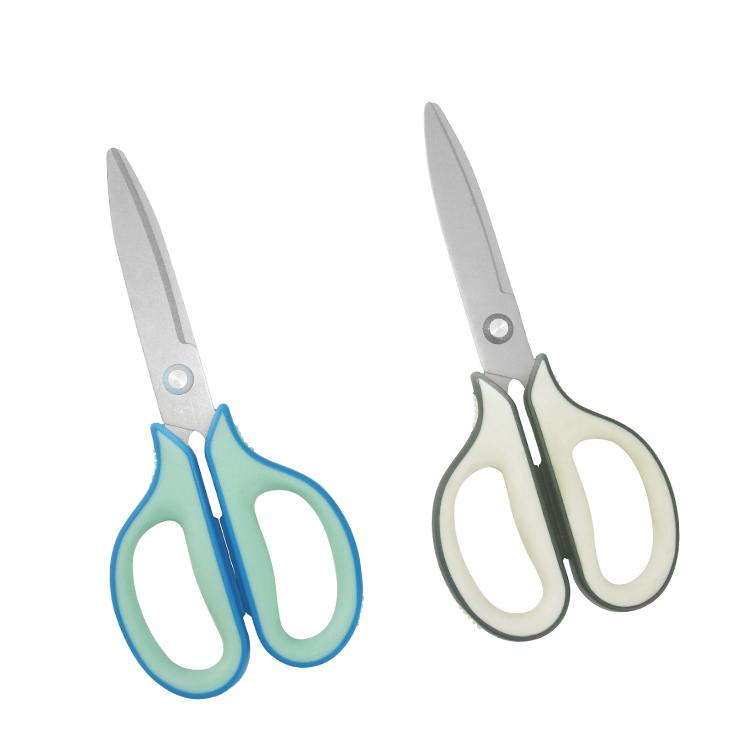
Sourcing stationery scissors looks simple until a buyer has to compare blade feel, handle comfort, classroom safety expectations, packaging, lead times, and brand customization across several suppliers. For school supply distributors, office product wholesalers, promotional product brands, and retail importers, choosing the right stationery scissors factory is less about a single sample and more about repeatable quality and clear communication.
This guide explains how to evaluate a factory or OEM partner for stationery scissors, especially when the target market includes schools and offices. It does not assume hidden specifications or guaranteed certifications. Instead, it focuses on practical questions buyers should ask before placing a bulk order.
Key Takeaways
- A stationery scissors factory should be evaluated on sample consistency, quality control process, packaging support, and communication, not only on unit price.
- For school scissors, buyers should ask about age suitability, tip design, handle size, labeling, and any required market-specific compliance documentation.
- OEM projects need clear artwork files, color references, packaging requirements, approval samples, and written confirmation of tolerances.
- Before confirming a wholesale order, compare pre-production samples with mass-production samples and define inspection criteria in advance.
What a Stationery Scissors Factory Typically Supports
A stationery scissors factory may produce scissors for everyday office use, classroom kits, promotional packs, craft assortments, or private-label retail programs. The production scope can vary by supplier, so buyers should confirm what is actually available rather than assuming every factory can make every style.
Common sourcing topics include blade size, handle shape, color options, packaging type, carton packing, barcode labeling, and private-label branding. If the order is for a school supply program, the buyer may also need to discuss whether the product is intended for younger children, older students, teachers, or general office users. Each use case can require a different balance of cutting performance, comfort, and safety-oriented design.
OEM Stationery Scissors: What to Clarify Before Development
Stationery scissors OEM work can help a brand create a product line that matches its market positioning. However, OEM success depends on details. A sketch or reference photo is not enough for a reliable quotation or production plan. Buyers should prepare a clear brief before contacting a supplier.
- Define the target user: student, teacher, office worker, craft user, or promotional giveaway recipient.
- Specify the desired size range and whether the scissors are for right-hand, left-hand, or general use if applicable.
- Provide Pantone or other color references for handles and packaging when brand color accuracy matters.
- Share logo placement, artwork files, and packaging dielines if private label packaging is required.
- Ask whether the supplier can provide a pre-production sample for written approval before mass production.
Buyers should also ask which elements are customizable and which are based on existing molds or standard components. Custom molds, custom colors, logo printing, and special packaging can affect pricing, timing, and minimum order requirements. Since these commercial details vary by supplier, they should be requested directly in the quotation stage.
School Scissors Supplier Considerations
When sourcing from a school scissors supplier, safety and usability are central concerns. Classroom scissors must be comfortable enough for repeated use and appropriate for the intended age group. A product suitable for an office desk may not be suitable for a primary school classroom.
Important questions include: Are the tips rounded or pointed? Is the handle sized for children or adults? Is the cutting action too stiff for younger users? Does the packaging include age guidance or warnings required by the destination market? Are there documents available for any compliance standards required by the buyer's country or retailer?
Suppliers should not be asked only for a low price. They should be asked to explain how they check sharpness, handle assembly, appearance, packaging accuracy, and carton condition. If the product will be supplied to schools, distributors may also want to keep approved samples on file for comparison with later shipments.
Comparison Checklist for Evaluating Suppliers
| Evaluation Area | What to Check | Questions to Ask the Factory |
|---|---|---|
| Product samples | Cutting feel, handle comfort, surface finish, consistency | Can you provide approval samples before production? |
| OEM support | Logo, color, packaging, carton marks, barcode needs | Which parts can be customized using existing tooling? |
| School suitability | Tip style, size, grip, labeling, age guidance | What information do you provide for school-use products? |
| Quality control | Incoming materials, in-process checks, final inspection | What inspection steps are used before shipment? |
| Commercial terms | MOQ, lead time, payment terms, packaging cost | Can you quote by packaging option and order quantity? |
Quality Checks Buyers Should Request
For stationery scissors, quality is experienced through everyday use. A product may look acceptable in a photo but perform poorly if the blades do not align, the pivot is too loose, or the handle edges feel uncomfortable. Buyers should inspect both appearance and function.
A practical inspection plan can include cutting tests on standard office paper, visual checks for scratches or molding marks, handle strength checks, open-and-close smoothness, and packaging verification. For private label orders, the inspection should also confirm logo position, spelling, barcode readability, inner quantity, and master carton marking.
If the order is high volume or intended for a major retailer, the buyer may arrange third-party inspection. The specific acceptance quality limit, inspection method, and testing requirements should be agreed in writing before production starts. Do not rely on verbal assumptions when the product will be distributed across multiple sales channels.
Packaging and Wholesale Presentation
Packaging affects both cost and market fit. Stationery scissors may be packed in bulk, individual sleeves, blister cards, paper cards, display boxes, or retail-ready assortments depending on the channel. A school supply wholesaler may prefer simple and efficient packaging, while a retail brand may need stronger shelf presentation.
Before requesting a quote, buyers should decide whether the product will be sold as a single unit, classroom pack, office pack, or mixed stationery set. They should also confirm shipping carton strength, inner box quantity, labeling needs, and whether packaging artwork must include importer details or market-specific warnings. These requirements should be confirmed with the buyer's own compliance or retail team.
How to Communicate With a Factory Efficiently
Clear communication reduces sampling delays and quotation revisions. When contacting a stationery scissors factory, include your target market, expected annual or first-order quantity, preferred packaging, customization needs, and required delivery destination. If you already have a benchmark product, send photos and measurements, but avoid asking a factory to copy protected designs.
It is also helpful to ask for separate quotations for standard items and customized items. This makes it easier to compare cost differences between stock-style wholesale purchasing and a full OEM project. For new buyers, a standard product with custom packaging may be a practical first step before investing in deeper customization.
Practical FAQ
What should I ask a stationery scissors factory first?
Start with product range, available sizes, customization options, sample policy, estimated lead time, MOQ, packaging choices, and quality control process. If the order is for a school program, ask about age suitability and labeling support.
Can a supplier make private label stationery scissors?
Many suppliers offer some form of OEM or private label service, but the scope differs. Ask whether they can support handle colors, logo placement, card design, barcode labels, cartons, and pre-production approval samples.
How do I check if school scissors are appropriate for children?
Review the size, handle comfort, tip shape, cutting force, packaging warnings, and any documentation required for your destination market. Always match the product to the intended age group and distribution channel.
Is the lowest quotation the best choice for wholesale scissors?
Not always. A very low price may not include the packaging, inspection, customization, or consistency your buyers require. Compare total landed value, sample quality, supplier responsiveness, and risk.
Should I request samples before placing an OEM order?
Yes. Request initial samples and, for customized orders, a pre-production sample with the agreed logo, color, and packaging. Keep the approved sample as the reference for inspection and future reorders.
Conclusion: Choose a Supplier With a Repeatable Process
A reliable stationery scissors factory is not only a place that makes scissors. It is a sourcing partner that can understand the intended user, confirm customization details, provide samples, answer quality questions, and support consistent wholesale supply. For school and office markets, buyers should focus on suitability, inspection standards, packaging accuracy, and transparent communication. That approach leads to better purchasing decisions than choosing on appearance or price alone.
