




Stationery Scissors OEM: A Practical Sourcing Guide for Buyers
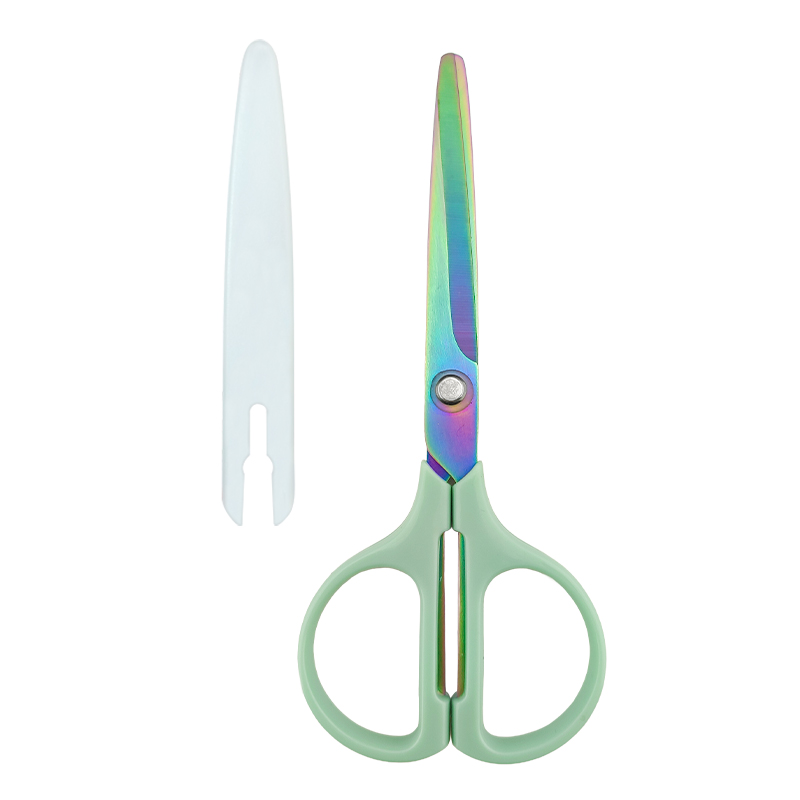
Stationery scissors are simple products, but sourcing them well requires more than choosing a color and asking for a low unit price. For retailers, distributors, stationery brands, school suppliers, promotional product companies, and office product buyers, an OEM project should balance cutting performance, safety, packaging, appearance, and repeatable quality. The right stationery scissors OEM partner can help turn a product concept into a consistent private-label item, while the wrong supplier can create problems with blade alignment, uncomfortable handles, packaging damage, or inconsistent finishing.
This guide explains how to evaluate a stationery scissors factory or professional stationery scissors manufacturer without relying on vague claims. It focuses on practical sourcing questions, sample review points, and product-selection criteria that buyers can use before placing an order.
Key Takeaways
- Define the end user first: office staff, students, craft users, or promotional buyers may need different handle sizes, blade lengths, and packaging.
- Ask suppliers to confirm available materials, finishes, safety options, and packaging formats instead of assuming specifications.
- Review pre-production samples carefully for blade alignment, smooth opening and closing, handle comfort, and finish consistency.
- For OEM projects, a clear artwork and packaging brief reduces delays and misunderstanding.
- Do not rely only on appearance; cutting performance and durability are central to repeat sales.
What Stationery Scissors OEM Means
OEM stands for Original Equipment Manufacturer. In stationery scissors sourcing, it usually means a factory manufactures scissors that another company sells under its own brand or as part of a retail, wholesale, school, office, or craft product line. OEM may involve existing shapes with private-label packaging, or more customized requests such as handle color, blade finish, cover design, blister card artwork, barcode placement, or carton labeling.
The original article introduced the idea of stationery scissors OEM as a way for businesses to obtain branded tools. That remains the core point: buyers are not only purchasing scissors, they are also managing how those scissors will be presented, used, and reordered. A professional approach starts with a sourcing brief that explains target market, usage scenario, preferred appearance, packaging requirements, and quality expectations.
Match the Scissors to the Intended Market
Before contacting a stationery scissors factory, buyers should identify who will use the product and where it will be sold. Office scissors may need a clean professional appearance and comfortable handles for daily paper cutting. Craft scissors may place more emphasis on appearance, smooth movement, and attractive retail packaging. School scissors may require extra attention to age suitability, tip design, and safe handling instructions. Promotional scissors may need reliable printing space or packaging that can support campaign branding.
Useful product questions include:
- What blade length and overall size are appropriate for the target user?
- Will the scissors be used mainly for paper, light craft materials, packaging, or general office tasks?
- Is a protective cover required for storage, retail display, or safer transport?
- What finish is preferred, such as a standard metallic look or a decorative colored effect?
- Should the handle be designed for right-hand use, left-hand use, or general use?
The source article referred to visually distinctive scissors, including rainbow iridescent styling and vibrant finishes. If such finishes are important, buyers should ask the supplier how the finish is applied, whether color variation is normal, and how samples compare to mass production.
Supplier Evaluation: What to Ask a Scissors Factory
A capable stationery scissors manufacturer should be able to answer detailed questions clearly. Buyers do not need to accept broad statements such as “high quality” or “durable” without evidence. Instead, they should request information that can be verified through samples, documents, and order procedures.
Important questions to ask include:
- Which existing models are available for OEM branding?
- What customization options are available for handle color, blade finish, cover, logo, and packaging?
- What materials are used for the blades, handles, and any protective cover?
- Can the supplier provide a sample before mass production?
- How are blade sharpness, alignment, opening and closing action, and appearance checked during production?
- What packaging formats are available, such as blister card, paper card, box, or bulk packing?
- What are the lead time, minimum order quantity, payment terms, and reorder process?
- Are any market-specific compliance or labeling requirements the buyer must provide?
Some suppliers may offer stainless steel blades, ergonomic handle concepts, corrosion-resistant finishes, or decorative coatings, but buyers should confirm these details directly for the selected model. Do not assume every stationery scissors product includes the same material grade or performance level.
Comparison Checklist for OEM Stationery Scissors
| Review Area | What to Check | Buyer Action |
|---|---|---|
| Cutting performance | Clean cutting on intended materials, no snagging, smooth blade contact | Test samples with paper and any target materials before approval |
| Blade and pivot | Alignment, opening resistance, screw or rivet consistency | Compare several samples, not only one perfect pair |
| Handle comfort | Grip size, edge smoothness, comfort during repeated use | Ask users in the target market to handle the sample |
| Finish and appearance | Color consistency, scratches, coating uniformity, logo position | Set visual acceptance standards in writing |
| Safety and storage | Tip shape, cover fit, warning labels, retail handling risks | Confirm requirements for the destination market |
| Packaging | Artwork, barcode, language, hanging hole, carton strength | Approve packaging proofs before production |
| Commercial terms | MOQ, lead time, sample cost, payment terms, shipping method | Request a written quotation and order confirmation |
Sample Approval and Quality Control
Sample review is one of the most important stages in stationery scissors OEM sourcing. A sample should not be judged only by how it looks in a photo. Buyers should physically open and close the scissors, cut several sheets of paper, inspect the blade edges, check the handle surface, and confirm whether the cover fits securely if a cover is included.
For private-label orders, keep an approved sample as the reference standard. This helps both buyer and supplier compare mass production against the agreed product. If the buyer requires specific packaging artwork, logo placement, or color matching, these should be approved before production starts. Written approval is especially useful when multiple departments are involved, such as purchasing, marketing, and quality control.
For larger wholesale or retail programs, buyers may also ask how the factory performs incoming material checks, in-process inspections, and final inspections. Avoid making assumptions about testing procedures; ask the supplier to explain what is routinely checked and what can be arranged if extra inspection is required.
Packaging, Branding, and Retail Presentation
Packaging affects both product protection and customer perception. A pair of stationery scissors with an attractive finish may still perform poorly at retail if the card bends, the barcode is placed incorrectly, or the product is difficult to see. Common OEM packaging decisions include card size, printed instructions, product name, brand logo, barcode, warning text, country labeling, and carton packing.
When preparing artwork, provide editable files in the format requested by the supplier and confirm color expectations. If the scissors are sold online, buyers should also request accurate product dimensions, package dimensions, and clean sample photos where possible. These details help reduce listing errors and customer complaints.
Practical FAQ
What is the difference between OEM and wholesale stationery scissors?
Wholesale usually means buying an existing product in quantity, often with limited changes. OEM may include private-label packaging, customized colors, logo application, or other brand-specific requirements.
How do I know if a stationery scissors manufacturer is reliable?
Start with communication quality, sample consistency, clear quotations, packaging proofing, and willingness to answer technical and commercial questions. A reliable supplier should help clarify details before production.
Should I choose decorative scissors or a standard office style?
Choose based on your sales channel and end user. Decorative finishes may suit gift, craft, or retail displays, while standard styles may be better for office and institutional purchasing.
What should I include in an OEM inquiry?
Include target quantity, intended market, preferred size, blade and handle expectations, packaging type, logo needs, destination country, and any compliance or labeling requirements.
Is a protective cover necessary?
It depends on the product concept and distribution channel. A cover can help with storage and presentation, but buyers should confirm fit, material, packaging impact, and cost with the supplier.
Final Sourcing Advice
Stationery scissors OEM sourcing works best when buyers treat the product as a complete program rather than a single item. The scissors, cover, finish, packaging, labeling, carton packing, and reorder plan all matter. By asking precise questions and approving samples carefully, buyers can reduce sourcing risk and build a product that fits office, school, craft, or retail demand.
